
Dalton’s Battlefield Preservation Efforts Are Rewarding
By Robert D. Jenkins Sr. · Originally published March 2017 · pp. 1–2
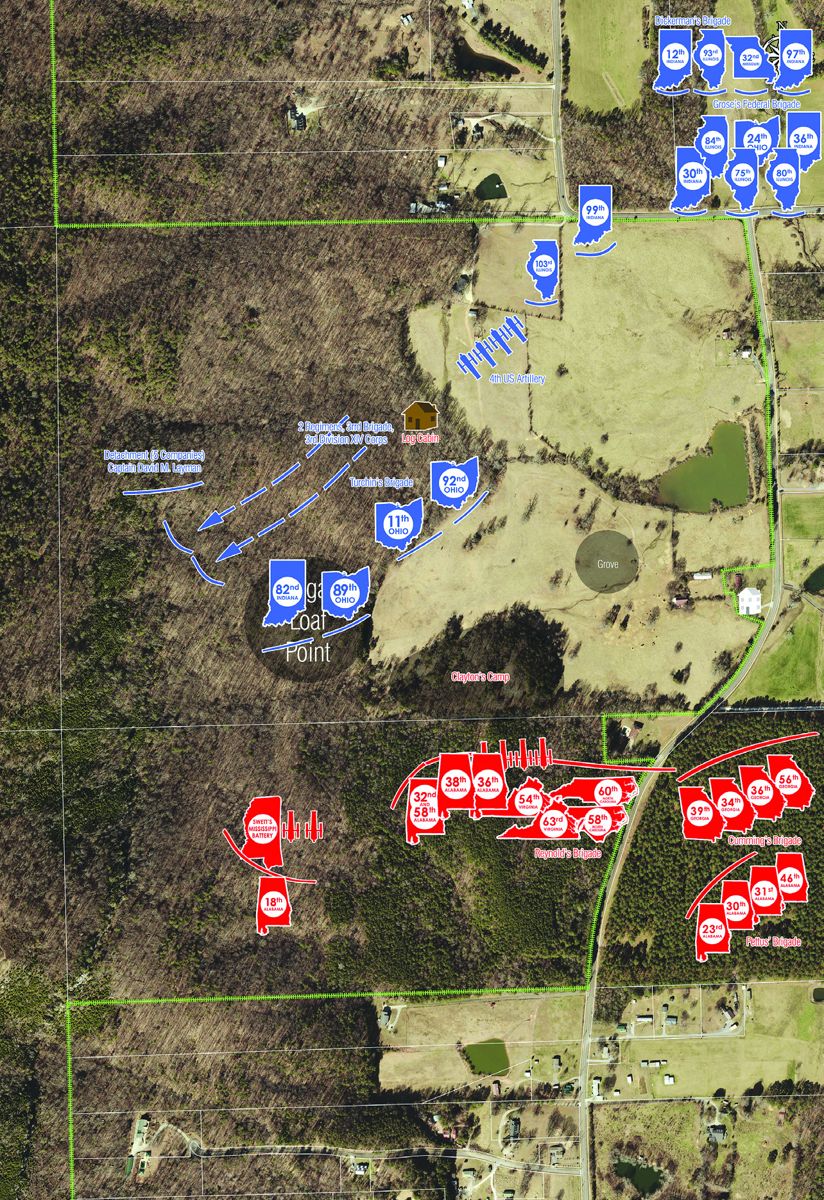
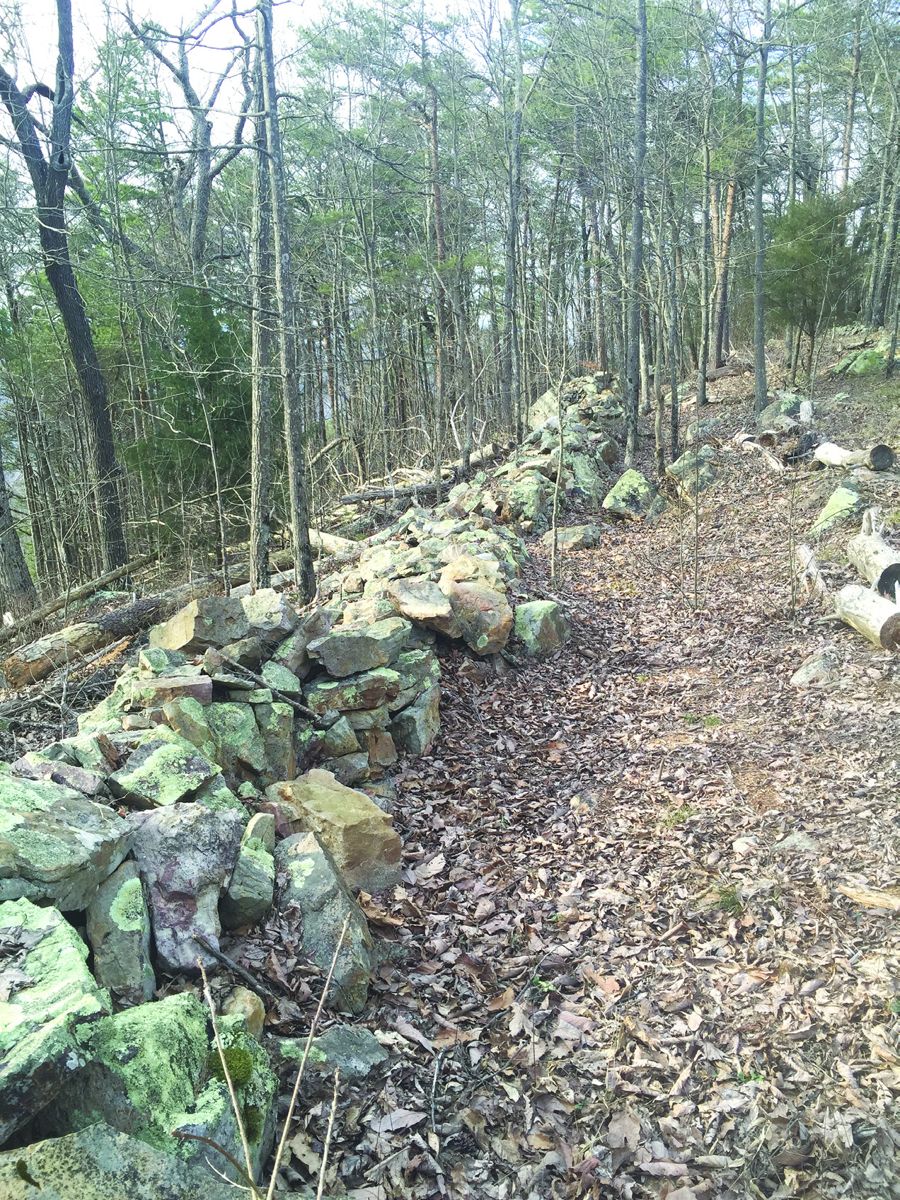
Whitfield County, Georgia, is the home to more Civil War earthworks than any other county in the Nation. On October 29, 2016, Whitfield County, in conjunction with Save the Dalton Battlefields, The Civil War Trust and other local organizations acquired over 300 acres in Crow Valley, just north of Dalton, Georgia, thus preserving a significant portion of these earthworks. The property, formerly known as The Grant Farm or Grant Property, lies adjacent to Rocky Face Ridge where Whitfield County already owns over 600 acres atop the ridge. There, Confederate and Federal earthworks and rock walls remain in nearly pristine condition, a stark reminder of the fierce fighting which occurred in February and May 1864. The Grant Property features trenches, redoubts, stacked rock walls, and both below surface and above surface earthworks in multiple locations throughout the just over 300 acres. It was the scene of combat on two separate occasions during the war. Additionally, the property was the location of one or more brigade-sized Confederate camps during the Winter of 1863-64 for up to six months. Also, the property saw use by Native American Indians, early White settlers to Crow Valley, and slaves. There is evidence that several cabins were erected by one or more of these groups both prior to and during the war. In February 1864, the property was host to fighting with two separate actions occurring on February 24-25, 1864 as Federal forces advanced from north to south across Crow Valley toward Dalton. Confederate forces including Clayton’s Alabama brigade and Reynolds’ Virginia and North Carolina brigade defended the southern half of the property while the Northern troops under Turchin’s Ohio and Indiana brigade with portions of other Northern units from mid-western states crossed the northern half of the property. The February fighting covered virtually the entire 300 acres of the Grant property as both Northern and Southern units marched and countermarched and attacked and counterattacked one another during the action. The February action also saw Confederate earthworks constructed in several places including a significant one-quarter to one-half mile of infantry trenches, a fourgun battery site, another trench line of smaller length and a portion of a two-gun battery earthwork together with a supporting redoubt and vidette. In addition, the property features a rare Federal rock wall about 3 feet in height and over 50 to 80 feet in length along the slope of Rocky Face Ridge which was erected and manned by 5 companies of
Federal troops on the afternoon of February 25, 1864. The February fighting also saw Confederate cavalry and artillery in the form of Key’s Arkansas Battery and Swett’s Mississippi Battery on the Grant Property. In May 1864, the northern portions of the Grant Property were utilized for Confederate earthworks as the Southern forces learned from the February fighting and moved their lines further to the north to take advantage of more of the high ground along Rocky Face Ridge and Crow Valley. This earthwork was manned by Reynolds’ North Carolina and Virginia brigade and Pettus’ Alabama brigade along with Key’s Arkansas battery again. For the Federals, units which attacked in May from north of the property came from Wagner’s Federal brigade along with other supporting units from the Federal IV Corps of the Army of the Cumberland and units from the Federal XXIII Corps from the Army of the Ohio which skirted the easternmost portion of the property in the field. Also, Cumming’s Georgia brigade saw action in May in the field east of and partially on the Grant Property. The May earthworks feature a combination of Confederate infantry trenches, rock walls, and a four-gun battery site. In addition to the two periods of combat, the Grant property was home to a number of Confederate troops from late November 1863 to the second week of May 1864. These units, including some 1,200 to 1,400 men from Clayton’s Alabama brigade and men from Stevenson’s division which included Reynolds’ North Carolina and Virginia brigade, Pettus’ Alabama brigade, and Cummings’ Georgia brigade, spent time on and around the property using the streams for water and cooking and cleaning, and, at least with Clayton and Reynolds’ brigades, making cabins and huts for winter quarters. This acquisition marks the sixth property in Dalton and
Whitfield County which have been preserved by various organizations and which will be opened to the public as an historic park. Dug Gap Mountain Battlefield Park maintained by the Dalton Civil War Roundtable, Mt. Rachel owned by the City of Dalton, Rocky Face Ridge, Mill Creek Gap Battlefield Park and Potato Hill Battlefield Park owned by Whitfield County, will now be joined by the Grant Property which will open access to the Battle of Crow Valley. The Grant Property is now preserved for future archaeological, historic and ecologic interpretation for both the battles which occurred in February and May 1864 there, and for the Confederate camps (much like a small-scale
Valley Forge) for future historians, archaeologists, environmentalists and students to study its use as a Civil War battle site, a Confederate camp, and a pioneer, slave, and Indian settlement prior to the war. Whitfield County and Save the Dalton Battlefields plan to open the Grant Property to the public for day time use as a walking, hiking, biking park which will not only interpret and feature the earthworks, rock walls and related sites on the Grant Property, but the park will also include trails to the summit of Rocky Face Ridge where visitors will be able to reach vistas atop the mountain from which, on a clear day, one will be able to see all the way to Lookout Mountain in Chattanooga, Tennessee, to the northwest, as well as Pine Mountain, Lost Mountain, and even Kennesaw
Mountain to the south. No date has been set for the park’s opening, but plans are already in the works. In the meantime, private tours may be arranged by contacting Robert Jenkins, President, Save the Dalton Battlefields 706259-4626.