
Through The Lens
The Light At The End Of Rat Hell
By Stephanie Hagiwara · Originally published June 2017 · p. 7
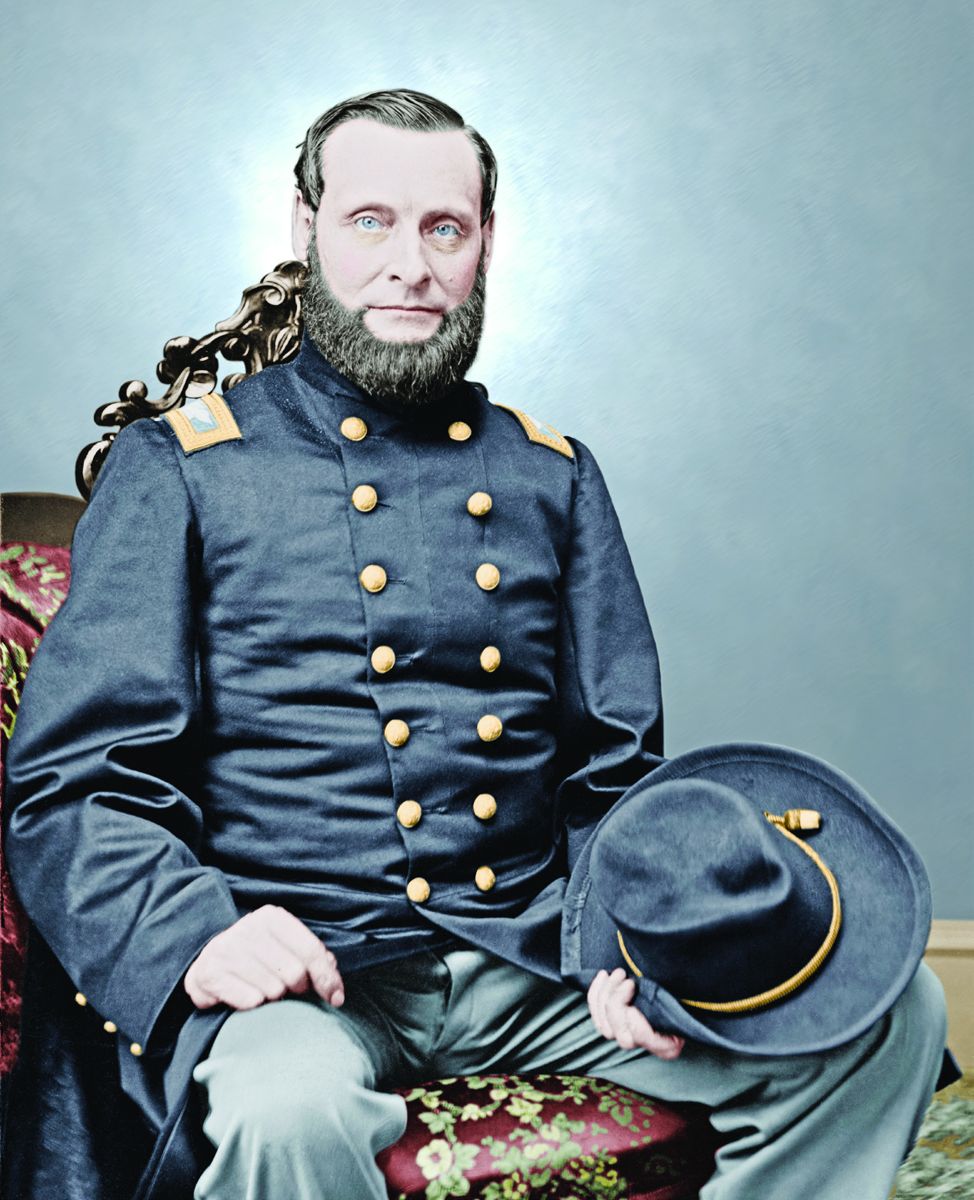
“I shall never forget the night when I first emerged into the open air. Just as Capt. Phelps had helped me from the tunnel the guard sang out not twenty yards from where we stood ‘Post No. 7 half-past one o’clock and all is well.’ I thought, ‘Old fellow, you don’t know as much as you think you do.’” U.S. Lt. William Reynolds, successful Libby Prison escapee.
In March 1862, the Confederate government decided to convert a Richmond, Va., three-building warehouse complex into a prison for captured Union officers. The complex was isolated, encompassed an entire city block and had the James River on the south side as a convenient water source. Given 48 hours to vacate, Luther Libby left the sign advertising his shipping supply business, “L. Libby & Son, Ship Chandlers,” on the building, giving one of the most infamous Civil War prisons its name.
By 1863, there were approximately 1,200 men crowding Libby Prison. Their primary occupation was planning an escape. Col. Thomas Rose of the 77th Pa. Inf. and Maj. Andrew Graff Hamilton of the 12th Ky. Cav. met while scouting for an escape route in the dark, abandoned basement kitchen known as “Rat Hell.” The area was known for the rat colony that made their home in the two-foot-thick loose packing straw covering the dirt floor.
Between “their nocturnal prowlings and close conferences together,” some fellow inmates knew an escape plan was being hatched and they wanted in on it.
It was decided that 15 men would rotate digging a tunnel in three shifts. Rose “found more difficulties with this arrangement than I had anticipated. …The profound darkness of the place caused some of them to become bewildered when they attempted to move about, and, as absolute silence had to be observed, they could not find their way to places where they were needed, or even find their way out of the cellar,… it was a matter of great difficulty to find them. I sometimes had to feel all over the cellar to gather up the men that were lost.”
The pair coordinated their efforts with Rose concentrating on digging and keeping up morale. Hamilton came up with the various solutions to make it possible, chisels to dig, turning a rope into a ladder, repurposing wooden boxes used as spittoons to haul out the dirt. A man fanned oxygen in the tunnel with a rubber blanket stretched across a frame. Under the straw, the tunnel’s diggers and the dirt were hidden from guards on their rounds. All had to contend with “the unpleasant feature of having to hear hundreds of rats squeal all the time, while they ran over the diggers almost without a sign of fear.”
During rollcall, to hide the missing men, a digger would position himself to be counted at the start, then slip to the middle of the ranks to be recounted. To the frustration of Rose, other prisoners did the same. One day the headcount was 15 inmates above the expected headcount. The exasperated counter proclaimed, “Now, gentlemen, look yere: I can count a hundred as good as any blank man in this yere town, but I’ll be blank blanked if I can count a hundred of you blanked Yankees. Now, gentlemen, there’s one thing sho, there’s eight or ten of you-uns yere that ain’t yere!”
To stop the rollcall hijinks, one day the Confederates had additional guards oversee the count. Capt. Isaac N. Johnston, after an intensive search was deemed an escapee. Johnson agreed to hide “in this cold, dark, and loathsome place [which] was most revolting to my feelings” during the day, returning upstairs after lights out to sleep with his fellow inmates. Between sightings and escape speculations, Johnston had to cease sleeping upstairs and the diggers started a rumor that his escape route was a couple of guards who were his cousins.
After the first two tunneling attempts failed, Rose came up with a new plan. He speculated that it would be possible to dig a tunnel underneath a 50-foot vacant lot, resurface on the other side of a shed where the guards would ignore them as being outside their jurisdiction. After 17 days, the tunnel reached the outside world.
It was agreed that each of the original 15 tunnelers would select a friend to escape with him. A second group of 15 would depart the next night. Maj. Bedan McDonald’s plus one was Col. Abel Streight of Streight’s Raid fame. Streight continued to be a thorn in the Confederate’s side while in prison. He wrote a published letter to C.S.A. Secretary of War James Seddon denouncing the prisoners’ semi-starvation. Standing up to his captors, Streight repeatedly proclaimed, “You dare not carry out that threat! You know our Government will never permit it, but will promptly retaliate upon your own officers, whom it holds.”
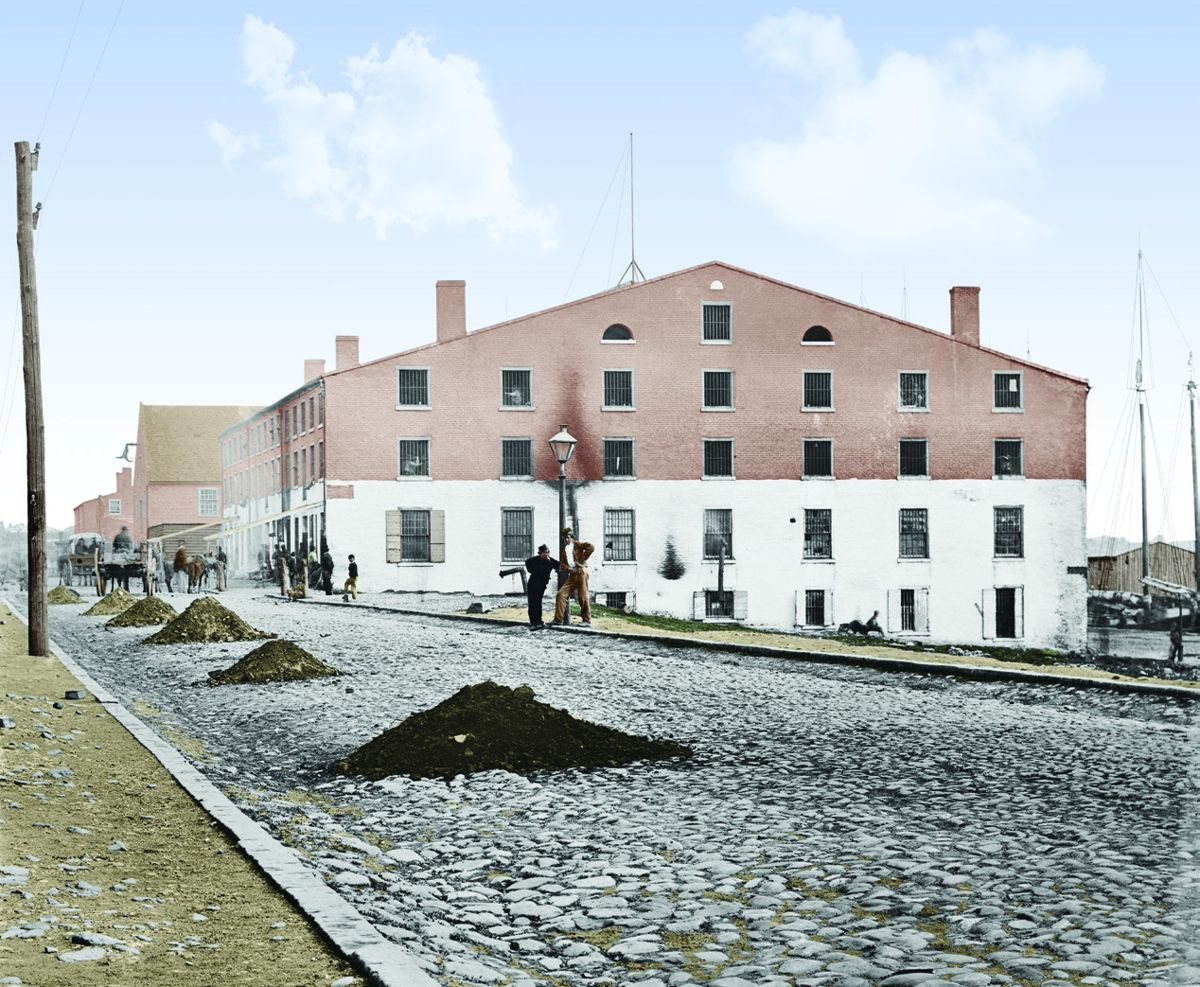
According to inmate Joseph Ferguson, Richmond officials “would rather have lost half the prisoners around the city than the ‘hell-hound’ Streight.”
On the night of Feb. 9, 1864, as inmates loudly held a musical, Rose and Hamilton were the first to journey through the tunnel to the outside. Inside, inmates noticed the men departing the prison, but not the guards. The news spread like fire and men dashed to the cellar to escape! Col. Harrison Hobart implored the men to be quiet. A warning cry that the guards were coming scattered the waiting men. Still, 109 men took advantage of the tunnel.
All headed 50 miles east toward Union lines at Williamsburg, Va. It helped that most escapees had previously poured over area maps while serving with U.S. Gen. McClellan during the Peninsula Campaign. During the escape, many men hid in swamps during the day and traveled at night. “I was in ice and water to my knees the greater part of the time, and often it was up to my waist,” recounted Hamilton.
Hounds were sent after the escapees. Not all the dogs understood their task. Hamilton related that a “long slab-sided bloodhound came crawling thru the underbrush toward me. …To my surprise he came up, wagging his tail, and licked my hand and laid down by me.
Many men would praise the help of local slaves. Inside the prison, the escapees had the help of captured African American U.S. Army teamster Robert Ford, who was treated like a quasi-slave instead of prisoner and allowed outside the prison. Ford connected Streight with local resident Abigail Green who hid Streight’s group for days in her home before journeying to freedom. For his role, Ford was sentenced to 500 lashes. Ford survived and later made his own escape.
Of the 109 men, two drowned trying to swim across the James River and 48 were recaptured including Rose. He was finally exchanged April 12, 1864. Johnson was among the 59 who made it to freedom. He was found by U.S. Gen. Benjamin Butler’s troops who were sent to aid the escapees. The next morning, he rode at the head of a search party. Within two miles, he saw two men he recognized. “Spurring my horse in advance of the rest, and swinging my hat and cheering as I went, I hastened to meet my old companions—and seldom is so much joy pressed into a few brief moments as was ours when we met; we wept, we laughed, we shouted aloud in our joy.”
Sources:
- Four Months In Libby, And The Campaign Against Atlanta by Isaac N. Johnston
- Famous Adventures And Prison Escapes Of The Civil War, “Colonel Rose’s Tunnel At Libby Prison” by Frank E. Moran • Story of the Famous Tunnel Escape from Libby Prison by Andrew G. Hamilton • “Libby Tunnel, An Interesting Account of Its Construction,” The National Tribune, May 14, 1885 • Southern Lady, Yankee Spy: The True Story of Elizabeth Van Lew, a Union Agent in the Heart of the Confederacy by Elizabeth R. Varon
Stephanie Hagiwara is the editor for CivilWarinColor.com and Civil War in 3D.com. She also writes a weekly column for HistoryinFullColor.com that covers stories of photographs of historical interest from the 1850’s to the present. Her articles can be found on Facebook, Tumblr and Pinterest.