Restored Locomotive Texas Returns to Atlanta
Originally published July 2017 · pp. 1–4
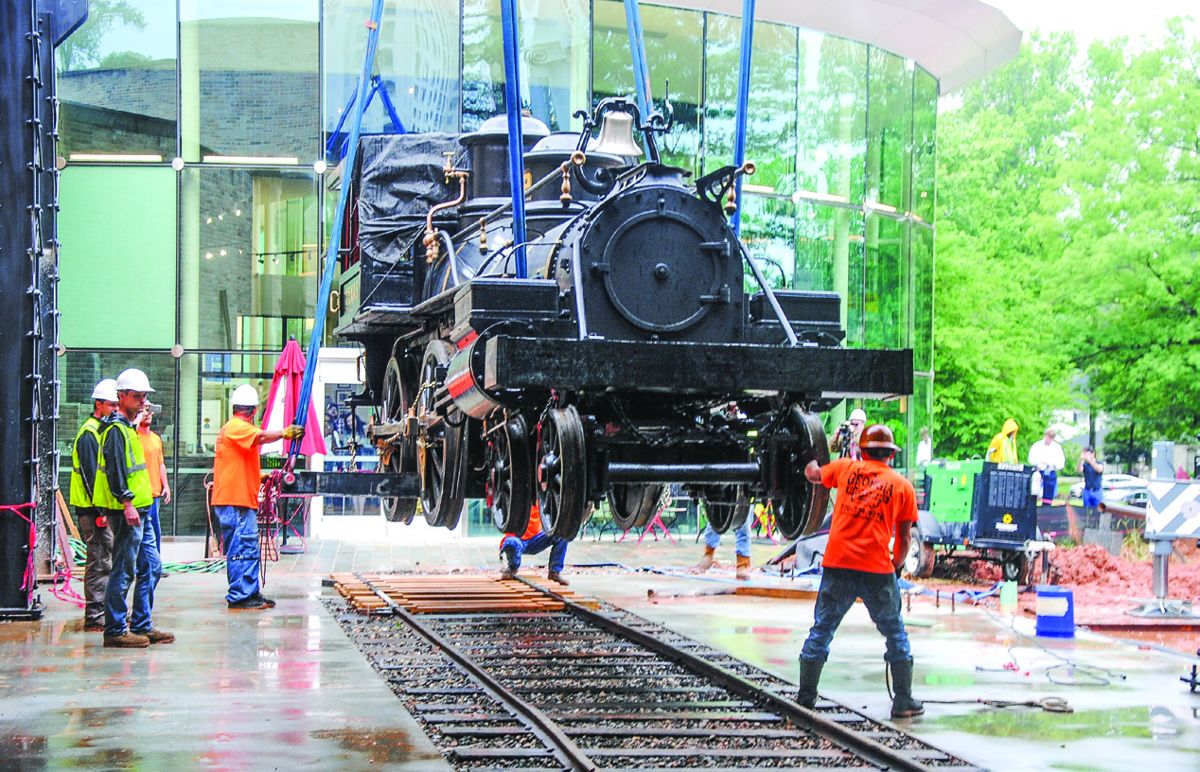
ATLANTA, GA.—Fresh from a 15-month restoration at the North Carolina Transportation Museum in Spencer, N.C., the Western & Atlantic Railroad locomotive Texas returned to Atlanta on May 4, and was gently lifted by a crane into its new home at the Atlanta History Center. The historic locomotive will be displayed inside a specially designed glass-fronted hallway-gallery connected to the new Lloyd and Mary Ann Whitaker Cyclorama Building, which is scheduled to open in the fall of 2018. The Texas, which is listed on the National Register of Historic Places, was produced by New Jersey locomotive maker Danforth, Cooke & Co. in 1856. The Texas is most famous for its role in the 1862 Great Locomotive Chase, when it was used to chase down Union Army raiders who commandeered another W & A steam locomotive, the General. Both the Texas and General were saved from the scrapyard because of their roles in the Great Locomotive Chase. The Texas was also a workhorse along the W & A railroad for many years after the war, hauling freight until 1907, when it was finally taken out of service. In 1908, after a public outcry for its preservation, the Texas was donated to the City of Atlanta, which displayed it outdoors in Grant Park. At the time, Atlantans wanted the Texas displayed in their city, because Chattanooga had the General (since moved to the Southern Museum of Civil War and Locomotive History in Kennesaw, Ga.). In 1927, the Texas was moved inside the Atlanta Cyclorama building where it was exhibited with the 1886 cyclorama painting The Battle of Atlanta. In 1936, Atlanta historian Wilbur Kurtz added a new smokestack, pilot (“cowcatcher”), and name plates and painted the Texas so it would resemble its 1862 appearance. Much of Kurtz’s research was based the appearance of the General after it was re-built in 1892. A 2012 conservation assessment by Scott Lindsay of Steam Operations Corporation (which specializes in the restoration and operation of historic locomotives) confirmed that the Texas needed substantial work. Unchecked rust was present in many areas (some of it painted over in the 1936 restoration), several timbers comprising the tender frame were rotten, and a variety of parts had gone missing over the years.
The restoration work would also mean moving the 53,000-pound Texas out of the Grant Park Cyclorama building, a major logistical challenge, to say the least! In 2014, thanks to the support of several key donors, the private, non-profit Atlanta History Center and the City of Atlanta signed a 75-year license agreement, whereby The Battle of Atlanta Cyclorama and the Texas were to be moved to a new facility constructed at the Atlanta History Center. With great fanfare, the Texas and its tender were carefully extracted from their old home in Grant Park during December 2015. Cranes and trucks brought them to the North Carolina Transportation Museum in Spencer, N.C. (a former locomotive repair shop) for restoration by the Steam Operations Corporation while the new facility in Atlanta was being built. Like any working transportation equipment, locomotives evolve over time, as parts are routinely replaced or upgraded to keep the machines running and the railroad profitable. A careful part-by-part examination by Max Sigler and Nathaniel Watts of Steam Operations Corporation confirmed that the Texas was no different. In the 1870s, the locomotive was upgraded to burn coal rather than wood. The 1874-dated boiler was installed with new steam and sand domes in 1877. The cab dates to the 1880s, and the wheels (regauged to the standard 4 feet, 8 and ½ inches in 1886) bear dates between 1896 and 1904. A “diamond” shaped smokestack and wooden pilot (“cow catcher”) were also later additions, as was a switching engine footboard in the early 1900s. Little remains of the locomotive that participated in the Great Locomotive Chase except for parts of the frame as well as the lyre-shaped bell frame on top of the boiler.
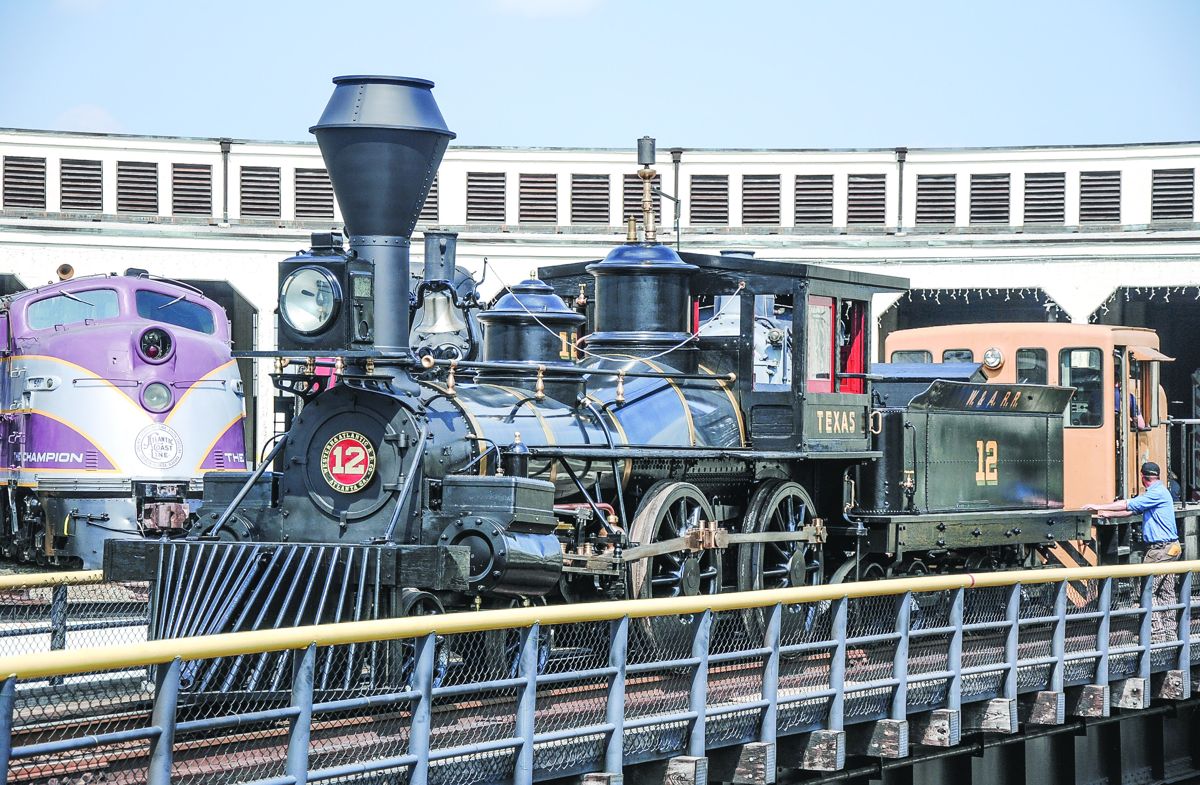
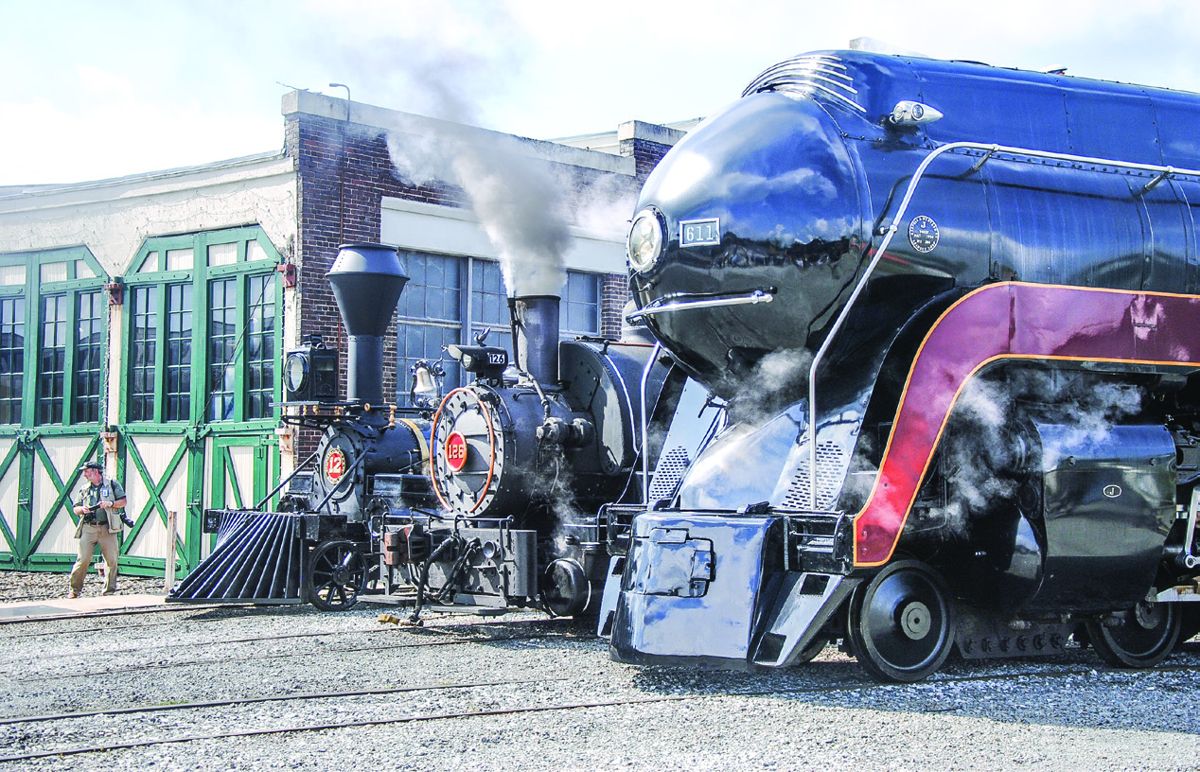
Although considered a giant in her time, the Texas was dwarfed by later locomotives, including the Lehigh Valley Coal Company 126 (1931, center) and the massive Norfolk & Western 611 (1950, right)
An 1871 Tennessee Rolling Mill stamp discovered on a repair on the tender tank. This is the earliest mark found on any part of the tender or locomotive.
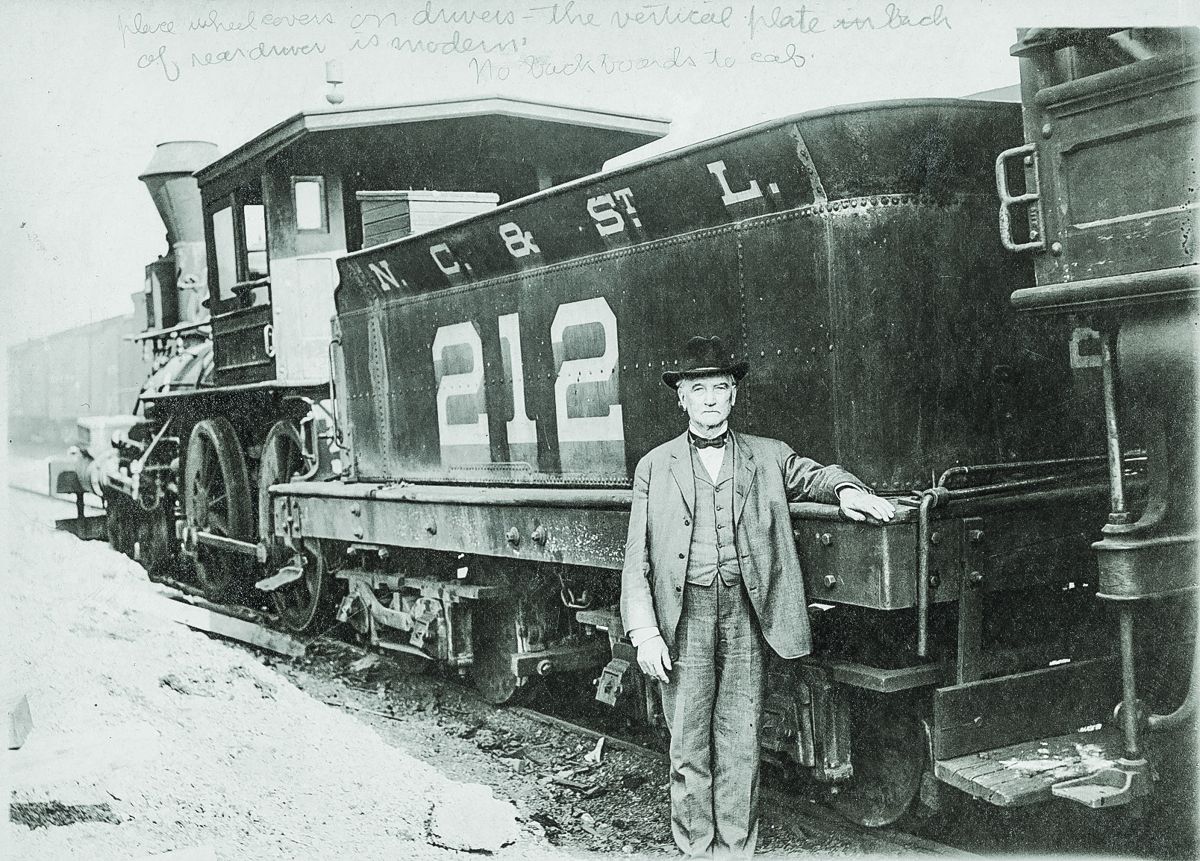
The tender is believed to have been built in 1864 by William Mason & Company, in Taunton, Mass. (which also fabricated U.S. Model 1861 rifle-muskets) for the U.S. Military Railroad locomotive Dalton. After the war, the Dalton was purchased by the W & A and later renamed for William McRae, the general superintendent of the railroad and a former Confederate brigadier general. The tender has also been heavily modified over the years. Unfortunately, when the Texas and its tender were repainted in 1936, any remaining paint layers were sandblasted away and replaced with a “red lead” (actually orange) primer. That meant that the 2016 historic paint finishes analysis by David Black of Raleigh, N.C., revealed very little about the Civil War–era paint scheme of the Texas. The only clues were specks of green hidden in crevices of the frame, and traces of black on the frame and other parts. With this evidence in mind, the Atlanta History Center decided that the most honest presentation of the historic locomotive was its 1886 appearance—after its last major service modifications. The Texas’ new color scheme is dominated by black, but boasts other secondary hues of 1880s locomotives, including brass details, a Russia-iron (blue-tinted) boiler jacket, a red cab interior, and the Western & Atlantic (W&A RR) lettering on its side in yellow-gold—all choices that photographs, paint analysis, and other research indicated were true to the 1880s. Other aspects of the restoration include a new pilot, a new smokestack, a correctly painted wooden cab with glass windows and appropriate brass fixtures, the replacement of rotted sections of the tender frame and rusted out sections of the water tank, and a new number plate. On April 28-30, the Texas was spotlighted in a special farewell event at the North Carolina Transportation Museum. “The Texas Returns: Featuring 100 Years of American Steam” also included former Norfolk & Western No. 611, the former Lehigh Valley Coal Company No. 126, and the CSX GP38 diesel locomotive 2702, named the Franklin M. Garrett for the late Atlanta History Center historian who was also a train enthusiast. In its home at the Atlanta History Center, the Texas will be the central artifact in a new exhibition emphasizing the importance of railroads in the history of Atlanta. The Center is already home to one of the largest collections of Civil War artifacts in the world. “The Texas is a tangible link to the New South city that rose from the ashes of the Civil War,” commented Atlanta History Center CEO Sheffield Hale. “In fact, no artifact can be more important for telling the story of Atlanta than the Texas.”
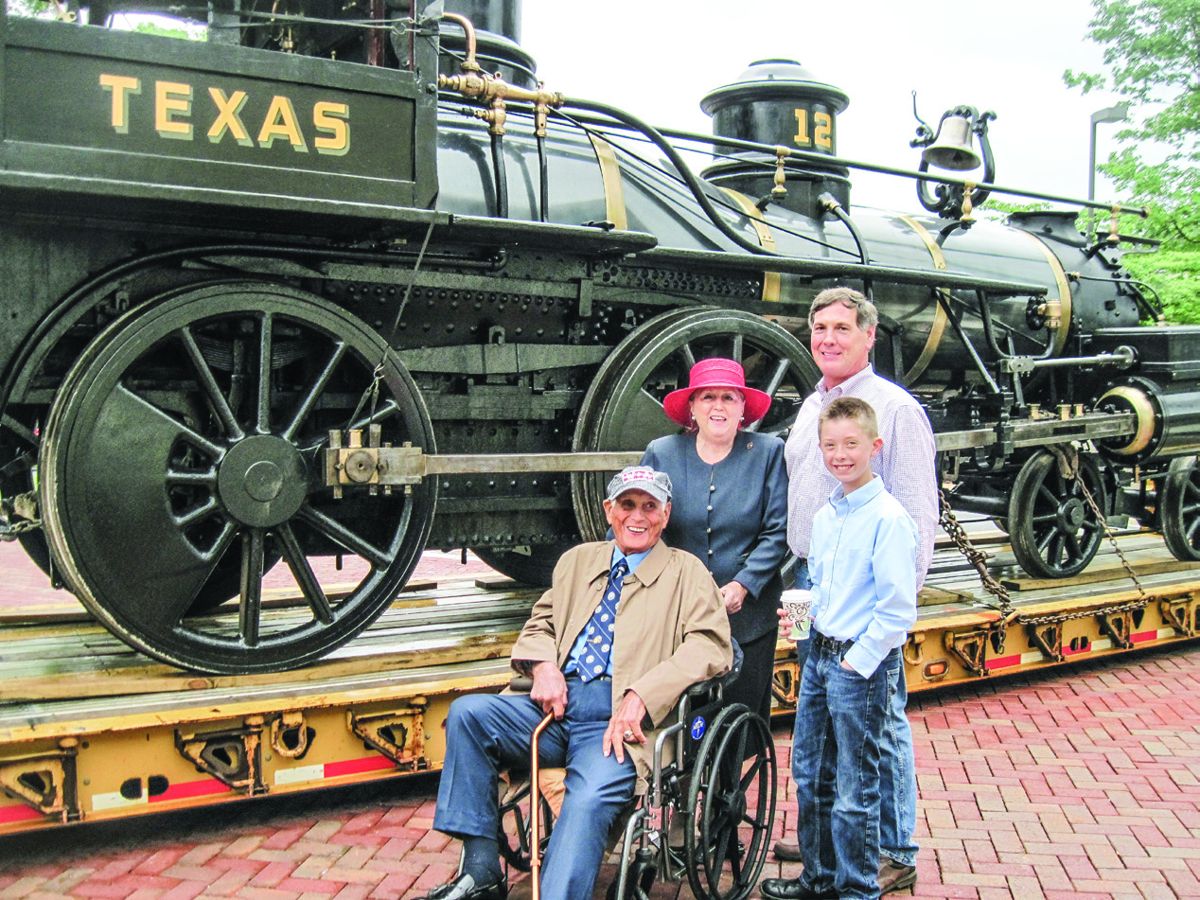
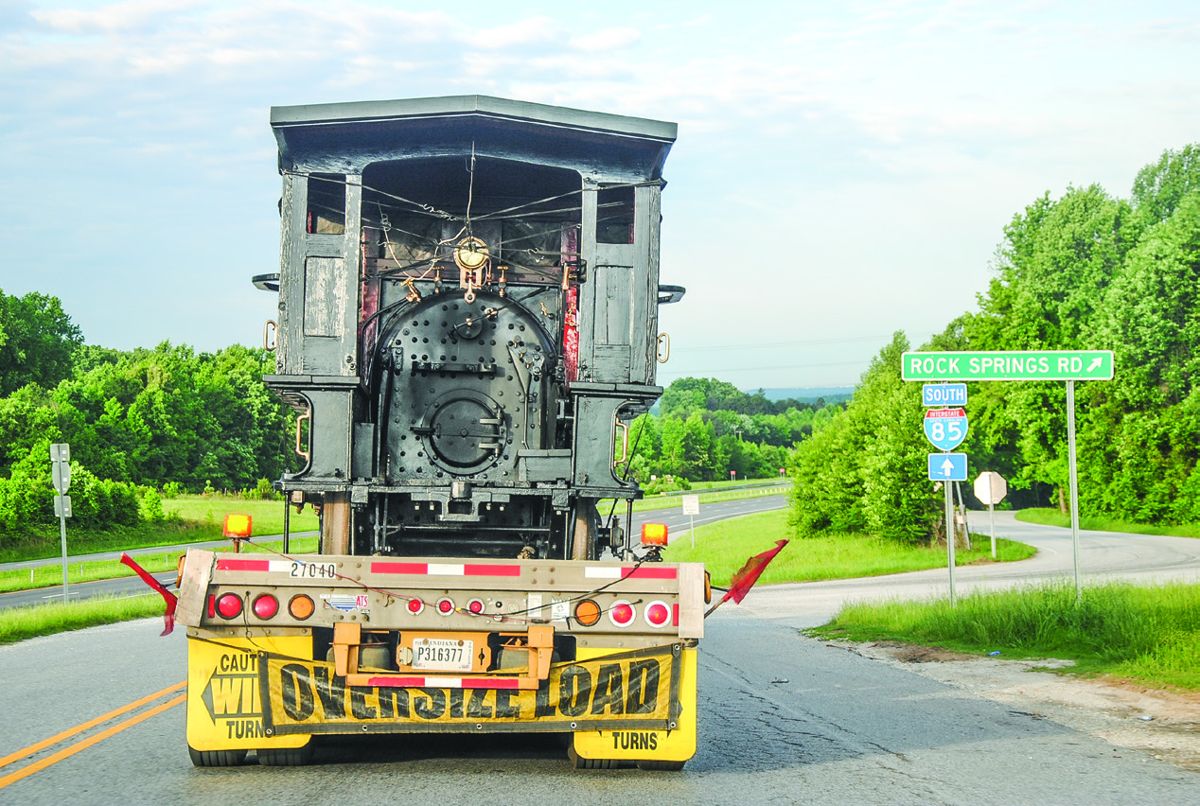
The Texas is lifted onto a “lowboy” trailer by the Crane & Rigging Company at the N.C. Transportation Museum, May 3, 2017.