
Raymond, Mississippi Confederate Forlorn Hope in the Battles for Vicksburg
By Robert L. Durham · Originally published July 2017 · pp. 10–12
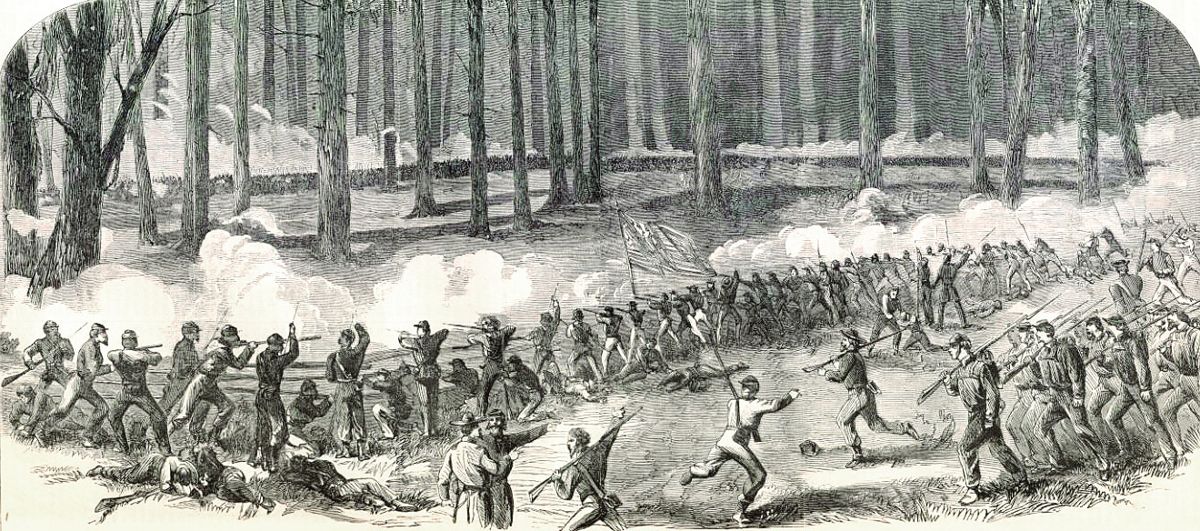
In the spring of 1863, Union Maj. Gen. Ulysses S. Grant crossed the Mississippi to begin the final phases of the Vicksburg campaign. The maneuver left Confederate Lt. Gen. John C. Pemberton scrambling to find out where Grant was heading. Pemberton’s main responsibility was to protect Vicksburg, but he was hoping to fall on Grant’s rear or flank, or possibly to pick off an isolated column. He shifted his troops, trying to learn Grant’s intentions. On May 11, he ordered Brig. Gen. John Gregg to march his reinforced brigade to Raymond, Miss.1 Little did Gregg know that Raymond lay squarely in the path of Maj. Gen. James B.
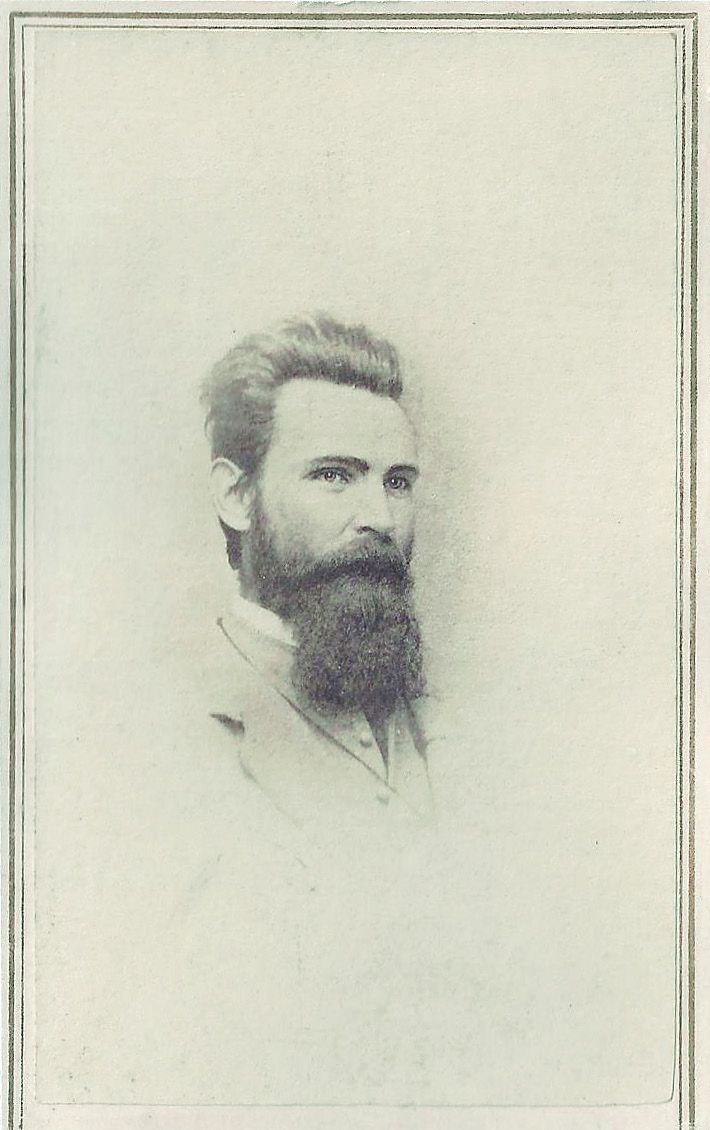
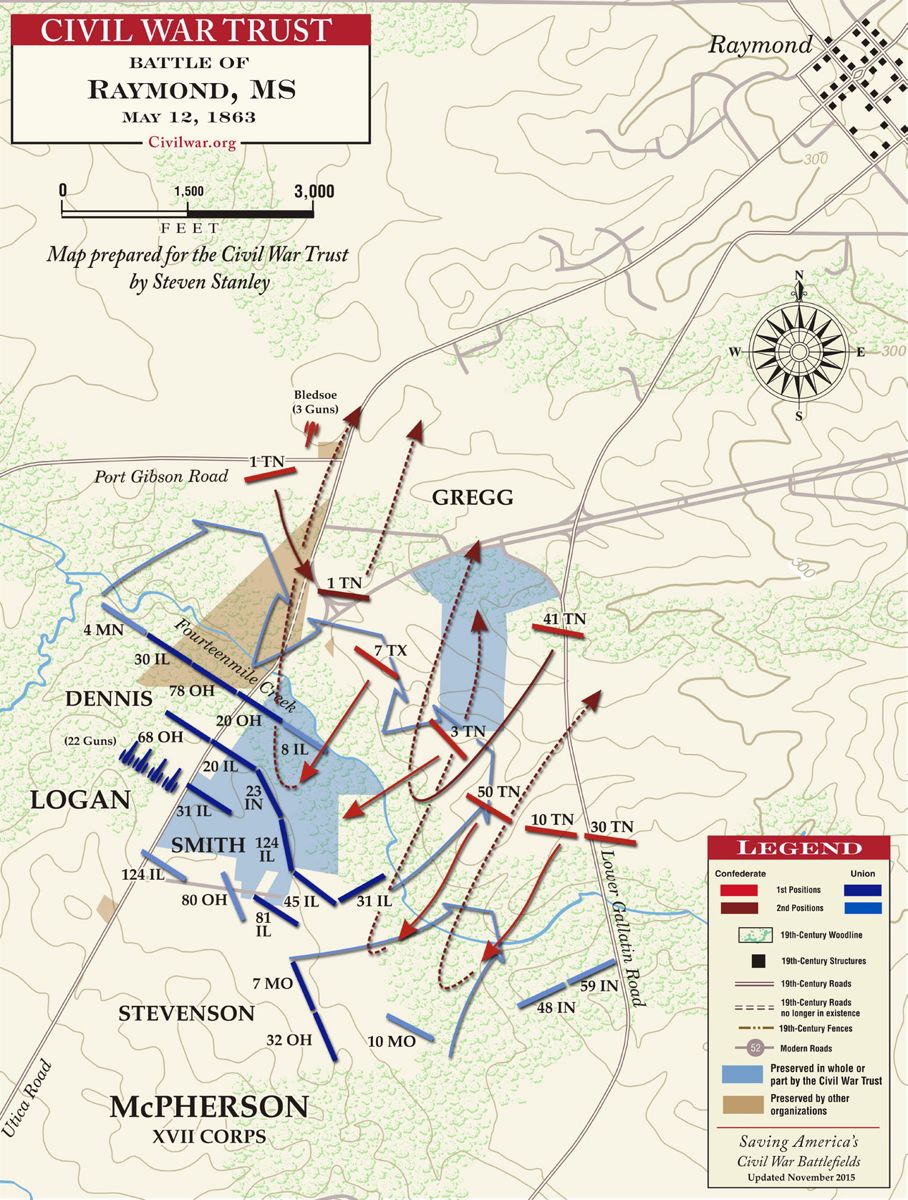
McPherson’s XVII Corps, on their way to Jackson, Miss. Gregg’s orders were not to bring on a general engagement unless he outnumbered whatever Union force he ran into, however, if chance favored him, he could fall upon the flank or rear of one of Grant’s columns. Pemberton told Gregg that the Mississippi cavalry regiment of Col. Wirt Adams would meet him at Raymond. When Gregg arrived in Raymond, he met a warm welcome from the citizens of the town. The band of the 3rd Tenn. Inf. played “The Girl I Left Maj. Gen. James B. Behind Me” and everything was McPherson, USA. merry, as the townspeople gave (Library of Congress) water and food to the marching men. Much to Gregg’s conster- Fourteen-Mile Creek. Early in nation, Wirt Adams was not to be the morning of May 12, Gregg found. Instead, there was a four- received from them a report that man detachment from Adams’ Federal troops had been spotted command, under Sergeant Miles, on the Utica road. This was close, some forty troopers, mostly boys but Hall’s squadron had not been from the surrounding area, and the able to ascertain the number of 1st Miss. State Troops (mounted) Yankees.3 under Capt. J.M. Hall.2 Gregg had been ordered not to Wirt Adams had been ordered bring on an engagement. He was to take his cavalry to Raymond, to withdraw to Jackson if he conbut mistook the order to mean the fronted by a greater number of five men already there. Adams the enemy. He was loath to pull did send a fifty-man squadron back until he ascertained what to Raymond under Capt. W.S. he faced. Later reports indicated Yerger. The detachment did not that the enemy force was only reach Raymond until nearly 2,500 to 3,000 men, which Gregg dark. Gregg sent the detachment took to be a marauding brigade. to scout north and west, not the Gregg’s task force was almost direction McPherson’s Corps 4,500 strong, so he decided to was coming from. He sent Hall’s capture the enemy confronting squadron to scout southwest and him.4 placed pickets on the bridge over McPherson had ordered Maj. Gen. John A. “Black Jack” Logan’s Division to start their march toward Raymond at 3:30 a.m. on May 12. Brigadier General Marcellus M. Crocker’s Division followed at 4:30. The advance of Logan’s column discovered Gregg’s advance pickets about 9:30 a.m. Brig. Gen. Elias S. Dennis’ brigade was in advance so Logan ordered them to form a line of battle across the road. They advanced against the Rebel pickets. Logan ordered Brig. Gen. John E. Smith and John D. Stevenson’s divisions held in supporting distance.5 At 10 a.m., the Federals opened an artillery barrage against Gregg’s picket post. Gregg had six regiments of Tennessee and Texas infantry. He deployed the 7th Texas, under Col. Hiram B. Granbury, to support the picket at the junction of the Port Gibson and Utica Roads. The 50th Tenn., under Lt. Col. T.W. Beaumont, was sent out on the Lower Gallatin Road. The 10th/30th Tenn. Consolidated,6 under Col. Randal W. McGavock, was placed in support of the Fiftieth. Gregg ordered the 3rd Tennessee, under Col. C.H. Walker, about ½ mile from Raymond, between the two roads. Gregg’s remaining regiment, the 41st Tenn., under Col. R. Farquharson, was temporarily held in reserve in Raymond. Capt. Hiram M. Bledsoe’s Mo. Btry. of three guns was positioned near the junction of the Utica and Port Gibson roads, with the 1st Tenn. Bn., under Maj. S.H. Colms, in support.7 Union General Logan brought up Smith’s Bde. to the right of Dennis and ordered the two brigades to advance, “well protected with a line of skirmishers.” Gregg’s skirmishers were posted along FourteenMile Creek, which divided the Union and Confederate forces. General Smith claimed FourteenMile Creek was “at times a considerable stream with steep banks—but now with only about 2 ½ feet of water, and affording an excellent cover.” According to Lt. Col. William P. Davis, commander of the 23rd Ind. in Smith’s Bde., the creek was “almost impassable, the banks being nearly perpendicular, and covered with dense undergrowth.” Logan’s skirmishers drove the Rebel skirmishers beyond the creek. Colonel Manning F. Force, commander of the 20th Ohio in Dennis’ Bde., reported that: “The fire was very close and hot. Private Levi Donaldson … had his leg shattered by a rifle held within a foot of it.” According to Gen. Logan, after driving out the Southern skirmishers, Dennis’ Bde. had to advance about “400 yards through an open field under a very heavy combined fire of infantry and artillery.”8 Gregg saw that the main force of the enemy was deployed on the Utica Road. He reported that “a single field, dotted with spots of timber, separated the Lower Gallatin and Utica roads… Finding that I would necessarily be driven into town by his artillery unless I moved up nearer, and believing from the evidence I had that his force was a single brigade, I made my dispositions to capture it.” He moved the 50th and the 10th/30th into the timber, with instructions to approach as near as possible to the enemy battery. They were to await the sounds of an attack being made from the Rebel right, upon which they were to attack the battery.9 General Gregg ordered up the 3rd Tenn., to the right of the 10th/30th, in an open field. He moved the 7th Texas to the right of the 3rd. He then sent word to the 41st Tenn. to move into the reserve position previously occupied by the 3rd. Union Gen. Dennis’ skirmishers were firing on Gregg from a stretch of timber behind their battery. Gregg ordered the 7th Texas and 3rd Tenn. to charge into the woods with skirmishers advanced. According to Col. Calvin H. Walker, the commander of the
3rd, “I then ordered a charge, which was made in the most gallant manner under a galling fire.” The Yankees fell back before the charge. The 50th and the 10th/30th had been ordered to attack when they heard the Confederate charge but, for some reason, did not do so effectively. This enabled the Federals “to place a force upon the left flank” of the 3rd Tenn. Gregg ordered the 41st Tenn. to reinforce that flank. Sumner Cunningham of the 41st described the Yankee fire: “ a literal shower of bullets, the dust rising all about us as it would by the first heavy dash of rain.”10 The cause for the failure of the 50th and 10/30th to charge may have been the mortal wounding of Col. McGavock, the commander of the 10th/30th Tenn. Consolidated, just as the attack started. Captain Patrick M. Griffin, a member of the 10th/30th, provided a poignant account of McGavock’s wounding, “I was standing about two paces in the rear of the line and Col McGavock was standing about four paces in my rear. We had been under fire about twenty minutes when I heard a ball strike something behind me… It was my colonel. He was about to fall. I caught him and eased him down with his head in the shadow of a little bush. I knew he was going and asked him if he had any message for his mother. His answer was: ‘Griffin, take care of me! Griffin, take care of me!’ I put my canteen to his lips, but he was not conscious. He was shot through the left breast, and did not live more than five minutes.”11 The Union line now outflanked the Confederates on both wings. Many Rebel units, who were separated from each other, were outflanked individually. The 10th/30th Tenn. detected a Federal force “sweeping around on my left with superior numbers.” Their new commander, Lt. Col. James J. Turner, described what they did in response: “I ordered the whole command to cheer and halloo and charge the enemy at a double-quick… The enemy stood till we came near … and then broke in utter confusion and attempted but once to rally on their colors, but we came up within 30 steps of them and killed their color bearer, and the rout was complete.” Davis of the 23rd Ind. described the action from the Union side: “Owing to the denseness of the thicket, our skirmishers were advanced but a short distance before the enemy was upon them, advancing rapidly down the hill in our front… That portion [of the Confederate line] on our right opened fire and continued until they were within bayonet reach. Not having time to fix our bayonets, we attempted to beat them back with our muskets, but … we were obliged to fall back … to the creek… We remained in this position, sustaining a heavy fire, for about one and a half hours, when the enemy began to fall back.”13 The remainder of Wirt Adams’ Mississippi cavalry finally arrived on the battlefield and
Adams reported to Gregg that a large supporting force of the enemy was advancing. Finally realizing that he was facing an enemy force much larger than a single brigade, Gregg ordered his regiments to withdraw, and this was effected in good order. The 3rd Ky. Mtd. Inf., under Col. Albert P. Thompson, arrived while they were preparing their retreat. One of Capt. Bledsoe’s artillery pieces had exploded during the battle, but the other two guns, along with the 3rd Ky., acted as rear guard. There was
Texas monument remembering Texans’ valor and devotion during the Battle of Raymond.
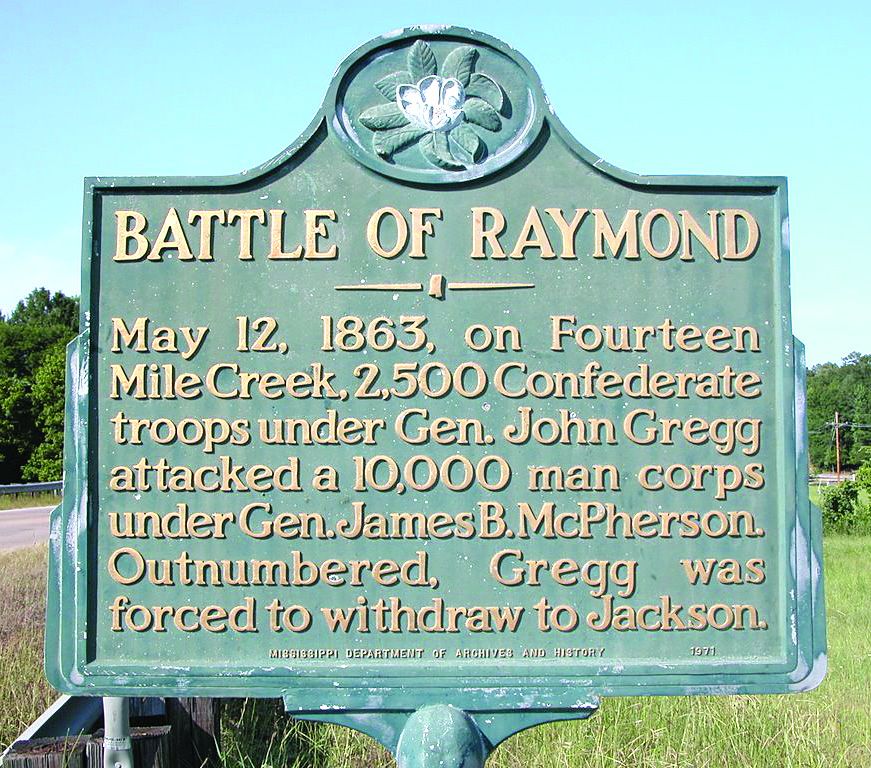
not much of a chase. General McPherson reported, “The rough and impracticable nature of the country, filled with ravines and dense undergrowth, prevented anything like an effective use of artillery or a very rapid pursuit.14 A single reinforced brigade of Confederates had held up the advance of an entire Union corps for hours. The loss on both sides was large for the number engaged. Pemberton lost the further use of Gregg for defending Vicksburg since Gregg retreated to Jackson because he expected a stand to be made at the state capital. Lieutenant General Joseph E. Johnston, overall commander of Confederate forces, decided against trying to resist McPherson and retreated north of Jackson with very little opposition. Endnotes: Ballard, p. 260, William Cunningham, p. 512. 2. Ballard, p. 260, OR, Gregg, pp. 736-737, . 3. Ballard, p. 261. 4. OR, Gregg, p. 737. 5. OR, McPherson, p. 637, OR, Logan, p. 645, OR, Smith. 6. The 10th Tennessee was an Irish regiment, known as the Sons of Erin. 7. OR, Gregg, p. 737. 8. OR, Logan, p. 645, OR, Smith, p. 708, OR, Force, p. 714, OR, Davis, p. 711, Hays, p. 41. 9. OR, Gregg, p. 737 10. OR, Gregg, pp. 737-783, Sumner Cunningham, Confederate Veteran, 1899, p. 298, Hockersmith and Cunningham, p. 257, OR, Walker, p. 740. 11. Griffin, p. 555. 12. OR, Turner, pp. 741-742. 13. OR, Davis, p. 712. 14. OR, Gregg, p. 738, OR, McPherson, p. 704. Bibliography: • Ballard, Michael B., Vicksburg: The Campaign That Opened the
•
•
•
•
•
•
•
•
•
•
•
•
•
Mississippi, 2004, pp. 260-269. Cunningham, Sumner A., “Experiences in Mississippi,” Confederate Veteran, 1899, p. 298. Cunningham, William E., “The Battle of Raymond,” Military Annals of Tennessee: Confederate, Volume I, 1995, pp. 511-513. Davis, William P., Twenty-Third Indiana Infantry, OR, Series 1, Volume 24, Part 1, pp. 711-712. Force, Manning F., Twentieth Ohio Infantry, Second Brigade, OR, Series 1, Volume 24, Part 1, pp, 714-715. Gregg, John, “Commanding Confederate Forces,” OR, Series 1, Volume 24, Part 1, pp. 736-739. Griffin, Patrick M., “The Famous Tenth Tennessee,” Confederate Veteran, 1905, pp. 553, 555. Hays, E.Z., History of the Thirty-Second Regiment Ohio Veteran Volunteer Infantry, 1896. Hockersmith, H.H. and Sumner A. Cunningham, “Battle of Raymond, Miss.,” Confederate Veteran, 1901, p. 257. Logan, John A., Commanding Third Division, OR, Series 1, Volume 24, Part 1, pp. 645-646. McPherson, James B., Commanding Seventeenth Army Corps, OR, Series 1, Volume 24, Part 1, pp. 637, 704-705. Smith, John E., Commanding First Brigade, Third Division, OR, Series 1, Volume 24, Part 1, pp. 707-708. Turner, James J., Thirtieth Tennessee Infantry, Commanding Tenth and Thirtieth Tennessee, OR, Series 1, Volume 24, Part 1, pp. 740-742. Walker, C.H., Third Tennessee Infantry, OR, Series 1, Volume 24, Part 1, pp, 739-740.
Robert L. Durham is a retiree from DLA, where he was a computer specialists doing installations of communications systems for FMS countries. He is a long-time Civil War buff and has written numerous articles. He also is addicted to Old West and Napoleonic history.
Interpretive map of the Battle of Raymond.