Franklin Battlefield Procures Artillery for Interpretation
By Gregory L. Wade · Originally published July 2017 · pp. 1–6
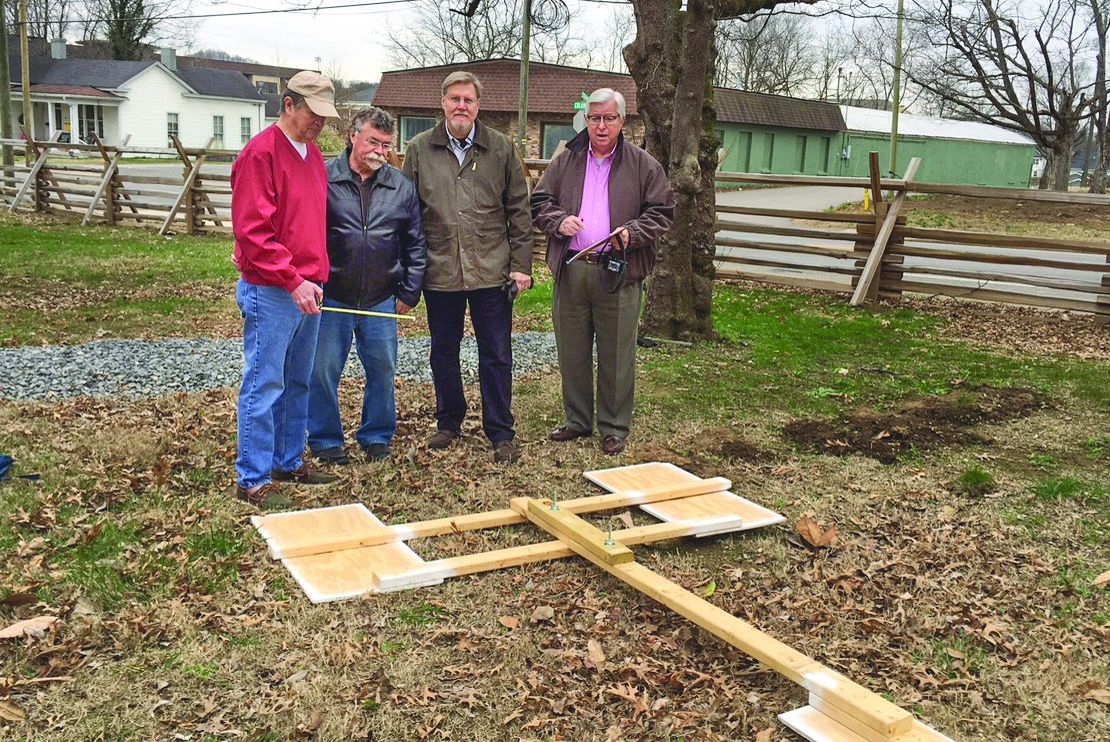
FRANKLIN, TENN.— Authentic replicas of artillery that played a critical role in the November 1864 Battle of Franklin, Tenn., will soon be part of the rising battlefield park in this bustling community south of Nashville. The battle, known for its incredible Confederate infantry charges into the face of raging cannon and musket fire, was an unusually intense event even by Civil War standards. Federal artillery “played a devastating role in determining the outcome of this fight,” says Eric Jacobson of the Battle of Franklin Trust, the organization that manages the Carter House and Carnton plantation sites. To place cannon as they were during the battle “is a huge step in interpreting” the action of that day, Jacobson noted. When the local preservation group known as Franklin’s Charge began the difficult work battlefield experience in Franklin, with more likely to come. Local leaders, who initiated the movement that continues to this day, now find themselves with a jewel well past its rough stages. Land acquisition efforts continue to evolve while the already acquired properties are being refined. About twenty acres preserved in the midst of the core around the Carter House on that hellish November 1864 day, reflect what the Civil War Trust’s Jim Lighthizer once referred to as a “miracle” of preservation. “We did it the hard way,” notes Jacobson, “by buying land and removing existing structures.” Once virtually written off as lost to development, visitors today can see what charging Confederates saw of the Carter House farm, its riddled outbuildings providing stark evidence of the savagery of acquiring battlefield ground back in 2005, few who knew the Inside this issue: battle site’s then could envision 30 – Advertiser Index the full scope of such a project. 23 – Ask The Appraiser The effort of raising millions 11G – Black Powder, of dollars, reaching alliances White Smoke with land owners, government 14 – Book Reviews 29 – Classifieds officials and historians required a 18 – Critic’s Corner lot of imagination and creativity 24 – Events Section over the last decade. Since 2005 8 – Inspection, ARMS! the battlefield at Franklin, once 2 – Preservation News considered lost to development, 16G – The Source has now become one of the 32G – Through The Lens greatest preservation stories in – The Unfinished Fight American history. To date over 19 – Small Talk-Trivia 120 acres are now part of the
Several modern structures that once blocked the view have been removed and visitors now clearly see the last yards of a long distance charge into a cauldron of destructive firepower. Franklin’s Charge and its associates now face a more recent and welcome challenge, properly interpreting the ground. Interpreting a battlefield requires signage, foliage management, trails and in this case another major expense, cannon. Recognizing the need for the artillery pieces, Franklin’s Charge board member Cullen Smith started the Cannon on the

Battlefield (COTB) committee as a part of the overall Franklin’s Charge organization. “Most of us remember visiting battlefield parks as kids, climbing on cannon and wondering about it all,” noted Smith. He says his great grandfather fought at Franklin with the 49th Ala. Inf. and reclaiming the Franklin battleground is very “personal” to him. “We need the artillery there as they were during the battle, to make this a real Civil War park,” he added. Jacobson says there were four 3-inch Ordnance rifles and two 12-pounder Napoleons at this part of the Federal lines. “The Sixth Ohio fired some 400 rounds and the First Kentucky about 200,” he said. Those in the fighting could “hear bones breaking” as artillerymen fired canister, solid shot and shell at the attacking Confederates, mostly men of Patrick Cleburne’s Division. “There were really no natural obstacles stopping the charging Confederates and these guns were critically important to the Federal victory,” Jacobson added. I am excited about this progress, says Ernie Bacon, one of the early leaders of Franklin’s Charge who also serves on Franklin’s Battlefield Preservation Commission (BPC). This commission is unique and one of the few municipal bodies in the country dedicated to battlefield preservation, management, and interpretation. “Cullen and his committee’s work in raising cannon procurement funds will make our battlefield experience even more real to the history tourist,” he noted. In their April session, the BPC voted unanimously to accept the cannon for positioning on the Carter Hill Battlefield now owned and managed by the City of Franklin Parks Department. The guns will be located on their exact battle locations adjacent to the Carter Cotton Gin, a landmark in the fighting now marked only by its stone foundation. Authenticity is important among those involved in the study of Civil War armament and no less among artillery reenactors like Jason Boshers of Mt. Pleasant, Tenn. Boshers is a member of Capt. B.F. White’s Btry. made up of artillery enthusiasts who participate in living history events, memorials, and reenactments. “I am pleased with their selection of the cannon, the type of product being forged, and especially the location and accuracy of their placement,” Boshers observed. “As we move forward with the interpretation of the Carter Hill Park, this attention to detail will be appreciated by all of us,” he added. “This was a very rigorous process and we did our due diligence,” Smith said after determining which bid to accept for the replica pieces. Various manufacturers were researched and two were interviewed based on input by reenactor groups, state and local park authorities, historians and others. “In the end we selected Historical Ordnance Works, Woodstock, Ga., and ordered three 3-inch Ordnance rifles and one bronze 12-pounder Napoleon with their carriages,” he added. Noting the project will not be complete until all six guns are in place, the cannon committee still has to raise funds for the other two pieces to complete this part of the parks interpretation. “We plan to have a big celebration when these first four guns are delivered,” Smith added with a smile, “and we will ask for donations for the rest.” Cost of the initial phase of the project is around $80,000 with additional dollars required as part of the ongoing fund raising effort. Smith said the Tennessee Wars Commission, a state government entity, stepped up with a “generous grant” and individual donors helped in a big way in the first phase. “Now we need help to obtain the rest as well as a couple of ammunition limbers,” he noted. For information on how to donate to the Carter Hill Cannon Committee fund raising effort, contact Cullen Smith at [email protected]. Donations may also be sent to: Cannon Fund c/o Franklin’s Charge, 604 West Main Street, Franklin, TN 37064. Smith says gifts are tax deductible if donated through Franklin’s Charge.
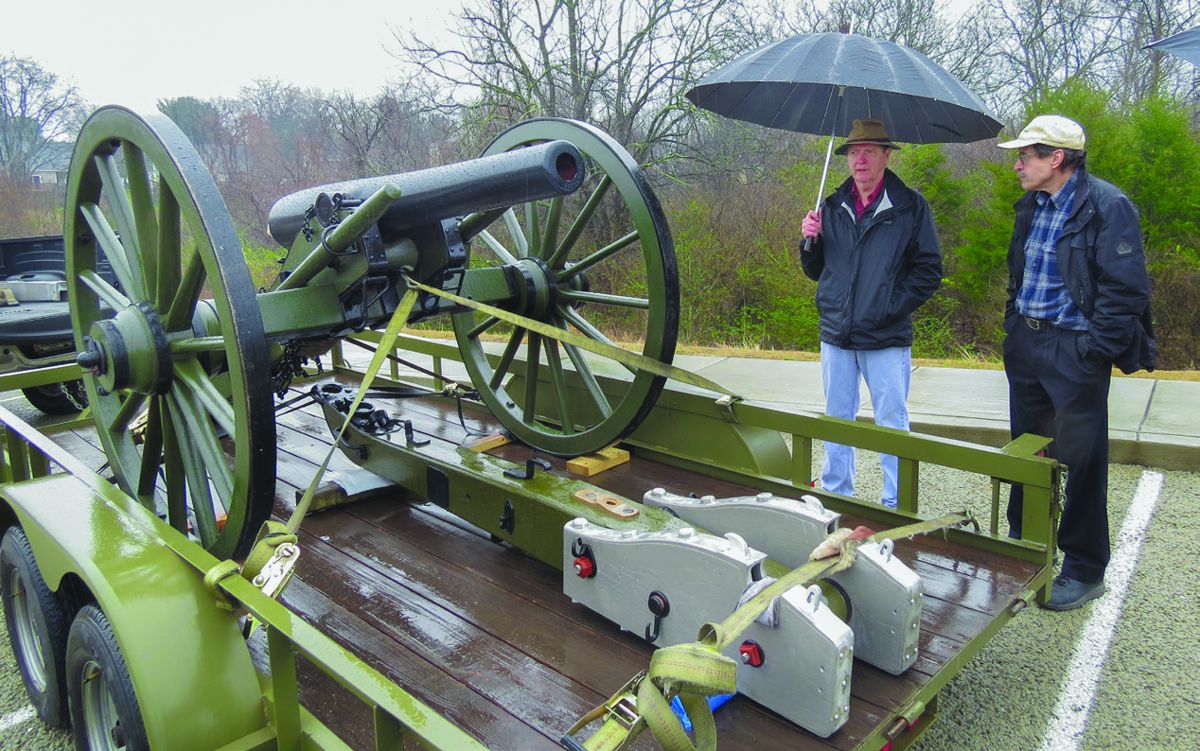
(Greg Wade)