
Remembering A Desperate Defense Of Culp’s Hill
By Joe Bordonaro · Originally published January 2017 · p. 37
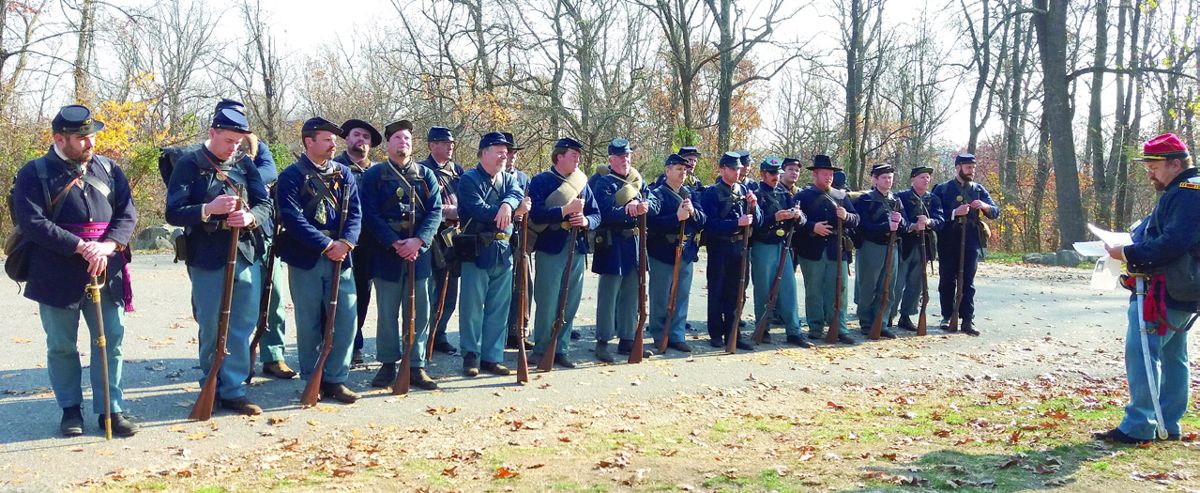
Remembering A Desperate Defense Of Culp’s Hill By Joe Bordonaro Colonel Joshua Chamberlain’s 20th Maine is rightly famous for its epic defense of Little Round Top on the late afternoon of July 2, 1863. Their tenacious struggle is credited with saving the left flank of the Union Army from disaster. However, few people realize that on the right flank, at about the same time, another group of soldiers was involved in an equally desperate, and equally important, defense of Culp’s Hill. General Meade was a very worried man. Confederates under the command of General Longstreet were threatening to break through the center of the Union Army’s line on Cemetery Ridge and at the same time were assaulting the extreme right flank of the army, located on Little Round Top. Colonel Chamberlain and his 20th Maine were barely holding off determined attempts by the Confederates to capture the hill and thus outflank the entire Union Army’s line at Gettysburg. At the same time, General Daniel Sickles had moved forward, without orders, and his III Corps had been overwhelmed in the center of the line. In desperation, General Meade ordered General Slocum to send his XII Corps as reinforcements. Fortunately for the Union Army, General Slocum was able to persuade General Meade to allow him to leave one brigade on Culp’s Hill. Not long after the rest of the XII Corps left, an entire Confederate division, about 5,000 men, slammed into General George Greene’s lone brigade, numbering about 1,300 men. General Greene had earlier ordered his men to build breastworks to defend their position, despite the disapproval of his division commander, General John Geary, who felt that building defensive works would make the men less aggressive in fighting the Confederates. These defensive works, the remains of which can still be seen on Culp’s Hill today, were all that prevented General Johnson’s Confederate division from sweeping General Greene’s brigade off of Culp’s Hill. Had that happened, the Confederates would have probably captured much of the Union Army’s wagons and reserve artillery, which was posted along the Baltimore Pike, which runs directly behind Culp’s Hill. The Baltimore Pike was also the Union Army’s main communication line with its supply depot at Westminster, Maryland. After several hours of desperate fighting, the rest of the XIIth Corps began returning and joined in the defense and, around 10 pm, the Confederates ended their assault for the night. It is probably not by chance that the summit of Culp’s Hill is surmounted by a statue of General Greene. It was his determination to defend the hill, along with his engineering expertise, his leadership ability, and the bravery of his New York brigade that kept possession of Culp’s Hill for the Union on that crucial second day of battle at Gettysburg. On November 19, 2016, members of the Border State Guard reenacting unit gathered for a march of remembrance. Setting off from the Baltimore Pike from a parking area near the Marino’s Battlefield Museum, they marched up the hill, stopping along the way for members to speak about various individuals and units that played important parts in the defense of Culp’s Hill. Leaving at nine thirty in the morning, the marchers were back at their start point by noon, with a greatly increased store of knowledge about the battle while still leaving them time to participate in the annual parade of remembrance in town.
Brian McKeon, of Somerset, NJ, describes the role of General George Greene in the defense of Culp’s Hill.