
Maker McElroy’s Rare ‘Lasso Knife’ Explained
By Shannon Pritchard · Originally published January 2017 · p. 26
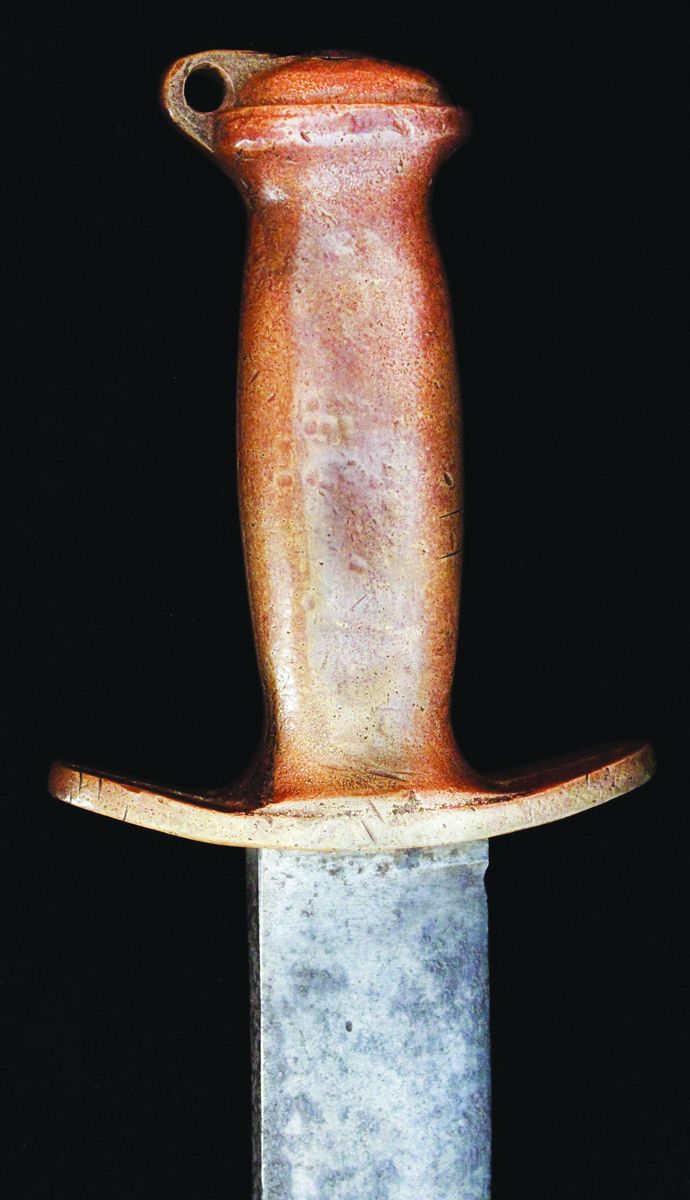
Maker McElroy’s Rare ‘Lasso Knife’ Explained By Shannon Pritchard The knife illustrated here has an interesting history. It can be seen from this article, quoted in the text box to the right, that McElroy was making all manner of edged weapons. He made a spear point version of this knife as well as a clip-point style. This example is a full twenty inches long, which makes it the largest example of this knife known in either pattern. The text, in the box on the right, describes this knife as a “Lasso Knife” and says “It is designed for throwing at the enemy”. Knowing something of throwing knives, and in fact all manner of archaic and modern arms, I am certain that when the article mentions “throwing” he does not use it in the common vernacular. This knife is balanced wrong for throwing in a traditional manner, which requires the knife to flip end over end numerous times. Furthermore, the lanyard attached to the handle would make it impossible to throw in the traditional manner; it would tangle as the knife flipped end over end. What he really means is ‘slinging.’ In other words, twirling the knife around the head by the lanyard attached to the hilt, which would make the knife fly point first, and letting go at the proper time to
This knife was recorded in the Macon Telegraph in early 1862:
“We saw excellent specimens of Swords, Regulation Staff, Service Cavalry Sabre, and Foot Artillery Cutlasses, etched and plain blades. The Staff Swords were beautiful. The scabbard is of steel, polished and bronzed. We saw these swords in their various stages – from being forged until ground and polished… We were shown a specimen of what is called the “Lasso Knife.” The blade is from twelve to sixteen inches in length, with a solid brass handle, to which is attached a rope. It is designed for throwing at the enemy, and it is a ‘deadly weapon’ in the hands of skillful men. We saw a beautiful specimen of one, silver mounted and ornamented. They also manufacture Bowie Knives of all patterns.”
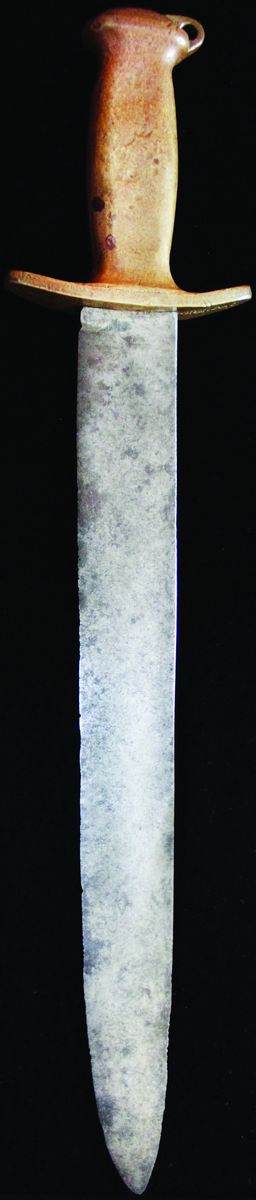
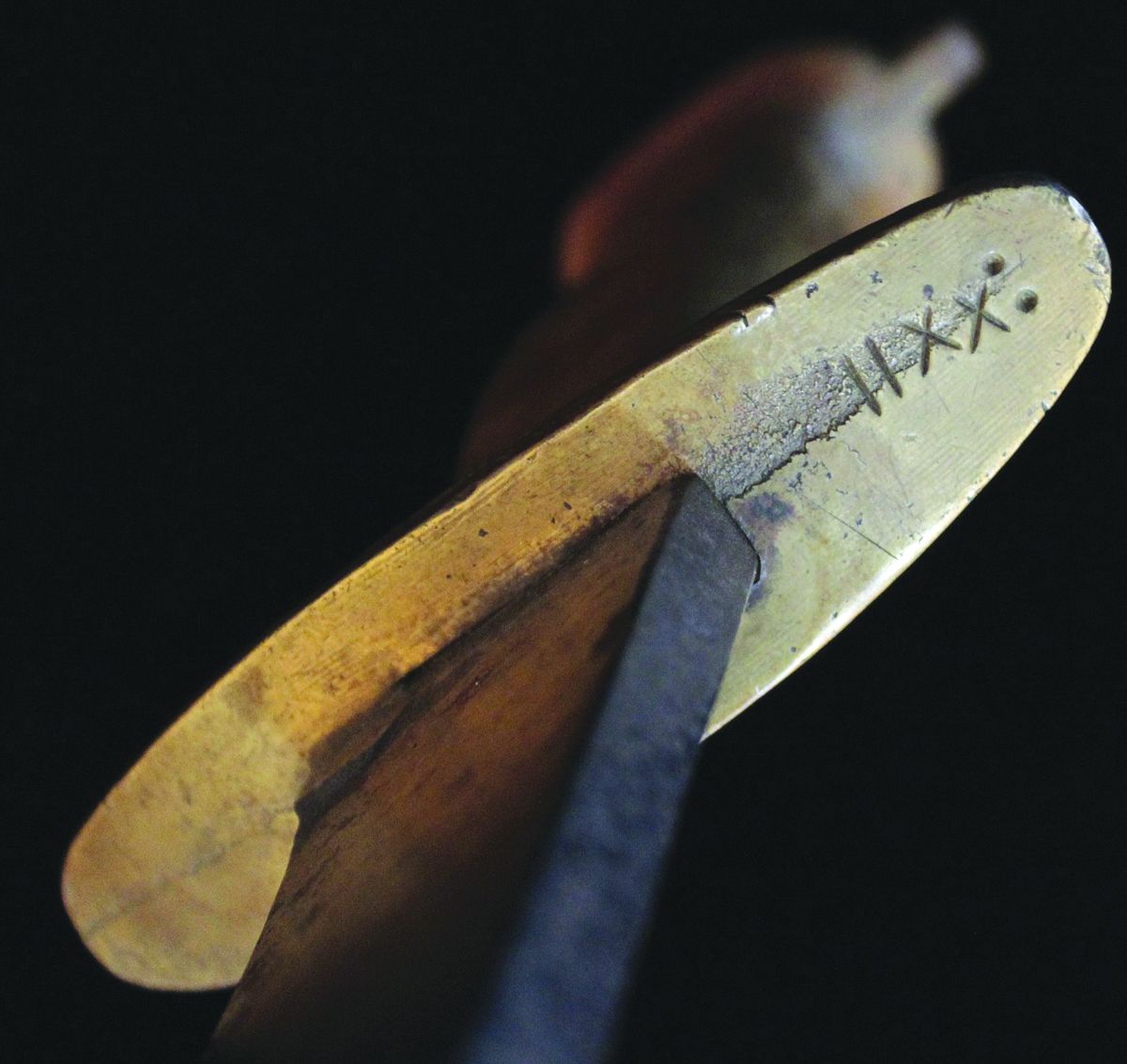
strike the target. One could learn to do this well in an hour, while to learn how to throw in the traditional manner would take endless hours of practice. A spear-point example of the Lasso Knife mentioned in the article is shown here. The Roman numeral XXII is cut into the underside of the hilt. This is not a serial number, as there is another number XXII known, and there exists one that was unhilted that had the same number on the blade tang, meaning that this is an assembly number. Only one scabbard for these rare knives is known to exist, so it can be assumed that the leather was of extremely poor quality.
Overall view of the “Lasso knife”.
Shannon Pritchard has authored numerous articles relating to the authentication, care and conservation of Confederate antiques, including several cover articles and is the author of the definitive work on Confederate collectibles, the widely acclaimed Collecting the Confederacy, Artifacts and Antiques from the War Between the States, and Confederate Faces in Color.