
History Of Memorial Hall — 125th Anniversary
By Joseph A. Ricci · Originally published January 2017 · pp. 8–10
Memorial Hall before the front porch was added. By Joseph A. Ricci One hundred and twenty-five years ago, Memorial Hall opened its doors and invited the world to see how men of the South took up arms to fight and die for the right to secede from the Union, a right they believed was guaranteed by the Constitution. Her opening was heralded for weeks in the local newspapers, as dignitaries changed their schedules to attend and hastily penned lofty oratory. A lot has changed in the decades since the cypress doors first swung open to an anxiously awaiting populace. On this anniversary we look back at how Memorial Hall came to be, how she obtained some of her more prestigious artifacts through the years, and how some of the personages and events have become integral parts of her story. In the twenty years following the end of the Civil War, the Confederate veteran organizations of New Orleans sought a common place in which to “unite” and house their growing collections of documents and relics relating to the conflict. In 1889, these Confederate veterans formed the Louisiana Historical Association and chose the newly constructed Howard (now Patrick F. Taylor) Library on Lee Circle.1 A small “alcove” within the library served as a repository for war relics, documents and other artifacts of the Civil War period until the collection threatened to outgrow the space. It was at that point that Frank T.
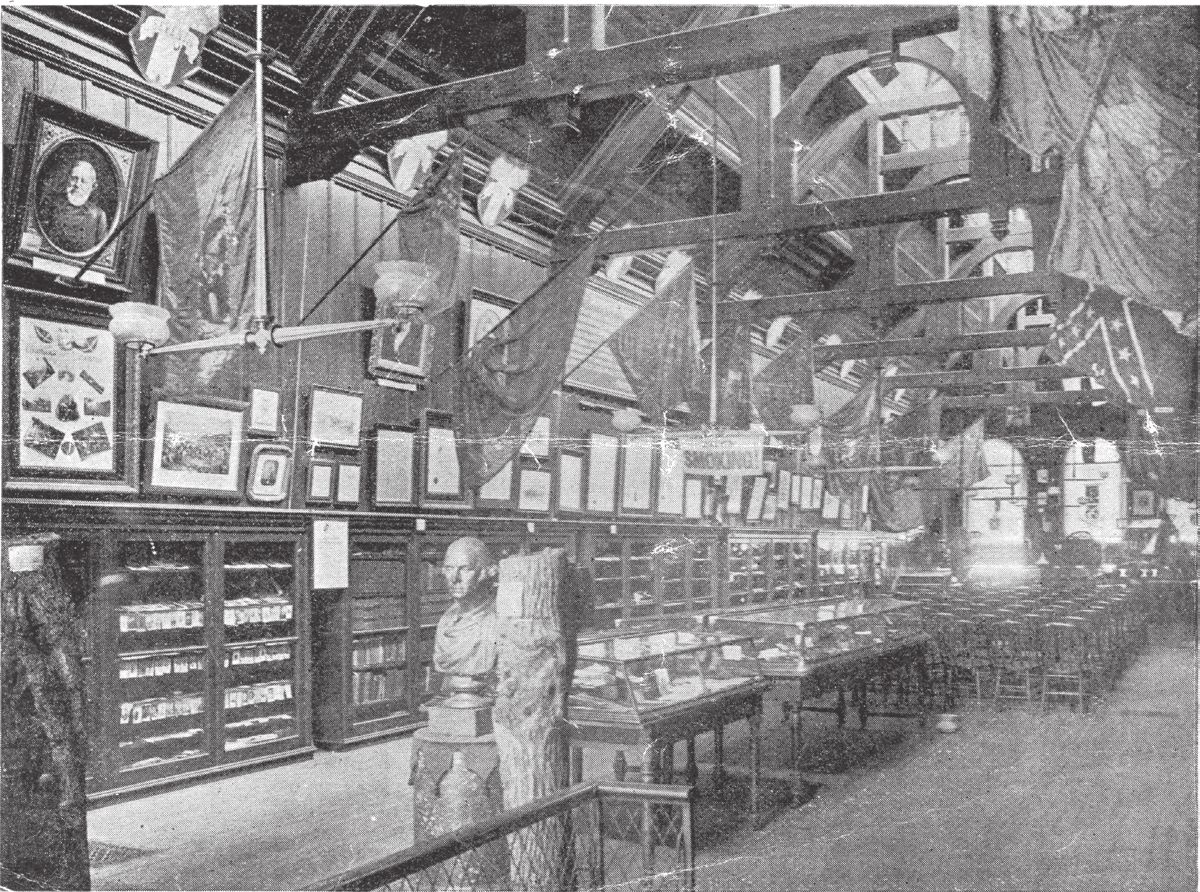
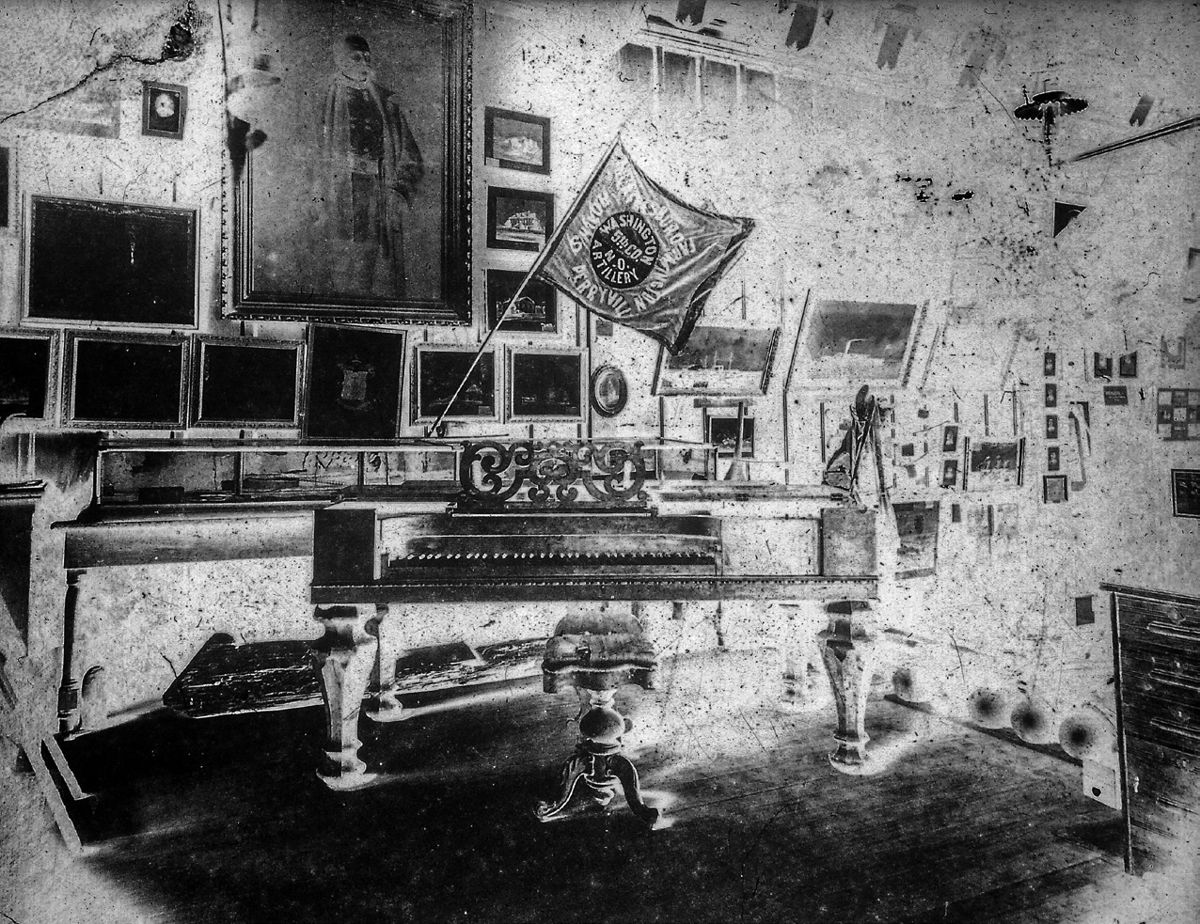
Interior of Memorial Hall in the late nineteenth-early twentieth century when veteran’s organizations still held meetings within its walls. Note: The stairway in the main hall was not yet installed. The stairway was hastily installed when members of the Washington Artillery purchased several cannon barrels for the museum collection. At the time the only access to downstairs was by using the stairway in the rear of the main hall. When the cannons arrived there was no way for the men to get a 900 pound cannon barrel through the main hall and down stairs for storage. It was decided to cut a hole to make the stairway.
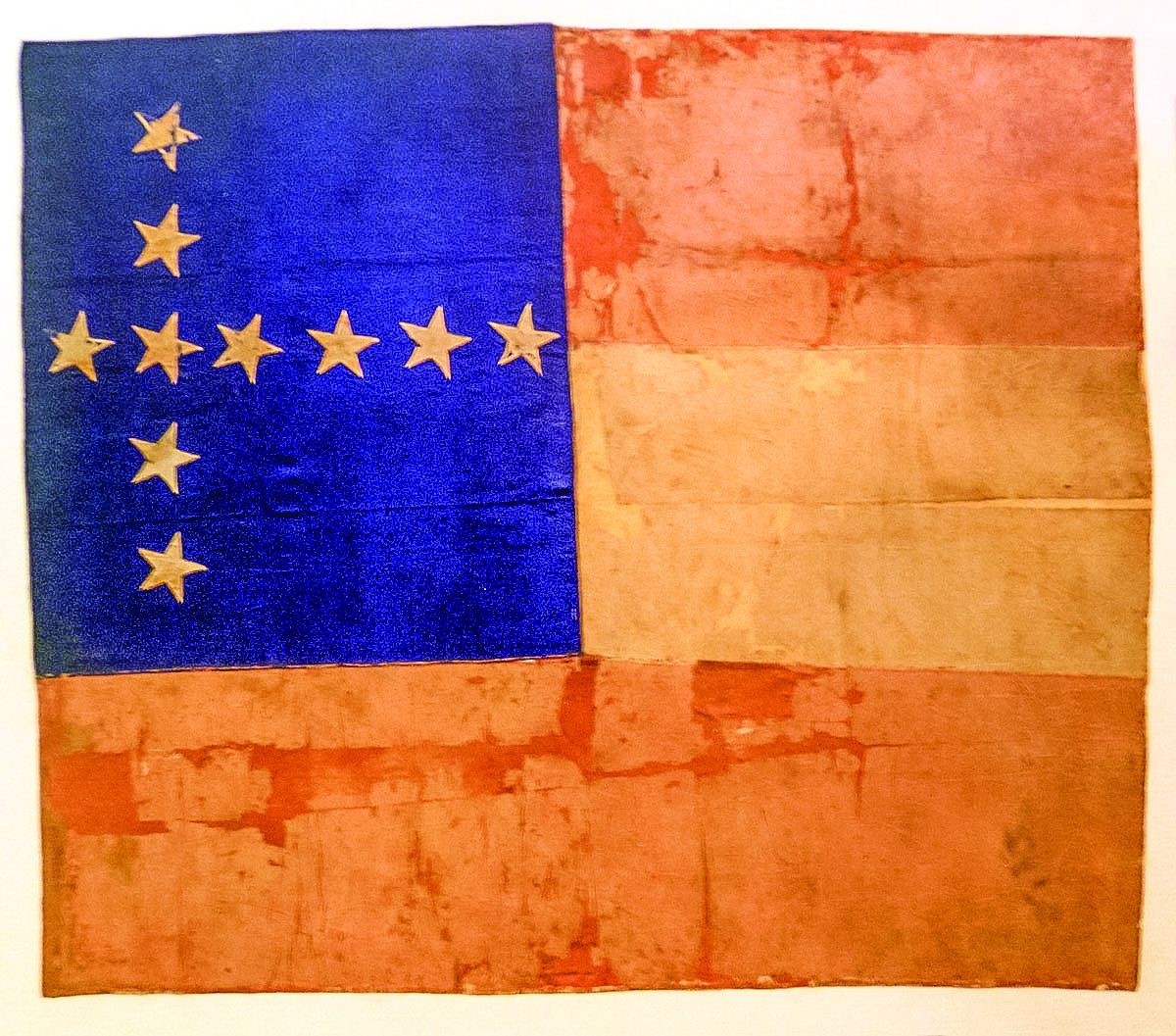
Howard, a local philanthropist and benefactor of the library, stepped in. Mr. Howard wished to construct an Annex to the library in honor of his father Charles, who, while New York born, fought in the Confederate army during the Civil War. The younger Howard was active in the ill-fated Louisiana Lottery of the 1880s and believed that he needed to honor the sacrifice of the Confederate soldiers who, like his father, gave their all for the Confederacy. Construction of the “Howard Annex,” as Memorial Hall was then referred, was completed in December of 1890. The exterior structure is Romanesque in style and was designed by the architectural firm of Sully and Toledano of New Orleans. The interior main hall is constructed of rich Louisiana Cypress wood and features seven main trusses that transverse the room overhead while a variety of glass exhibit cases surround the room at the floor level. Initially, a gasolier provided light from each beam. The Confederate Memorial Hall of New Orleans opened its doors on January 8, 1891, to the pomp and ceremony comparable to the more recent opening of the National World War II Museum. The event featured notable speakers from the many Confederate veteran organizations along with religious and political or- their dead hero.”5 Memorial Hall atory which recalled the events still receives occasional visits of 1861-1865. The organizations from the many great-great grandrepresented were the Army of children of General Blanchard to Northern Virginia Association, see his uniform and other items Army of Tennessee Association, received back in 1891. Washington Artillery, the Association of Confederate States Cavalry, and of course the Howard Library Association.2 Within three weeks of opening, Memorial Hall hosted its first function, the Army of Northern Virginia Association’s, Jackson Banquet. On January 21, 1891 the museum was given over to the men who fought under General Robert E. Lee so that they could honor his fallen “right arm,” General Thomas J. “Stonewall” Jackson.3 This was the first of many Lee-Jackson birthday General Albert G. Blanchard affairs held at Memorial Hall by daughter Blanche through the years. Blanchard. Six months after the opening, In April 1892 Mrs. Jefferson a substantial donation of relics came in from the Army of Ten- Davis turned over the first of nessee Association, including the many artifacts she would evensword of Colonel Charles Dreux, tually donate, including Jefferson the first Confederate field offi- Davis’ saddle and a portrait of cer to be killed in the Civil War. daughter Winnie along with other Memorial Hall also received the mementos.6 When the Museum opened, it Twelfth Louisiana flag, referred to as Bragg’s Escort Flag during housed a fraction of the artifacts, flags and relics that occupy its the same transfer.4 The following month, the do- exhibit cases and storage area nation of a uniform was received today. Its display cases contained from the family of deceased Gen- many documents and books, eral Albert Gallatin Blanchard swords from the various periods with a note from his granddaugh- in the life of Jefferson Davis, a ter Blanche saying, “Hoping the few uniforms and several flags. A Memorial Hall in which I take photograph of Charles Dreux and a just pride, will allot a niche “jewelry” crafted by prisoners of whereby his children and grand- war from Vicksburg graced one children may at times view with case, while the flag of the Eleventh reverence the tattered garments of Louisiana Infantry Regiment and a sheet of Confederate Bonds graced another. Some of these items remain on display today.7 The various Confederate veterans organizations held meetings in the newly completed Memorial Hall. At these early meetings, more artifacts would be presented to the newly formed Louisiana Historical Association for display in the Museum. Although Memorial Hall opened with documents, flags and artifacts already on display, the numerous veteran organizations continued to enrich the growing collection. Shortly before the fifth anniversary of its opening, Memorial Hall received a significant contribution from Henri and Rene T. Beauregard, sons of General P.G.T. Beauregard, the officer who ordered Fort Sumter fired upon. This donation consisted of their father’s uniform and cap, his sword presented to him by St. Bernard and Plaquemines parishes, epaulettes, a headquarters flag and a smoking cap.8 A later contribution from the Army of Tennessee Association included the shell jacket of J.W. Noyes of New Orleans and the flag of the Orleans Guard Battalion, which distinguished itself at Shiloh, along with numerous documents and maps of the Civil War period.
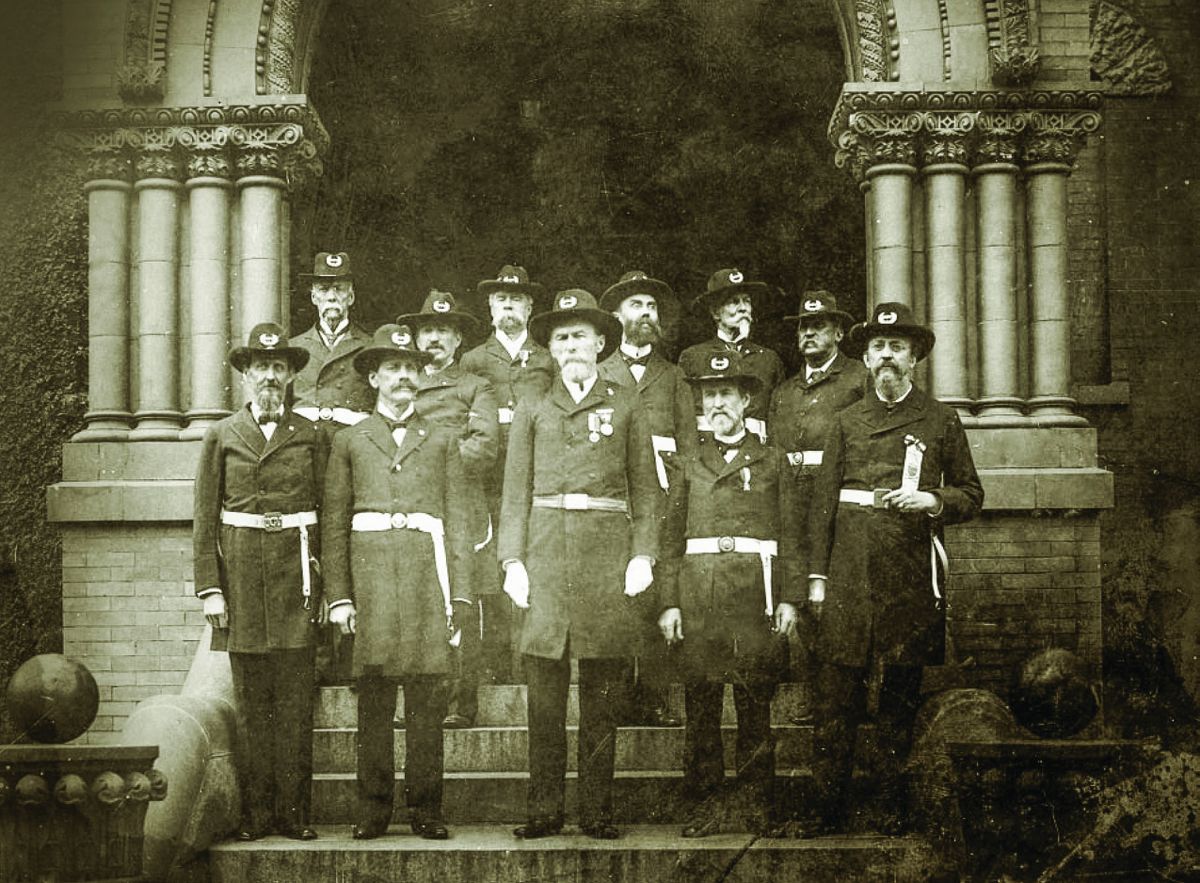
Frock Coat belonging to General Beauregard. Perhaps the most notable event in the early history of Memorial Hall was the twenty-four hour period in which the exhumed body of the late Confederate President Jefferson Davis lay in state within its walls before it departed Louisiana. While Davis resided in Mississippi, he became ill and died while in New Orleans in 1889. His funeral and memorial service at City Hall (now Gallier Hall) was the largest the city has ever seen. He was interred in Metairie Cemetery at the Army of Northern Virginia Tomb. In 1893, his body was exhumed when Mrs. Davis decided that his final resting place should be in Richmond, Virginia. His casket departed New Orleans on a multicity “tour” throughout the South on his way “home.” And that journey began at Memorial Hall.9 While Davis’ body lay in state, all of the exhibit cases in Memorial Hall were obscured by a wall of ferns that surrounded the observers and the honor guard. The honor guard that watched over the Davis casket was composed of members of the various veteran organizations of New Orleans. Placed near the coffin were the three largest floral offerings sent from the Cavalry Association, the Army of Tennessee Association, and the Ladies Confederate Memorial Association. Present to receive the coffin were Davis’ good friends, J.H. Payne and General Stephen Dill Lee, of the United Confederate Veterans. Once the departed leader was in place, the honor guard had the doors of Memorial Hall opened, and the crowd of citizens that had gathered outside entered the Hall.10 The procession was non-stop for almost twenty-four hours. By the time the doors were closed the following day, over 60,000 people had passed through Memorial Hall for one “last look” at Davis. Although attendance today is more than in the recent past, that number has never been surpassed.
Mrs. Varina Davis.
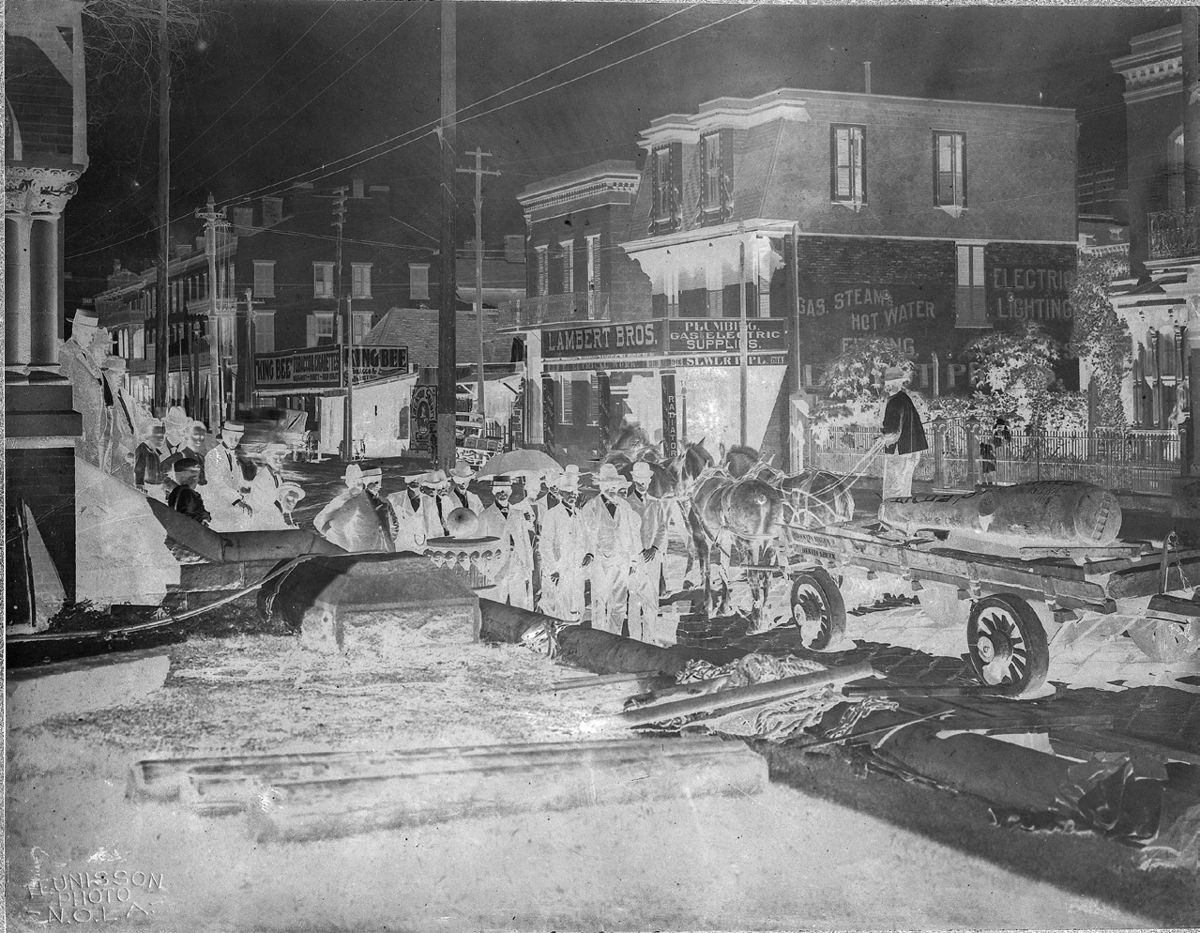
This did not end the Davis connection with Memorial Hall, nor was it the only funeral or memorial service held within the museum. The first curator, Crescent Regiment veteran William C. Bullitt, and Kentucky Cavalry leader, (later United Confederate Veteran Commander) George Moorman also had funerals held in Memorial Hall. In 1918, museum benefactor and longtime Confederate Memorial Association president, Mrs. William J. Behan, was given a memorial service in the Hall after her death. Mrs. Davis and her daughter would visit New Orleans often until their deaths. The most significant of Mrs. Davis’ contributions to Memorial Hall, contained in 21 cases and boxes, came in 1899. Shipped from Beauvoir, the Davis estate in Mississippi, were a significant quantity of the fallen leader’s personal items, along with his formal wear, baby crib, a family bible and other religious articles. Mrs. Davis enclosed a note with the shipment which stated, “The pressure brought upon me by Montgomery and Richmond and other places for relics is very great, but my heart is in New Orleans Memorial Hall. There I feel I owe [my] most affectionate gratitude and there I send my most precious relics”.11 Aside from the structure itself, the most readily visible artifact of the Memorial Hall collection resides on the front lawn. The “Lady Slocomb” is an 8-inch caliber Columbiad cannon manufactured in the Tredegar Iron Works of Richmond, Virginia. It was used by the Washington Artillery in the defense of Spanish Fort during the Battle of Mobile in 1864. This, the largest of Memorial Hall’s relics, obtained its nickname from the wife of Captain Cuthbert Slocomb of the Washington Artillery and came to rest at Memorial Hall in September of 1899.12 Many additional artifacts also have their own story. The Chickering Piano taken from the trenches of Jackson, Mississippi by members of the Washington Artillery has one of the most interesting. During the siege of Jackson, members of McPeely’s Louisiana Pioneer Company removed the piano from a house and then Andy Swain of the Fifth Company, a skilled pianist, performed familiar tunes for the men in the earthworks between battles. Years later, when the piano was donated to Memorial Hall, the artillerymen held a reunion. That same Andy Swain, older but still capable, resumed his position at the keyboard and finished a musical piece that was interrupted by combat many years before.13 In fact, it was Andy Swain who originally wrote Joseph Chalaron requesting that he attempt to obtain the piano from the Scott family. Chalaron, himself a veteran of the Washington Artillery, had become a board member at Memorial Hall and was instrumental in helping build the museum’s collection of war artifacts. Swain told him of the availability of the old piano, and that they should raise money to buy it from the Scotts of Mississippi. Ten years of negotiation and price haggling would pass until the family’s descendants decided to
How the Annex looked in the early days. Note the original flags suspended above. “donate” the piano and pay for its transportation to Memorial Hall.14 But artifacts were not the only acquisitions of Memorial Hall during its early years. The volume of material being received by the Hall due to a dying veteran population threatened to exceed its storage capacity. To remedy the situation, the building was expanded (in 1897) when an annex was constructed alongside the main hall. This “fireproof room” was built to include metal exhibit cases with ¾ inch thick glass. During the same period, the iconic “front porch” was added over the upper portion of the front steps. In 1907, the Children of the Confederacy, working under the direction of the Ladies Confederate Memorial Association, raised funds to install a stained glass window at the back of the Hall. That window, depicting the Great Seal of the Confederacy with Washington on horseback, remains today and, along with a second stained glass window beneath it, always elicits the question, “Was this ever a church?” In 1949, the United Daughters of the Confederacy raised funds for the second stained glass window which depicts Father Abram J. Ryan, friend of Jefferson Davis and “Poet Priest of the Confederacy.”15 From 1874 through 1922, many Confederate monuments were erected throughout New Orleans to commemorate and honor the men who fought for the South. Evocative as these granite memorials are, so is Memorial Hall. It became a living shrine staffed by veterans of the Civil War until they passed from the scene. New artifacts were collected almost monthly from the various veteran organizations through the 1920’s. During this same period, the directors of the Museum were themselves veterans of the conflict. Called the “Confederate Museum,” “Confederate Memorial Hall,” “Civil War Museum” or simply, as originally named, “Memorial Hall,” the current museum building is in itself an “artifact” due to its historic significance and uniqueness within the burgeoning “warehouse” district of New Orleans. The structure was placed on the National Register of Historic Places in 1975. Today, with holdings of over 10,000 pieces in inventory, including over 140 flags, Memorial Hall boasts the second largest Confederate collection in existence. Many of the flags have been conserved through our much imitated “Adopt-aFlag” program and are on display today. This principle has been recently applied to oil paintings and is being considered for uniforms in need of conservation as well. Accompanying the flags, are numerous guns, swords (including many manufactured in New Orleans) and dozens of oil portraits of Confederate leaders and battle scenes (many by noted artists of the 19th century). Noteworthy among the works of art are two paintings completed by Abraham Lincoln’s niece, Katherine Hardin Helm, and a portrait of the Reverend A. Gordon Bakewell by noted landscape artist Ellsworth Woodward. Memorial Hall is now managed and operated by Memorial Hall Inc., a private, non-profit organization receiving support from admissions and contributions from the Memorial Hall Foundation. The museum receives no state or federal funding. Artifact and document donations continue to arrive at Memorial Hall from the descendants of Confederate soldiers long since deceased. Recent acquisitions include daguerreotypes, reunion medals, and numerous documents pertaining to veteran organizations as well as a captured Union cavalry flag. The recently re-designed museum storage area allows for prompt cataloging of items and proper placement within the storage area. Each artifact is preserved with the same care and for the same purposes that early curator and Confederate veteran Joseph Chalaron once charged his generation – “we should guard them with the tender care with which a mother watches over her child… see that they are transmitted to our descendants as object lessons which will inspire them …to emulate the courage, patriotism, and devotion to the duty of those who have gone before.” 16 The Memorial Hall Collection does not present a “history of the Civil War,” “Fort Sumter to Appomattox” rendering of the complex conflict with various interpretations and causes that remain in dispute even today. The collection of artifacts strives to present a picture of the Confederate soldier and an illustration of how he fought, lived and died. Past newsletters have highlighted some of the artifacts and personalities that have played a part in the development of the collection in Memorial Hall—some say, the second largest collection of Confederate artifacts in the United States. As a part of the Memorial Hall Foundation, you are directly instrumental in helping to preserve this part of American history for future generations. Without the generous contributions of Foundation members, the massive task of managing the collection, attending to the one hundred and twenty-five-year-old building, and developing exhibits that illustrate Louisiana’s part in the
War Between the States could not be accomplished. After one hundred and twenty-five years, we continue to honor the charge of Colonel Chalaron. 1.
Kenneth Trist Urquhart, “Seventy Years of the Louisiana Historical Association,” Louisiana History, Vol. 1, Nr.1, 1960, pp. 7-8. 2. “The War Museum,” New Orleans Picayune January 8, 1891. 3. “Veterans Gather to Remember Jackson,” New Orleans Picayune, January 22, 1891. 4. “Ancient History: Recent Valuable Donations to Memorial Hall,” New Orleans Picayune, June 7, 1891. 5. “Louisiana Historical Association: Daily Additions to the Collection of Relics,” New Orleans Picayune, July 12, 1891. 6. “Historical Association,” New Orleans Picayune, April 20, 1892. 7. “Confederate Relics: Items Being Arranged in Memorial Hall,” New Orleans Picayune, March 31, 1891. 8. “Virginia Veterans Elect Officers: Valuable Relics Added to Memorial Hall Collection,” New Orleans Picayune, January 1, 1896. This article states that the Beauregard sword came from “St. John and Plaquemines Parishes”, while the sword itself is marked “St. Bernard and Plaquemines Parishes”. 9. “Davis Remains,” New Orleans Picayune, May 27, 1893. 10. “Jefferson Davis: A Simple Ceremony of Silence Marked by Remarkable Incidents,” New Orleans Picayune, May 28, 1893. 11. “The Treasures of Memorial Hall: Chalaron Gives List of Davis Souvenirs,” July 16, New Orleans Picayune, 1899. 12. “The Lady Slocomb: A Silent Witness,” New Orleans Picayune, September 20, 1899. 13. “Washington Artillery Veterans Greet a Veteran Piano,” New Orleans Picayune, June 1, 1902. 14. Letter from A.G. Swain to J.A. Chalaron dated Dec.28, 1892, Tulane University Special Collections, Louisiana Historical Association Papers. 15. “UDC To Set Up Memorial To Father Ryan,” New Orleans Times Picayune, April 17, 1949. 16. Glen Cangelosi and Patricia Ricci, Confederate Memorial Hall Museum: The Battle Abbey of the South, A Pictorial View (New Orleans: Confederate Memorial Hall, 2002
Memberships in the Foundation, as well as one-time contributions can be made through PayPal, via the museum website at www.confederatemuseum.com, or by mail at Memorial Hall Museum, 929 Camp Street, New Orleans, LA 70130.