
Will Terrorism Affect The Artillery Hobby?
By Jack E. Marlar · Originally published February 2017 · p. 24
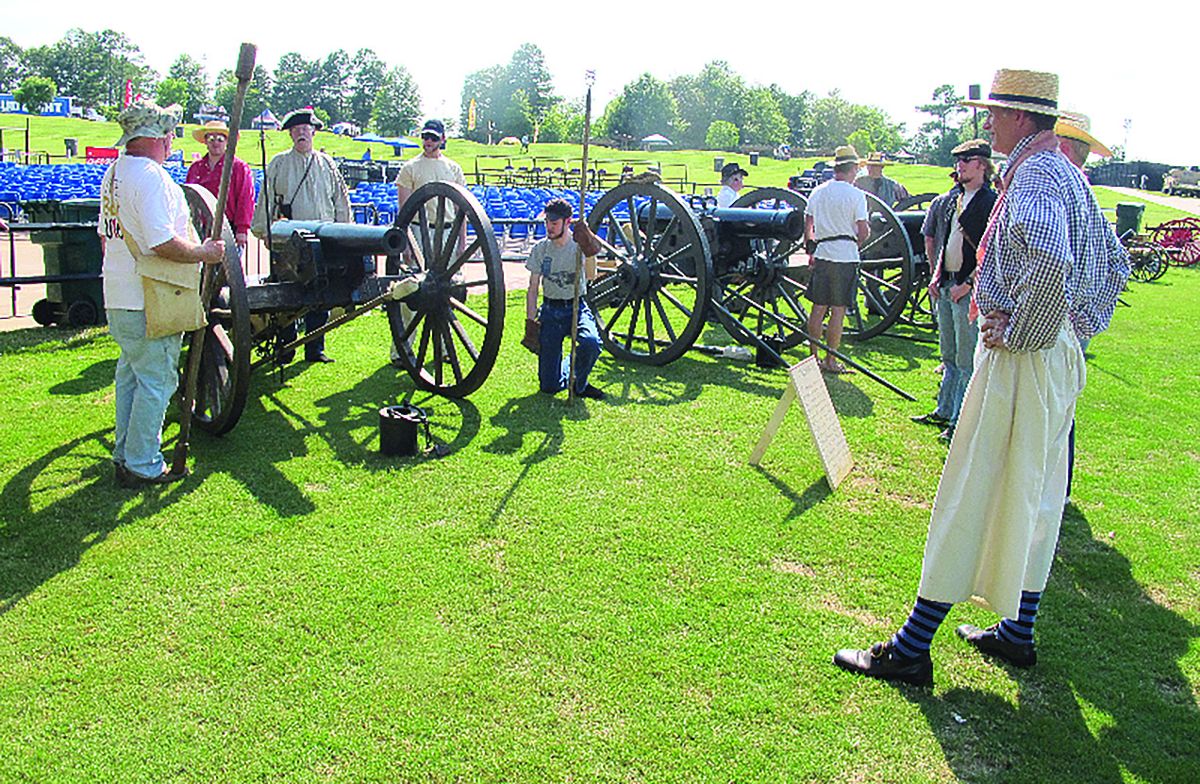
Recently I organized a group of cannon to accompany a large symphony orchestra’s performance of Tchaikovsky’s 1812 Overture. Having done this numerous times since 1973 at various venues in the Southeast, I noticed a new twist during our July 2016 event. Usually, we have to contend with local police and/or deputies, Fire Department, and event safety officials. Needless to say, that has more often than not been a hassle, but mostly with logistics. They were concerned with the crowd and public safety as you would expect. At some events, we had to request additional personnel to keep spectators from “wandering over to see those guns.” The cannon were left to their crews to serve during the performance. This year the Palmetto Light Artillery fielded a wide range of pieces: 12-pdr. Napoleon; 24-pdr. field howitzer; 3-inch rifle; 12pdr. mountain howitzers; Confederate patent office Williams machine cannon; line throwing cannon; Verbruggen 3-pdr; and king howitzer. Conspicuous amongst the interested public safety folks were some unusual “Officer Types” in jack boots and green uniforms. I preemptively went over and introduced myself to see what small talk I might generate. These state officers were interested in what type of guns we had and what we would be firing. I took all three
Line of artillery during the event. down the gun line, briefly describing each piece and explaining that only black powder would be used. I explained that each gun’s crew had previously prepared its rounds, and one officer asked to see inside each ammunition box to examine them. I was a little nervous when it became apparent that not all the rounds were contained in individual cardboard cylinders, but he made no comment. When he asked what would be firing them, I showed him some friction primers. His next query was what chemical was in them. I had no answer other than that they are commercially available and that the original mercury fulminate is no longer used. Then he explained his reason for asking: a bomb-sniffing dog would be coming through in short order. Now, with any large gathering of people, a terrorist has a proverbial “soft & ready” target. We might wonder why a bunch of experienced, patriotic, history-loving volunteers such as ourselves would merit such scrutiny from the public safety officials. There has been only a handful of real home-grown American terrorists recently, but they have been a part of our history for quite some time. I might mention John Brown, America’s first real terrorist, who had already killed indiscriminately and was planning for more, courtesy of boxes of “Beecher’s Bibles” filled with weapons! These state officers had an interest in what we had, who we were and what we were going to do. We went through some “load by detail” drill and demonstrated our full speed loading, which greatly impressed them with our precision and concern for safety. If any of our crews had brought a large supply of powder, the officers might have been asking more questions. The lessons that can be taken from this experience are: 1. A cannon is a tool that can potentially consume large quantities of black powder, but one should never bring more to an event than will be needed. 2. Always keep your rounds in individual containers and the ammunition box lids closed. Sloppy attention to safety increases the potential for an accident, inviting more official scrutiny and the possibility of governmental restrictions on our hobby.