
Critic's Corner
Stephen Sears’ Young Napoleon
By Stephen Davis · Originally published February 2017 · p. 35
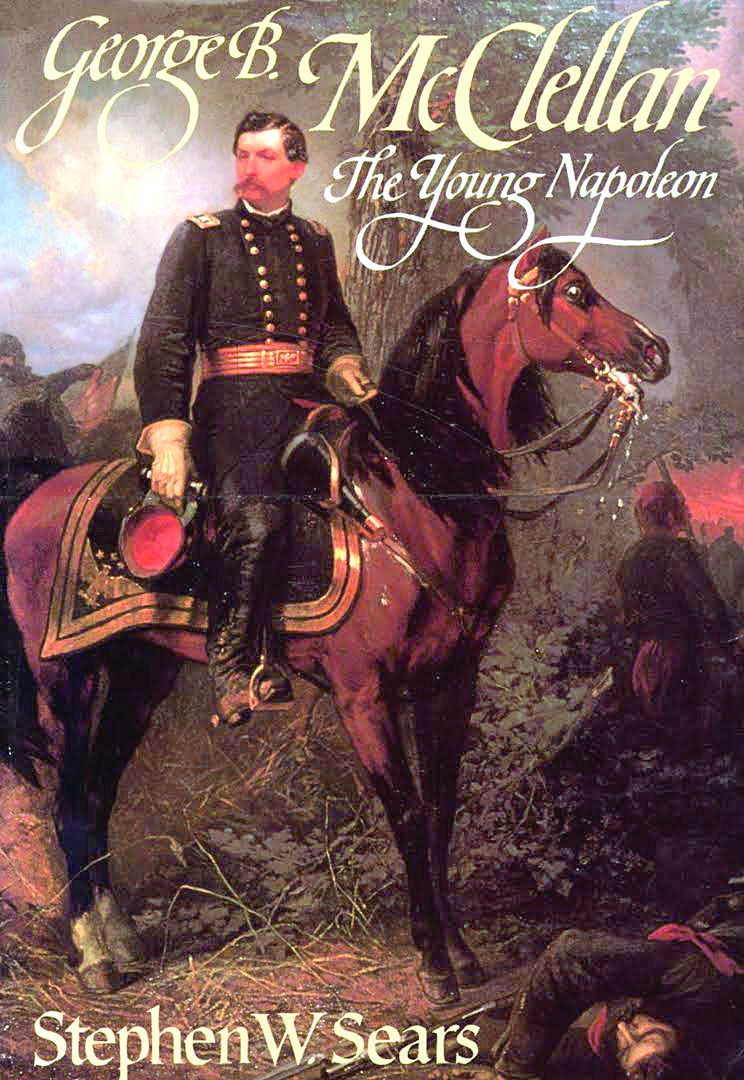
A good biographer has a knack for pithy characterization of his subject. One sees it throughout Stephen W. Sears’ George B. McClellan: The Young Napoleon (1988). “Better with subordinates than with superiors,” is Sears’ way of explaining McClellan’s downfall as a Union war hero.
Of course, McClellan was a complicated character, with more than enough faults and quirks to challenge a biographer (and engage a reader). But Sears’ perceptive, cogent way of explaining McClellan’s arrogance toward his bosses is a key reason that The Young Napoleon remains one of my favorite Civil War biographies. “This arrogance,” the author observes, “marked the most unpleasant side of George McClellan’s character.” It didn’t help that Young Mac was smart, and knew it. He believed he should have graduated Number One in his West Point class of 1840, but he had to settle for second. As a lieutenant in Mexico, he expressed contempt for President Polk, believing, as Sears writes, that war was for soldiers; “civilians could not understand it, or be permitted to direct it.” Afterward, he struck sparks with higher-ranking officers. “I don’t care much for anybody’s opinion,” he wrote in 1851, “as long as I am in the right.” The problem was, he usually thought he was in the right. “A bent for self-deception” also emerged unflatteringly in the young officer’s makeup. After he left the army in early 1857, McClellan became a railroad executive and in this new calling as well he demonstrated his “naturally defiant disposition,” as Mac himself termed it. Circumstance compounded his fatal hubris. On May 14, 1861 the thirty-four-year-old was appointed major general in the regular U.S. Army—only Winfield Scott outranked him. Of course, he started disagreements with his superior over Northern strategy. Then, hailed for bringing about a Union victory in western Virginia, McClellan showed his boastfulness. “Presdt, Cabinet, Genl Scott & all deferring to me,” he exuded to his wife Ellen; “I seem to have become the power of the land.” Yet the young general fretted about the enemy. Brought to Washington in charge of the Division of the Potomac, “Little Mac,” as he came to be called, believed the Rebel forces outnumbered his. He had to be reinforced, but General Scott and President Lincoln stood in his way. “I am here in a terrible place,” he railed to Ellen in mid-August. “The enemy have from 3 to 4 times my force—the Presdt is an idiot, the old General in his dotage—they cannot or will not see the true state of affairs.” “The Presdt is an idiot”-part would certainly get McClellan in trouble. He had met Lincoln during the 1858 Illinois senatorial campaign, in which McClellan, a firm conservative Democrat, supported Stephen A. Douglas. The Republican nominee, Mac sniffed, “was not a man of very strong character, & as he was destitute of refinement—certainly in no sense a gentleman.” Nevertheless, Lincoln put McClellan in command of the Army of the Potomac on August 15, 1861. In this new role he continued to spar with Winfield Scott until the old general finally resigned. McClellan succeeded him as general-in-chief on November 1. The young Napoleon returned the president’s confidence by privately vilifying him as a “gorilla” whose manner of conversing with anecdotes was “ever unworthy of one holding his high position.” When Lincoln invited him to Cabinet meetings, McClellan formed disdainful opinions of those officers, too. State Secretary Seward, he wrote Ellen, was “a meddling, officious, incompetent little puppy.” Relating how McClellan termed naval secretary Welles “an old woman and Attorney General Bates an old fool,” Sears is forced to conclude about his subject, “he had lost none of the contempt for civilian control of the military” shown earlier in the Mexican War. When Edwin Stanton became Secretary of War in January 1862, McClellan disliked having to discuss plans for the spring campaign with him or anyone else. “McClellan resented having to debate the matter at all,” the biographer notes. When Congressional leaders, especially powerful Radical Republicans, voiced objection to McClellan’s inactivity during the winter of 1861-62, the general bristled, shooting back excuses and demanding reinforcements. And all of this was before McClellan even launched his Peninsular Campaign against Richmond. In the field the Young Napoleon showed a whole new slew of failings: “the slows” (Lincoln’s phrase), reluctance to commit to battle, fear of defeat, blaming others for his failure, et al. All of these combined to bring about McClellan’s eventual downfall. But I always come back to his famous snub of the president. In November 1861 Lincoln and Seward made an unannounced visit to McClellan’s home. Informed that the general was out, they waited. McClellan returned, was told that Lincoln was waiting, but strode right by the parlor and went upstairs. Later, beckoned again, he sent down word that he had gone to bed. John Hay, who was there, termed it “unparalleled insolence.” It was indeed. Since the Civil War some U.S. Army generals have gotten into hot water by not showing deference to their civilian superiors. Maybe they should take a lesson from history. Reading Sears’ great biography of McClellan, to learn the consequences of hubris, might be a good place to start. Steve Davis of Atlanta is a regular contributor to Civil War News and is the Book Review Editor. His new book, A Long and Bloody Task: The Atlanta Campaign from Dalton through Kennesaw Mountain to the Chattahoochee River May 5-July 18, 1864, was published as part of Savas Beatie’s Emerging Civil War paperback series. The companion volume, carrying the Atlanta Campaign to the city’s surrender on September 2, 1864, will be published early this year.