
The Watchdog
Flintlock Muskets
By Craig L. Barry · Originally published February 2017 · p. 11
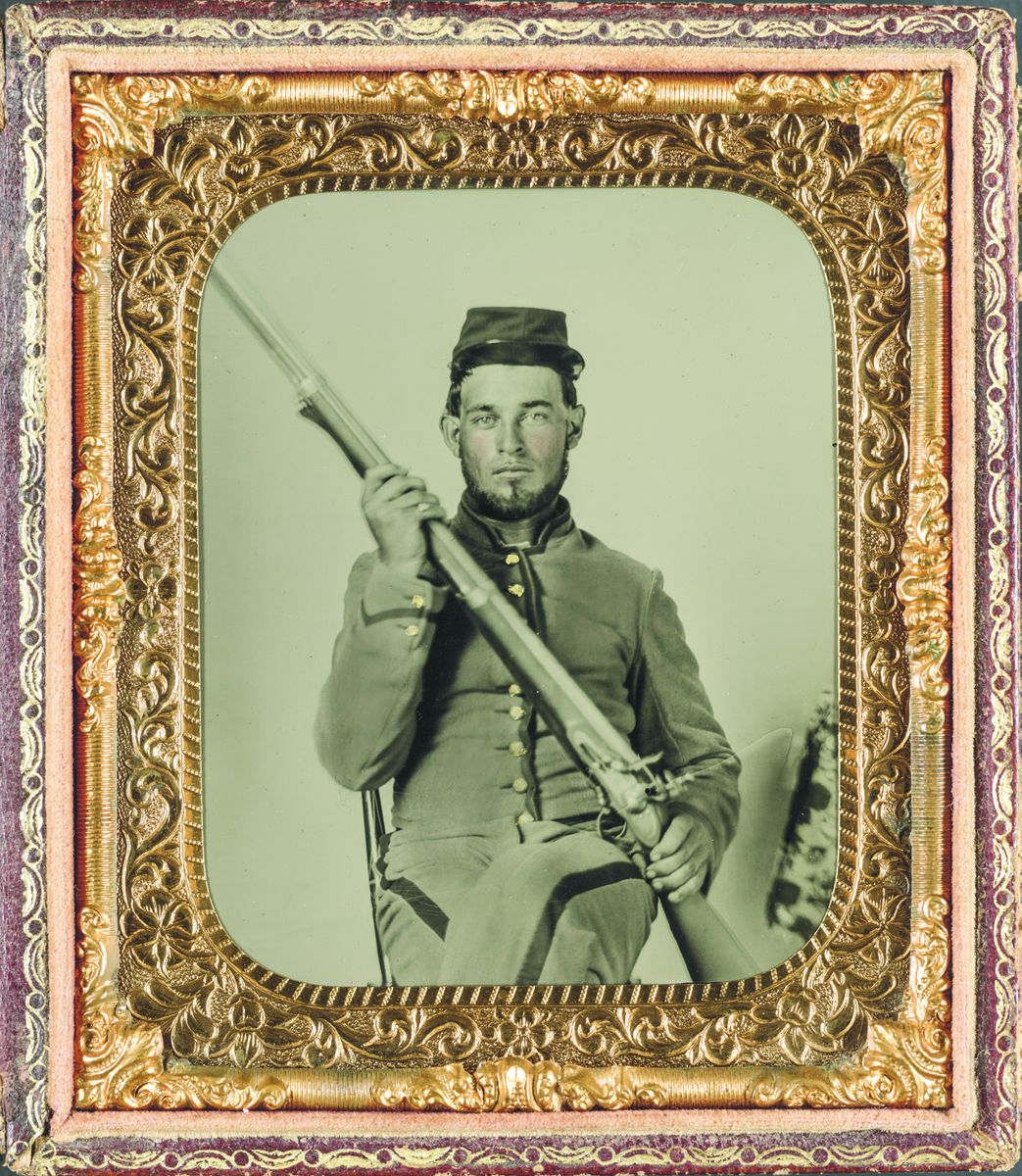
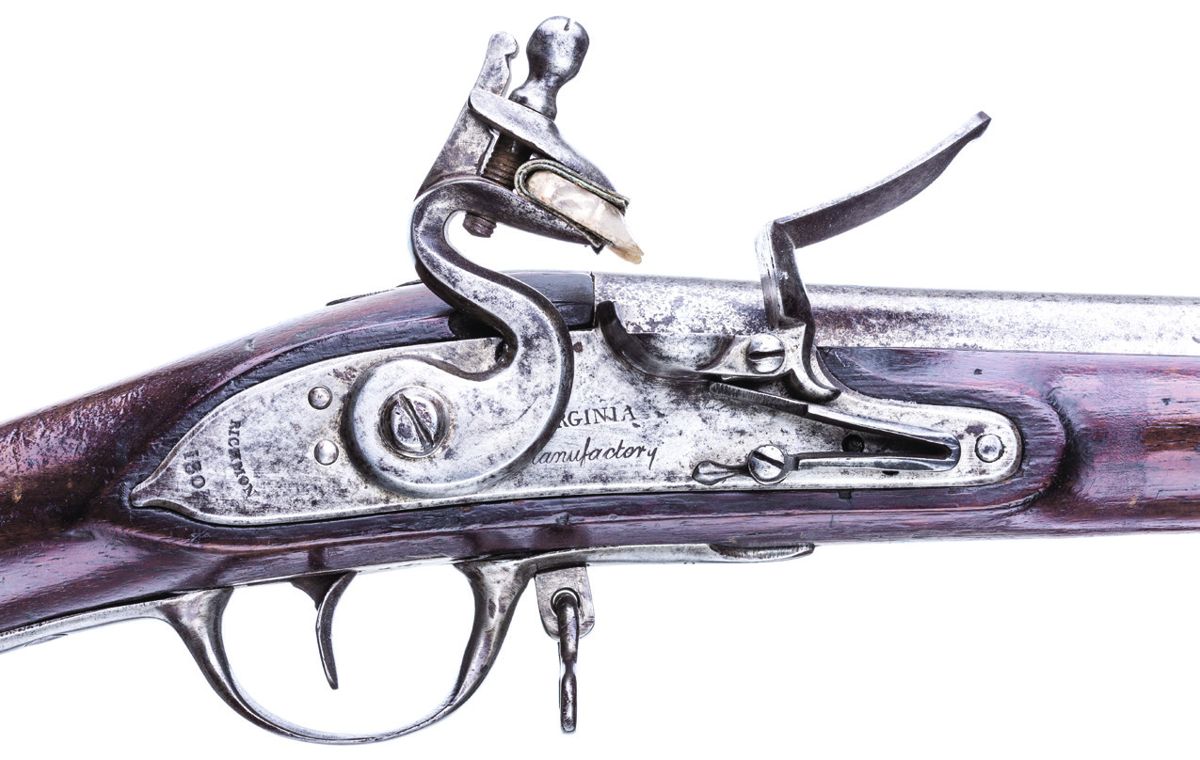
The most common infantry arm in Confederate hands during the early days of the U.S. Civil War was a smoothbore musket, many still in flint and a few others previously converted to percussion. There is no serious debate that smoothbore muskets of various types were issued in abundance. A review of ordnance and inspection records for the period will confirm that beyond any doubt. E.P. Alexander noted in Military Memoirs of a Confederate (1962) that, “There was…an endless variety of arms and calibres in use, scarcely ten percent of them being the muzzle loaded rifle-musket in .58 calibre, which was then the regulation arm for the United States infantry. The old smoothbore musket, caliber .69, made up the bulk of the Confederate armament at the beginning, some of the guns even all through 1862, being old flintlocks.” Military strategists have long marveled over the tactical success of General Thomas “Stonewall” Jackson’s Valley Campaign. One question that arises is that if the weapons issued his troops were a factor in that success. The underlying presumption is that after “Colonel” Jackson liberated the arms and equipment from the Harpers Ferry Armory in April 1861, his men marched off armed with the cache of relatively modern U.S. Armory produced rifles and muskets. This was not the case. Infantry arms were in short supply in the first months after secession from the Union. Mobilization was futile if the troops could not be armed prior to taking the field. Hence, arms had to be doled out cautiously and were first issued to the soldiers about to be deployed. The small supply of percussion muskets on hand was quickly exhausted by the end of May 1861. The Army of Northern Virginia was largely armed with “old Springfield muskets such as had been captured from Government Arsenals in the South,” most of these were still in flint. The same was true of the inventory of the southern state arsenals, including virtually all military long arms in the Virginia Armory. There were also shotguns and hunting rifles, etc. brought from the home front…almost anything that would shoot. At the end of October 1861, an article published in the Richmond Enquirer newspaper read, “A hundred flintlock muskets of those gathered by the agents from the different sections of the Commonwealth are altered daily at the (Virginia) State Armory now located in Stuart’s Factory at the corner of 7th and Cary Streets. They are being sent in quantities to the field to replace an equal number of flintlock muskets now in the hands of volunteers. The machinery in the State Armory, though simple is amply sufficient for the purpose to which it has been devoted with great assiduity for some months past.” Peter Cozzens, in Shenandoah 1862: Jackson’s Valley Campaign noted the following, “In November 1861 the nucleus of Jackson’s division in the Shenandoah Valley was armed
— MAKER — LEATHER WORKS
31st Edition
AUTHENTIC QUALITY REPRODUCTIONS
Museum Quality
with flintlock muskets. Governor Letcher of Virginia later replaced these with the loan of 1,550 percussion muskets from the (Virginia) State armory.” Jackson also borrowed several hundred U.S. 1851 cadet muskets from his former employer, the Virginia Military Institute. This “borrowed” supply of VMI percussion muskets were still in the ranks of the 4th Virginia Co H (Rockbridge Grays) during the 1862 Valley Campaign and afterwards. The Governor of Virginia wrote asking for their return some months later. Jackson’s response was telling; he replied that (regrettably) he could not return VMI’s cadet muskets “until in their place percussion muskets could be issued.” It appears clear that Jackson did not achieve his success in the Shenandoah Valley during 1862 because of his troops were better equipped than the Union forces, if anything the opposite was the case. Even with early success in the Shenandoah Valley, many Confederates under Jackson were still armed with flintlocks. In 1862, many (but not all) had upgraded to percussion smoothbore muskets. By late June, percussion muskets were becoming the norm and some had even scrounged up or captured newer rifle-muskets. Confederate veteran L.G. Beadwell noted in an article titled “How We Were Armed” (1916) that one soldier who served with Jackson in 1862 recalled the following: “When our regiment was forming, the officers, to induce the men to enlist, promised to arm them with Enfield rifles imported from England as soon as we were mustered in. But these they did not have, and the men were inclined to rebel; but all returned to camp from the barracks in Savannah, where they took the military oath, and continued to drill with the old shotguns and squirrel rifles with which they had left home. Sometime after this the government sent wagonloads of pikes to arm the regiment. This also came near causing great trouble, and the officers did not attempt to compel the men to take them. Finally, the regiment was armed with old smooth-bore muskets which had done service in previous wars, and with these we were armed when we reported to Stonewall Jackson in 1862 in June, our camp was near the railroad station, where there was a great pile of new Springfield muskets that had been left on the numerous battle fields by the Federals and picked up by our men, and we were told to exchange our old muskets for these.” Not all of Jackson’s men were so lucky. Thomas F Wood of the 13th N.C. noted in memoirs that in June 1862, “On the road I picked up an Enfield rifle which I exchanged for mine, an old fashioned Springfield musket.” The process of replacing smoothbores with new rifle-muskets continued well into late 1864, but was never fully implemented for all Confederate armies before the Civil War ended. If battlefield success resulted in the capture of newer weapons, it stands to reason that defeats later in the war resulted in their loss. At the Confederate defeat at Missionary Ridge in November 1863, over 6,000 infantry arms were lost to capture by the Union. Hence, out of desperation, flintlocks were back in use in the trenches outside of Atlanta in mid-1864, if only as a stopgap measure until more modern arms were available to replace them. Were flintlocks still in use by the Union in 1862? It appears there were still a few but in very small numbers. Note the following: “It is an established fact, and readily accepted as such, that the Confederate soldier was issued far more flintlock arms than his northern counterpart. Nevertheless a number of instances are recorded which indicate without question that at least some Federal soldiers went to war with flintlock muskets on their shoulders.” According to Robert Reilly, (U.S. Military Small Arms 1816-1865) after the Battle of Fredericksburg in December 1862, there were 13 flintlock muskets included among the more than 9,000 small arms recovered by the Army of Northern Virginia gleaning the battlefield.