Conservation Treatment Of Mary Surratt’s Bonnet
By Jessica Hack · Originally published February 2017 · p. 23
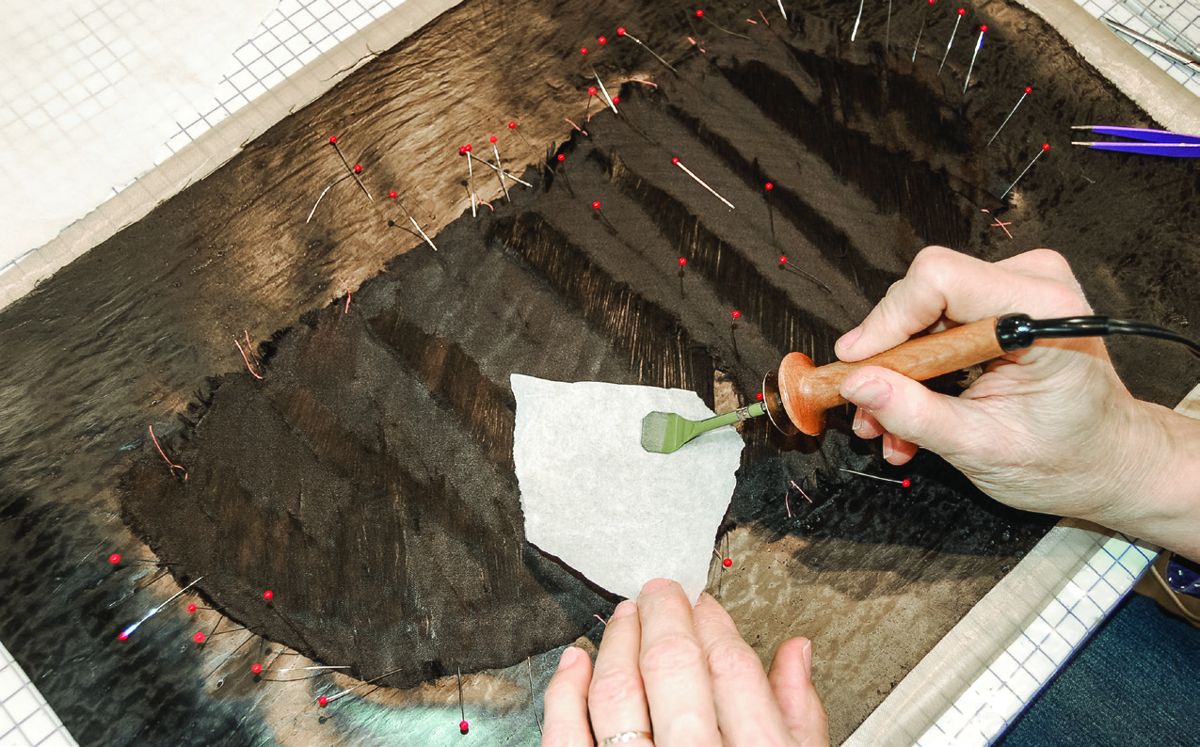
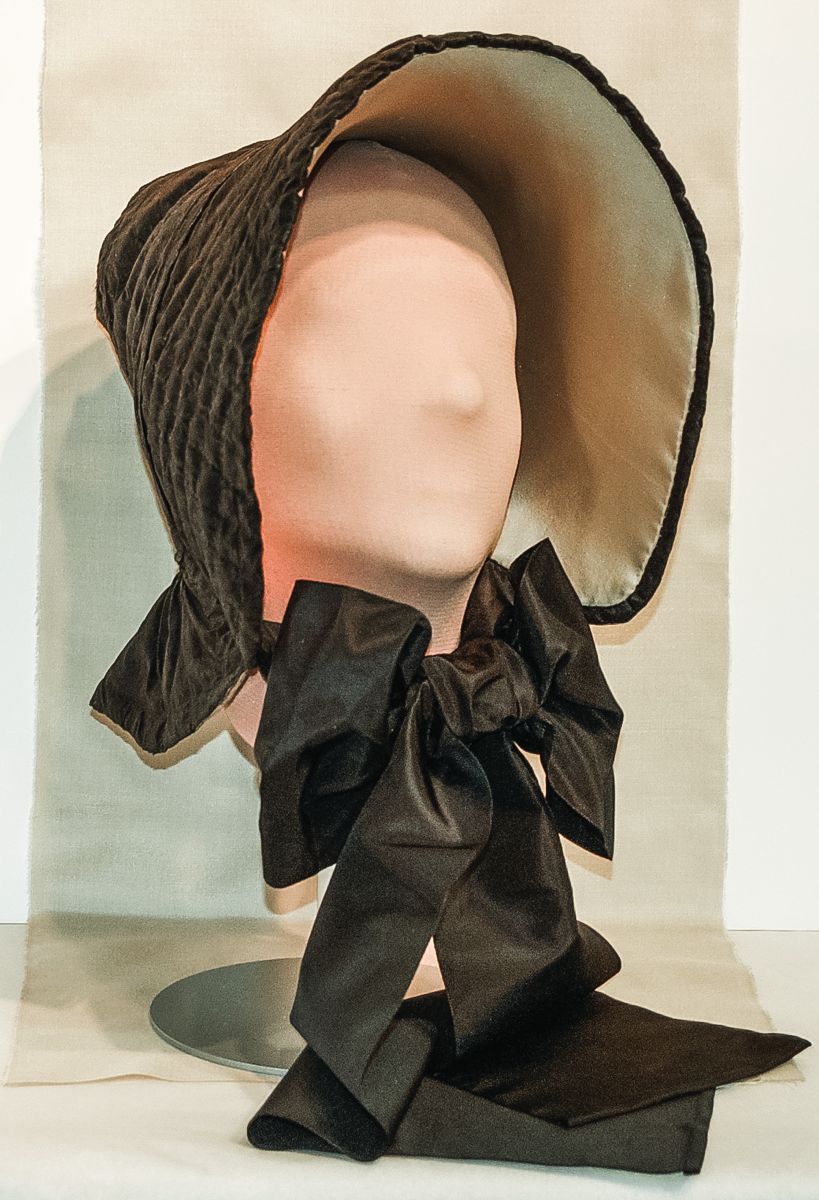
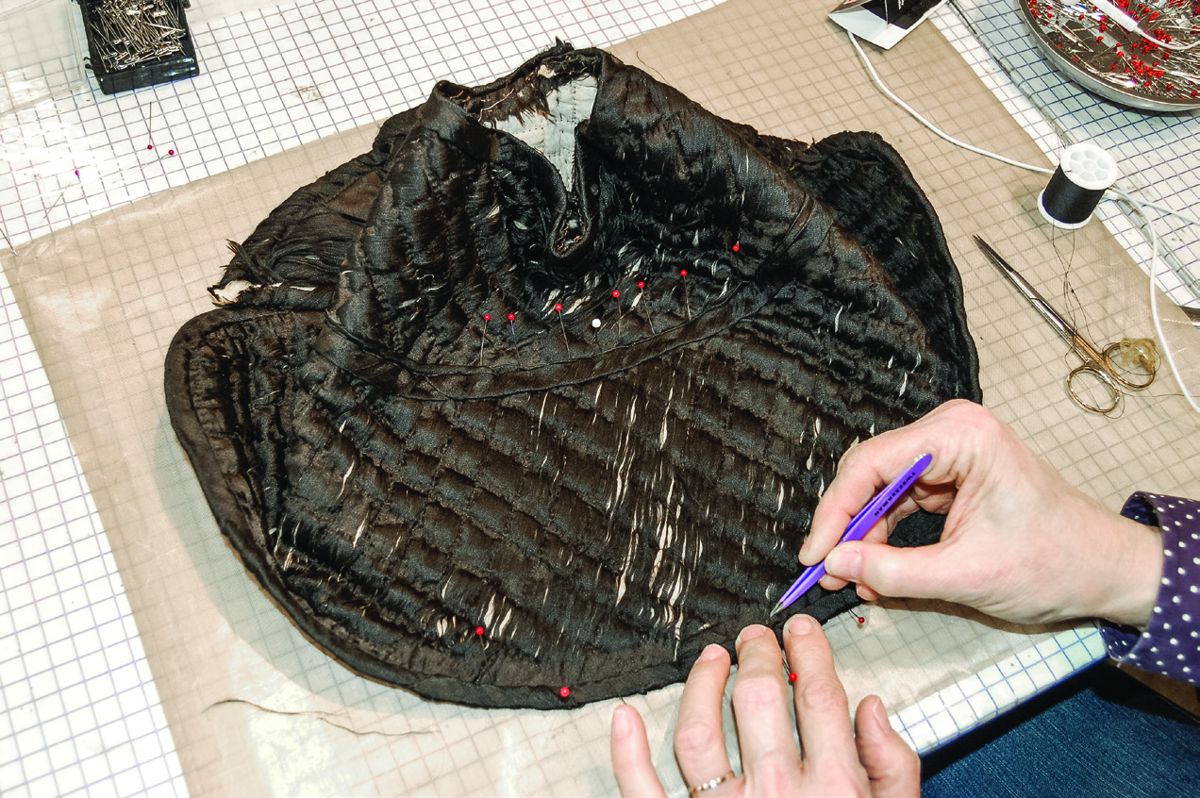
This article is the first in what I hope will be a continuing series about conservation treatment of Civil War era textiles. As textiles are often among the most fragile of artifacts, it is remarkable that so many have survived through time. However, they frequently are in need of conservation, both to preserve them in general, and to make them stable enough for display. In 2015 my studio undertook the conservation treatment of a bonnet worn by Mary Surratt, one of the Lincoln assassination conspirators. The bonnet is said to be the one Surratt wore to the scaffold before the hood was placed over her head. It was given to General Eckert, who accompanied Surratt to the gallows. It has been documented in a book entitled Lincoln Lessons: Reflections of America’s Greatest Leader by Frank J. Williams and William D. Pederson. The bonnet is currently part of the collection of the Little Drummer Boy Museum in Andersonville, Ga., which purchased the Eckert Collection some years ago. The quilted bonnet is made of black silk satin material, with padding and a cotton lining. The material at the bonnet’s back crown has no padding or lining. Over time, the silk satin fabric has deteriorated. The fabric was shredded in many quilted squares, on the neckpiece and back sections. The lining was yellowed and stained. 1. The bonnet was first hand vacuum cleaned through a screen of fiberglass mesh with a low suction HEPA filtered cleaner. It was hand dry cleaned with mineral spirits. 2. China silk fabric was dyed to match the color of the silk satin material. It was coated with Lascaux 498, a co-polymer vinyl acetate emulsion adhesive. The silk fabric was prepared for use in stabilizing damage to the back crown panel of the bonnet. Conservation of the bonnet’s body presented a particular challenge because of the way the layers of the bonnet were quilted together. This meant that stabilizing the deteriorating silk would have to be done from the surface, rather than from underneath, as with the back crown section. 3. The unlined back crown section was stabilized by heat seal consolidation, using the prepared china silk material. The pleated back crown section was unstitched and removed from the bonnet. The pleated folds were first marked with thread. The crown was then pinned out on top of a panel of the prepared china silk, and heat fused to it.
Ribbon and silk lining stitched into bonnet. place over the bonnet. The crepeline was heat fused to the bonnet to secure the inlaid threads and overall shredded silk fibers. 7. Two rows of 2” wide horsehair braid (in double thickness), were stitched into the brim to hold it erect. 8. The back crown material was re-pleated and pinned to size. It was then stitched into the crown. 9. New silk fabric was prepared for use as a decorative lining for the brim. It was cut, fitted, and pinned to the inside of the brim of the bonnet. 10. Wide black silk taffeta ribbon was hemmed, gathered and hand stitched into the bonnet. After the ribbon was secured, the new silk lining was stitched into the brim. 11. The bonnet was fitted to the mannequin head. The taffeta ribbon chin bow was tied, and then tacking stitches were hand sewn through the top of the bonnet to secure it to the head form.
Conservation treatment of the bonnet took 41 hours to complete. If you have any questions about conservation of the bonnet, please contact me at: Jessica Hack Textile Restoration: [email protected]