
Book Reviews
Book Reviews — February 2017
Originally published February 2017 · pp. 30–39
Civil War News book reviews provide our readers with timely analysis of the latest and most significant Civil War research and scholarship. Stephen Davis, Civil War News Book Review Editor. Email: [email protected]
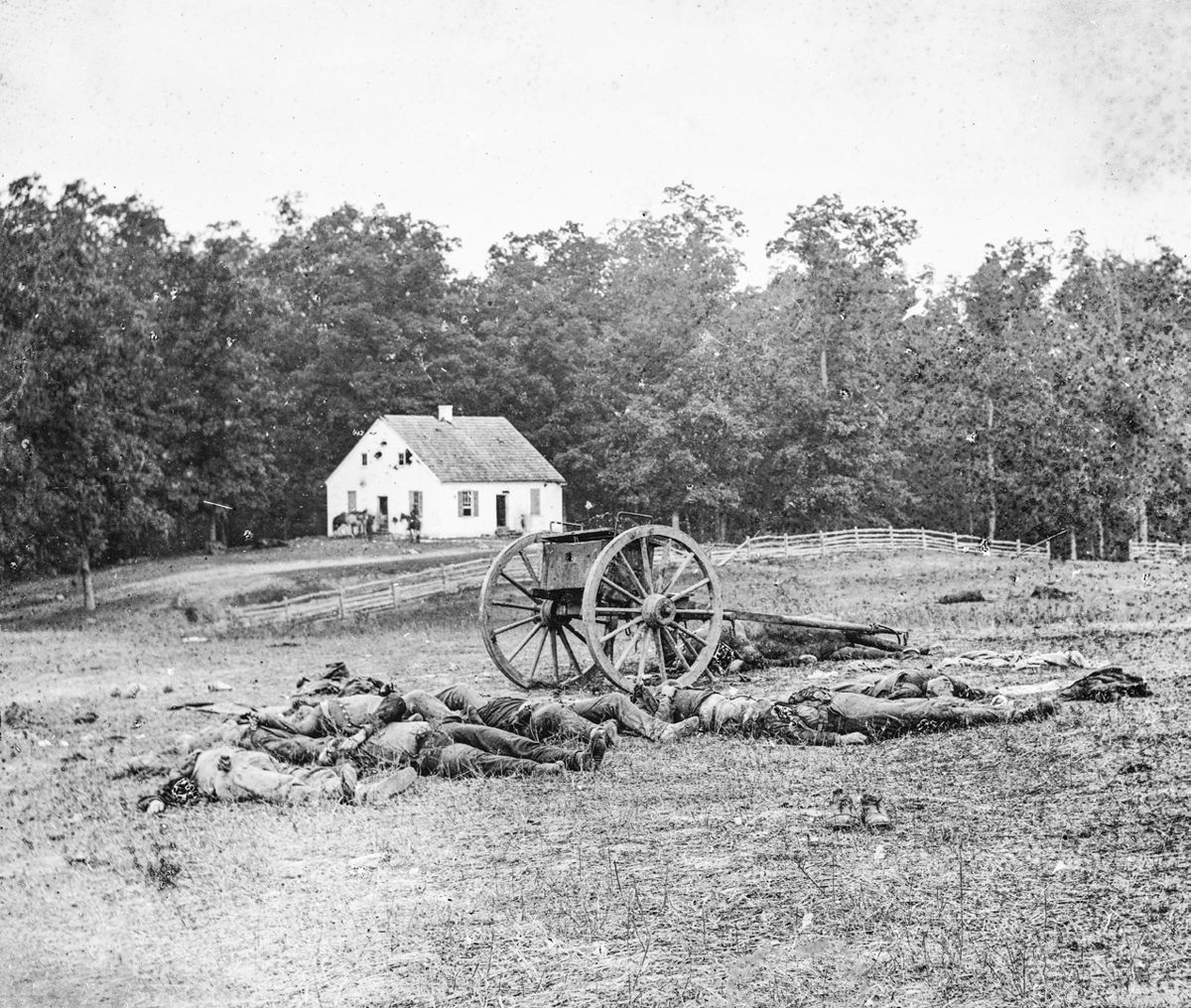
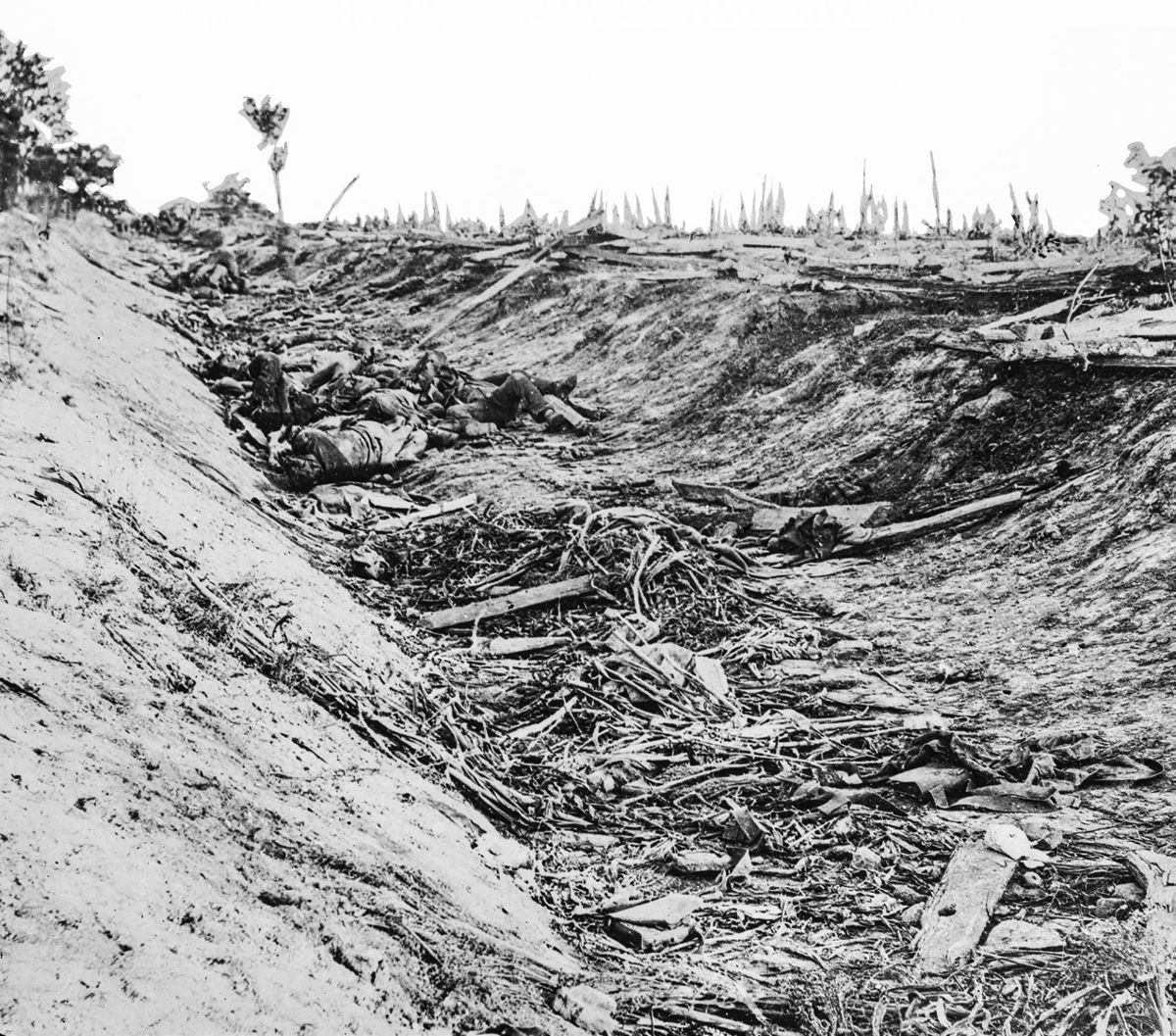
“Simply Wonderful” Guide To Civil War’s Bloodiest Day A Field Guide to Antietam: Experiencing the Battlefield through its History, Places, and People. By Carol Reardon and Tom Vossler. Maps, illustrations, photographs, notes, index, 360 pp., 2016, University of North Carolina Press, www.uncpress. unc.edu, $23.00 softcover. Reviewed by A. Wilson Greene
There is so much to like about this guidebook that I hardly know where to begin. Perhaps describing the format is a good place to start. Reardon and Vossler have developed an innovative and highly effective formula for guiding visitors through a battlefield. Most of their 21 major driving stops (many having multiple places to explore on foot) pose six questions: What happened here?; Who fought here?; Who com-
manded here?; Who fell here?; Who lived here?; and often, if not universally, What did they say about it later? This structure provides ample information on the tactical events at each locale, the relevant commanders, the regiments or brigades involved, and the casualties absorbed by those units. The discussion of the civilian property owners in each chapter and their fates during and after the battle adds a particularly welcome dimension. The final segment provides the authors a chance to explore the historiography and participant interpretation of events. The text is informed by a wide variety of primary sources that are documented in each chapter, although a bibliography might have been useful. The writing is crisp and easily digestible, and from time to time rises to an elegance not often associated with the guidebook genre. “We view past events through two sets of interpretive lenses: the objectivity that seeks the truth of history and the seductive, sanitizing, sentimentalizing, selective, and self-serving pull of memory” is but one example. Moreover, the word count at each destination strikes just the right note: sufficient to tell a comprehensive story but not so long as to drive the weary battlefield reader to a shady bench. While the authors usually stick to a straightforward recitation of the ebb and flow of the fighting, they do inject provocative judgments from time to time. The implied exoneration of McClellan for failing to attack on September 15 or to exploit his advantages after September 17 will attract some notice. Reardon and Voss include wonderful factual tidbits that may have escaped even those readers intimately familiar with the battle, such as the location of a toll house on the Hagerstown Pike, the origin of the Pry family name, or the identity of the soldier who inspired the figure atop the New Jersey monument. The book begins with a brilliantly concise overview of the campaign and concludes with a fresh examination of how the battlefield became gradually preserved. The tour route is logical, starting with the deployment of the respective armies and following the combat from north to south, just as the action unfolded that brutal September day. The tour stops include all the major destinations, although one could argue that a walk to the bluffs east of the Lower Bridge and down to Snavely’s Ford might enhance an appreciation for the south end of the battlefield. The authors take us to Boteler’s Ford on the Maryland side of the Potomac, but chose not to offer a trip to the right bank, where recent preservation efforts have resulted in a very enlightening visit to the Shepherdstown Battlefield. The full-color maps that adorn each tour stop are alone worth the book’s modest tariff. They are some of the best available in any Antietam publication and include troop positions, ground cover, and landscape features such as roads and buildings. Each map thoroughly orients the battlefield visitor to the terrain, accompanied by a succinct description of what that visitor is seeing. It is apparent that the authors are experienced and skilled battlefield guides themselves and know how the right language and information can bring a static terrain alive. The University of North Carolina Press has given us a book with remarkably high production values. The many photographs and historical illustrations are crisp and clear; the pages are glossy and designed to stand up well to the rigors of a battlefield tromp on a hot and humid day; the text is devoid of typos, misspellings, or grammatical faux pas. That said, there are a handful of minor factual errors, all of which have nothing to do with Antietam itself. Students of the Western Theater will argue that Halleck, not Grant, bogged down around Corinth in the spring of 1862 and that Bragg organized his army around Chattanooga, not in middle Tennessee that summer. A.P. Hill is buried in a residential neighborhood in north Richmond, not along Monument Email us at Avenue. Richard Anderson, [email protected] scribed as the commander of the “Richmond defense forces,” rather inherited what was left of Call 800-777-1862 Beauregard’s army and fought it around Petersburg following the Louisianan’s transfer to the West and Longstreet’s return to the field in the fall of 1864. These quibbles, however, have nothing to do with the focus of this book—a simply wonderful effort that can be enjoyed as intended on the battlefield or read profitably as a primer on America’s bloodiest day from the comfort of home. The authors mention in their Acknowledgments that this volPreserving the military ume is part of a series. In 2013 history of the Western they published a similarly specHemisphere since tacular guide to Gettysburg. One can only hope that Reardon and 1949. Membership Vossler possess the energy to add includes a scholarly many more entries to what has quarterly magazine already become the gold standard with an annual twelveof Civil War battlefield guides.
Will Greene is Executive Director, Pamplin Historical Park & the National Museum of the Civil War Soldier in Petersburg. He is at work on a three-volume history of the Petersburg Campaign for the University of North Carolina Press. Publication of Volume One is expected later this year or in early 2018.
Want To Advertise Your Book In Civil War News?
print uniform series.
After the Civil War: The Heroes, Villains, Soldiers, and Civilians Who Changed America. By James Robertson. Illustrated, photos, 400 pp., 2015, National Geographic, www.nationalgeographic.com, $20.40 hardcover. Reviewed by Evan McLaughlin
James “Bud” Robertson’s After the Civil War presents a very accessible history of Reconstruction as reported through the experience of significant individuals. Divided into nine chapters, this book presents important themes in Reconstruction history, including rebuilding the South, reunion, memory, persistent violence, economic depression, and the birth of the “lost cause.” Each chapter consists of roughly eight biographical sketches of five to six pages per entry. Each biographical segment treats not only the subject, but how that particular person fits into the greater narrative of Reconstruction history. It is extremely interesting to learn about what some of the most popular military leaders did during Reconstruction. For example, General James Longstreet eventually supported the Republican Party and his social standing plummeted as a result. He became a scapegoat for former Confederate soldiers as they tried to pin blame following their loss in the Civil War. This book also chronicles the contributions of important figures to the arts and social movements. For example, Robertson considers Walt Whitman’s contributions to poetry and Frederick Douglass’s efforts to guarantee citizenship rights to African Americans. Informative chapters also cover the political rise of famous commanders such as Joshua Lawrence Chamberlain. Reflecting an ideological transition from the Reconstruction Era to the Gilded Age, Robertson’s final chapter explains the financial contributions of Andrew Carnegie, Jason “Jay” Gould, and John Pierpont Morgan. Moreover, Robertson includes many interesting graphics, including political cartoons and pictures. In fact, every entry has at least one image. The pictures are extremely clear and reflect National Geographic’s stellar reputation regarding image quality. One of the most interesting graphics is a picture of a proof page from Walt Whitman’s O Captain! My Captain! It is fascinating to see the revisions and notes Whitman added into his draft. This book is recommended for readers seeking for an overview of Reconstruction history. While it touches on the major themes of reuniting the North and South and race relations, it is extremely informative regarding little known technological innovations, including mortuary science. Civil War historians who value military history will be satisfied with the postwar stories of Nathan Bedford Forest, Wade Hampton, Winfield Scott, David Glasgow Farragut, and Daniel Sickles. This book is extremely appropriate and useful for readers who enjoy biographies as it provides brief snapshots of each individual and their contribution to the Reconstruction Era and ultimately America’s future. Evan McLaughlin, valedictorian of his Muhlenberg College class, is a member of Phi Beta Kappa, and a social studies teacher at Mountain View Middle School in Mendham, New Jersey. He is currently studying at Seton Hall University to earn an MA in American History and he earned the 2014 James Madison Fellowship for New Jersey.
Greetings from Gettysburg. By David R. Craig and Mary L. Martin. Text, illustrations, 96 pp., 2016, Schiffer Publishing, www. schifferbooks.com, $24.99, hardcover. Reviewed by Sue Boardman
The popularity of souvenir postcards began in the early 1900s in America. Historic locations like Gettysburg offered ample opportunity for visitors to share their travel experiences with family and friends through these colorful mailing cards. In the introduction to this book, David Craig offers to give readers a look at historic postcards of and from the famous battlefield, and insight into the visitors who sent them. The concept of this visually appealing book is fresh and interesting – there were literally thousands of Gettysburg postcards published, collected and sometimes mailed. A book about them thus provides an interesting new interpretative perspective. Unfortunately, this one falls short of its stated objective. The chapters are divided into themes such as battlefield locations, Union and Confederate monuments, equestrian monuments and the commanders they represent, battlefield avenues, etc., and are illustrated with multiple examples of postcard images. Little is written about the actual postcards themselves or the content of the messages written on them. Rather, the reader learns details of the subject matter, but the text is often fraught with inconsistencies and/or errors in spelling, nomenclature and historical accuracy. For example, the Eternal Light Peace Memorial is referred to as the Eternal Light of Peace several times (even though the captions appearing on several of the cards bear the correct title); General Hancock’s home town of Norristown is given as Morristown; Whitworth cannons are called Whiteford cannons; General Rodes is spelled Rhodes; the sculptors of several battlefield monuments are Lee Lawrie, not Lowrie, and Batterson, not Batton. General Greene was a brigade commander, not a division commander; Bloody Lane is mentioned as a Gettysburg landmark but is actually on the Antietam battlefield. The description of the Eternal Light Peace Memorial states the shaft is made from Maine granite and the base from Alabama limestone but the reverse is true. Craig’s reason for why the Confederate 2nd Maryland monument inscription was changed from 1st Maryland is completely inaccurate, as is his statement that the towers on the field were all reduced in height (only one of the original five was reduced and two of them were removed entirely). President Lincoln attended a political meeting, not a service at the Presbyterian Church during his visit to dedicate the Soldiers’ National Cemetery; Corporal Skelly was in the 87th PVI, not the 165th. There are numerous similar errors, sometimes several appearing on a single page (there were over fifty errors discovered in a single cursory reading). Most of these facts could have been fact-checked quickly from a number of reliable historic sources in the thousands of Gettysburg books or in the vast amount of historical information on line. In the chapter on equestrian monuments, Craig gives detailed biographical information about the commanders depicted on the cards, much of it relating to the subject’s entire military career rather than focused on his service at Gettysburg. In other chapters, little is given about the subject beyond the inscription printed on the card. In the last chapter, Craig does give a wonderful description about a postcard sent from Gettysburg during the 1913 reunion. He shares what was written on the card by the sender—his ancestor, who was a returning veteran. It is an example of what I expected from the rest of the book. Other than viewing the book as only a collection of colorful postcards, it is my opinion that any reader would have been expecting to learn more about the postcards themselves, when they were sent, who sent them and what the senders had to say about what they experienced during their visit. It would have been so interesting to read about the changing impressions of individual visitors over the decades, as overall historical interpretations changed. This book is based on a wonderful concept and I would like to give it a more positive review. However, I owe it to the historians at the Gettysburg National Military Park and to my colleagues on the Licensed Battlefield Guide force to give an accurate assessment, because any recommendation I offer is a reflection on our credibility as a whole. If the inconsistencies and errors are corrected and the text refocused on its nicely stated objectives, this volume can represent a fresh visual perspective on the Gettysburg visitor experience that I could happily endorse. Sue Boardman is the director of the executive leadership program at the Gettysburg Foundation. She co-authored several books on the Gettysburg cyclorama, and on Elizabeth Thorn; gives frequent presentations on the battlefield and for Civil War Round Tables, and is an avid collector of Gettysburg photography and postcards.
Role Of The Palmetto State South Carolina in the Civil War and Reconstruction Eras: Essays From the Proceedings of the South Carolina Historical Association. Ed. by Michael Brem Bonner and Fritz Hamer. Notes, index, 289 pp., 2016, University of South Carolina Press, www.sc.edu/uscpress, $49.99 hardcover. Reviewed by Tom Elmore
According to its website, “The South Carolina Historical Association was founded in 1931 by persons teaching, writing, and studying history in South Carolina. Since that time, it has held an annual meeting for the presentation of papers on a wide variety of historical fields.” This book presents twenty-three of those papers, previously published between 1938 and 2010. The editors, both past presidents of the association, note that the annual publication Proceedings of the South Carolina Historical Association never went for the mystique of the Lost Cause or Reconstruction, but showed “objectivity and professionalism in the articles from the 1930s and 1940s.” The articles are divided into five different categories dealing with pre-Civil War politics, life on the battlefield, the home front, emancipation and Reconstruction. Naturally, much of the book is about South Carolinians, both the famous and not so famous. Among the former, Wade Hampton III, arguably the Palmetto State’s biggest Confederate hero and the first post-Reconstruction governor, gets the most attention. Several essays are devoted to his role in the 1876 “Red-Shirt” campaign, all of which challenge some long-held beliefs about his role in the campaign. The war itself is not ignored. Louis B. Towles’ piece on Gen. Joseph Johnston’s taking command of the Army of the Tennessee challenges many of the general’s critics then and now. Also debate-worthy is Christopher A. Mekow’s essay regarding the targeting of civilians during the siege of Charleston. Though oddly enough, Maj. Gen. William T. Sherman’s march through South Carolina in 1865 is not covered in any of the articles presented. One of the more interesting pieces is by Martin Abbott, arguing that contrary to popular belief, a large percentage of white South Carolinians actually approved of the job of the Freedman’s Bureau. This paper, first published in 1962, as the Civil Rights movement was heating up, underscores the fact that much of what is presented here must have been controversial when first published. This also highlights one of the strengths of the book. Despite the fact that much of what is presented here is 40 years old or older, none of the articles feels dated or comes across as relics of the past (save for one piece that uses the term “negro”). Had this reviewer not known better, he would have thought most of the scholarship here is recent. Furthermore, unlike most books of this sort, the writing is consistently good and all the essays are interesting in their own right. For anyone interested in South Carolina’s role before, during the Civil War or in the Reconstruction era, this is a must-read. Tom Elmore of Columbia is author of several books and magazine articles about South Carolina in the Civil War and the 19th Century. Currently he is finishing up a book about the relationship between the Vatican and the Lincoln and Davis administrations.
Gathering to Save a Nation: Lincoln & the Union’s War Governors. By Stephen D. Engle. Notes, bibliography, index, 736 pp., 2016, University of North Carolina Press, www. uncpress.unc.edu, $49.95 cloth. Reviewed by John D. Fowler
“For all we know about why Southerners left the United States, historians still grapple over how and why Northerners restored them to the Union.” Thus begins Stephen D. Engle’s new work on the relationship between Abraham Lincoln and the Union war governors. That opening sentence encapsulates the book’s purpose, which is to add to the understanding of Union victory.
Engle, a professor of history at Florida Atlantic University and the director of the Alan B. and Charna Larkin Symposium on the American Presidency, is the author of several well received books on the Civil War era. This work grew out of a conversation with noted Reconstruction historian Hans Trefousse more than twenty years ago. In the intervening years, Engle continued to ponder the nature of the relationship between the Lincoln administration and the Northern states, whose support was critical to Union victory. Engle’s thesis states that the traditional view of Lincoln’s relationship with the wartime Union governors as put forth by William Hesseltine in Lincoln and the War Governors (1955) is essentially wrong. Hesseltine, writing during a time when Lincoln was greatly admired, posited that loyal governors actually did little more than mobilize troops early in the war and that the real keys to Union victory were the generals, the federal government, and especially the leadership of Lincoln. Engle refutes that argument and claims that far from being mere pawns for Lincoln, the governors were dynamic and dedicated in their support and defense of the federal system of government and vital to Lincoln’s ability to wage a long and costly war. While the names of men such as Louis P. Harvey, William Dennison, John Andrew, and James Robinson are unknown except to some Civil War or state historians, these men were instrumental in marshaling their states’ men and material for the war effort, and, according to Engle, they deserve to be removed from obscurity. Engle has utilized a wealth of primary sources such as letters, diaries, and government documents and also has combed the vast secondary literature available to produce a nuanced view of these governors. He demonstrates that, given the nature of the relationship between the national government and the states, Lincoln had to depend on the loyal governors not only to supply the soldiers and equipment necessary to wage the war but also to use their political savvy to stifle antiwar sentiment, especially in the face of early Union battlefield defeats and widespread hostility toward emancipation. It was the governors who dealt with disgruntled constituents, both civilian and soldier, who sometimes vehemently disagreed with the Lincoln administration’s policies and conduct of the war. In lieu of these factors, the president and the governors developed a symbiotic relationship in which both needed the other in order to execute the war to a successful conclusion. Indeed, Engle goes so far as to declare that it was the support given to Lincoln by the governors that proved to be the key to Union victory. Without active, vocal, and consistent support from the state executives, the national government would have lacked the soldiers, the war material, and most importantly the popular support necessary to achieve victory over a determined enemy. Engle’s thesis fits with another recent work, Lincoln and the Union Governors (2013) by William C. Harris. Harris also argues that historians have ignored the Northern war governors even though they played a crucial if not the crucial role in mobilizing men and securing resources for the Union armies. They also did much more. They dealt with guerrillas and outlaws, Indian uprisings, and wartime opposition. They generally allowed the national government’s will to be implemented and its needs to be satisfied within their respective states. While the two books cover the same ground and share the same thesis, Engle’s work is more detailed and more thoroughly researched, while Harris’s work is part of the Concise Lincoln Library series. In sum, this is an insightful book that, along with Harris’s work, will offer readers a thorough view of the overlooked alliance of Lincoln and the loyal state leaders. John D. Fowler is B.J. and Dicksie Bandy Chair of History and Executive Director of the Bandy Heritage Center at Dalton State College in Dalton, Georgia. With David B. Parker he is the editor of Breaking the Heartland: The Civil War in Georgia (2011).
Living Hell: The Dark Side of the Civil War. By Michael C. C. Adams. Notes, suggested further reading, index, 292 pp., 2016, Johns Hopkins University Press, www.press.jhu.edu, $19.95 softcover. Reviewed by Jeffry D. Wert
Few voices arose in the spring of 1861 that warned fellow countrymen of the terribleness that awaited with a civil war. Instead, many Americans embraced the approaching conflict, believing that the war would be brief and rather bloodless. It took some months before the reality dispelled the naïve illusions. The four years of war engulfed the entire nation, from New England to California and from Minnesota to Louisiana. Its reach seemed endless, from battlefields—large and small—to rural villages and urban streets. The war’s impact touched nearly everyone in a myriad of ways. In time, the stirring words and patriotic songs of the early days were silenced at Shiloh, Malvern Hill, Antietam, Chickamauga, and other bloody places. Northerners and Southerners discovered, whether admitted or not, that the divided nation had descended into a darkness. This book, aptly titled Living Hell, endeavors to describe the breadth and depth of the Civil War’s “dark side.” The author addresses a wide range of subjects, military and civilian. This work is a coming-together in a singular volume of topics addressed in many other books—the reality of combat, the deadliness of diseases, the clearing of battlefields, the care of wounded, the dislocations caused by invading armies, the toll of combat on men, the terrible plight of Southern civilians and slaves, and even some of the war’s aftermath. The author, Professor Michael C. C. Adams, does not conduct research into unpublished manuscripts and contemporary newspapers. He relied on published works, primarily memoirs and diaries of military and civilian participants. In turn, the narrative is replete with quotes from these individuals, whose words convey, as the author intended, “a graphic picture” of America’s bloodiest war. Professor Adams fulfills his intent in rendering this darkly wrought portrait. Serious readers of Civil War books will be familiar with many of the individuals, whom the author quotes. But it is the number of the quotes and the repetitive content of the words that convey the shared experience of so many entrapped in this living hell. The author used a narrative device of placing himself and the reader as close observers of soldiers on the march, of workers in factories, and of Southern refugees afoot on roads. To some readers this may make for a more graphic narrative, but to this reviewer it seems contrived. To be sure, history is observation, but primarily in words and only from a distance across time. The Civil War was arguably the watershed event in American history. Its cost and results changed the country forever. So too, according to the author, did the conflict’s dark side extend well beyond Appomattox, even into the present century. While his argument consists of many strands, it is open to debate. Professor Adams asserts that a sharpshooter killed Union General John Reynolds on the first day at Gettysburg and that the Federals suffered 7,000 casualties in ten minutes at Cold Harbor on June 3, 1864. Modern research has dispelled both these alleged facts. Dozens, if not more, books have been published on the various topics addressed in Living Hell. Each of those works offers fuller and more detailed accounts than does this book. But Professor Adams brings together in a single volume many of these aspects of the Civil War’s encompassing and grim nature. The book is a starkly painted portrait of a divided nation engulfed in a four-year nightmare. Jeffry D. Wert, of Centre Hall, PA, is a retired high school history teacher and the author of nine books on Civil War subjects.
Civil War Weather in Virginia. By Robert K. Krick. Illustrations, tables, notes, 190 pp., 2016, University of Alabama Press, www.uapress.ua.edu, $24.95 paper. Reviewed by Timothy J. Orr
Robert K. Krick’s Civil War Weather in Virginia is a handy reference book that examines weather conditions in the Old Dominion State. It offers meteorological data for each day of the Civil War, starting with October 1, 1860, and ending with June 30, 1865. Krick’s compiled figures come from the ledger of Reverend C. B. Mackee, a Georgetown resident who recorded temperatures three times per day—at 7 A.M., 2 P.M., and 9 P.M. In the 1950s, the U.S. Weather Bureau preserved Mackee’s data on microfilm, and Krick has helpfully reproduced that information in easy-to-read monthly charts. In addition to temperature, each data entry contains times for sunrise and sunset (as observed in Richmond), and most entries include sundry notes describing daily precipitation. However, readers should be advised that these notes are sparse and not terribly descriptive. For instance, on March 3, 1863, Mackee wrote, “3 p.m. snowgust & thunder.” He included no notes for March 4 and 5, and then for March 6, wrote, “sleety hail at daybreak.” For March 7, he wrote simply, “rain,” and for March 8, he wrote, “.57 [inches of rain] yesterday and night.” The subsequent entries go on similarly. In short, these entries are far from being accurate descriptors of precipitation, wind speed, or cloud cover. Krick’s book is something of a “must-have” for every dedicated Civil War researcher, largely because there is nothing comparable to it. There is no meteorological study of the Civil War, either by state or nation, save only Harold A. Winters’ Battling the Elements: Weather and Terrain in the Conduct of War (1998), in which the Civil War constitutes only a fraction of the analysis. Readers should be aware that some of Mackee’s data is subjective, an all too common problem concerning weather reports from the nineteenthcentury. In the 1860s, surface weather analysis had not advanced beyond its infant stages and meteorologists rarely calibrated their instruments to a national standard. Krick’s own data suggests that Mackee’s recordings could be unreliable. At two points—October 1860 and August 1863—Mackee’s entries are missing. To fill in the month of August 1863, Krick supplied weather data from the nearby U.S. Army weather station at Alexandria. The army’s temperature reports are noticeably higher than Mackee’s numbers for the preceding month of July. This suggests that the army’s thermometers ran too high or Mackee’s too low (or both). This discrepancy hints at an inherent problem with Mackee’s records. Although he chronicled temperatures with a thermometer, those temperatures did not conform to other temperature readings from across the state. Quite probably, they do not even conform to our own modern conception of temperature. To put it another way, when Mackee wrote, “81°,” in actuality, it might have felt like our own 90°. To a nineteenthcentury American, temperature was more a state of mind than an inflexible statistic, and readers should be aware of this before they start using Mackee’s data to draw larger conclusions about the war and weather. In addition to Mackee’s statistics, Krick includes observational data from Union and Confederate soldiers, Virginia citizens, and local newspapers. He includes about four to eight observations to supplement each chart of monthly data, and they appear helpfully on the page opposite Mackee’s temperature readings. These observations are terse and tend to privilege Confederate accounts over Union ones, but they add another layer to the story. Probably, Civil War Weather in Virginia will appeal only to the most dedicated researcher, but it forces us to ponder the importance of the untold struggle between armies and meteorological conditions. We should wonder: did Civil War armies conquer the elements or did the elements conquer them? Timothy J. Orr is an associate professor of history at Old Dominion University in Norfolk.
Kentucky Rebel Town: The Civil War Battles of Cynthiana & Harrrison County. By William A. Penn. Photos, maps, notes, index, 374 pp., 2016, University Press of Kentucky, kentuckypress.com, $40. Reviewed by Lawrence K. Peterson
William A. Penn has focused his attention on the two battles of Cynthiana and other actions in and around Harrison County, Kentucky, located northeast of Lexington. However, he goes into great detail in much more than the fighting. This book is a gem for two sets of students of the Civil War: those interested in the fighting in Kentucky other than Richmond/Perryville, and those interested in civilian life during the war. It is especially beneficial to the latter group. While Penn details the fighting during the two different battles of Cynthiana, his descriptions of life in the area during the war will be of great benefit to those wishing to learn more about how the civilians coped. Penn explains how both North- and South-leaning citizens managed to get along with each other while living in the same town. He describes at great length how the provost marshal system worked dealing with civilians as well as soldiers. He covers day-to-day living by these civilians, which is so often overlooked by other works. He also describes the two battles fought at Cynthiana, as well as John H. Morgan’s two raids which caused the battles. He presents these actions in a very logical sequence of events, tying individual events together. These often-overlooked actions had a comprehensive effect upon the Union-controlled Kentucky Central Railroad which forwarded supplies from Cincinnati to the Federal camps within Kentucky. Morgan’s raids caused temporary havoc with this transportation system. I am unaware of any other book that covers this area in as much detail as does Penn. The only very minor gripe I have with Penn concerns his lack of a more detailed map of the area he describes. His battle maps are excellent and he includes two area maps. However, neither of these show the locations of important railroad bridges and other roads and locations which he describes in detail. Utilizing other available maps may clarify these locations for the reader. While the descriptions of the battles in and around Cynthiana are excellent and well deserve to be told, the real value of this work is the detailed environment which surrounds them. This is an area often glossed over by many authors, often because of the huge amount of battle information being presented, and rightly so. Penn gives us the opportunity to delve into the less explored world of the civilians sitting out the fighting for whatever reasons, and how they managed to get along with all parties concerned. Penn has done a marvelous job of presenting the many obstacles these people had to deal with daily, and gives us more appreciation of the effects of the war on their lives. Even if fighting in north central Kentucky is not a priority, any student of the war interested in the civilian aspect of the war will benefit from Penn’s in-depth study of the war in and around Cynthiana. Lawrence K. Peterson of Denver is President of the Rocky Mountain Civil War Round Table and author of Confederate Combat Commander: The Remarkable Life of Brigadier General Alfred Jefferson Vaughan (2013).
Slavery at Sea: Terror, Sex and Sickness in the Middle Passage. By Sowande M. Mustakeem. Map, notes, index, bibliography, 265 pp., 2016, University of Illinois Press, www.press.uillinois,edu, $24.95 softcover. Reviewed by Wayne L. Wolf
Slavery at Sea places the Middle Passage directly in the human manufacturing process of slavery. Previous works of research, e.g., Frederic Bancroft’s Slave Trading in the Old South or Ira Berlin’s Many Thousands Gone: The First Two Centuries of Slavery in North America, are typical of the literature of adopting bondsmen to plantation life. Sowande Mustakeem forcefully argues that the Atlantic crossing was as central to the formation of, and a precondition for, the adaptation to captivity. From the bartering for new slaves on the African coast to the horrors of shipboard life, the captives were exposed to notions of power. Sailors, surgeons, and captains had control over slaves’ bodies, leaving only suicide or revolt as options for a slave to control his own destiny. The Middle Passage thus was akin to a war zone, where brutality, rape, disease and death thinned out the captive cargo, affecting profit–the bottom line for the ship’s owners. Slaves were a mere commodity where the key features desired were age (preferably under 30), fertility, health, and adaptability to plantation life. These were the criteria that determined which slaves to purchase and what price they would bring in the Americas. The slave trade thus became a three-prong process of capture, transport and product delivery. The author explores voluminous ship records, auction sales, slave narratives, and factor logs to demonstrate how, while the Middle Passage was a violent, unregulated time period, it served as an indispensable crucible for molding bondsmen into financial assets. Ship’s crews manufactured cooperative chattels through this cycle of enforced dependency, physical and psychological terror, sexual assault, and deprivation. The end product was a commodity suitable for a life of bondage. Slavery at Sea does an excellent job describing the importance of the Middle Passage, as well as forcefully rejecting the notion that slave subjugation began upon arrival in America. The ordeal of the bondsmen is equated in terms of a production process beginning along 3,000 miles of African coast and ending with plantation adjustment. The slave’s desire for freedom was manifested in both shipboard suicides and revolts, foreshadowing resistance that would later occur on land. The slave was not a smiling, docile creature but inherently a human seeking freedom at any cost. Control over their own bodies and labor, desire for family connections, and ever-plotting to escape bondage characterized the slave onboard ship and later on land. The mythical portrayal of slaves in Gone With the Wind is simply that, a myth. Excellent research, a clear and engaging literary style, and an appropriate use of primary source material recommend this book for the student of the Atlantic slave trade or the historian who desires new insights into the manufacturing process of slavery. Wayne L. Wolf is Professor Emeritus at South Suburban College, South Holland, Ill., and the author of numerous Civil War books and articles, including The Last Civil War Scout and Civil War Letters.
The Civil War in Art and Memory. Edited by Kirk Savage. Photographs, color illustrations, notes, index, 281 pp., 2016, Yale University Press, www.yalebooks.com/art, $70 hardcover. Reviewed by Stephen Davis
For years Robert Lowell’s poem “For the Union Dead” (1960) has spoken to me in the same way as Donald Davidson’s “To the Army of Tennessee” (1933): the poetic artist pondering the plight of modern existence through the cognitive lens of Civil War heroism. For Davidson, it was the veterans of the Army of Tennessee charging at Franklin who beckoned us to find some meaning in our lives, as they did in theirs. In Lowell’s verse, it was Col. Robert Shaw and the 54th Massachusetts’ charge at Fort Wagner which stood in stark relief to our wearied modern world, in which we savage serviles slide by in grease. Relief is a good word, for whereas Davidson had only his imaginings of Hood’s soldiers at Winstead Hill, Lowell could actually see Shaw and his men marching to battle, thanks to a phenomenal work of sculpture in Boston Common: Augustus Saint-Gaudens’ Robert Shaw Memorial, unveiled in 1897. The bronze relief depicts Colonel Shaw riding before his marching African-American soldiers. Overhead, a winged Fame bears a branch of laurel, and the Latin inscription, “OMNIA RELINQVIT SERVARE REM PVBLICAM,” reminds us that Shaw gave all to serve the country. You might recall that architecture at the University of Pittsburgh, the volume brings us fifteen thoughtful essays, all richly illustrated. In his own essay, “The Unknowable Dead: The Civil War and the Origins of Modern Commemoration,” Professor Savage uses a cenotaph to two Union soldiers in a western Pennsylvania cemetery as backdrop. Both Jesse and George Sprowls, brothers, died in the war; the grieving parents could never locate their graves. The family raised a touching monument to them anyway. In contrast, the grave of Lt. John Clark, 7th Michigan (killed at Antietam) was marked carefully by Northern burial crews, allowing Clark’s family to find it and bring his remains back home for reinternment. The story, which hinges on Alexander Gardner’s photograph of Clark’s grave on the battlefield and William Frassanito’s research about it, allows Savage to reflect on “alternative circulations of personal identity”: we know today where some Civil War soldiers are buried; we will never know about others. A number of essays view art, and memorial statuary in particular, through the prism of race. Thus Maurie D. McInnis looks at the equestrian statue of Robert E. Lee, unveiled at Richmond in 1890, and concludes, “equestrian images had long been a symbol of white supremacy and of the power and violence encoded in the system of racial slavery.” Charles H. Karelis, in “The Problem of Racial Hierarchy in the Shaw Memorial,” sees Colonel Shaw on horseback riding tall above his troops and perceives “a ranking of the races,” a sculpted embodiment of “racial hierarchy.” “In the Shaw memorial, SaintGaudens condescends unjustly and embarrassingly,” Karelis asserts, but at least he did so without obvious manifestation of contempt for black people. (Of this objection, Gary Gallagher has commented that such carping can come “only from someone unaware of the fact that colonels usually rode horses and infantrymen, whatever their color, did not” [Causes Won, Lost, and Forgotten [2008]). As you can see, essayists in this book tend to shake things up. Richard J. Powell, who teaches art and art history at Duke, asks us to take another look at “The Wounded Zouave,” the famous photograph attributed to Brady, but which was possibly taken by Andrew J. Russell near Chancellorsville. Funny: I’ve always thought that the seated, wounded Zouave looked of mixed lineage, and that the half-standing, half-kneeling young soldier in greatcoat was white. Instead, to Powell, the Zouave “appears Caucasian,” and the greatcoated lad “with his dusky complexion and partially exposed woolly hair…looks African American (or of mixed racial ancestry).” That’s what art does, I guess. Steve Davis of Atlanta is a regular contributor to Civil War News and is the Book Review Editor. His new book, A Long and Bloody Task: The Atlanta Campaign from Dalton through Kennesaw Mountain to the Chattahoochee River May 5-July 18, 1864, was published as part of Savas Beatie’s Emerging Civil War paperback series. The companion volume, carrying the Atlanta Campaign to the city’s surrender on September 2, 1864, will be published early this year.
Colonel Shaw is riding on his bubble, he waits for the blessed break. The Aquarium is gone. Everywhere, giant finned cars nose forward like fish; a savage servility slides by on grease.
Saint-Gaudens’ sculpture is shown at the end of Glory (1989). It is fitting that Saint-Gaudens’ sculpture is pictured on the front cover of a lush, provocative new book, The Civil War in Art and Memory. Edited by Kirk Savage, professor of history of art and
The Boy Soldier: Edwin Jemison and the Story Behind the Most Remarkable Portrait of the Civil War. By Alexandra Filipowski and Hugh T. Harrington. Photos, maps, end notes, index, 168 pp., 2016, Westholme Publishing, www.westholmepublishing.com, $24.99. Reviewed by Theodore P. Savas
The iconic photo of the haunting young face of Edwin Jemison was first published about half a century ago, and identified by name about three decades after that. Like nearly everyone else who has studied the Civil War, his eyes and innocence captured my interest. And like so many others, I have often wondered who he really was, how he lived, and how he died. Now we have substantially more information thanks to a new book that adds flesh and bone to the forlorn visage. Authors Alexandra Filipowski and Hugh T. Harrington dedicated years researching the story behind the photo in an effort to accurately document Jemison’s life. We now know with confidence that he was born Edwin Frances Jemison on December 1, 1844, in Louisiana. He traveled to Georgia in 1857 to live with relatives and attend school, and in the weeks after Fort Sumter he enlisted in what would become Company C (Pelican Grays) of the 2nd Louisiana Infantry. Shortly thereafter, the regiment was transferred to Virginia, where Jemison served out most of his remaining short life on the peninsula. He saw sharp action (and likely participated in a bayonet charge) during the Yorktown siege at Dam. No. 1 and later retreated toward Richmond. The fighting at Seven Pines skipped past the 2nd Louisiana, but the Seven Days’ Battles did not. Jemison was killed on July 1, 1862 at Malvern Hill. He was 17. The strength of this book is in the establishment of the hard facts of a short life with a violent end: name, birth, basic early life and military service information, and the date of his death. The authors included some fascinating information about the family (including photos), how Jemison may have died, and where he may be buried. This is all very welcome and well presented. The last two chapters (“How did Eddie Die,” and “Peace to his Ashes,” a discussion about his burial location) are the strongest portions of this short monograph. The section of mini-biographies of the principal participants was a welcome inclusion. The prose is easy to read, the photos and images add to the book, and the maps are good. The end notes are
Antietam Battlefield Guides The 1862 Maryland Campaign
2-8 hour tours or customized to your interest
Tours of Antietam Harpers Ferry South Mountain Shepherdstown
Like us on Facebook www.AntietamGuides.com Call to book your tour: 866-461-5180
All guides are National Park Service Certified
mostly perfunctory, though some include interesting additional facts. There is no bibliography, but there is an index. As I was reading The Boy Soldier, however, I could not shake the belief that the information discovered about Jemison would have been better suited—and more tightly presented—as a long scholarly essay than a standalone book. The vast bulk of The Boy Soldier is a generalized account of the early war in Virginia, most of which had nothing directly to do with the subject, peppered with undocumented (and unknowable) references to what Jemison may have seen, thought, heard, or did. For example, a significant number of paragraphs are expended on the June 10, 1861 fight at Big Bethel, all of which Jemison arrived too late to experience. An entire chapter is dedicated to Malvern Hill, including a block quote more than a page and a half long by John Gordon on the charge of an Alabama regiment that adds nothing to our understanding of the young soldier. Jemison arrived on that field, saw little of what going on, played no major role, stepped out, and was killed. Students of the war will not find anything new here, and very few details are presented on the 2nd Louisiana other than the most basic of facts. Another oddity is that the authors call Edwin “Eddie.” The first reference is in the second sentence of the book, and the name is maintained throughout. Was that a nickname? Was he really called “Eddie,” or is that an invention of the authors—a term of endearment leaning toward familiarity? I don’t recall seeing it explained. There are many positive aspects to The Boy Soldier, including the back story of how the authors came together to write this book. I love their dedication to solving this small mystery and they have done the Civil War community a real service. I recommend it—but only with the caveats above taken into account. Theodore P. Savas is the owner and managing director of Savas Beatie publishing. The recovering attorney and widely published author appreciates red wine, good cigars, expensive gin, wreck driving, and Mozart. A classically trained pianist, he plays bass (Rickenbackers only) in the hard rock band Arminius. Ted lives in El Dorado Hills, California.
THE NEW YORK TIMES DISUNION: A History of the Civil War. Edited by Edward L. Widmer with Clay Risen and George Kalogerakis. Photos, map, index, 400 pp., 2016, Oxford University Press, www.oup. com/us, $29.95 hardcover.
Reviewed by Bruce H. Stewart Jr.
In the study of the American Civil War it is common to find a thorough discussion of the leading events which influenced its outcome. Generals and campaigns, as well as the prominent political figures of the day, have governed the majority of existing literature. As new information comes to light, additional contributions have been made. This is an ongoing process, and will continue to provide great value to the casual reader as well as more detail for the serious scholar. While this approach has considerable merit, Ted Widmer has chosen to view the conflict from an entirely different angle. Compiled with co-editors Clay Risen and George Kalogerakis, their recent work, Disunion A History of the Civil War, takes on lesser-known topics and places with essays in a variety of categories. Each essay is short, but informative and well written, intended to open a window into material which has been largely unexplored. Little is provided from a purely military standpoint. Instead, the focus remains on the lives of those Americans who were so tragically affected by the carnage around them, but never did carry a gun. It is a collection of human interest stories which exposes the lives of common families unable to control their own destiny, surrounded by the most devastating episode in American history. At the outset, conditions for the war are explained. The Buchanan administration, unrest in Kansas, as well as the issue of slavery itself are brought to the forefront in order to lay the groundwork for the turmoil to come. This is followed by the role played by women behind the scenes of the actual battles, and addresses the plight of those left behind. Legal topics and presidential relations within the Lincoln government are two issues which are examined and nicely analyzed, subjects which receive rare attention. Finally, Disunion concludes with a chapter which covers the consequences and aftermath of the war. The discussion of such variety is a very good one; however, there are two chapters which seem, when taken with the remainder of the book, a bit out of place. One, while factually true, deals with the Indian activities in the far west, a more peripheral topic than the rest of the book with not as much relevance. The second describes foreign relations, but not in regard to the forlorn hope of the Confederacy in its desire to bring British and French forces into an alliance. Rather, it describes the admiration of Abraham Lincoln held by Otto von Bismarck, Holland’s views on slavery, and the contribution to the Northern war effort made by Hawaii. The majority of the book is insightful and offers far more than a cursory glimpse of Civil War life. It presents a wide range of subject matter clearly and concisely, although the deletion of the above mentioned chapters would have strengthened the final product. Bruce Stewart of Atlanta is author of Invisible Hero: Patrick R. Cleburne (Mercer University Press, 2009). He is currently working on a study of unpublished letters by soldiers in the Army of Tennessee.
The Civil War Letters of Alexander McNeill, 2nd South Carolina Infantry Regiment. Edited by Mac Wycoff. Notes, bibliography, index, 704 pp., 2016. University of South Carolina Press, www.uscpress.com, $39.95. Reviewed by Harrington
C.
Michael
If you’re like me, you generally pass on reading published collections of personal letters written by Civil War soldiers. Perhaps the soldier served for only a year or two in the war before being killed or disabled, so his correspondence stops abruptly just when it was getting interesting. Maybe the soldier’s service took him to the backwaters of the war or he never participated in a major battle, making his letters rather dull. Sometimes soldiers’ letters tell us much about their personal relationships with kinfolk or loved ones back home but little about the war or their part in it. But the most common reason I typically avoid these books is that the soldier was at best semi-literate and wrote poorly, making his letters both a challenge to decipher and a struggle to comprehend. The Civil War Letters of Alexander McNeill, however, refutes all of my pat reasons for usually passing on soldiers’ letters. In fact, I recommend the book, especially to those who generally share my prejudice against this genre of Civil War historiography. In summary, here’s what made this book interesting to me: • Alexander “Sandy” McNeill soldiered for more than four years in the Eastern Theater and fought in many of the major battles of the war, including First Manassas, Fredericksburg, Chancellorsville, Gettysburg, Chickamauga, the Wilderness, Spotsylvania and Cedar Creek. • McNeill’s letters to his beloved Almirah Haseltine “Tinie” Simmons are light on battle descriptions but reveal much about the day-to-day life of a Confederate soldier in the East. • Almost without exception, McNeill’s letters are well written and easy to read, if you pardon his occasional lapse into Victorian romantic sentimentality. Though nothing is known about his education, McNeill’s polished prose and his extensive vocabulary convince me that he would have scored in the 700s on the verbal portion of the SAT had he sat it. When the war broke out, Sandy McNeill was in his late twenties and a merchant in a small town in (what is today) Greenwood County in the South Carolina upcountry. Shortly after Fort Sumter in April 1861, McNeill enlisted as a private in the
Secession Guards, which soon mustered into Confederate service as Company F, 2nd South Carolina Infantry Regiment. The regiment would become part of a hard-fighting brigade of South Carolinians commanded for most of the war by General Joseph B. Kershaw. McNeill’s letters to Tinie, a young widow from his home town with a small child, begin with a missive written from camp in Charleston in early May 1861 proposing marriage and end with a letter written from North Carolina in the closing days of the war. During the interim, Sandy penned more than a hundred letters to Tinie, whom he married in October 1862 after resurrecting a broken engagement. Virtually all of Sandy’s letters to Tinie were lovingly preserved by his descendants and are presented in this book. The editor, Mac Wycoff, calls the McNeill letters the “largest and best collection of Civil War letters” that he has seen in his long career of working with such documents. Although his letters are filled with avowals of love and advice to Tinie about everything from managing her few slaves to handling her finances, the opinionated McNeill also expresses his views on a wide variety of non-personal matters, ranging from the harsh weather in Virginia, camp food, army morale, Yankees (an “immoral race” in McNeill’s view), the escalating depreciation of Confederate currency, the enlistment of black troops by the Confederacy (which he reluctantly favored) and the merits and demerits of his commanding generals (with his harshest criticism being reserved for Jubal Early). McNeill’s letters are revealing of his character. He comes across in them as a principled, straitlaced Methodist with little sense of humor, who was nonetheless an exemplary soldier. He was also lucky, narrowly avoiding death on several occasions, including a gruesome torso wound at Spotsylvania that invalided him for several months. Though fiercely dedicated to the cause of Confederate independence until the bitter end of the war, Sandy makes no attempt in his letters to explain his patriotism. Instead, he’s content to present the war to Tinie as “our holy and sacred cause.” The closest McNeill comes to linking slavery to the South’s war effort is a reference he makes after Gettysburg to his fighting for “our Sacred rights and institutions.” When confronted with the inescapable reality of the South’s defeat, McNeill falls back onto his religion. In one of his final letters to Tinie, Sandy attributes the failure of the Confederacy to establish its independence as God’s judgment on the “wickedness” of the people of the South. Sadly, he predicts to Tinie that the war’s end will “bring my darling to the wash tub and the cook pot.”
Mac Wycoff was a fortunate choice to edit the McNeill letters. The author of two published histories of the 2nd South Carolina, Wycoff brought to the task an intimate knowledge of Kershaw’s command. His end notes are relatively light but informative and spare the reader the surfeit of peripheral information common to some similar collections of soldier letters. It is unfortunate that no photographs of either Sandy or Tinie have survived, because they would have enhanced the text. Otherwise I am short on criticism and long on praise for this remarkable collection of letters. C. Michael Harrington practices law in Houston. He’s authored several published articles on South Carolina soldiers, and he’s lectured to Civil War organizations in Houston on multiple topics, including South Carolinians in the war. He’s a long-time director of the Houston Civil War Round Table.