
Yankee Entertainments Before Atlanta Burned
By Stephen Davis · Originally published December 2017 · pp. 10–13
Publisher’s note. Recently our Book Review Editor, Steve Davis, gave a talk at the Center for Civil War Photography’s Annual Image of War Seminar in Charleston. He spoke on George Barnard’s photographs of Atlanta during the Union occupation. I attended, and noted the heretofore unpublished findings that he pointed out. Afterward I asked Steve to contribute the following article, which represents his cutting-edge research. By Stephen Davis Maj. Gen. William T. Sherman’s Union forces occupied Atlanta for two months, Sept. 2-Nov. 16, 1864. The Federals had barely settled into their occupation before it became clear that the Rebel army under Gen. John B. Hood would not attack them in the fortified city. Instead, in late September Hood headed off into north Georgia. Sherman followed him with most of his forces, but left the XX Corps behind to garrison Atlanta. The record we have of the Northerners’ occupation—they called it “Yankee town”—comes from their diaries and unit histories. The story is well known. After Sherman expelled most of the city’s residents, officers occupied fine downtown houses, and most of the troops tented outside the city limits. Inside were garrisoned just three regiments of provost guards: the 2nd and 33rd Massachusetts, and the 111th Pennsylvania. With no prospect of hard fighting, or even hard work, Union soldiers whiled away their time in the usual ways. One of them was attending plays, pantomimes, and concerts put on at Atlanta’s main theater, the Atheneum on downtown Decatur Street. The 33rd had a particularly good band, which gave concerts and played back-up for shows put on by the soldiers themselves. Members of the 3rd Wisconsin organized a “variety troupe” that presented amusing plays. Several soldiers of the 33rd New Jersey performed well enough as the “National Minstrels” to be able to charge up to 75 cents for their shows. Members of Knap’s Pennsylvania Battery organized a glee club, which gave free chorales to the entertainment of all. Provost rules allowed troops from the surrounding areas to be downtown till 10 p.m., so those who chose could attend these events. Col. William Le Duc, quartermaster of the XX Corps, (whose troops held the city for most of the occupation) arranged concerts at the Atheneum throughout September and October. He even had handbills printed on a small press used to issue army orders. The first event was held on Sept. 24, a “vocal and instrumental concert,” featuring Rebecca Welch, a local lady who had been allowed to stay in the city after Sherman had kicked out most of its civilians. Lt. Russell Tuttle of the 107th New York loved music, so he attended as many downtown concerts as he could, including the opener on the 24th. In it Mrs. Welch sang and played the piano to such tunes as “Then You’ll Remember Me”; the army band served up the “Anvil Chorus” and other airs. Tuttle appreciated the bright lights, the crowded galleries, the applause and encores; they reminded him of the opera season back in Rochester. He noticed a few civilians in the audience, but mostly officers and men—including General Sherman and his artillery chief, Brig. Gen. William F. Barry; they “applauded most heartily.” In early November the musical soirees continued. We have evidence of these, thanks to George N. Barnard, whose famous photographs document Atlanta during the occupation. Connecticut-born Barnard opened a daguerreotype gallery in Oswego, N.Y., in 1843. Committed to a commercial career in the new photographic technology, he moved his studios to Syracuse in 1854. When the Civil War began, he joined Mathew Brady’s staff of cameramen. Doubtless some of the “Brady photographs” taken in Virginia during 1861–62 are Barnard’s, but they cannot be confirmed. In late 1863 Capt. Orlando Poe, who would soon become Sherman’s chief engineer, hired Barnard to take pictures in Nashville, Knoxville, and Chattanooga during the spring and summer of ’64. After Sherman’s army captured Atlanta in early September, Poe ordered Barnard to come to the city to photograph its fortifications. He did a lot more than that. During his stay in Atlanta, before he left with Sherman for Savannah, Barnard took pictures of the Rebel defenses, the Federals’ own fortifications, area battlefields, Sherman’s officers and men, and downtown scenes and settings. When Northern engineers began their demolition of railroad facilities and factory buildings, Nov. 12-15, Barnard captured that, too. So far as I know, no definitive catalog has been prepared of Barnard’s Atlanta photographs, which number up to 150. The Library of Congress and the U.S. Military Academy have the largest collections of his images, but they are also scattered in repositories across the country; we keep discovering new photos all the time. Recently I gave a presentation on Barnard’s Atlanta scenes in Charleston at the Annual Image of War Seminar, sponsored by the Center for Civil War Photography.
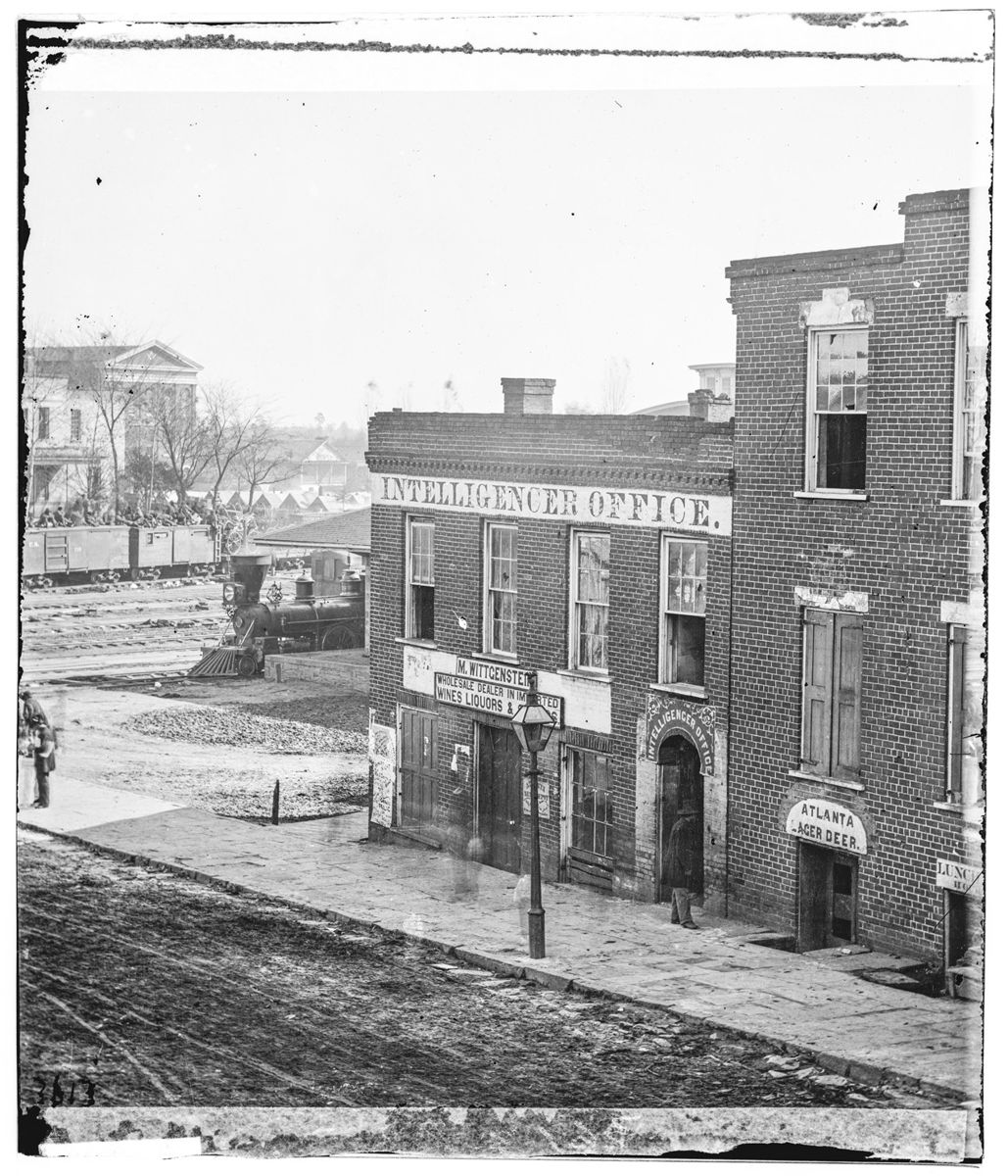
Above magnified photographs read: BENEFIT NIGHT Mr. I. Smith Leader of the Band Of the 33rd Mass. The Laughable Pantomime of the COBBLER’S FROLIC At the Atheneum Saturday night Nov. 5th. I covered a lot of ground, but one of my points centered on a handful of Barnard photographs taken in the first week of November 1864. With magnification, we can see handbills or small advertising posters for musical performances to be held at the Atheneum and other downtown venues. I’ll give examples. Take these two pictures of the office of the Intelligencer, Atlanta’s daily newspaper, at the foot of Whitehall Street (identified by the Library of Congress as LOC 03359 and 02216a). To its left is the railroad and beyond that the Atlanta Hotel, Masonic Hall, and camp of the 111th Pennsylvania. Close examination of the Intelligencer building shows a poster. Israel Smith, violinist, was principal musician of the 33rd Mass.; he would be a key performer. As for “The Cobbler’s Frolic,” Col. Adin Underwood included its cast in his history of the 33rd Mass. Among the roles was that of “Polly Crumps,” played by none other than Rebecca Welch.
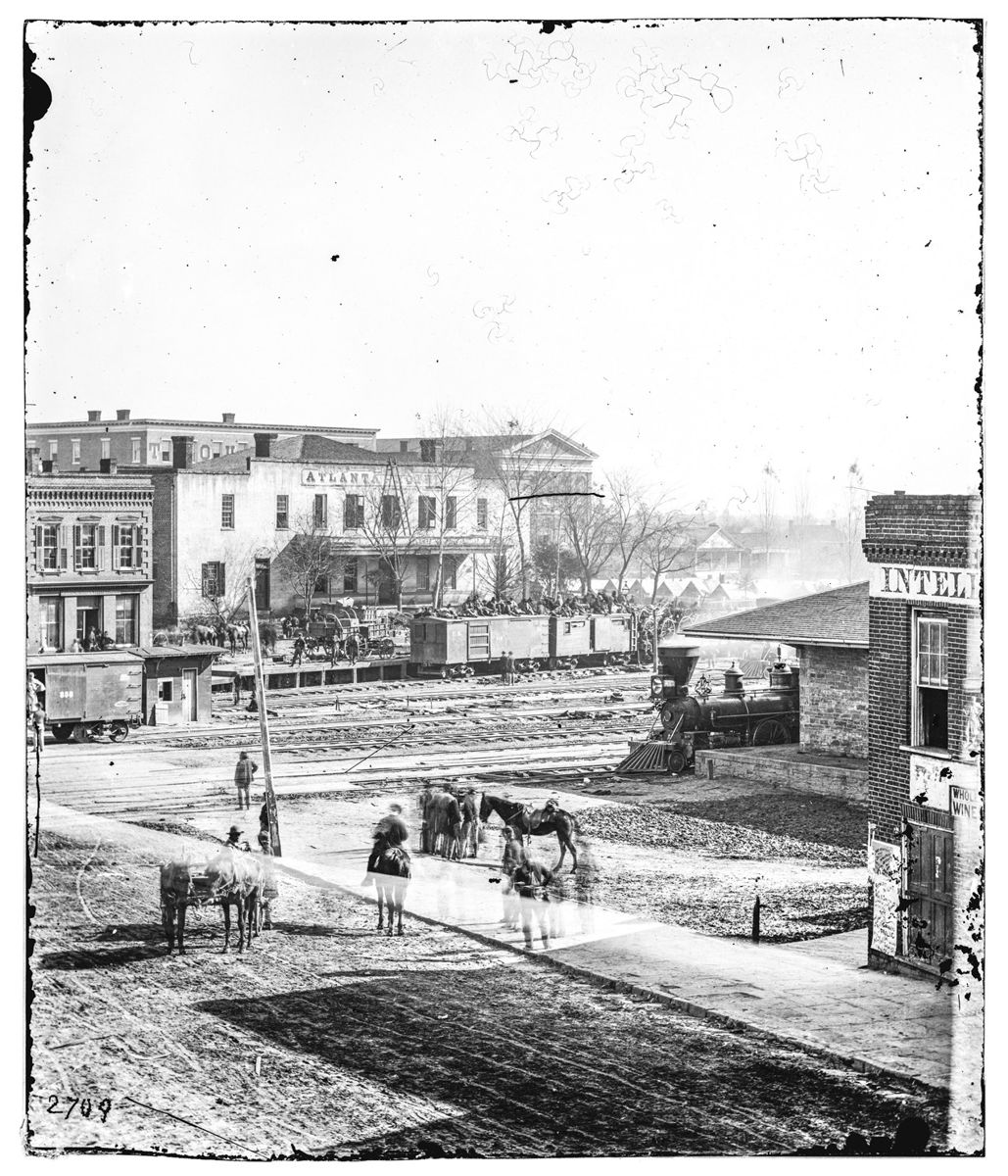
Close examination of the Intelligencer building of Barnard’s photograph shows a couple of posters attached to the brick corner.
“Sally” was performed by her daughter, “Miss S. Welch.” There was a part also apparently for an African-American (or a woman dressed up as one): “Dolly— Maid of all work,” filled by one “Miss Hattie.” Lieutenant Tuttle recorded in his diary for Nov. 5, that he attended “33d Mass. concert in the evening.” But he attended others that week; George Barnard’s pictures capture their advertising billboards. Sometime around Nov. 8,
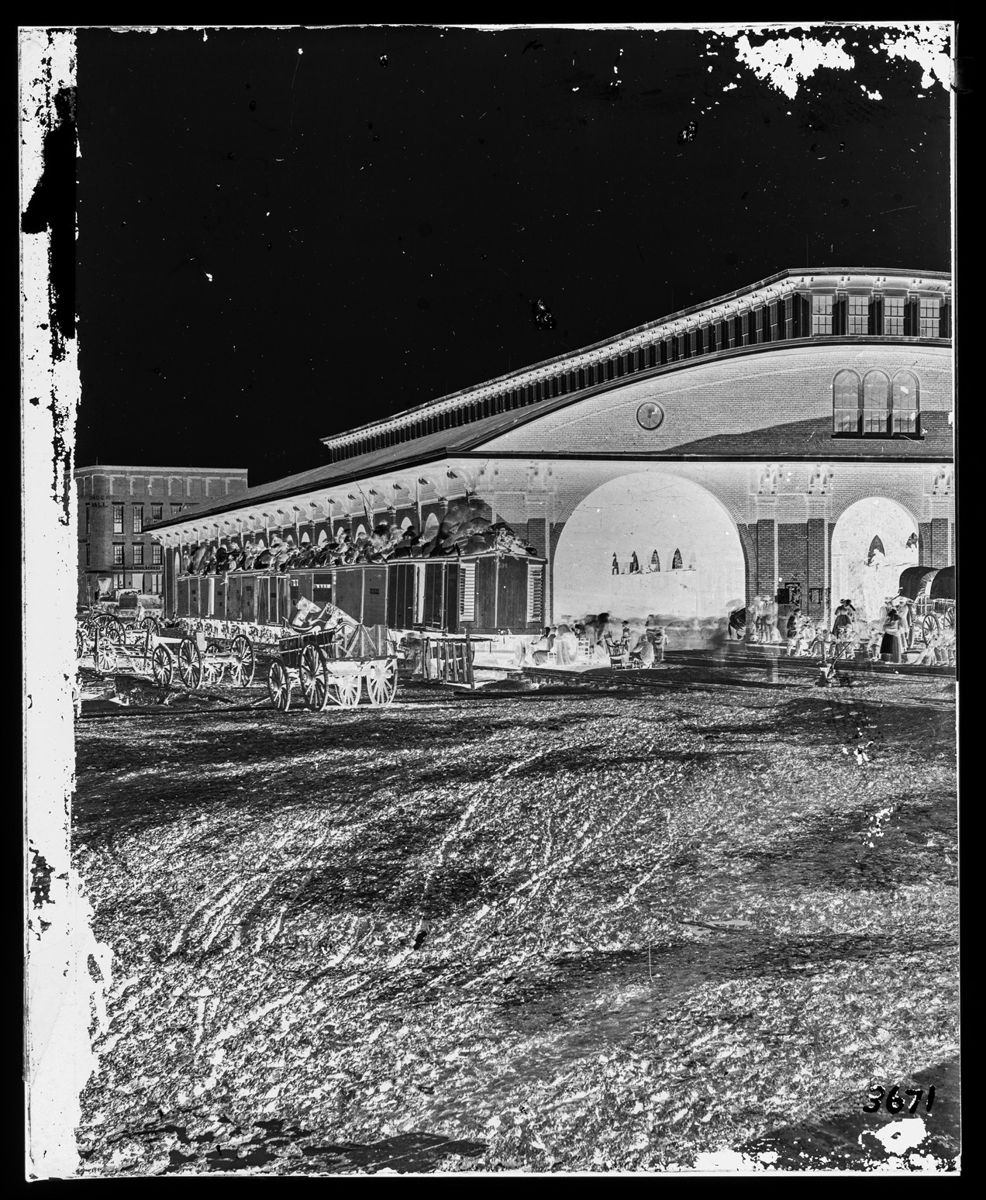
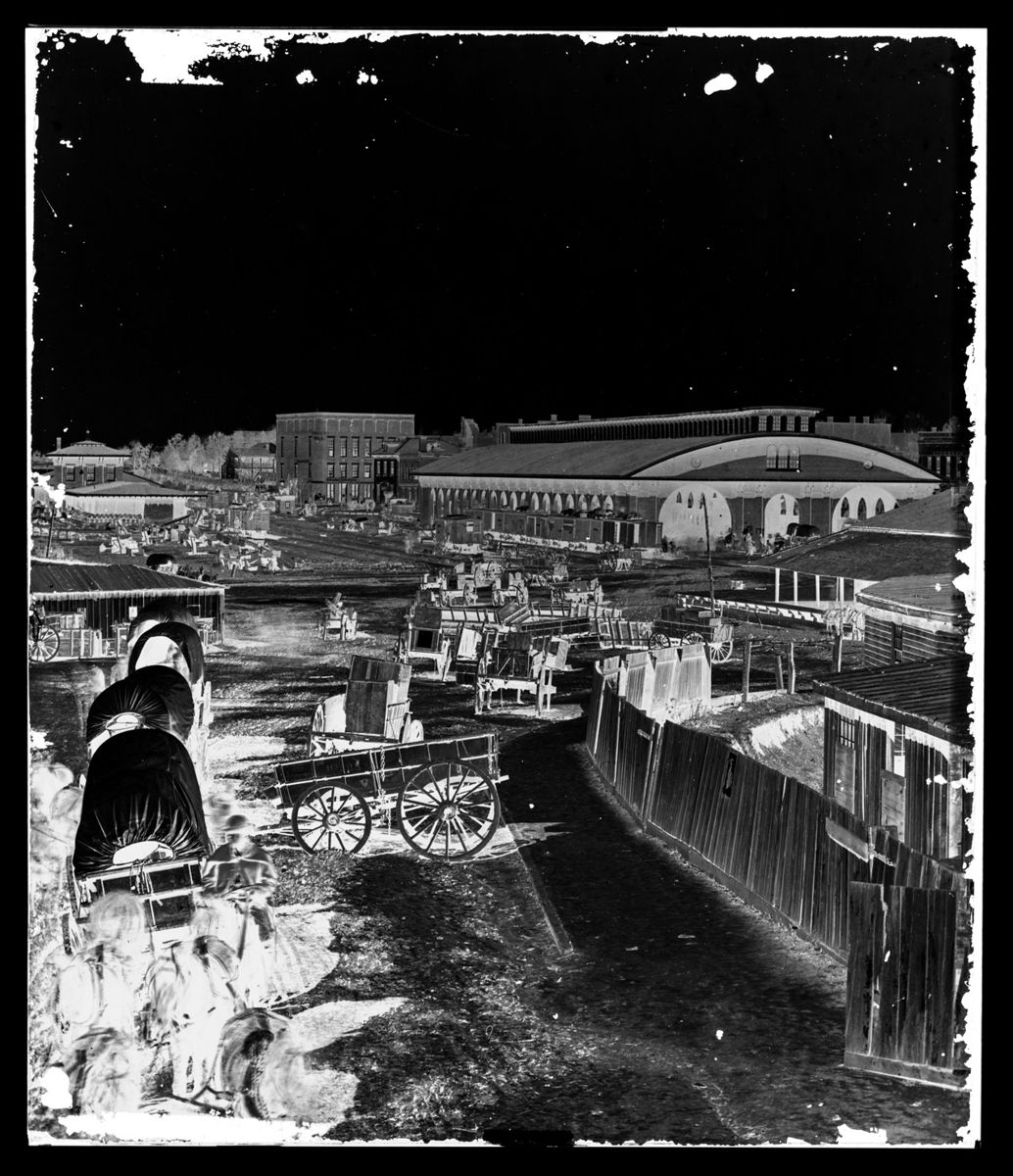
Barnard took a number of shots of a train being loaded at Atlanta’s downtown rail depot, called the “car shed.” (See LOC 02221u; 02233a) Everyone knew that soon Sherman would be abandoning Atlanta, leading his army away on a march whose destination only a few high-ranking officers knew. But all could see the quartermaster and commissary officers loading northbound trains with supplies and equipment that would not be carried in wagons in the forthcoming march. One of the series is numbered by the Library of Congress as LOC 02221u. The perspective is a long one, encompassing army wagons to the left, the car shed, and right behind it the light-colored Georgia Railroad Bank Agency and the three story “Concert Hall”—which really wasn’t a concert hall (the Atheneum was). Note the small cart in the center of the image and another of Bill Le Duc’s broadsides. Up close it reads: CONCERT AT THE ATHENEUM EVERY NIGHT THIS WEEK NOV 8 LOC 03472a: Here’s another photo of the same train. In this view, the tops of cars are now piled high with stuff; it is not army materiel, as that went in box cars whose doors are open and not yet filled. Instead, the stuff on top belongs to the last group of civilians still trying to get out of town before the Federals left. Almost all civilians had left Atlanta by early November; the folk left were mostly African-American freed persons, perhaps some poor whites, who had stayed on to work for the army as laborers, teamsters, cooks, and laundresses. Now, before the Yankees left, and the Rebels returned, exslaves were scrambling to get out of town. We see them when this scene is magnified. Behind them, stuck on the wall of the car shed, is another concert poster. This one advertises an event for the benefit of Sallie and Hattie, giving their last performance at the Atheneum on Monday night, November 7. The story behind the poster can be put together. Two young women, who had performed in “The Cobbler’s Frolic,” Sallie and Hattie, were now trying to get out of town, as was Rebecca Welch (“Polly Crumps”). The ladies would not have known that the Federals’ last northbound train would leave Atlanta on the morning of Saturday, Nov. 12, but for those fleeing the city, there obviously was no time to waste. Hence their last performance was on Monday, November 7. Mrs. Welch lost her husband in the war and was now trying to get herself and four children northward to safety. The 33rd Regimental Band, charging up to a dollar for some performances, generously agreed to share the gate with the Welches. The musicians eventually took in about $8,000. They gave a quarter of it to Rebecca to help in her hegira. Barnard was busy in early November. He also photographed the area around City Hall (LOC 02215a), on whose grounds the 2nd Massachusetts had built their huts and shanties. Across Washington Street were the handsome
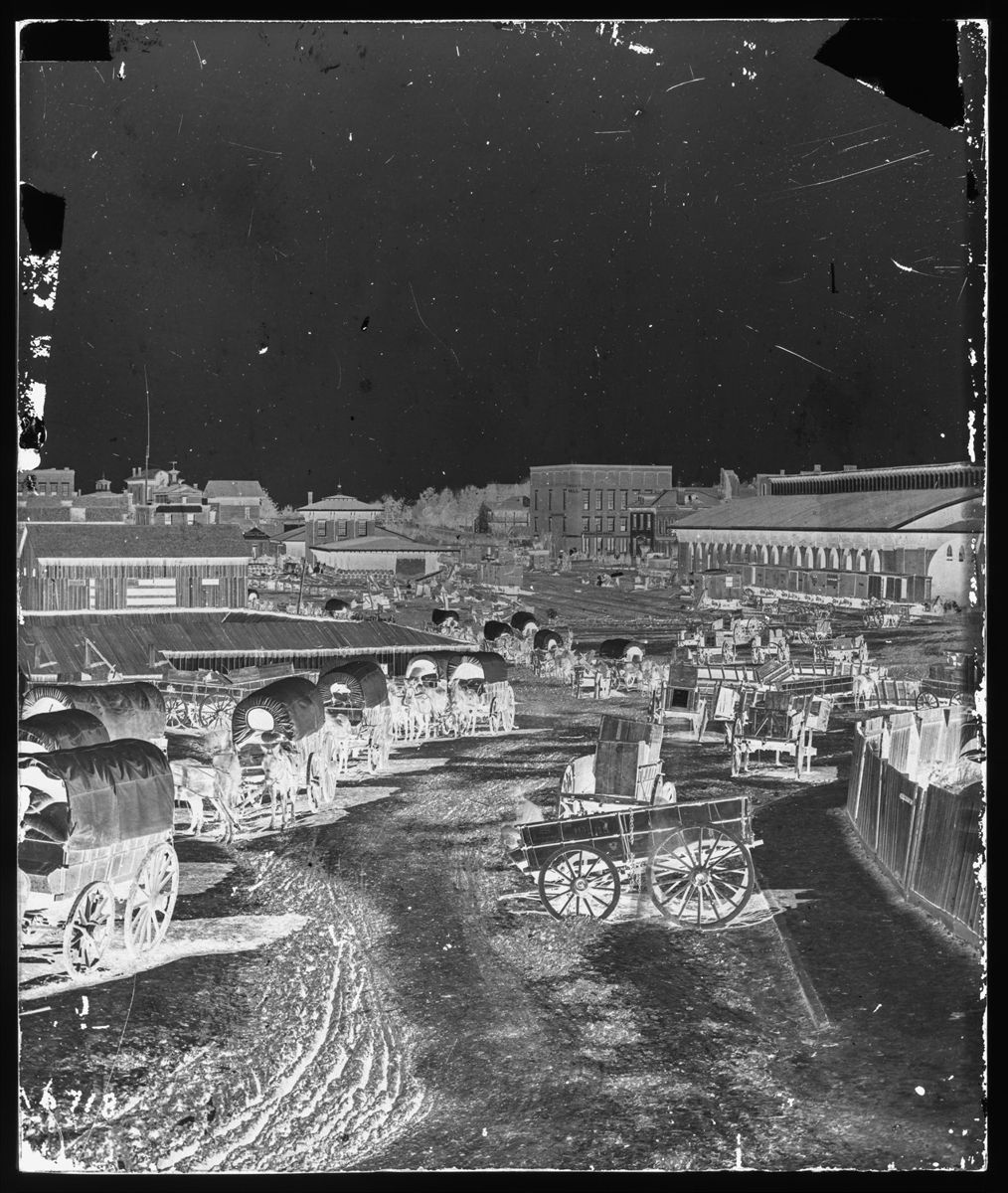
(LOC 02221u)
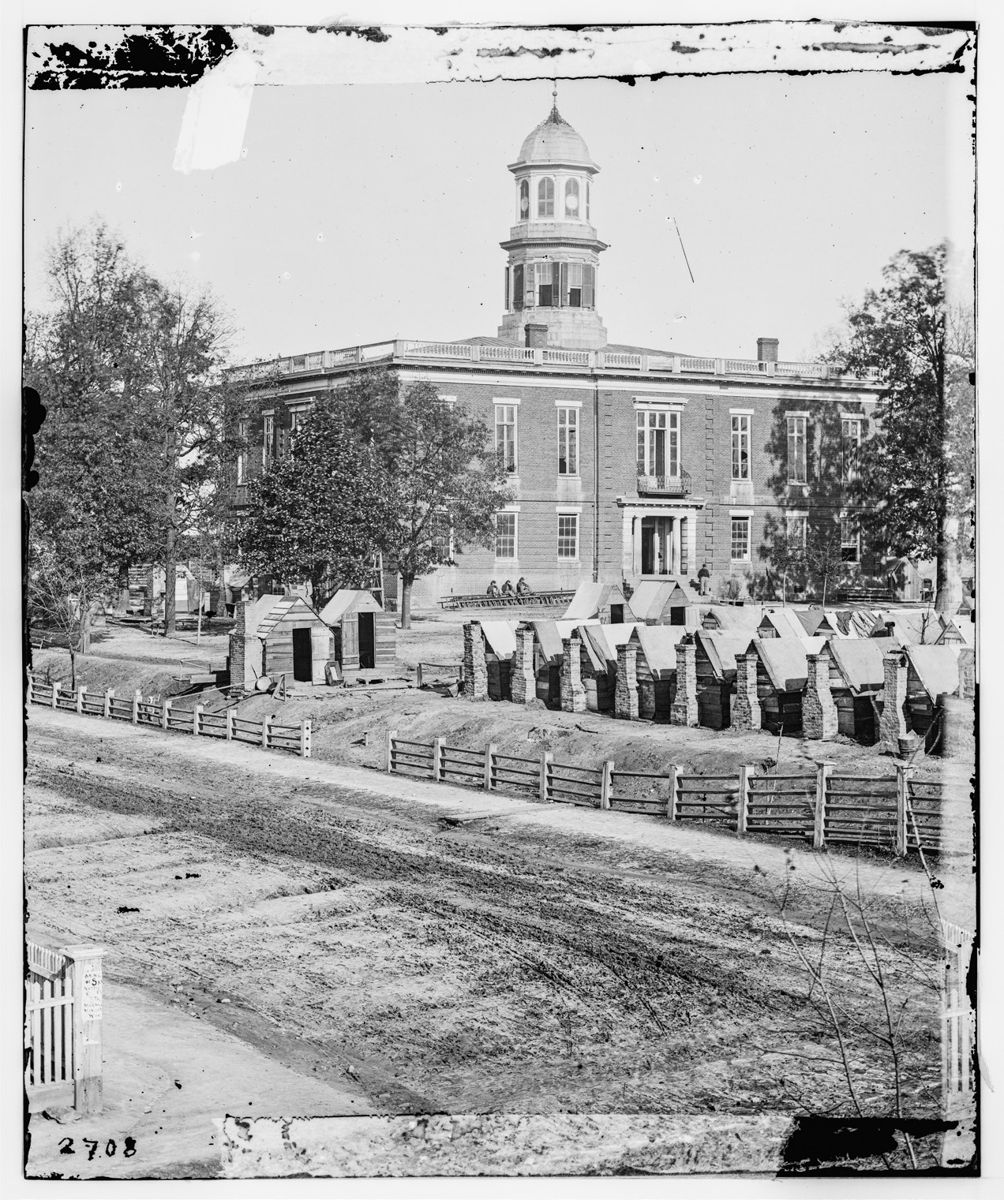
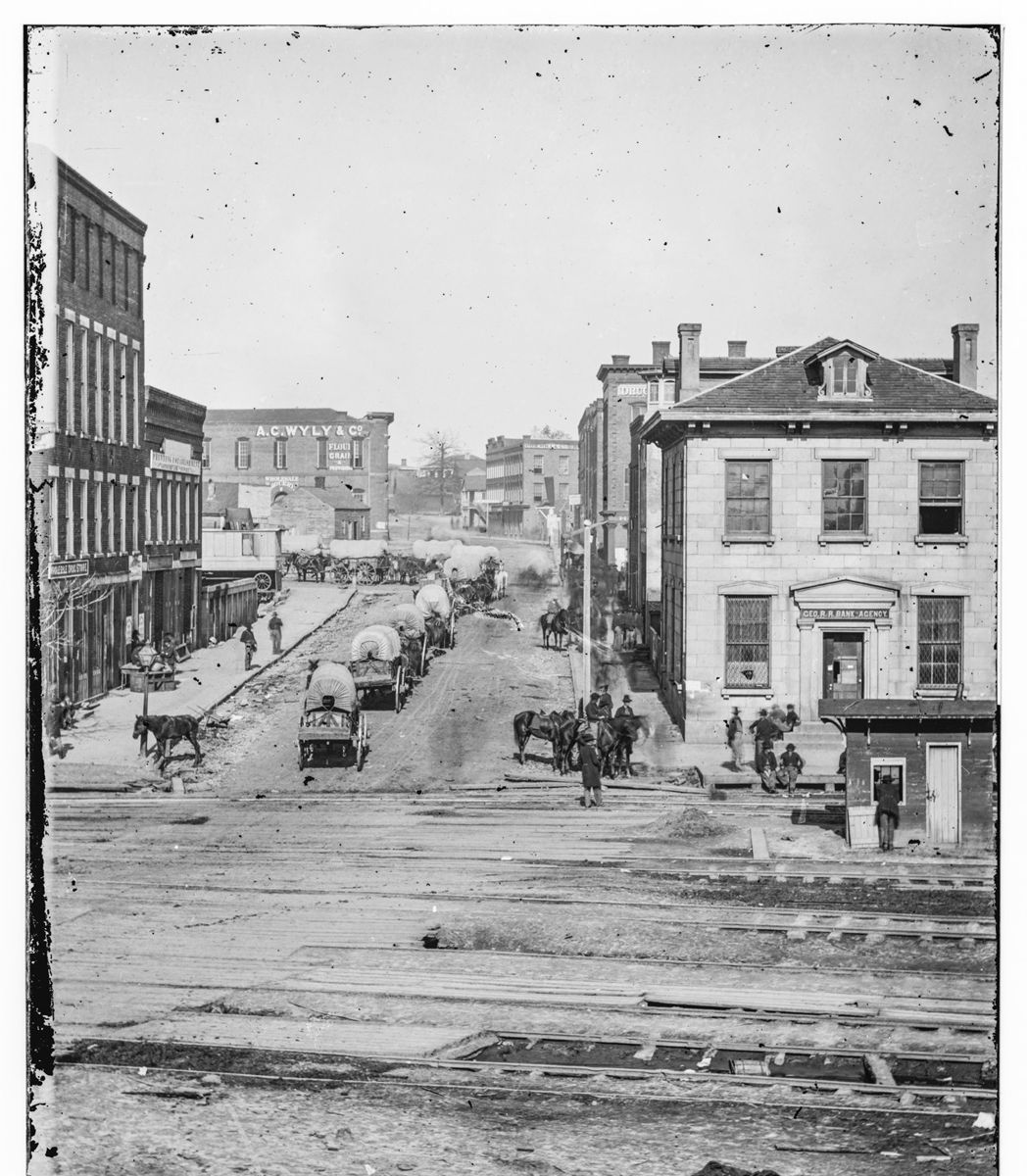
home of John Neal (Sherman appropriated it as his quarters during the occupation), and the Second Baptist Church (LOC 03353a). Look carefully at the fencepost at the church’s corner and again you’ll see the handbill for the Sallie/Hattie benefit at the Atheneum on Nov. 7. Posters for these events were being hung on buildings all over town. A view (LOC 03466a) which Barnard took from the railroad looking north up Peachtree Street, shows a few of these handbills: on the corner of the Georgia
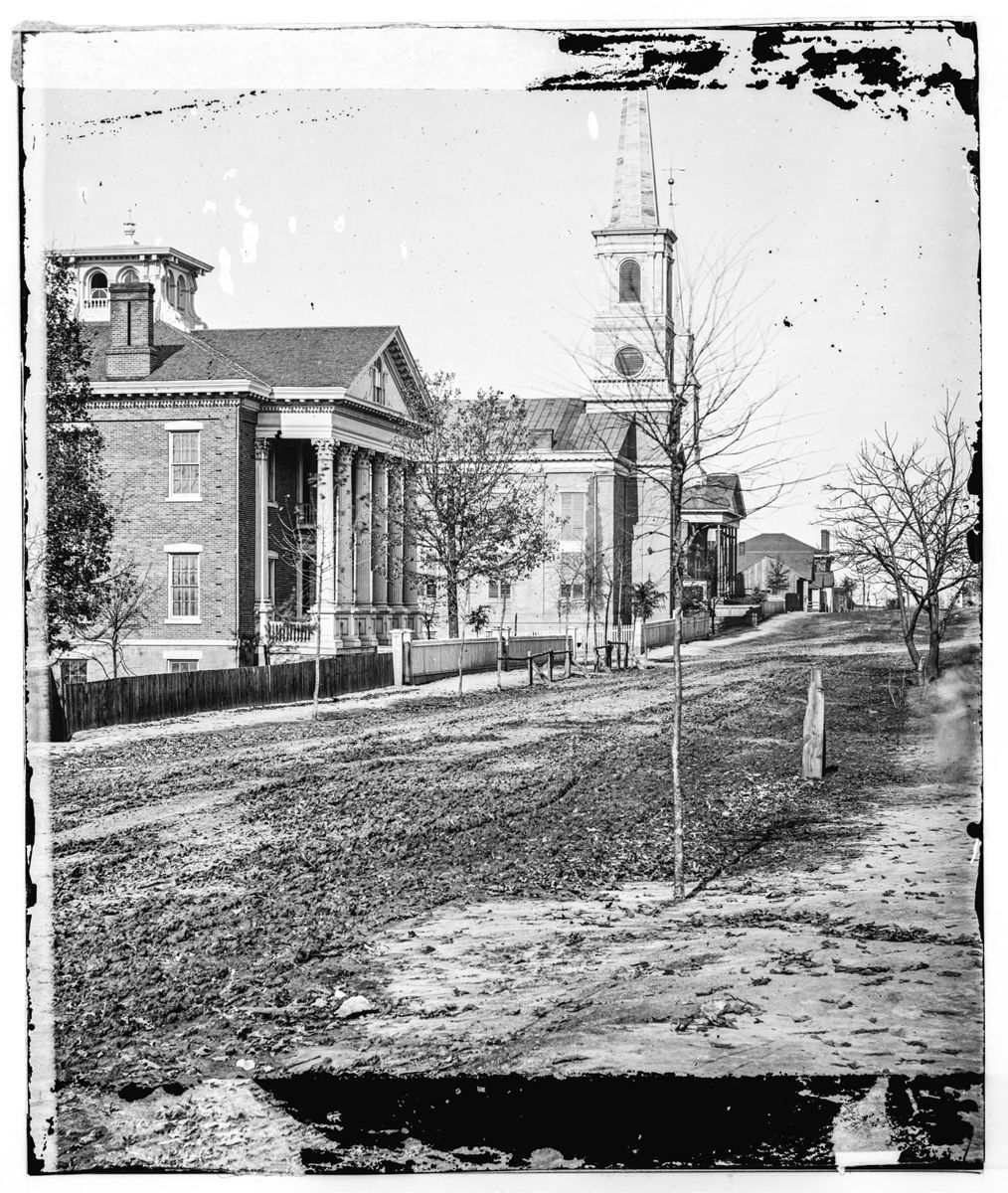
Railroad Bank Agency, and farther away, on the A.C. Wyly & Co. building. Still another entertainment announcement is seen in Barnard’s “Alabama Street, looking east from the corner of Whitehall Street, Atlanta” (LOC 03462a; caption comes from the Poe Collection of Barnard at West Point). The view looks east down Alabama, past the tall Franklin Printing House, before which is a Union wagon train. Look to the lower left. Behind the soldier leaning against the James Bank Building are these two broadsides: Wentworth and West The Black Joker At Hayden Hall Tonight Nov. 8 At the Atheneum Great Attraction Pantomime Thursday Night Nov. 10th We have little to go on about these performances. “Wentworth and West” could have been local actors or amateurs in a Federal regiment. Hayden Hall was a public building downtown, possibly on Peachtree Street, that was big enough to have housed a Confederate hospital in 1862. It was apparently an alternative venue for performances when another show was being put on at the Atheneum. …as it was on Tuesday night, Nov. 8. It was a festive day for the bluecoats in Atlanta. In the North, Nov. 8 was presidential Election Day, pitting President
Lincoln’s bid for re-election against the Democratic challenger, Maj. Gen. George B. McClellan. The presidential election of 1864 was the first in which U.S. soldiers voted in the field. Most had already gone home to cast early ballots, as authorities had done everything to get Union soldiers to vote, since most favored Old Abe. On Election Day, some soldiers in town both voted and received pay. Sgt. David Nichols of Knap’s Pennsylvania Battery recorded that he pocketed $235.40 that day, and had cast his ballot for Lincoln. His unit went overwhelmingly for the president, as he noted in his journal: “polled 113 votes, 95 for Lincoln & 18 for Mac (just 18 too many).” The festive atmosphere in the city that day reflected the belief of most that Old Abe would win, and that the men had dollars to spend. Hence the performance hall on the night of Nov. 8 was packed. “I never saw the Atheneum more full or the audience more noisy,” recorded Lieutenant Tuttle. In another week, however, things changed in Atlanta. November 15 was the day when
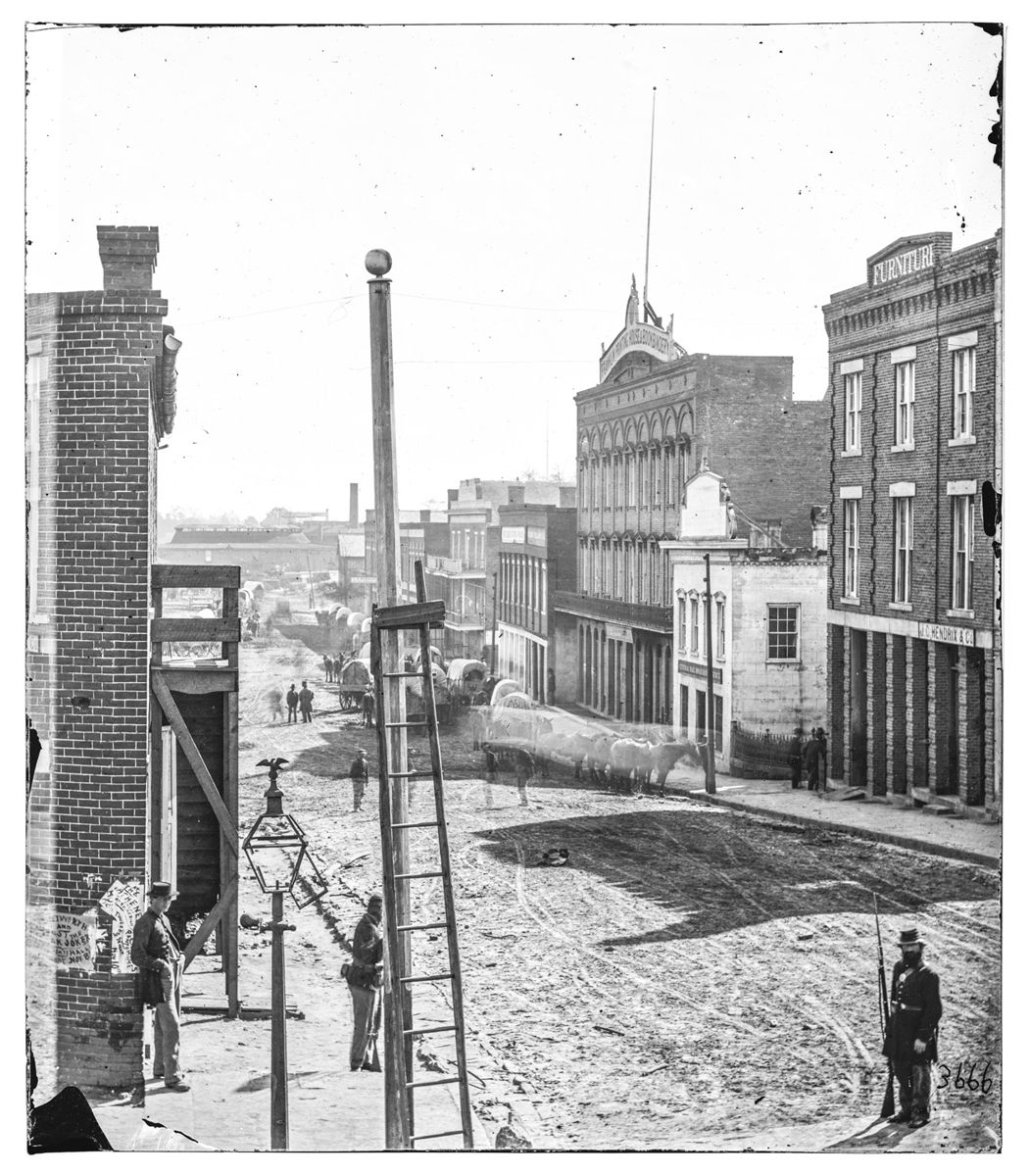
Union engineers conducted their final demolitions. Fires destroyed whole blocks downtown and buildings scattered throughout the city. On the morning of Nov. 16, Sherman and his staff rode out of town. “Behind us lay Atlanta,” the general later recalled, “smoldering and in ruins, the black smoke rising high in the air, and hanging like a pall over the ruined city.” But while they were there, Sherman’s men had enjoyed themselves with advertised entertainments, as famously photographed by George Barnard. Here in Atlanta, we savor the irony that everything we know about how our city looked in 1864 comes from the work of Sherman’s cameraman. Stephen Davis is the Book Review Editor for Civil War News. This article is based in part on his book, What the Yankees Did to Us: Sherman’s Bombardment and Wrecking of Atlanta, published by Mercer University Press in 2012.