The Saga of a Coat
By Jessica Hack · Originally published December 2017 · p. 38
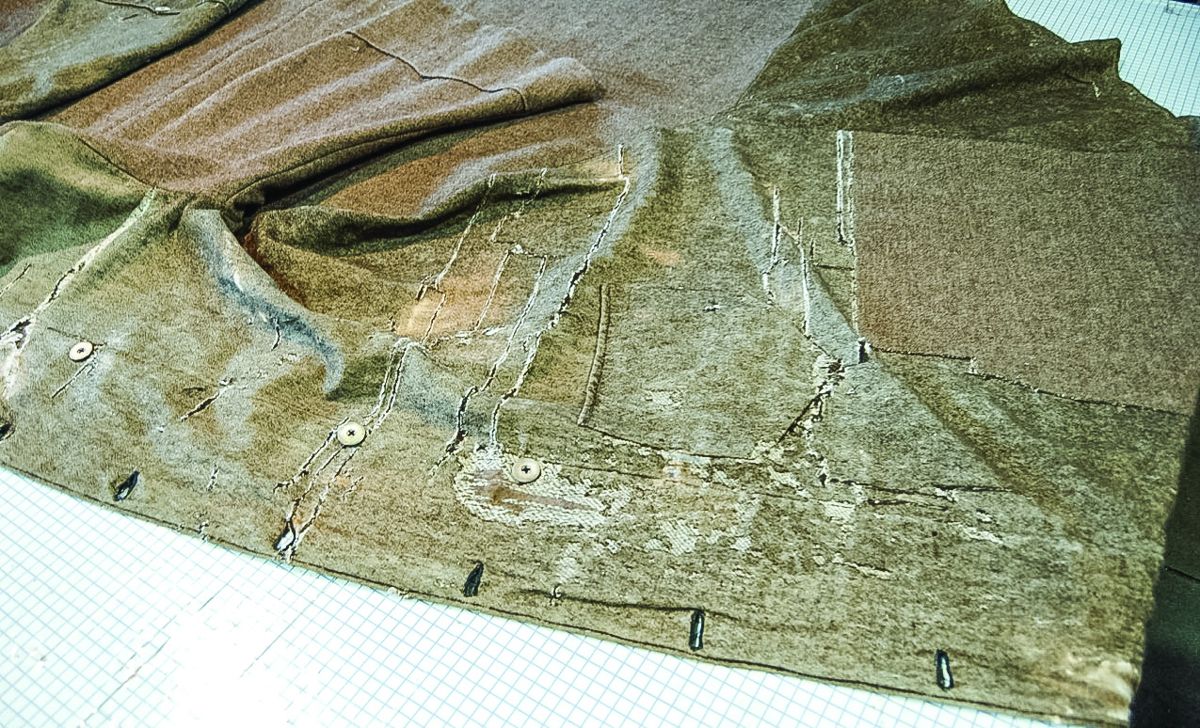
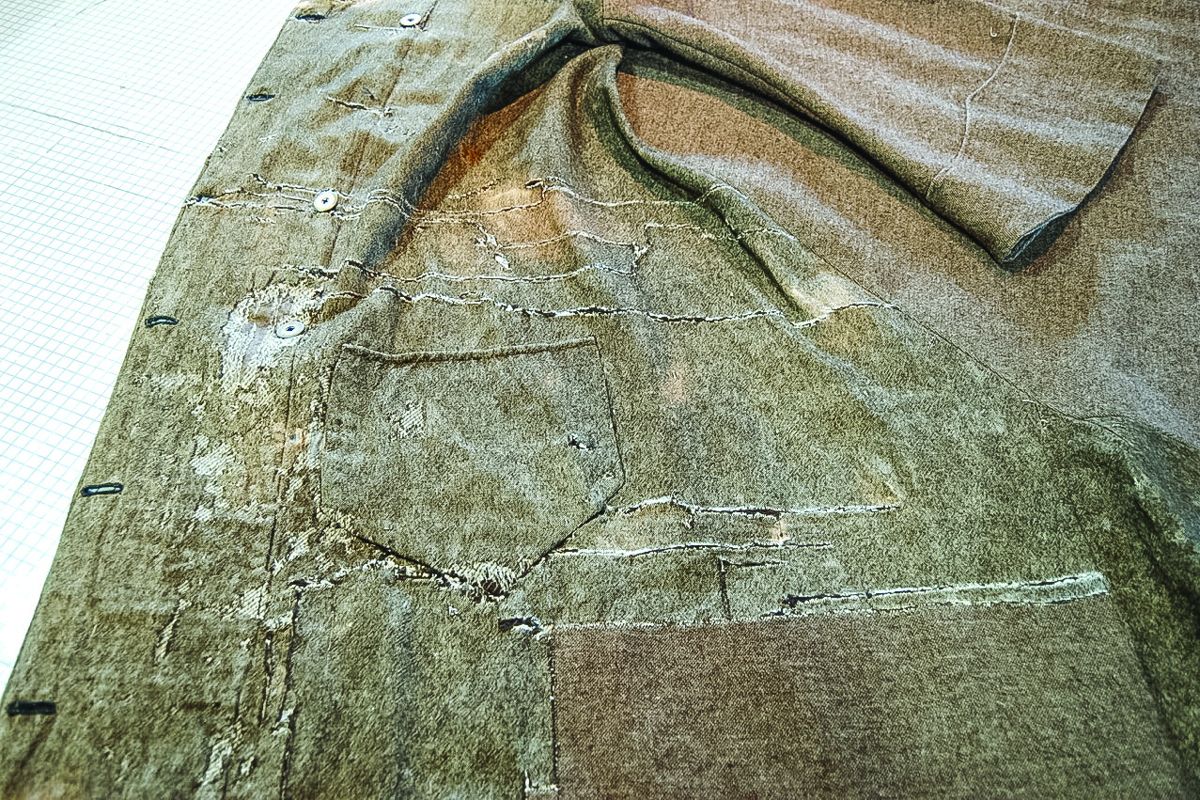
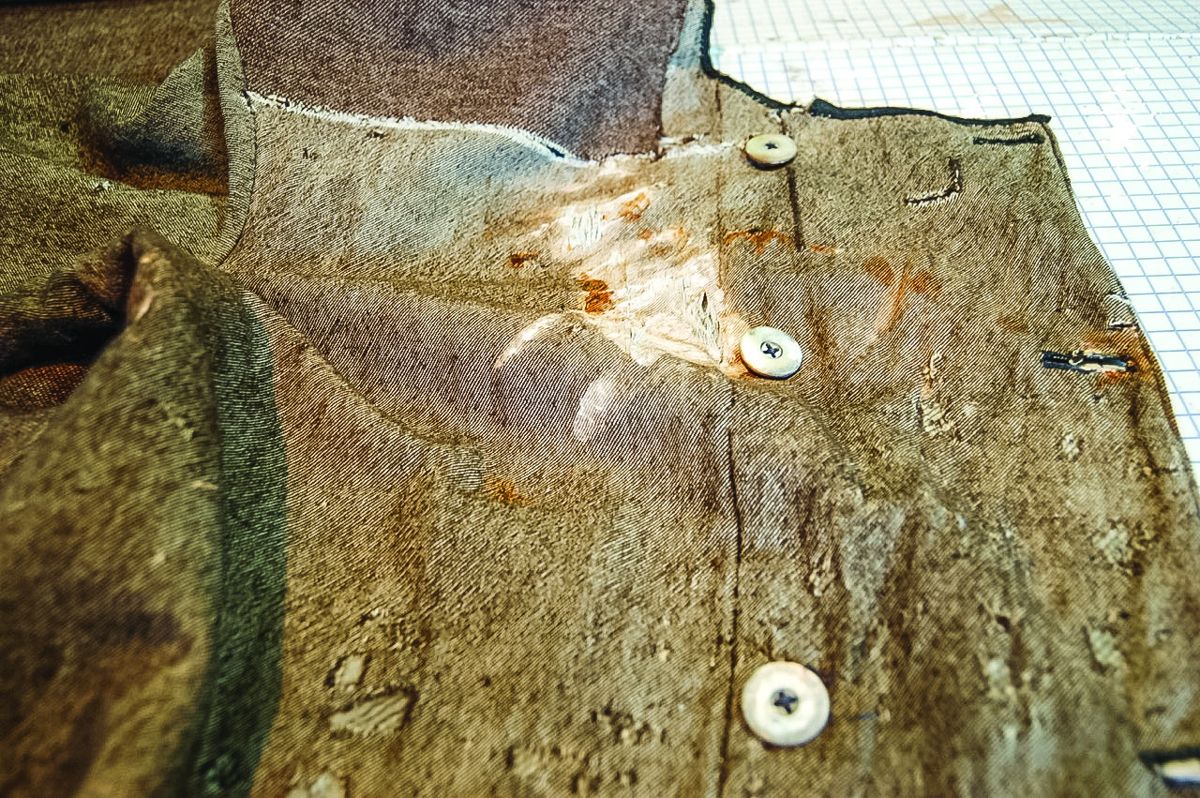
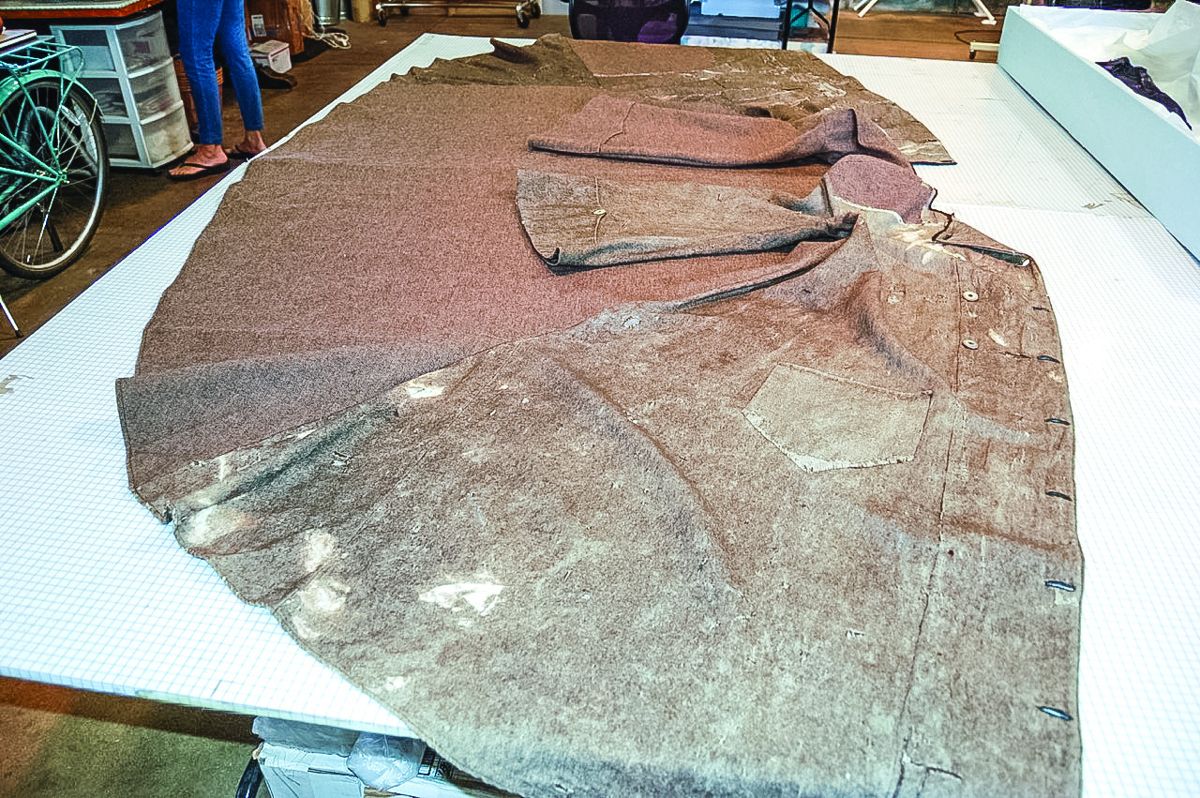
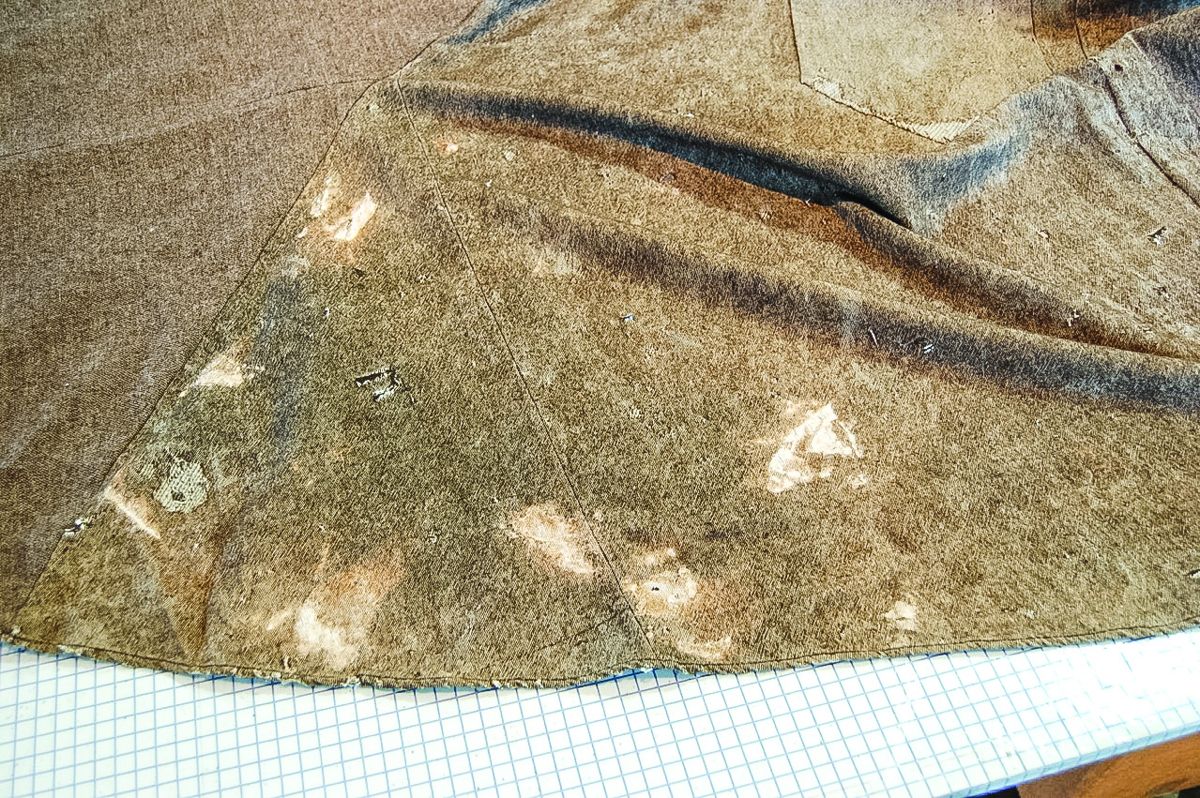
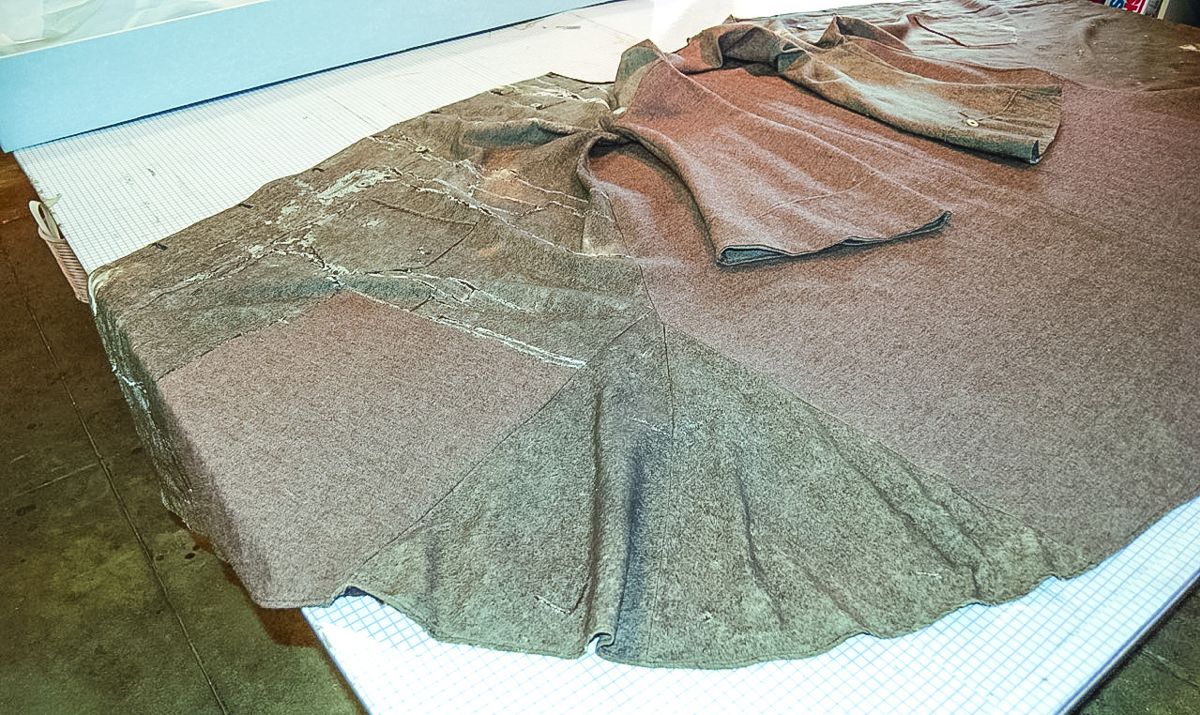
On May 10, 1865, Jefferson Davis, former president of the Confederacy, was captured by Union troops. The night before, Davis rested with his family in an encampment outside Irwinville, Ga., while on their way to Florida, where they hoped to catch a boat for Texas. Hearing gunfire and horses in the camp, Varina Davis convinced her husband to escape while he still could. She gave him her raglan overcoat to wear, along with a shawl that she was wearing, to cover his head. The loose-fitting overcoat, known as a “waterproof,” was nearly identical to his, and similar to the standard raincoat worn by Union soldiers. The shawl, too, was not unlike those worn for additional warmth by many men of the period. Nevertheless, after his capture, the Northern press repeatedly mocked Davis, depicting him as having escaped wearing his wife’s hoop skirt, petticoat, and bonnet. The coat and shawl came into the possession of then Secretary of War Stanton, who knew them to be what they were, but declined to correct the public record, earmarking the garments instead for his own private collection, and thereby perpetuating the myth of Davis’ cowardice. See the 2001, New York Times article by Robert C. Kennedy, and the 2010, American Heritage Magazine article by James L. Swanson for additional historical information about the capture of Jefferson Davis and the coat. The coat was ultimately returned to Davis family members and came to be part of the Davis family collection at Beauvoir, Jefferson Davis’ home in Biloxi, Mississippi. I call the conservation treatment of the coat a saga, because to date, conservation has occurred on four separate occasions: 1986, 1996, 2008, and 2017. The first treatment was minimal. The coat was wet cleaned and portions of the coat were sandwiched between layers of black transparent crepeline silk material, effecting limited change in the condition of the coat. The first major conservation effort was undertaken by my studio in 1997, in conjunction with the opening of the Jefferson Davis Presidential Library at Beauvoir. At that time the crepeline overlays were removed, and damaged areas of the coat were stabilized with underlays of new material. Sadly, the coat was profoundly damaged in Hurricane Katrina. It is amazing that the coat survived at all when a 30 foot wall of water overtook Biloxi in the storm surge. Only a portion of the coat actually survived. The left arm (as worn), a large piece of the left front panel, the right gore inset panel, and the back of the coat were torn away. The top part of the front left panel of the double breasted coat was badly torn and shredded. Other sections of the coat were torn away, bleached out, faded, and rust stained. The third conservation effort dealt primarily with replacing missing sections. Many newly torn areas of the front of the coat were minimally treated with sheer netting. Recently, thanks to a grant awarded to Beauvoir by the Order of the Southern Cross, my studio was once again able to conserve the coat. We decided to remove previous repairs, with the few exceptions of conserved areas that were still stable and integral to the coat. All other patches, netting, and replacement panels which did not fit the coat in terms of design, weight, and fabric content, were removed. While the coat supposedly had been cleaned after Katrina, visible particulate residue convinced us that the coat was still dirty. The brown water drained away after wet cleaning the coat bore this out. Given the significant amount of damage to the coat, it was decided to stabilize it by underlaying the entire coat with new material, and stitching the torn areas to the underlay for support. The double breasted raglan overcoat is made of a brown wool and white cotton twill material which, at least today, is a rare combination of materials. After a long search, wool twill fabric in a weave close to the size of the original coat material was selected and dyed to blend with the color of the coat. The remaining original coat material was over-dyed to return the bleached and damaged areas to their original color. Patterns were made to replicate the missing sections of the coat. New material was cut, fitted, and sewn to size, then stitched into the coat. The coat was steamed in preparation for return to exhibit at Beauvoir.