
Charleston’s Rich Civil War Photo Legacy Comes Alive During Image of War Seminar
By Bob Zeller · Originally published December 2017 · pp. 24–25
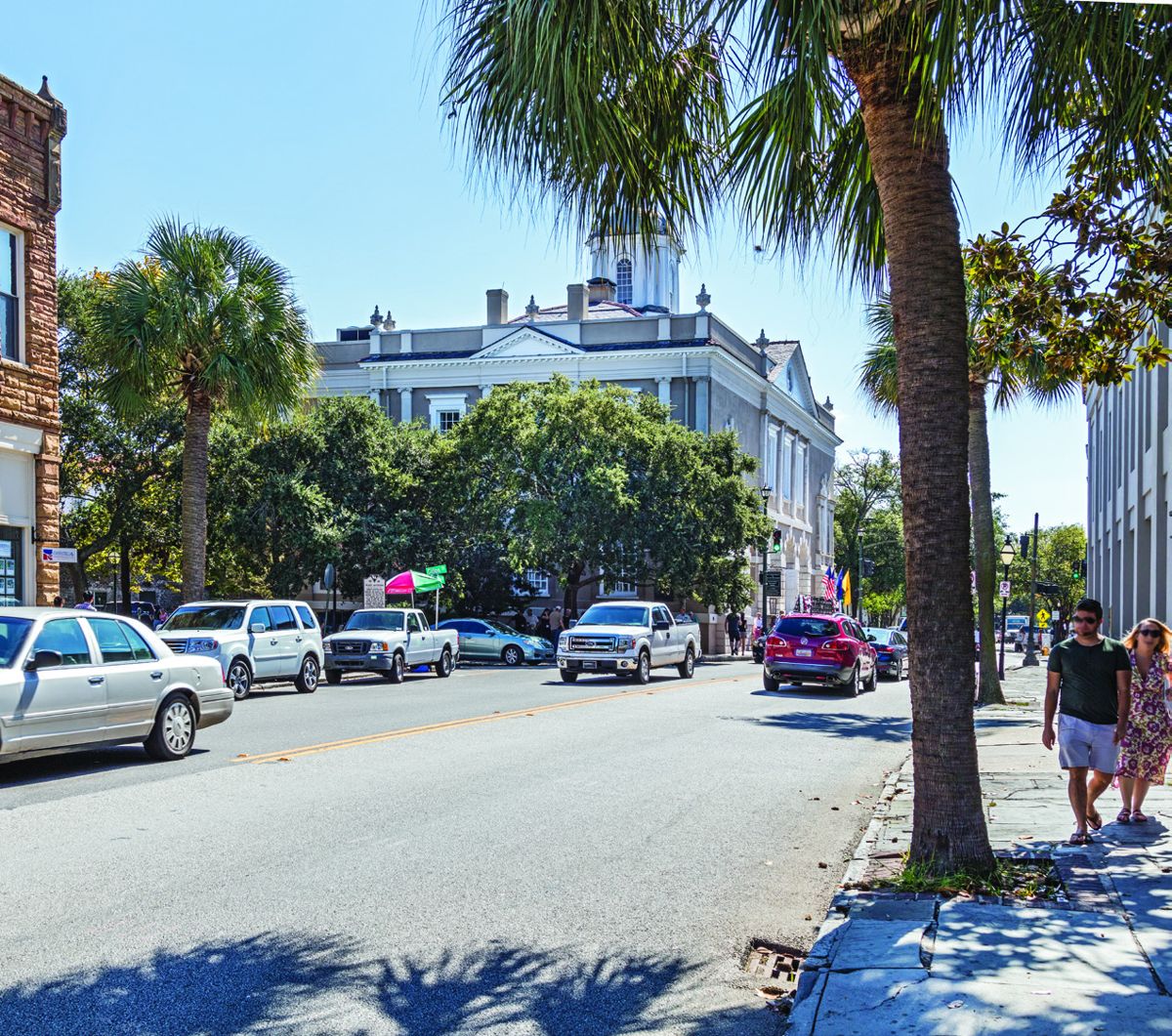
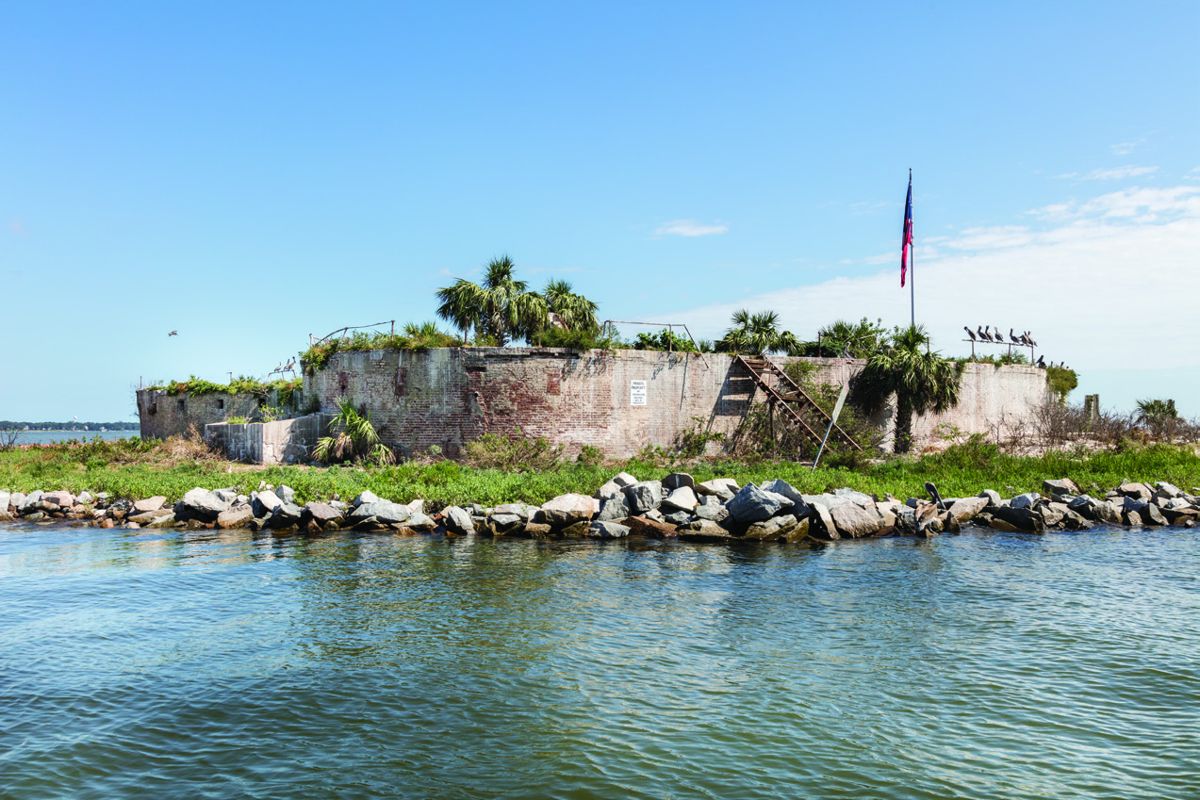
The first photographs of the Civil War were taken at Charleston, S.C., which became one of the most-photographed cities of the war era. So Charleston was the destination for The Center for Civil War Photography’s 17th annual Image of War seminar Oct. 13-15, where wartime photos were displayed in their original 3-D format at the exact spots where they were taken. The seminar toured three historic forts. Saturday’s tour included Fort Moultrie on Sullivan’s Island and a private afternoon visit to Fort Sumter in Charleston Harbor. The heartiest of our seminar attendees stuck around until Sunday afternoon, when the tides were right for an exclusive visit to the abandoned remains of Castle Pinckney on Shute’s Folly Island in Charleston Harbor. CCWP Vice President and seminar czar Garry Adelman, fulfilling a years-long desire to visit the deserted fort, led the expedition with about a dozen stalwarts, with permission from the Sons of Confederate Veterans, which owns the island. “Castle Pinckney was amazing,” Adelman said. “There was so much more to see than I thought there would be, and with the church spires of Charleston shown in some vintage photos, I now know exactly how the place was laid out. I wish we had more time but the tide began to come in, leaving us only about 25 minutes at the Castle.” Some of the Union prisoners captured at the Battle of First
Center for Civil War Photography Vice President Garry Adelman displays a 3-D photo of Fort Moultrie taken by Charleston photographers Osborn & Durbec in August 1860 near the spot where it was taken. (Peggy Melton)
Manassas were confined at Castle Pinckney in 1861, and Charleston photographer George S. Cook became the first photographer to take photos of Civil War prisoners of war when he visited the brick bastion on Oct. 11, 1861. Other photos were taken there in 1865. Since the steeples of Charleston’s historic churches appear in some wartime photos, Adelman could line them up with the present-day remains, even though the fort has been mostly filled in. The CCWP has always put a spotlight on the vast 3-D treasure trove of stereo photographs produced by the war’s photographers, and Charleston provided plenty of choices. Charleston photographers James Osborn and F.E. Durbec were only in business from 1859 to about 1862, but they took dozens of stereo photos in and around Charleston just before the war and after it started. Osborn & Durbec shot exclusively in 3-D and within days after the surrender of Fort Sumter in April 1861, they took a series of at least 43 stereo views of the battle-damaged Sumter and Moultrie as well as images on Morris Island. The negatives are apparently long gone, so the only record we have are the stereo views made by Osborn & Durbec, and they are exceedingly rare. Longtime CCWP member and regular seminar attendee Robin Stanford assembled probably the largest group of original Osborn & Durbec stereo views during a lifetime of collecting. They were acquired by the Library of Congress in 2015 and are now online for all to see and use, with free high-resolution downloads with a couple of mouse clicks. Just
Retired National Park Service historian Rick Hatcher speaks at the graves of the crewmen of the CSS Hunley submarine in Charleston’s Magnolia Cemetery during the Center for Civil War Photography’s Image of War seminar. (Peggy Melton)
search “Osborn & Durbec.” Stanford was on hand to see a poster-sized, 3-D anaglyph reproduction of her view of Fort Moultrie in August 1860, displayed near the exact spot where it was taken 157 years ago, an exclusive feature of Image of War seminars. CCWP also displayed poster-sized reproductions of two of Stanford’s Osborn & Durbec views inside Fort Sumter and an 1865 photo of the Old Exchange in Charleston. Seminar attendees viewed the stereo images with CCWP anaglyph 3-D glasses. Historic commentary was provided by Adelman and Rick Hatcher, retired historian at Fort Sumter-Fort Moultrie National Monument. The seminar’s Saturday afternoon visit to Fort Sumter came barely a month after it was flooded on Sept. 11 and forced to remain closed for days by Tropical Storm Irma, which wreaked havoc on the Caribbean and Florida as a hurricane.
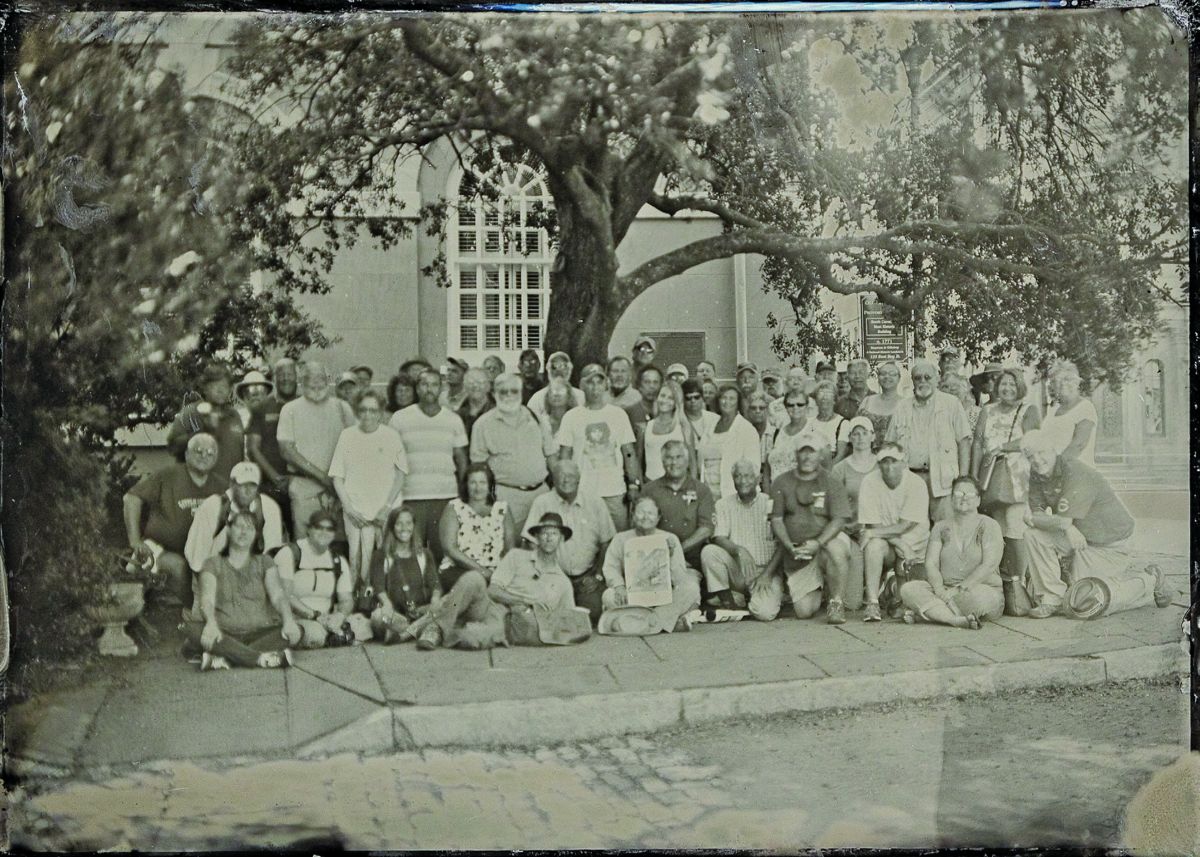
At the Old Exchange in Charleston for a lunchtime visit on Saturday, the Charleston Tin Typist, Christine Eadie, ably handled our annual wet plate photographic demonstration and group photograph as videographers from both the ABC and CBS affiliates in Charleston taped the scene. Both the Civil War News newspaper and Civil War Times magazine were represented at the seminar, which was topped off by a private cruise of Charleston Harbor with a filet mignon dinner on a gorgeous October Saturday night in South Carolina. The seminar also included slide programs in 2-D and 3-D on Charleston as well presentations by Adelman, author Steve Davis, and this writer, with revelations and detailed looks at Civil War images and early post-war photographs of Atlanta by George Barnard. Before Sunday’s exclusive visit to Castle Pinckney, the program featured stops at The Citadel, where photos were taken in 1865, and Magnolia Cemetery, where Hatcher told the story of the CSS Hunley while standing beside the graves of the sailors who served on the Confederate submarine. The 2018 Image of War seminar will be in Washington, D.C., next October. Watch for more details at www.civilwarphotography.org Bob Zeller, co-founder and president of The Center for Civil War Photography, is one of the country’s leading authorities on the imagery of the Civil War. He is the author of several ground-breaking books in the field, including The Blue and Gray in Black and White: A History of Civil War Photography (Praeger, 2005), the first narrative history about the war’s photographers, what they did and why they did it.