
The Private Letters of Gen. William D. Whipple— A Personal War Time Portrait
By Wayne L. Wolf & Bruce S. Allardice · Originally published August 2017 · pp. 26–27
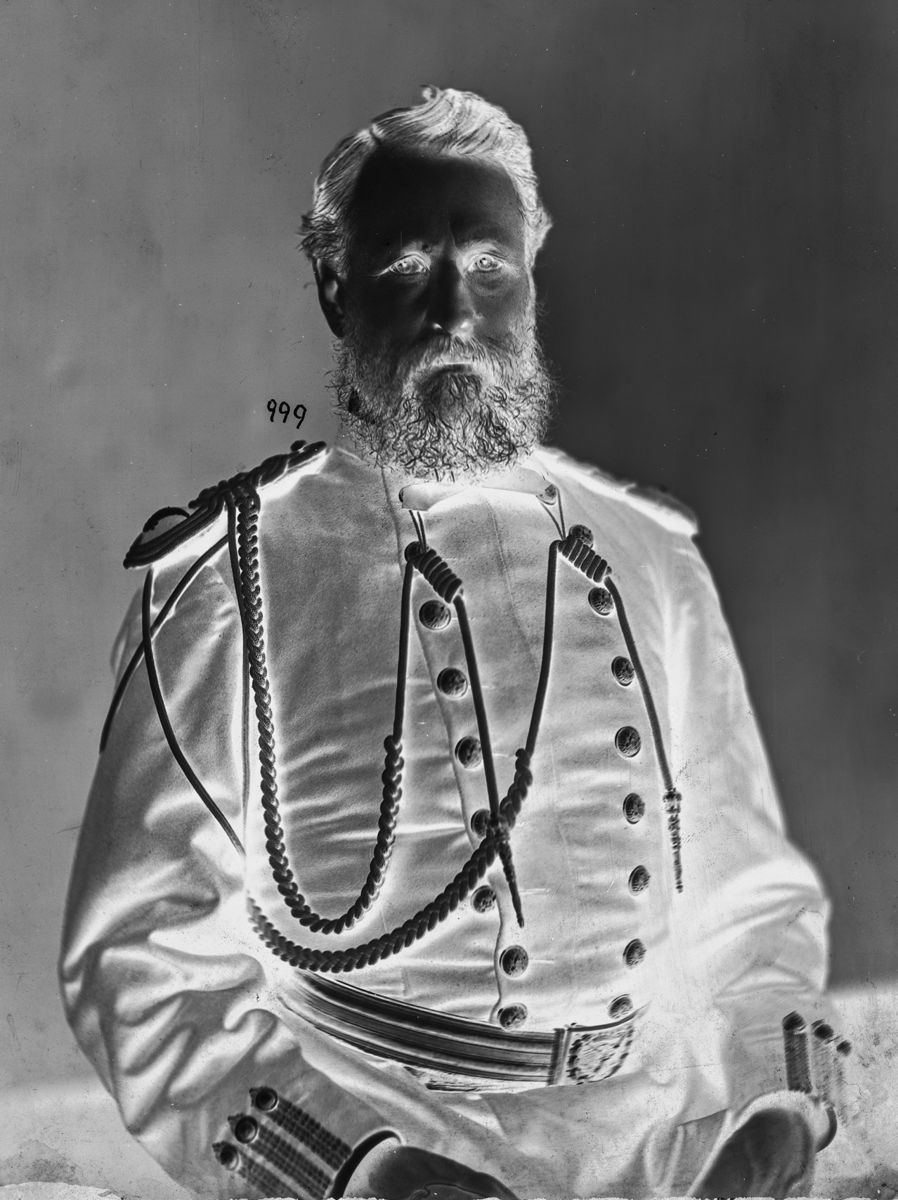
The Private Letters of Gen. William D. Whipple— A Personal War Time Portrait By Wayne L. Wolf & Bruce S. Allardice Historians love to find Civil War letters tucked away in attics, musty historical societies, or personal archives that shed light on the men who fought the war and add new insights into the brutal sectional conflict. Recently six previously unknown personal letters of Gen. William D. Whipple surfaced in New Orleans that shed light on his feelings about long separations from family, the difficulties of Southern winters, and speculations about enemy intentions during the occupation of Nashville and the battles during the march to Atlanta. Gen. Whipple was born in Madison County, N.Y., on Aug. 2, 1826. Graduating from West Point in 1851, he spent the next ten years on frontier duty in New Mexico and Texas. He escaped through rebel lines when the U.S. Army in Texas surrendered, and headed east to assume the post of Asst. Adj. Gen. in Gen. David Hunter’s Division. He was promoted to Brig. Gen. of Volunteers on July 17, 1863. In November 1863, he was Asst. Q.M. Gen. in the Army of the Cumberland. Later he became Chief of Staff to Gen. George Thomas. He took part in all operations around Chattanooga and Atlanta as well as the Battles of Nashville and Franklin. From 1870 to 1875 he was aide-de-camp to Gen. Sherman, then from 1878 to his retirement in 1890, he was Adj. Gen. in the Division of Missouri. He died on April 1, 1902 in New York City from pneumonia. Gen. Whipple was, above all, a devoted and attentive family man who adores his “little wife”
(Caroline M. Cook) and daughter (Marion). He longs to be with them. This first letter dated Aug. 6, 1863 was written less than a month after his promotion to Brig. Gen., yet focuses almost entirely on a planned family visit: Pottsville, Aug. 6, 1863 My Dearest Caro: You and Bertha come as quickly as you please and stop at Mount Carbon which is about a mile below Pottsville. Tell the conductor that you wish to get off there. I am in very comfortable quarters at the Morrison House. Your Aunt Lizzy says “by all means bring Marion as she wishes to see her.” Bertha should bring her saddle and riding skirt. Splendid riding in this vicinity. My black horse is a fine ladies horse. Pay Robert for my washing as I suppose he advanced the money for me. How does Walter like his pups. Love to all. Affectionately Yours, William His next two letters, in December 1863, turn their attention to the business of war. Excessive rains are raising rivers and destroying pontoon bridges. The mud unceasingly bogs down mules and makes forward movement impossible. The local populace is near starvation, and reenlistments are a priority to reman depleted Union regiments. The only Christmas amusement is when soldiers burn gunpowder on Christmas Eve to joyfully announce the arrival of another Christmas. Chattanooga, Dec. 25th, 1863 My Dear Little Wife,
How have you spent your Christmas. Mine was rather dull, very much like other days. I remained in the office until after one o’clock then mounted my horse and rode to Rossville [Ga., just south of Chattanooga], where I dined with Watkins [Perhaps Louis D. Watkins, who commanded a cavalry brigade] and came back in the evening and went to work again. The only way in which the men could manifest their joy at the return of Christmas was by burning powder. On Christmas Eve the noise thus made sounded like heavy skirmishing. Dec. 27th (1863) Chattanooga Yours of the 18th recd. today. I do not think that any of your letters have been lost. We have only expected letters to travel the space between us in too short a time. The map also came today. Poor little Marian. How I pity her on account of the necessity of her trip to the dentist. She will doubtless consent to the operation without many murmurs is [sic] she can be made to understand that her beauty in the future will be increased by it. I have sufficient bedding to keep me warm as the weather is not very cold. The disagreeable Southern winter is now finally upon us and the mud is execrable. The river rises and brings down drift and breaks our pontoon bridges and the poor miserably poor mules cannot haul the wagons through the mire. So I suppose we may consider ourselves stuck until spring. It has been raining steadily for 48 hours. The theatre of war is depopulated of all but soldiers and a few persons. We are obliged to feed to keep them from starving. In the meantime our old regiments are re-enlisting and going home to fill their thinned ranks and I do hope something will be done to put a large army into the field in the spring that we may finish up this rebellion and permit me to rejoin my darling wife and sweet little children. It is all a mistake about our evacuating Chattanooga. We never intend to evacuate this place. The rebels are trying to make themselves believe that we are going to do so but while we are engaged in building such works as the bridge over Running Water [10 miles west of Chattanooga] on the Memphis and Charleston Railroad, which is 116 feet high. With much love, Your Husband. As you do not inform me of how I am to direct my letters I continue to address as heretofore. Mrs. Gen. W.D. Whipple, Norristown, Pennsylvania. In a letter during the Atlanta Campaign, Whipple relates how the rainy weather has bogged down Sherman’s armies. It rained almost every day that June. In a June 18 letter to Grant, Sherman complained of “the immense quantity of rain” that had fallen, which was impeding his army’s advance as much as the Confederates were. A few days later Confederate Gen. Joseph E. Johnston noted that “the continued heavy rains” made off-road operations “next to impossible.” The fighting Whipple mentions appears to refer to Howard’s IV Corps seizing two hills near the Confederate center on June 20, and the Confederate counterattack that briefly retook one of the hills. Camp near Kennesaw Mt. Ga— June 21st, 1864 My dearest: Still the fight goes on unceasing by day and night and still the rain pours. Wagons when they move at all move at a snail’s pace, every hole has them stuck in it. Mules and horses are down in the mud constantly, and the eternal splash, splash, splash of persons walking through the mud and water is getting tiresome. Moreover, everything gets mouldy and boots taken off at night generally refuse to be put on in the morning. We gained an important point last night and the Rebels during the night tried seven times to retake it but failed each time. Their loss must have been heavy in these repulses at least I hope so. My health is very good now and I hope we will soon finish up Johnston’s army. The tenacity with which our men stick to this work is wonderful and merits all praise.
Give my love to the children and all at the farm. Yours affectionately, W. In his letter of Nov. 9, 1864 from Nashville, Gen. Whipple comments on the high cost of lodging in the city, the Union advantage in their ability to consolidate forces by both rail and steamboat, and their impatience with Gen. John Bell Hood’s lack of advance. The war is lasting too long, the desire to bring it to a conclusion evident among Union forces, and Gen. Whipple’s desire to be reunited with his family and resume domestic pursuits becomes paramount. Nashville, Nov. 9th 1864 My Darling Wife, Yours of Oct. 14 has just been received, it having went to Chattanooga and thus it was that I rec’d no tidings from you as early as I expected. Oh I am so tired of this separation. I think my visit home has spoiled me for the coming winter. Would bring you here if there was any certainty of remaining here this winter but we know not at any time that we may not be ordered away within twentyfour hour, and if that was not the case perhaps you are better off at the farm or living in Brooklyn or some other place as you did last winter than coming to this expensive, uncomfortable place. There was a lady at dinner at Paxton’s today who says she was offered three rooms in the third story of a house for a year for the moderate sum of seventeen hundred dollars. There was a fourth room upon the same story which the owner of the property would not permit her to have. From this you can form some idea of the price of things at this place. The manifold writer I left on purpose as I have another with me. I shall endeavor to make the Q.M. Department refund me the money expended for the dispatch which I can do by making out the account. It has been raining heavily here for several days which has caused a flood in some of the streams washing away trestle bridges and interrupting R.R. communication. Of course Hood cannot move in this mud and we have the advantage as we can concentrate our forces by railroad and steamboat. If Hood does not advance soon we will probably attack him. Give my love to the children and all at the farm, Yours affectionately, W. General Whipple would not have to wait long for the encounter with Hood. As Gen. George Thomas’s Chief of Staff he helped to oversee the Nov. 30,
1864 Battle of Franklin, Tenn., and the successful holding of Gen. Schofield’s line. Six thousand Confederate casualties were the result of Hood’s unsuccessful assaults on Union lines. On Dec. 15-16, 1864 Hood’s Army of Tennessee was again beaten and effectively destroyed as a fighting force in the Battle of Nashville. A final letter, written after the Tennessee Campaign ended, details how Thomas’s victorious army is resting after its pursuit of Hood’s beaten forces, and reequipping for the 1865 campaign. Eastport, Miss. Jan. 16, 1865 My dearest Caro: We reached this lovely spot day before yesterday. There is no town here, two or three sheds and a house on the hill back from the river being all the buildings in this vicinity. All is bustle and activity here however. A great number of steamers are lying at the bank discharging their cargoes and troops are moving and wagons arriving and departing. On the eastern or northern bank the gun boats are lying. We will remain here I presume until the army is fully ready to take the field and then away we will go again. We have not yet left the steamer so we cannot find room to encamp our head qrs. The 23rd Corps has been ordered to Annapolis.

We yesterday went about ten miles up the river to the camp of the cavalry hd.qrs. I hope the children are well, as well as yourself. Yours affectionately, W.
It would be another four months before the war would end for him and he could be reunited with his family.
Bruce S. Allardice is Professor of History at South Suburban College in Illinois. He is a past president of the Civil War Round Table of Chicago.
Wayne L. Wolf is past president of the Lincoln-Davis Civil War Roundtable and a Book Reviewer for Civil War News.