Still Going Strong at the N-SSA’s135th National Competition
By Bruce W. Miller · Originally published August 2017 · pp. 24–25
Still Going Strong at the N-SSA’s135th National Competition By Bruce W. Miller We members of the NorthSouth Skirmish Association owe a great debt of gratitude to two remarkable men, without whose perseverance, determination, and love of black powder shooting, the sport might never have existed. They are Jon L. “Jack” Rawles and Ernest W. “Pete” Peterkin. What originally brought them together was a photograph printed in the Oct. 1949 issue of Muzzle Blasts, the official magazine of the National Muzzle Loading Rifle Association. One illustration for an article on the opening of the Berwyn (Md.) Rod & Gun Club showed Pete wearing a Union shell jacket and kepi while firing his Model 1863 Springfield rifle musket that he had purchased nine years earlier for $5. That picture caught the eye and sparked the imagination of confirmed Southerner, Jack Rawles. For the next four months, Jack wrote letters to the NMLRA and to the gun club, trying to find out who the “gent in the Union suit” was and to arrange a friendly competition between musket-shooting Rebs and Yanks. Finally, he and Pete began to correspond. They soon learned they were kindred spirits, sharing a love of muskets and American history. Together they planned the first “shoot”, which took place as part of the Berwyn Gun Club’s annual match on May 28, 1950. Foreshadowing many future National Skirmishes, they shot in a drizzling rain. Because of time constraints, the first match consisted of three events: five men on each team firing at balloons hung from a target frame, then all competitors firing five-shot strings at paper targets prone at 50 yards and five-shot strings kneeling at 50 yards. When the smoke cleared, the Confederate team emerged as winners, and the Boys in Blue marched off the field with their muskets reversed to show respect for their conquerors. From this primitive program, Jack and Pete learned how much spectator appeal breakable targets offered. They resolved, in beginning a tradition we continue to this day, to make breakable targets an integral part of the small arms company matches. Two spectators at that first “shoot,” George Morton and George Carter, officers of the Cavalier Rifle and Pistol Club of Richmond, Va., invited both teams to stage another “North-South Shoot” on their range in the fall. The second match, which took place on Oct. 1, 1950, was the last time only two teams would compete in an N-SSA skirmish (Ericka Hoffmann) (Ericka Hoffmann)
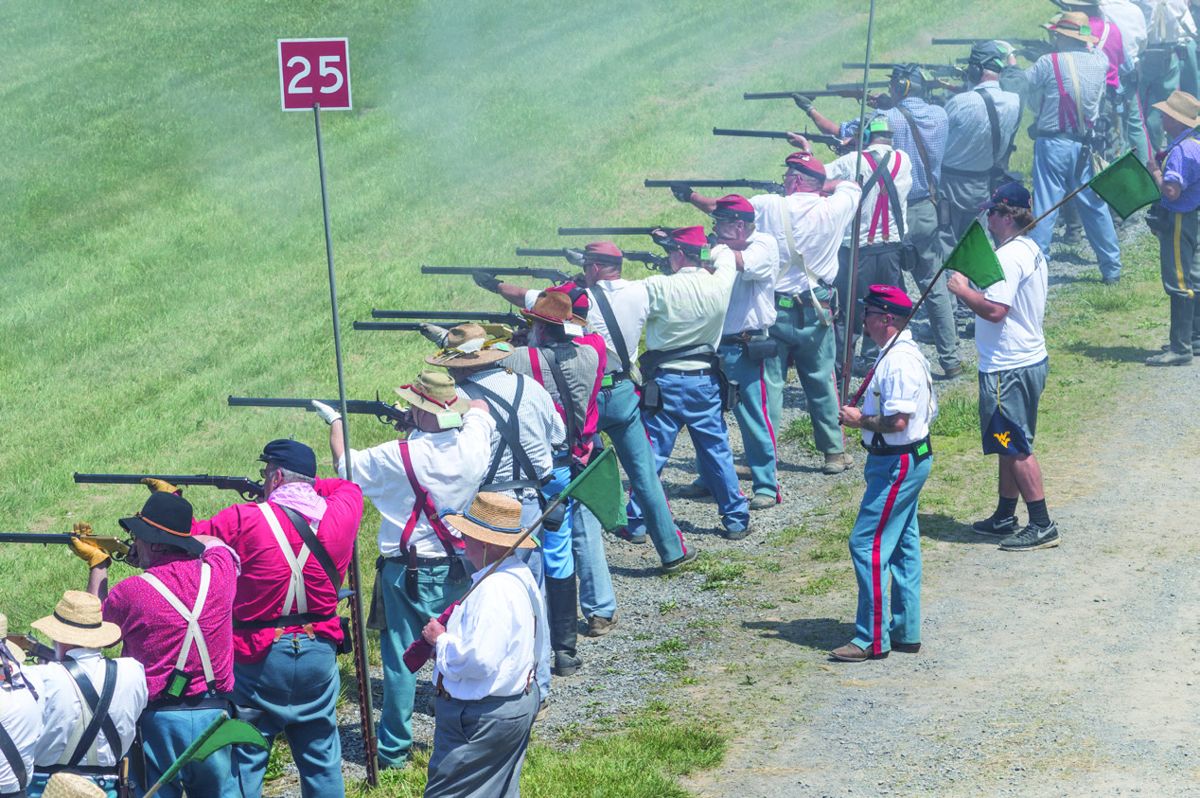
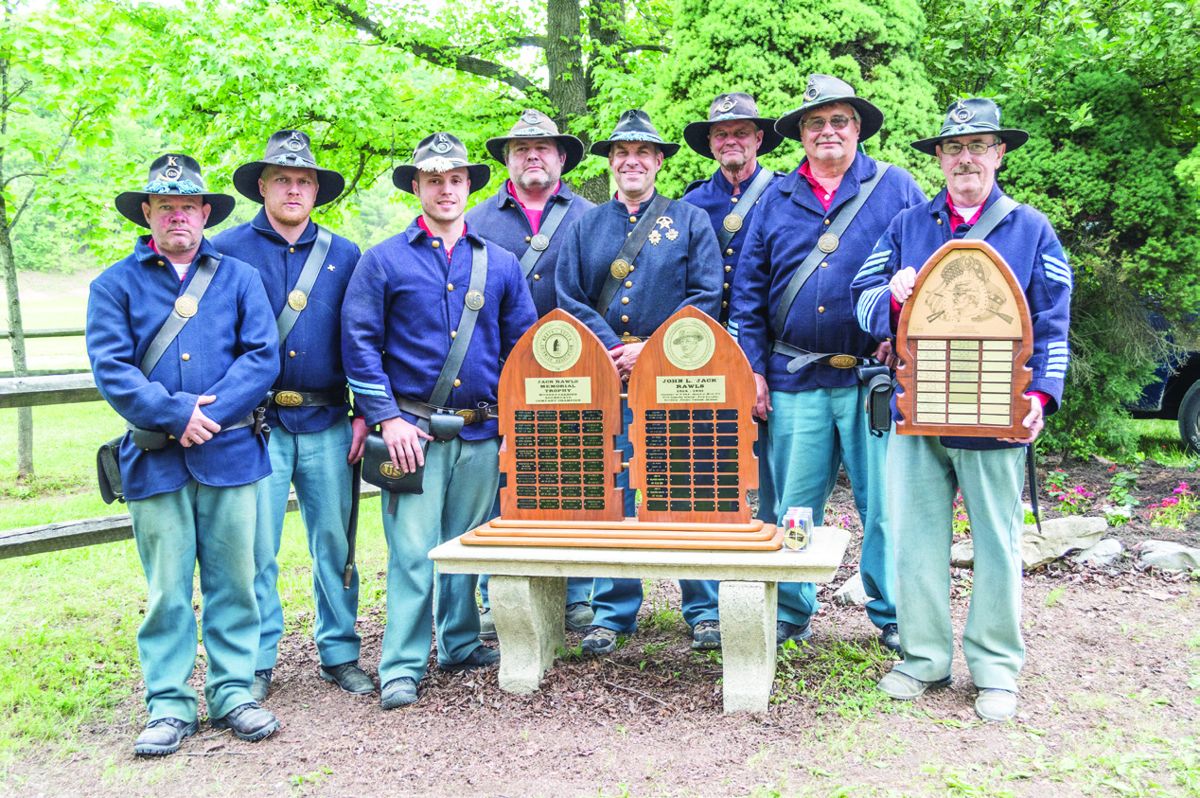
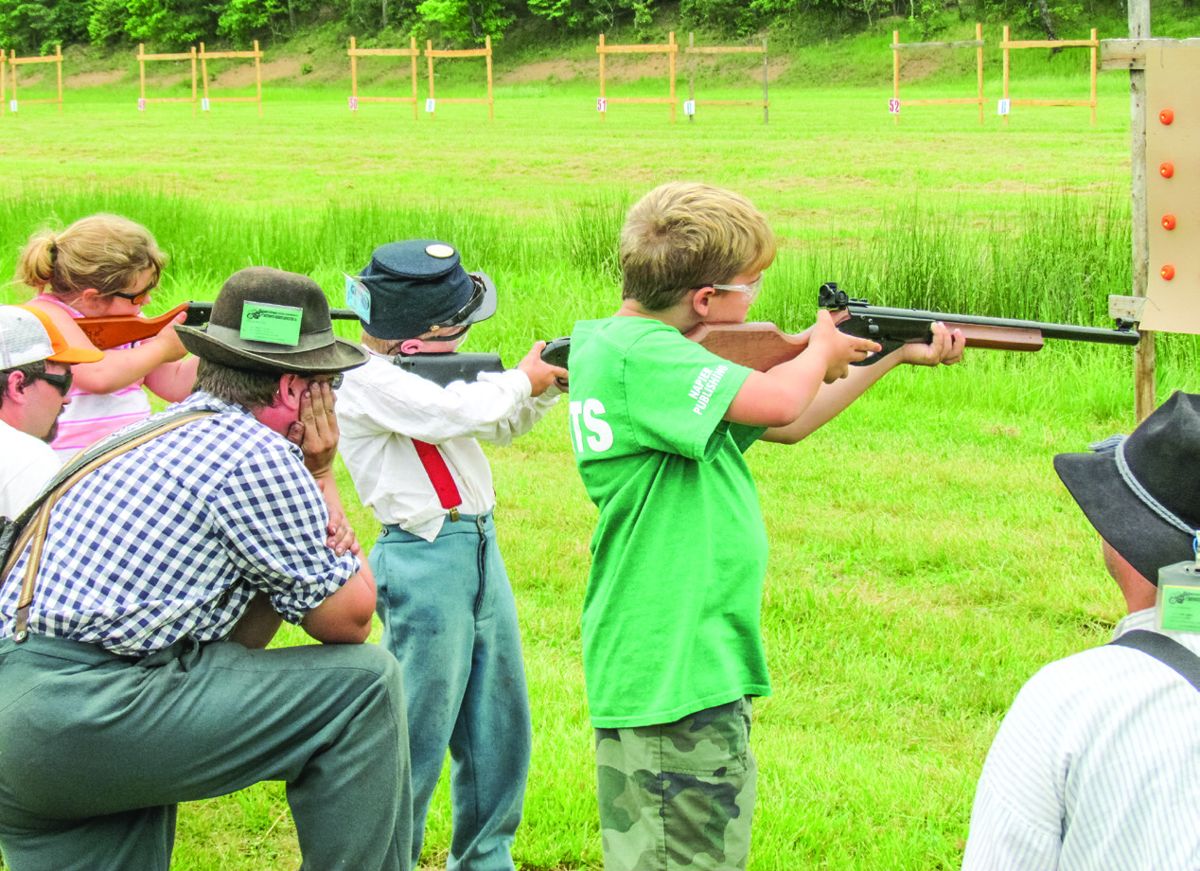
(although the name North-South Skirmish Association would not be adopted until several years later). The third skirmish was held in conjunction with the final Reunion of Confederate Veterans in Norfolk, Va. On May 19-21, the NorthSouth Skirmish Association held its 135th National Competition at Fort Shenandoah near Winchester, Va. The N-SSA has grown and expanded its matches to include live-fire competition with original or authentic reproduction Civil War period muskets, carbines, breech loading rifles, revolvers, mortars, and cannon. It is the largest Civil War event of its kind. The Rifle-Musket Team match continues to be the N-SSA signature event. All targets are breakable and the pieces certainly flew as clay pigeons, ceramic tiles, and pot silhouettes were blasted by Minié balls at ranges of 50 and 100 yards. At this spring national the consistently excellent 110th Ohio Volunteer Infantry (OVI) brought home the gold medals. They won the musket match with a time of 495.3 seconds for the five-event program, besting the next closest unit, the Washington Blue Rifles (Peterkin’s original, and N-SSA, founding unit) by a solid 24 seconds. A total of 176 eight-member teams participated in this classic competition. The 110th OVI struck gold again in the Smoothbore Musket Team match beating 108 other units to finish first with a total time of 185.8 seconds and a massive 40.0 second lead over the second place unit. This relatively new match has become increasingly popular and, as you can imagine, a really great test of skill. Competitors participate with many different firearms including the U.S. Model 1842; Confederate Macon arsenal conversions of the Model ’42; the Hewes & Philips conversion of the U.S. Model 1816 (which features a rear sight) and the occasional European Potsdam in .72 (Ericka Hoffmann) (Terianne Carey) caliber. The match comprised four events, including the extra challenging silhouette of a tiny clay pot at 25 yards and 6” x 6” ceramic tiles at 50 yards. The Carbine Team match consisted of five events: four at 50 yards and one at 100 yards. When the smoke cleared, the 8th Virginia Infantry was victorious for the second consecutive national with a solid time of 354.1 seconds, beating the next closest unit ( yes, the 110th OVI) by 17.1 seconds. Smith carbines are a favorite in this match and many are valuable originals. Skirmishers are also fond of Sharps’ carbines and you will often see Burnsides, Maynards, and even muzzle loading carbines and musketoons in this match of speed and accuracy. Seventy-six four member teams participated in the four event Revolver Team match: 12 clay pigeons on a cardboard backer; eight hanging 6x6 inch ceramic tiles; eight hanging clay pigeons and eight hanging 4x4 inch ceramic tiles. McGregor’s 2nd Battery finished first and claimed the gold medal with a time of 121.2 seconds, a slim 5.4 seconds better than the Nansemond Guards. Three additional shoulder arm team matches were held. In the Single-Shot Rifle Team match, the 149th Pennsylvania Infantry won with a time of 166.8 seconds; almost a minute faster than any other team. In the Breech-Loading Rifle Team match, the 2nd Maryland Artillery won the match in 126 seconds; a whopping 77.3 seconds better than 43 other teams. In the Spencer Team match, the 46th Illinois Infantry won for the second consecutive national. Fifty pieces competed in the Mortar Team match. We saw everything from ringing brass Coehorns to gigantic siege mortars again at this national. It is always great fun to watch this match because you can actually follow the projectile’s flight given the relatively low muzzle velocity. The mortar teams fire seven shots at a stake 100 yards down range. Officials then carefully measure the distance from the stake and tally the best five shots for score. The overall winner was the 35th Virginia Cavalry (White’s Company) with a five shot aggregate score of 19 feet-10 inches, an
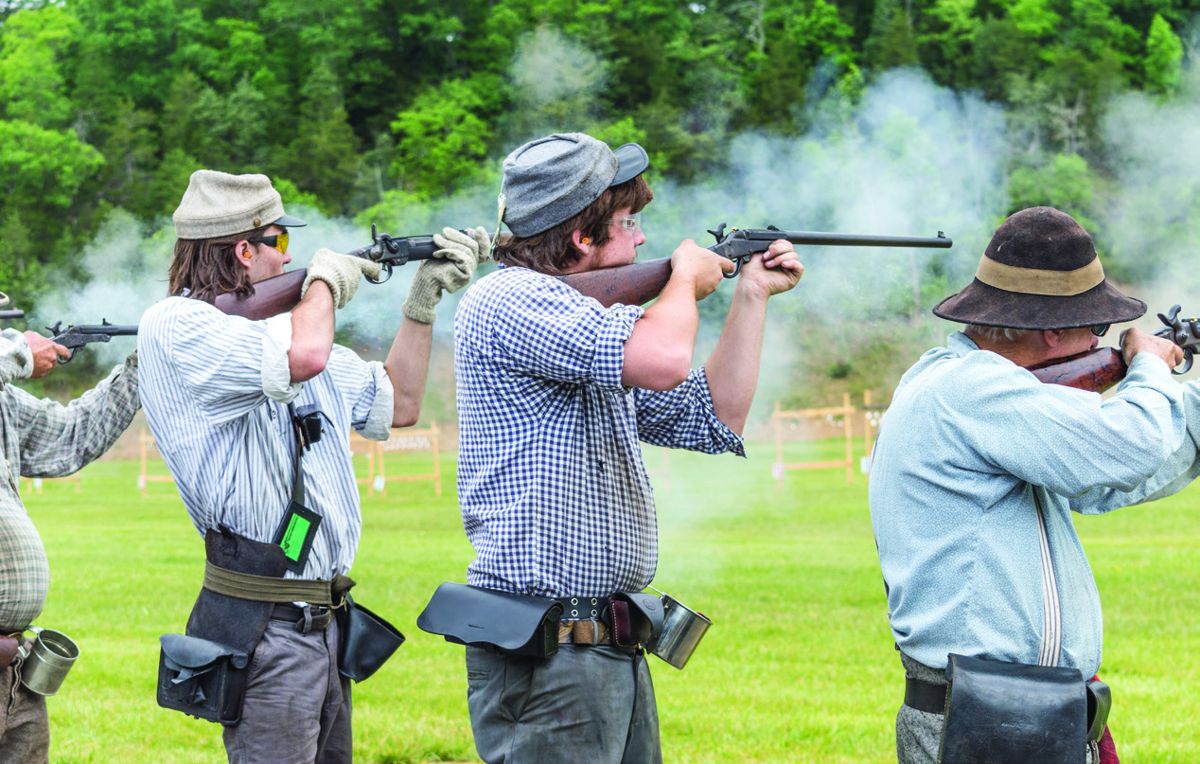
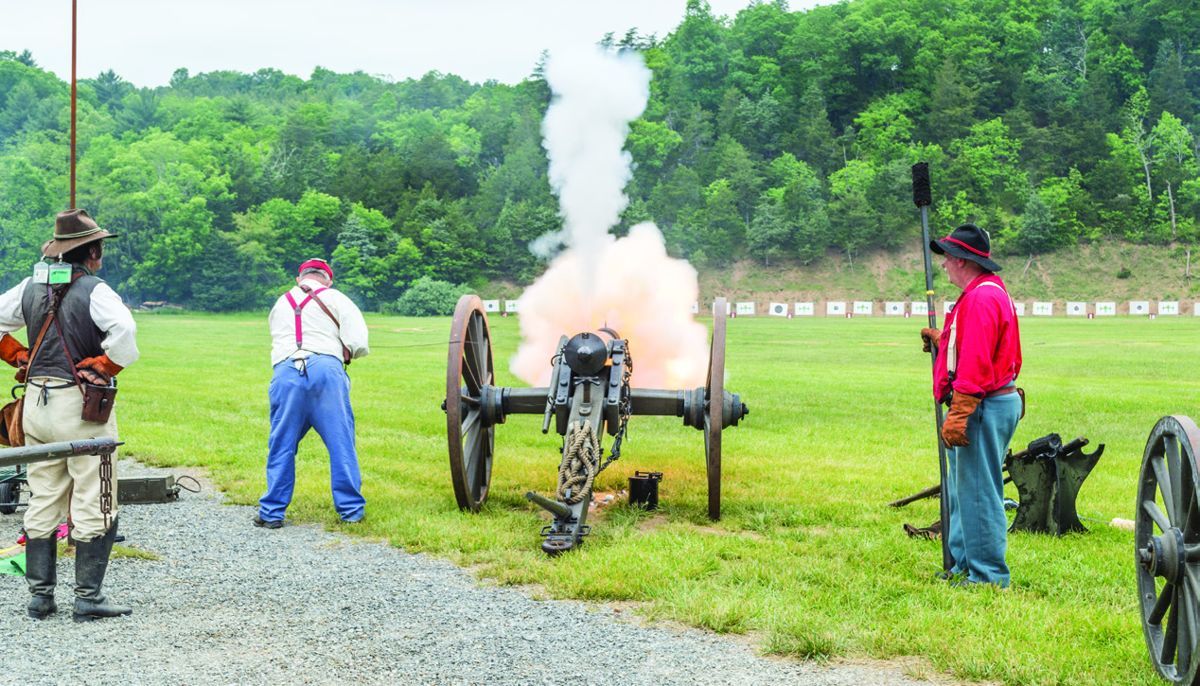
Bill Seaby of the 27th Virginia Infantry pulls the lanyard and fires a bronze 24 pounder Coehorn during the mortar match. Fifty guns competed in this match where teams fire at a stake 100 yards distant, and the best five of seven shots at net closest to the stake win.
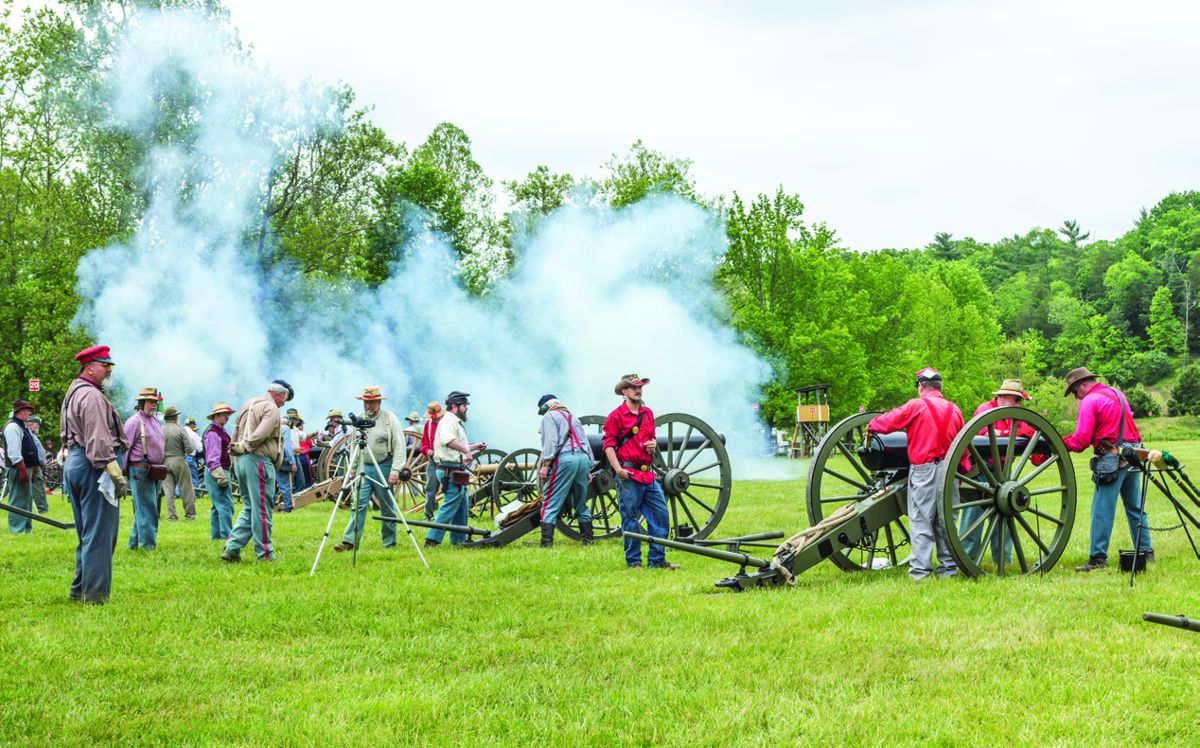
even 6 inches better than runner up Hardaway’s Alabama Battery. The artillery matches are a spectator favorite…as long as you have ear plugs. The range is reconfigured so that the cannons fire perpendicular to the regular firing line. Target frames and their paper targets are then set at a range of 200 yards for rifled guns and 100 yards for smoothbores and howitzers. Each cannon fires solid projectile at two targets, a bull’s eye and a silhouette of a cannon facing them that simulates counter battery fire. A maximum of 7 shots are fired on either target with a maximum point count of 25 per target. A perfect score is 50 points. The guns are classified by type: smoothbore, rifled, howitzer, and rifled howitzer. In the Smoothbore class, Hardaway’s Alabama Battery won with a terrific 48-4V (“V” represents the dead center of the center ring). In the Rifled class, the 3rd U.S. Infantry (Smithgall’s gun) won with the amazing perfect score of 50-5V. In the Howitzer class, the Rowan Artillery shot a lights-out 50-7V. The 1st Maryland Cavalry won for the third consecutive national in the Rifled Howitzer class with a 48-4V. The accuracy of these Civil War cannon is truly amazing. The N-SSA is the country’s oldest and largest Civil War shooting sports organization with over 3,200 individuals that make up its 200 member units.
Each represents a particular unit or regiment and proudly wears the uniform they wore over 150 years ago. At the 135th National, ten members were recognized for 50 years of membership in the association; quite an accomplishment. The 136th National Competition is scheduled for Oct. 6-8, 2017 at Fort Shenandoah, just north of Winchester, Va. For more information about the N-SSA visit the web site at www.n-ssa.org.