
Historic Battle Mural Moved To Permanent Home
By Stephen Davis · Originally published April 2017 · pp. 1–25
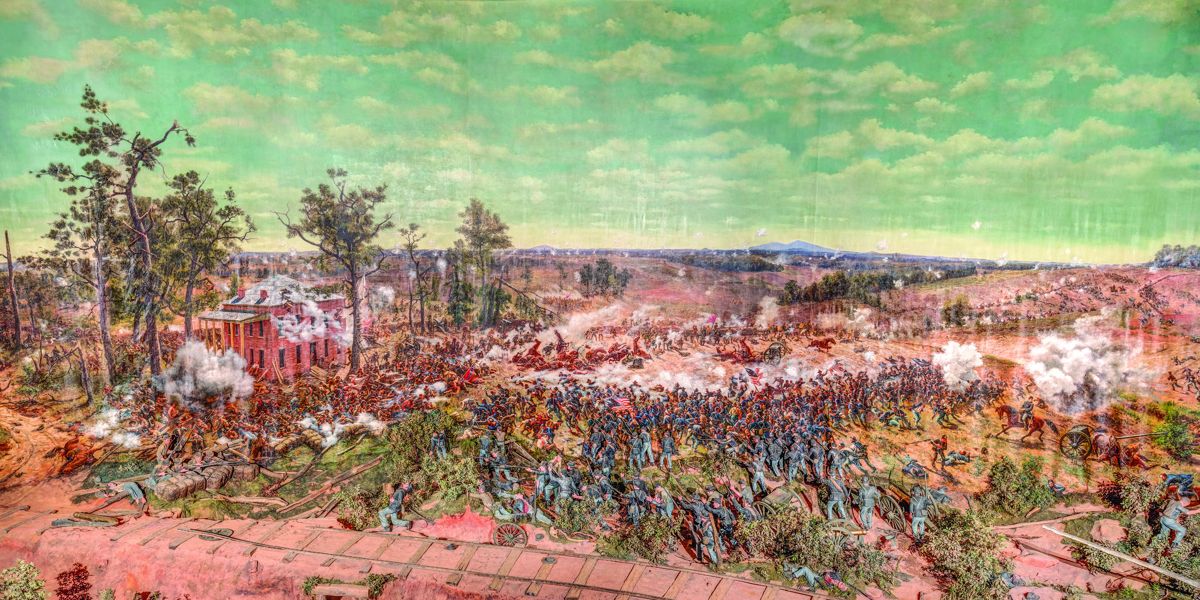
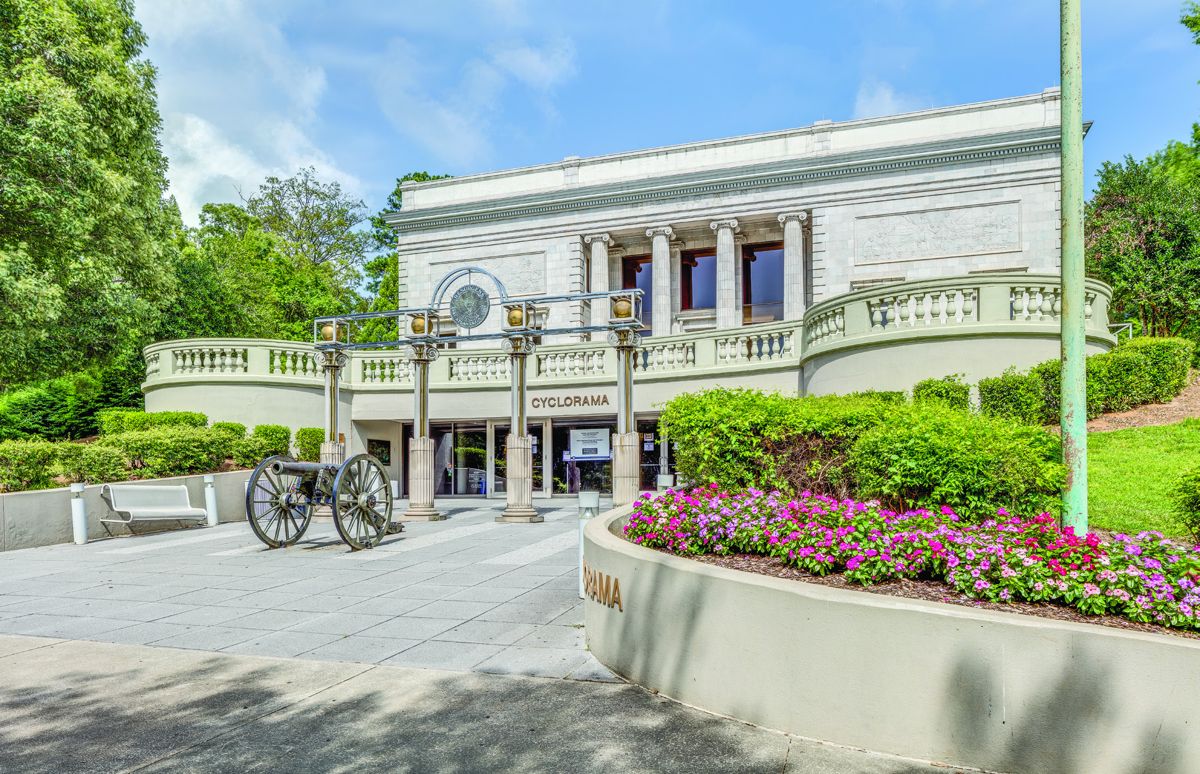
(Jack Melton) By Stephen Davis ATLANTA, GA.—One of the world’s greatest battle paintings has finally found its home. Let’s hope this one is its last, and the permanent one. Imagine a football field wrapped around you, and that’s how small you feel when standing inside the Cyclorama—359 feet in circumference and 42 feet tall. Formally titled The Battle of Atlanta, the huge painting portraying the battle fought on July 22, 1864 has been housed for more than a century in an Atlanta amusement park. Now, after a massive effort, the Cyclorama is moving to its best-ever home, the Atlanta History Center, in the middle of our city. I’m an Atlantan, and we’re all excited.
The story behind the painting, the actual battle, will be familiar to many readers of Civil War News. It was one of the major engagements of the Atlanta Campaign. Following two and a half months of hard fighting through north Georgia, Maj. Gen. William T. Sherman had brought his forces to within a few miles of the city. Confederate Gen. John B. Hood was determined to drive them away. On July 22, Hood attacked Sherman. After eight hours’ fighting, the Southerners were repulsed and withdrew back into Atlanta’s fortified lines after they had given the Yankees one of the bloodiest fights of the campaign, inflicting some 3,700 casualties (against 5,700 of their own). For a while that afternoon, Rebels had overrun some enemy works and by the end of the day had captured twelve pieces of artillery. They also managed to kill Maj. Gen. James B. McPherson, second-highest Federal officer to die in battle. Hood reported the battle as a victory, which caused the politicos in Richmond to whoop it up as such. The Battle of Atlanta is not the oldest battle-rendering extant.
Cyclorama murals—buildingsized paintings hung circularly for viewing from the inside— were a European innovation of the late nineteenth century. Subjects chosen for depiction ranged from Jesus’ Crucifixion to combats of the Franco-Prussian War. The American Civil War gave rise to other battle paintings for Shiloh, Second Manassas, Vicksburg,
Chattanooga and even the Monitor vs. Virginia. Frenchman Paul Philippoteaux supervised the cyclorama painting of the battle of Gettysburg, which came to this country in 1884. It remains one of the most popular attractions for today’s visitors to Gettysburg National Military Park. Today, of all these huge Civil War canvases, only The Battle of Gettysburg
H Cyclorama
H Cyclorama … … … . . from page 1 and The Battle of Atlanta are still standing. The Atlanta Cyclorama was a team effort. The American Panorama Company, formed by Chicago investors, hired William Wehner as manager of a Milwaukee studio. Wehner then recruited German artists to come to America and paint The Battle of Missionary Ridge in 1885-85. Success led Wehner to turn his painters to the big battle at Atlanta. They came here in 1885 and built a tall tower in the midst of the battlefield, whose traces could still be seen twenty years after the war. Confederate veterans and old-time Atlantans shared helpful recollections. Also assisting the artists was Theodore Davis, wartime illustrator for Harper’s Weekly, who had followed Sherman’s armies. After sketching layouts, they returned to their Milwaukee studios and completed the painting. The dozen artists worked hard at their craft; some, like Bernhard Schneider, were specialists in landscapes, others were painters of men and horses. Writing in St. Nicholas Magazine, December 1886, Theodore Davis emphasized their attention to detail. “Every officer represented is pictured in the uniform which he wore on the day of the fight,” he observed proudly; “while even the horses and their accouterments are as faithfully depicted.” The project was finished in 1886. The huge canvas, hung on wooden frames, opened in Minneapolis that June. A dramatic focal point was the scene in the mural showing Union Maj. Gen. John A. Logan, commanding the XV Corps, leading a counterattack against the Rebels who had just broken his lines. Logan’s centrality was due to Theo Davis’ suggestion that highlighting a famous individual would draw audiences. Sherman, interestingly, was but a speck on the horizon; he had watched the battle from a house a mile away. After its debut, the painting was disassembled and moved for showing in Indianapolis. In 1890 Paul Atkinson of Madison, Ga., became owner. Atkinson brought the painting to Atlanta, where it opened in Feb. 1892. Resale to Atlanta businessman George V. Gress led to Gress’ donating the Cyclorama to the City of Atlanta in 1898. At that time it was housed in a wooden building at Grant Park in the southeast suburbs because former Confederate officer Lemuel Grant donated land for the park which still bears his name. In 1921 a new fireproof building was constructed specifically for the painting, with enough added space to show off the Civil War locomotive Texas (famous from the Andrews Raid of 1862) and an upstairs museum. It was there that I first saw it as a kid in the 1950s. I’ve been a Civil Warrior since the 4th grade; maybe it was the Cyclorama that turned me on. And what an experience! I still remember entering the darkened, massive circular hall, where kindly old ladies with flashlights illuminated scene after scene as we walked around.
(Peggy Melton) The Cyclorama’s time is about 4:45 in the afternoon of July 22. The battle has been underway since around noon. Already, two divisions of Lt. Gen. William J. Hardee’s Corps have been repulsed in their attack on McPherson’s line. McPherson is dead; off in the distance by Sherman’s headquarters is an ambulance that carried his body. The fighting continues elsewhere, as Maj. Gen. Patrick Cleburne’s Confederates try to take a key hill manned by the division of Brig. Gen. Mortimer Leggett. These details are not shown in the painting. I can’t point to this in the literature, but one may speculate that the Mani-
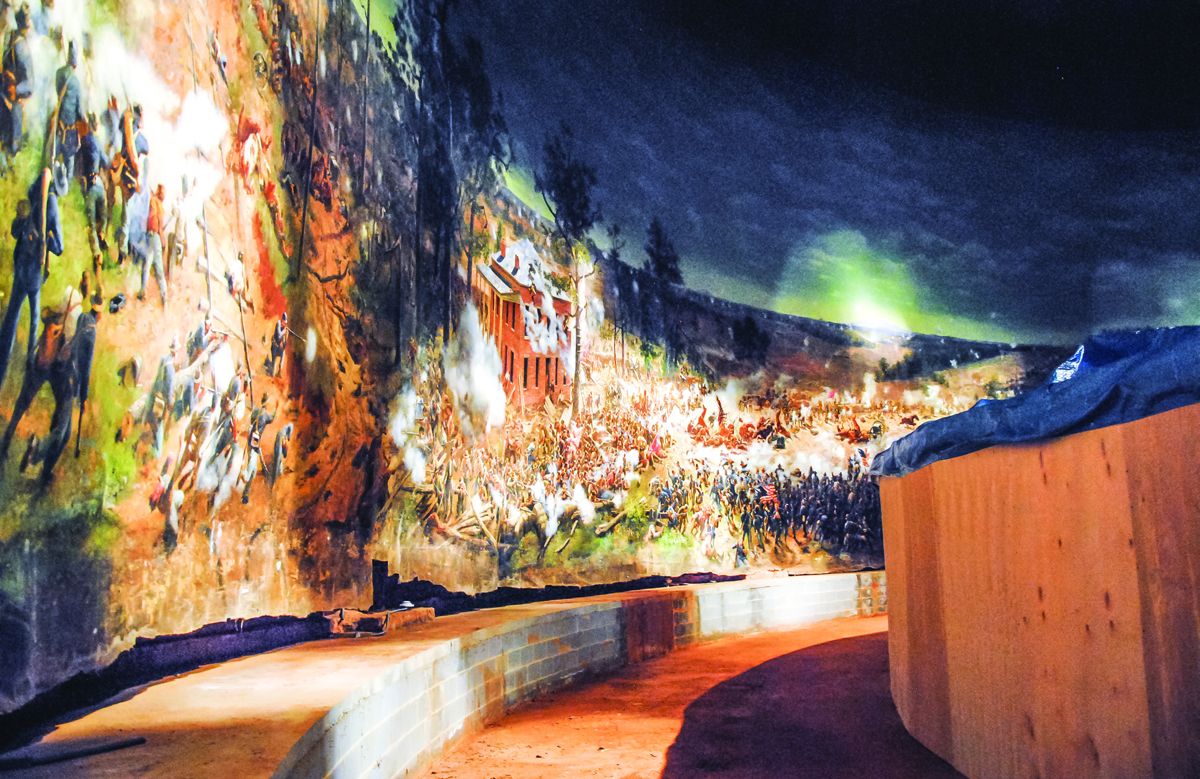
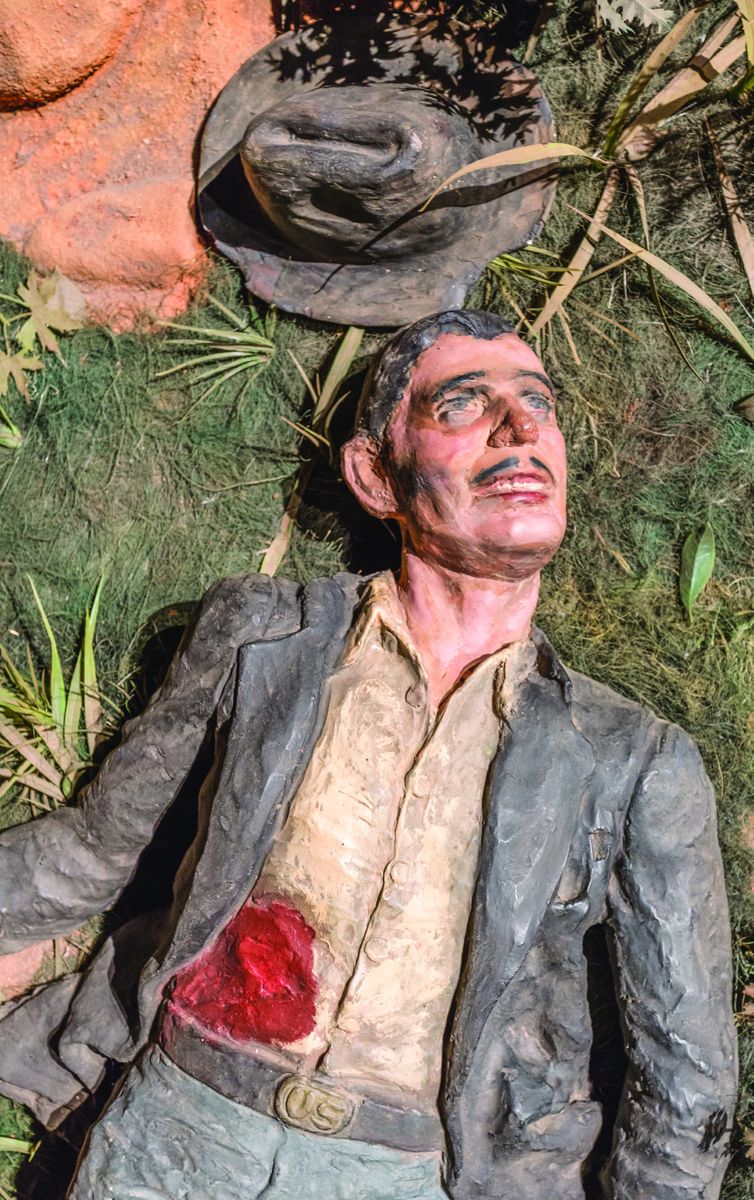
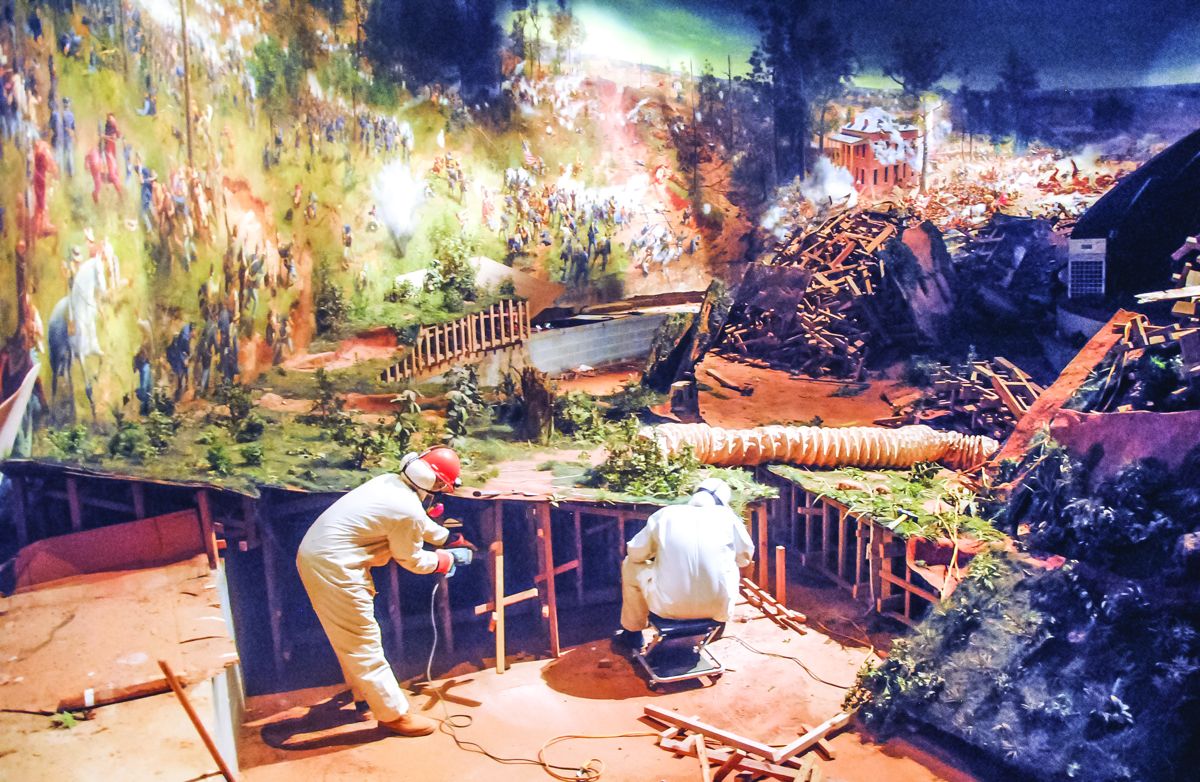
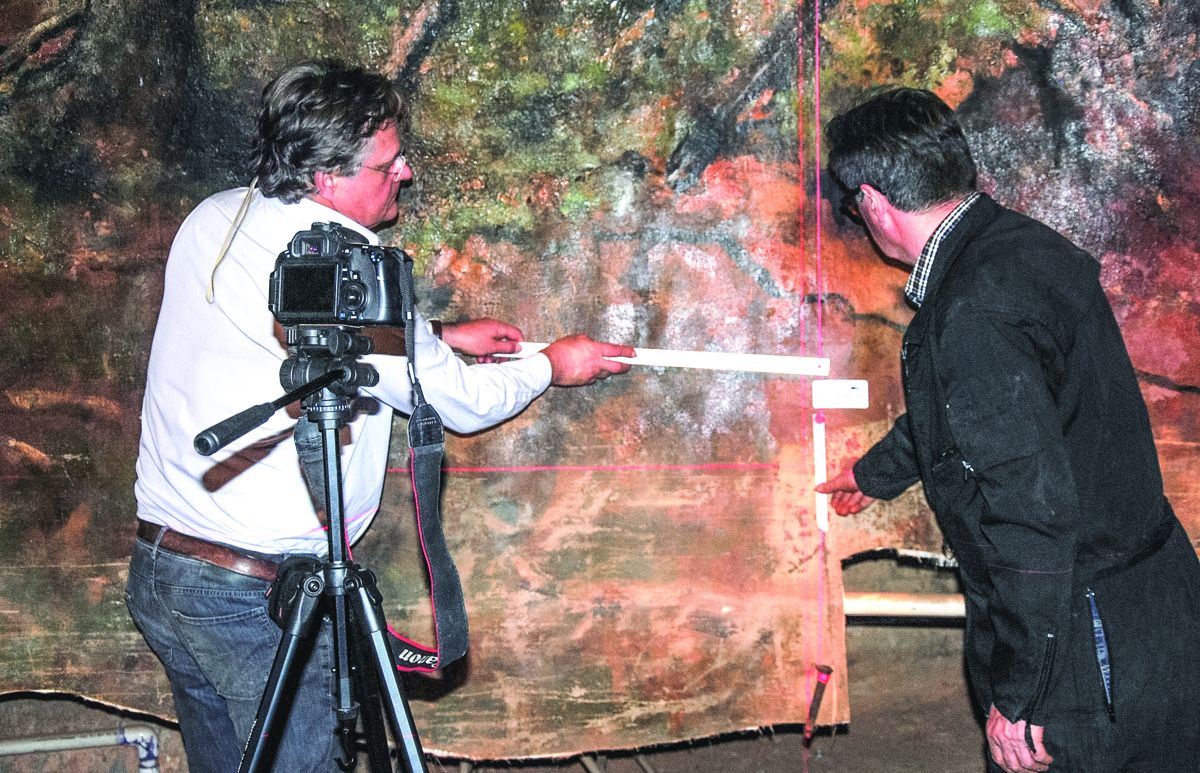
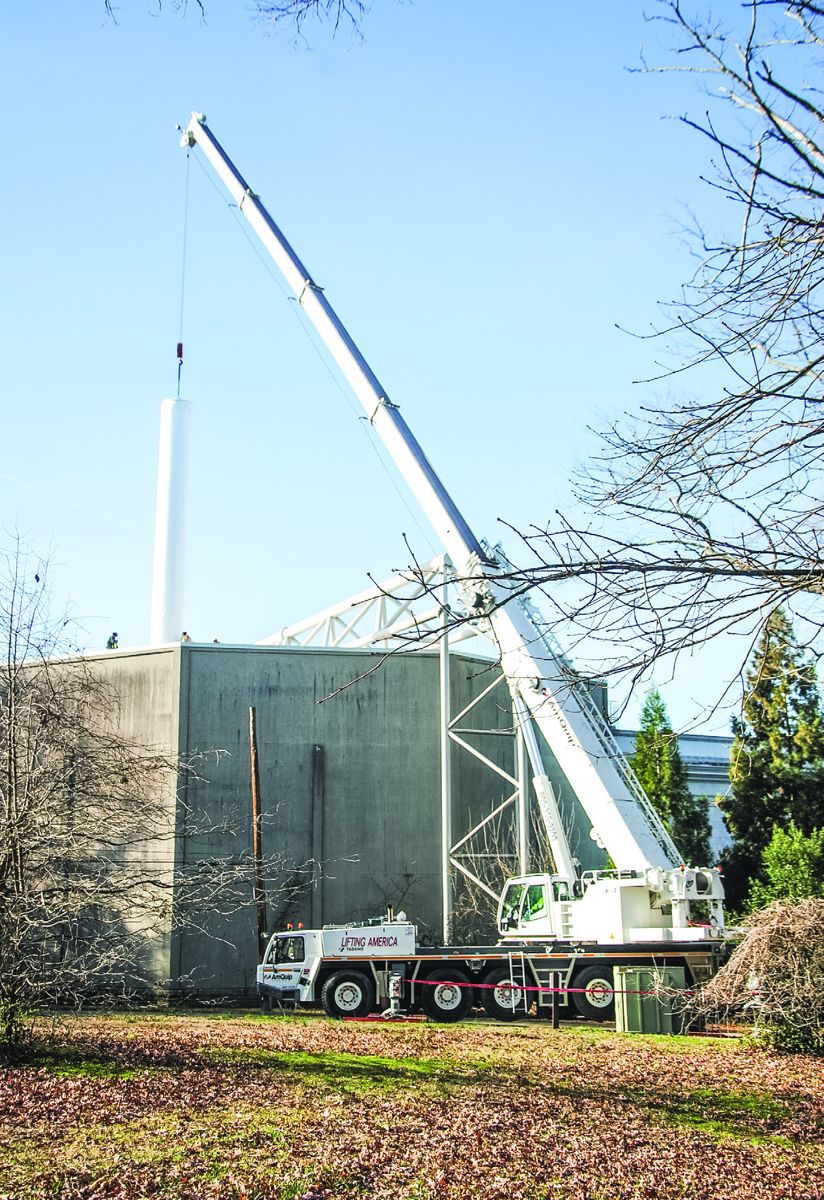
gault-Mersy firefight was chosen as the mural’s centerpiece for its demonstration of both sides’ heroism. The Southerners have broken through the Yankee line; the Northerners are charging to drive them back. In the 1880s, ex-Rebs and ex-Yanks were in the throes of a national celebration of Americans’ valor in the Civil War. This part of the battle gave both sides something to celebrate about. The Cyclorama’s starting point is the segment of the mural depicting the Confederate breakthrough of Logan’s line. Brig. Gen. Arthur Manigault’s Brigade of South Carolinians has overrun a sector of Union entrenchments and captured a four-gun battery of 20-pounder Parrotts (Capt. Francis DeGress’ Battery H, 1st Illinois Light Artillery). The battlefield is in the exurbs of Atlanta; in the midst of the fighting stands a two-story red brick house that is still under construction. Federals of Col. August Mersy’s brigade are counterattacking to restore their line and retake the battery. Horses still harnessed to their caissons are being shot down by the Yankees to prevent the guns from being wheeled off. The South Carolinians fight behind cotton bales (although some skeptics wonder what cotton was being grown just outside Atlanta). A couple of Confederates fire from the second-story of the brick house, which was owned by one George M. Troup Hurt. The scope of the canvas highlights the fighting north of Leggett’s hill, as Confederate Maj. Gen. Frank Cheatham’s Corps is locked in battle with Black Jack Logan’s XV Corps. The artists included scenes and vignettes big and small. Beside the Hurt house, a white and red flag droops from a pine tree; Union signal officers had used it as an observation perch. South of the Georgia Railroad, a Confederate courier has lost control of his horse; riding into enemy lines, he is shot down. In rear of the charging Federals, an ambulance carries Union Brig. Gen. Manning Force, who had been shot in the jaw. Riding in front of it, Theodore Davis had himself painted in. Off in the distance are Stone Mountain and Atlanta’s skyline to render perspective. Probably the coolest aspect of the Cyclorama is what was added to it fifty years later. A half-century after its creation, the painting had fallen into disrepair. In the 1930s the Federal Works Progress Administration offered funds for artists and craftsmen to restore the Cyclorama. Atlantan Wilbur G. Kurtz was appointed supervisor of the work conducted during 1934-36. Working with him were sculptors Joseph Llorens and Weiss Snell. To refurbish the canvas, seventy-five gallons of linseed oil were sponged in. A lot more was done. When it was moved into its Grant Park shelter in 1921, the building was found just a bit too small. A six-foot wide strip of canvas was cut out to make the whole thing fit; Kurtz had to repair the damage. He even painted in a few more Southern soldiers where they were needed, and repainted the Confederates’ flags to their more historical accurate design. Now for the cool part: Llorens oversaw construction of a thirty-foot diorama in the painting’s foreground. Red clay was brought in for flooring; artisans had to find just the right kind to match the Cyclorama’s painted dirt. Real tree stumps and twisted rails were brought in; cannon and shrubbery were cast in plaster along with—catch this—128 soldiers. The men were sized from twenty to fifty inches tall, to maintain the right perspective for viewers. The work was masterfully done. To this day you have to strain your eyes to detect where the painting ends and the diorama begins. The Cyclorama has had a lot of famous visitors. During the premiere week of Gone With the Wind in Dec. 1939, Clark Gable (Rhett), Vivien Leigh (Scarlett), Olivia de Havilland (Melanie) and others were given a private showing, led by the city’s mayor, William B. Hartsfield. “The only thing missing to make the Cyclorama perfect,” Gable is said to have remarked, “is I’m not in it.” So the mayor had Kurtz, Llorens and Snell make a plaster figure of Gable as a dead Union soldier (shot in the right side, judging from the blood on his shirt). Several decades later, despite the city’s care, the painting had again fallen into bad shape due to water damage and other factors. One problem literally came out of the ground. “Unfortunately, when tons of earth were brought in” for the WPA diorama in the 1930s, as As Federals counterattack to restore their line, the horses of Francis DeGress’ battery are killed in harness. Writing fifty years ago, Wilbur Kurtz stated that they were slain by Northern fire from nearby batteries. In his recent history of the battle of July 22, Gary Ecelbarger claims Southern officers ordered the horses shot. After the battle, Captain DeGress reported, “27 horses killed and ten taken by the enemy.” (Painting photos by Jack Melton) February 9, 2017: A second crane moves scroll 1 into a horizontal position so it can be secured to the flatbed. Escorted by police, Anderson Trucking Company then took the scrolls on their ten-mile trip to the Atlanta History Center.
During the Northern counterattack, an Illinois soldier recalled, “a well-known form came galloping furiously up the Decatur road on a coal-black charger streaked with foam, hatless, his long hair flying, his eyes flashing with wrath—a human hurricane on horseback. It was ‘Black Jack.’” Contrary to popular myth, John A. Logan did not sponsor The Battle of Atlanta Cyclorama painting. But the famous general was featured prominently in its advertising, such as this 1886 handbill from the Minneapolis premiere.
Historians judge that Major General McPherson was mortally wounded about 1:45 p.m. By the time of the action depicted in the painting, 4:45, Federals have recovered the general’s body and brought it by wagon to Sherman’s headquarters, the Augustus Hurt house (shown on the left). Today the site is on the campus of the Carter Center in east Atlanta.
According to Wilbur Kurtz, the standing Confederate figure behind cotton bales was modeled by Snell from a “Reverend Henderson,” who served in the Georgia Militia. This is the only figure besides Clark Gable actually modeled from an identifiable person.
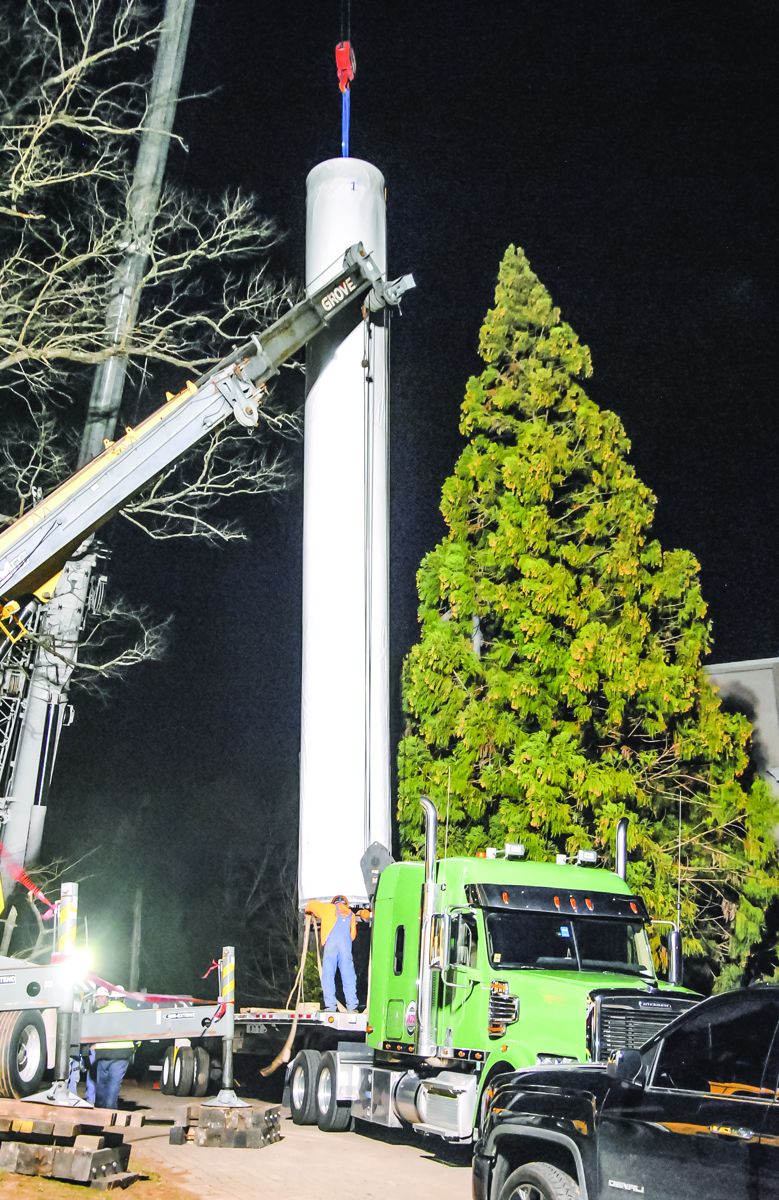
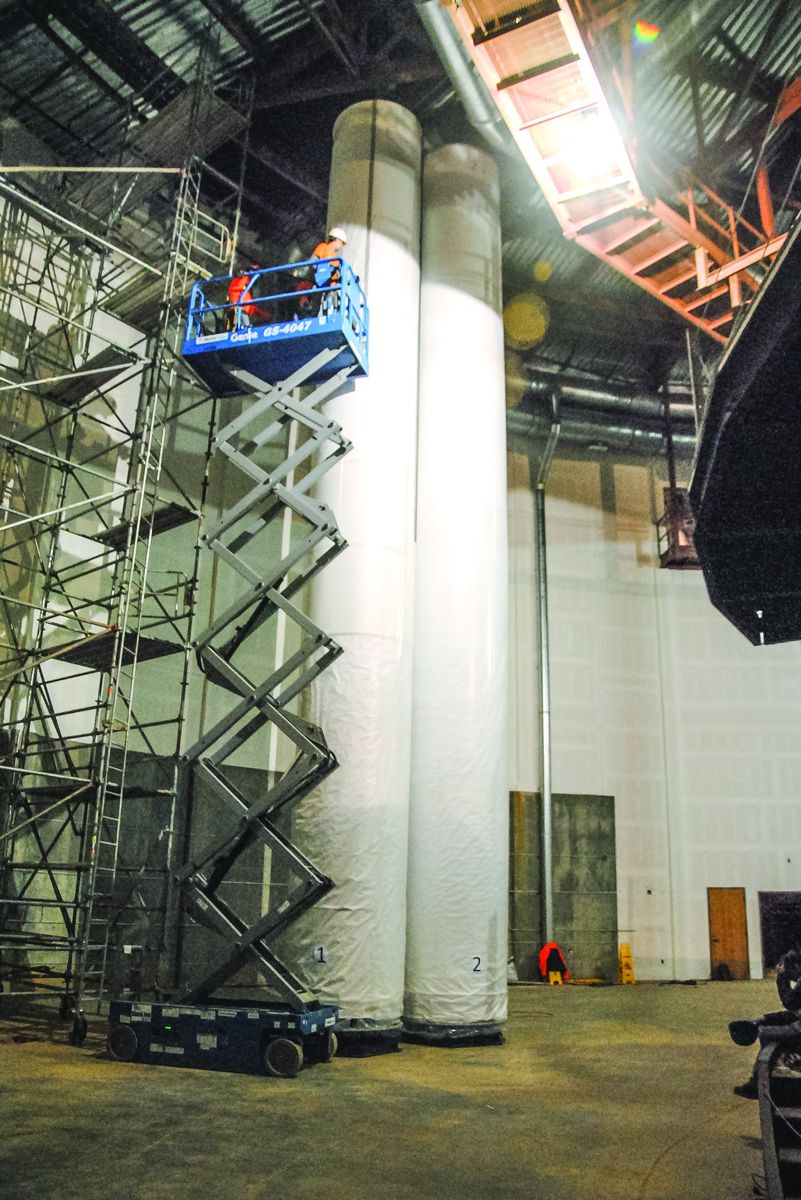
Historical Cyclorama Battle of Atlanta Program from 1892. Chip Carter wrote for Civil War Times Illustrated some years ago, “A plague of insects and mice came with it. The hungry vermin went straight for the canvas. A mixture of arsenic, lead, sulfur and antimony was applied to the back. The concoction did keep away small critters. But it is not believed to have done the painting or visitors much good.” What to do? Some suggested that the Cyclorama be moved to the Confederate theme park at Stone Mountain or another location. Maynard Jackson Atlanta’s first African-American mayor, responded that the engagement depicted “one battle where the right side won,” and pledged to restore the painting. The massive project lasted from 1979 to 1982 and cost $9 million. Conservators led by Gustav Berger carefully cleaned and treated the century-old canvas, restoring its painted colors and patching up hundreds of little holes. The red clay flooring of the diorama was replaced with fiberglass and plastic. The decades-old building was remodeled with a rotating viewers’ section, which moved slowly along with the recorded narrative. The made-over Cyclorama reopened in June 1982. Thousands of visitors have poured in since then, even as changes continue to be made. In 1990, a thirteen-minute film began to be shown, featuring 5,000 Civil War reenactors and a script explaining the campaign from Chattanooga to Peachtree Creek. The narrator was James Earl Jones, “whose thunderous ‘Darth Vader’ voice,” as one writer put it, “holds its own against the film’s constant kabooms.” Two decades later, the canvas needed still more work. Faced with an estimated cost of at least $8 million, the city appointed an advisory group to explore options. The members agreed upon the restoration, but also considered moving the Cyclorama to another location, perhaps downtown. Sheffield Hale, CEO of the Atlanta History Center, offered their campus as a new site, and a deal was struck. In July 2014, the City of Atlanta and the Atlanta History Center announced that the Cyclorama and all the relics housed with it, including the Texas, would be moved to a new 23,000-square foot facility at the History Center, located on 33 acres in the city’s Buckhead area. The city will retain ownership, with the History Center signing a 75-year license contract. Fundraising for moving the gigantic painting, building its new shelter and restoring the canvas got jump-started with a $10 million gift from an Atlanta couple, Lloyd and Mary Ann Whitaker. The History Center has since raised more than $35 million for the Cyclorama project, including endowed money for its continued safekeeping. Having closed its Grant Park home in July 2015, the move is underway at the time of this writing. Gordon L. Jones, Ph.D., Senior Military Historian at the History Center, and Jackson McQuigg, Vice President of Properties, are guiding the undertaking. The 10,000-pound canvas was split into two sections and wrapped around two 45-foot long steel spools. These were lifted by
At 42 feet tall and 358 feet in circumference, the Atlanta Cyclorama is one of the largest paintings in the country. This expanse of the mural encompasses half its circumference along the Georgia railroad in the foreground. In the center distance can be seen Kennesaw Mountain, twenty miles to the northwest. In the ambulance behind Logan is a seriously wounded Brig. Gen. Manning Force, shot in the jaw. He survived, and would return to the field a few months later.
This Federal loses his life in the countercharge of Col. James S. Martin’s brigade as Union forces try to drive off the Rebels who had overrun their line. (Painting photos by Jack Melton)
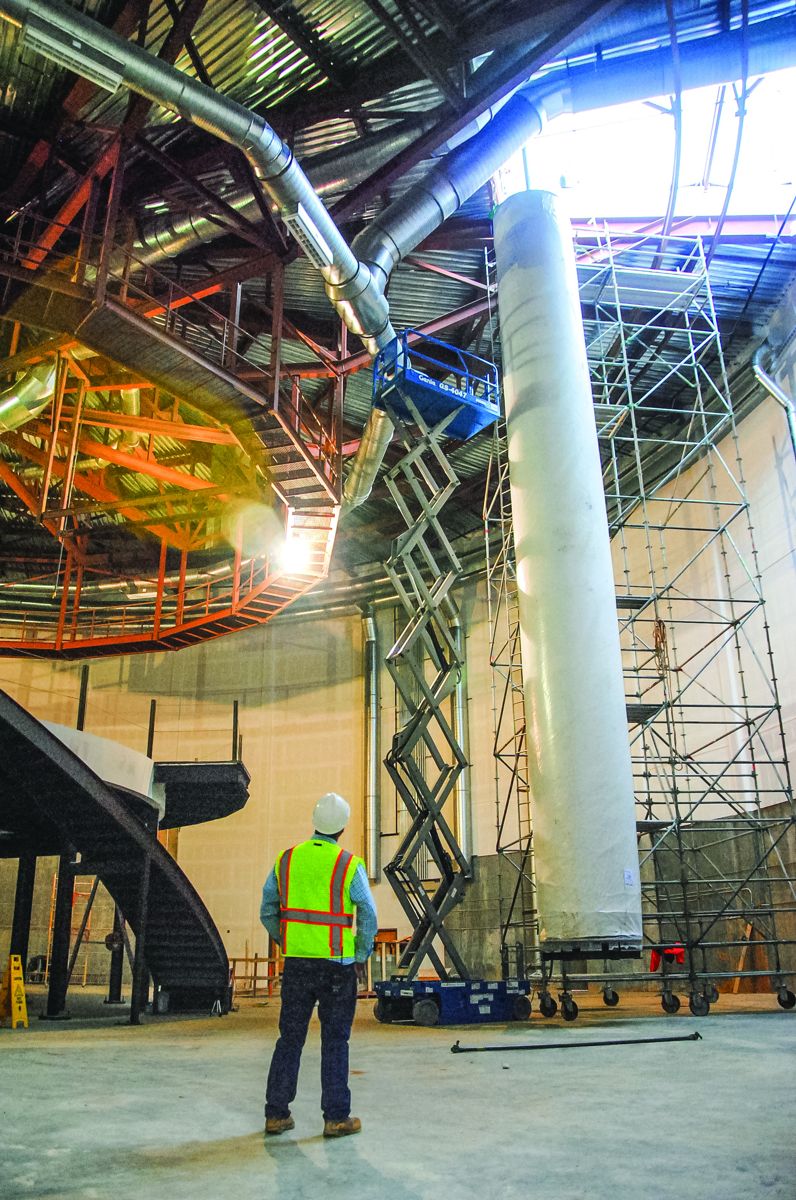
a crane through big holes cut in the roof of the Grant Park buildings, trucked by flatbeds to the History Center and there lowered through the roof of the new Lloyd and Mary Ann Whitaker Cyclorama Building. A lot of work is still ahead. In addition to cleaning and restoration, the six-foot wide panel, cut away in 1921, will be restored. So too will be seven feet of sky, based on photographs, which disappeared during the painting’s various moves; it will run along the top of the mural, which will now be 371 feet long and 49 feet tall. When all this is finished, the Atlanta Cyclorama will formally reopen at its new home in the fall of 2018. “This is one of the most important achievements in historic preservation to come out of the Civil War Sesquicentennial,” Dr. Jones declared. Only seventeen cycloramic paintings of century-old vintage are known still to exist worldwide. Of these, eleven are on public display. Three are in North America: The Battle of Gettysburg, The Panorama of Jerusalem in Quebec, and of course our Battle of Atlanta. I for one can’t wait to see it again. I believe it’ll be just as I remember it as an awe-struck kid, overwhelmed by the majesty and terror of America’s great Civil War. Steve Davis of Atlanta is a regular contributor to Civil War News and is the Book Review Editor. His new book, A Long and Bloody Task: The Atlanta Campaign from Dalton through Kennesaw Mountain to the Chattahoochee River May 5–July 18, 1864, was published as part of Savas Beatie’s Emerging Civil War paperback series. The companion volume, carrying the Atlanta Campaign to the city’s surrender on September 2, 1864, will be published early this year.
In the booklet he wrote in the 1950s about the Cyclorama, Wilbur Kurtz described this scene: “A Confederate courier, his horse getting out of hand, over-runs the line and becomes a target for Federal bullets and bayonets.”
The locomotive Texas, which served Atlanta from 1856 to 1907, is being restored at the North Carolina Transportation Museum in Spencer, N.C. It will be moved to the Atlanta History Center in May 2017.
Well into the 1970s, the Atlanta Cyclorama served as a sort of Confederate shrine. In its new exhibition galleries, the Atlanta History Center plans a broader interpretation.
The view picks up with the railroad heading eastward toward Stone Mountain (visible on the horizon, eighteen miles away). In the center, Brig. Gen. Joseph A. J. Lightburn’s Union troops advance across the wheat field to support the Federal assault. This photograph of the Cyclorama was obviously taken before it closed in mid-2015. It will re-open in its new quarters at the Atlanta History Center in Fall 2018.
An original print of the 1/10 scale preliminary sketch prepared by the American Panorama Company in 1886. Atlanta History Center curators found this copy and four others for sale on e-Bay in 2006.
Capt. Francis DeGress rides forward to reclaim his lost battery. Artist Theodore Davis later wrote that he was proud to place “my old friend” DeGress in the composition.