
Heroes At The Crater In Petersburg
By Carl L. Sell Jr. · Originally published April 2017 · pp. 8–9
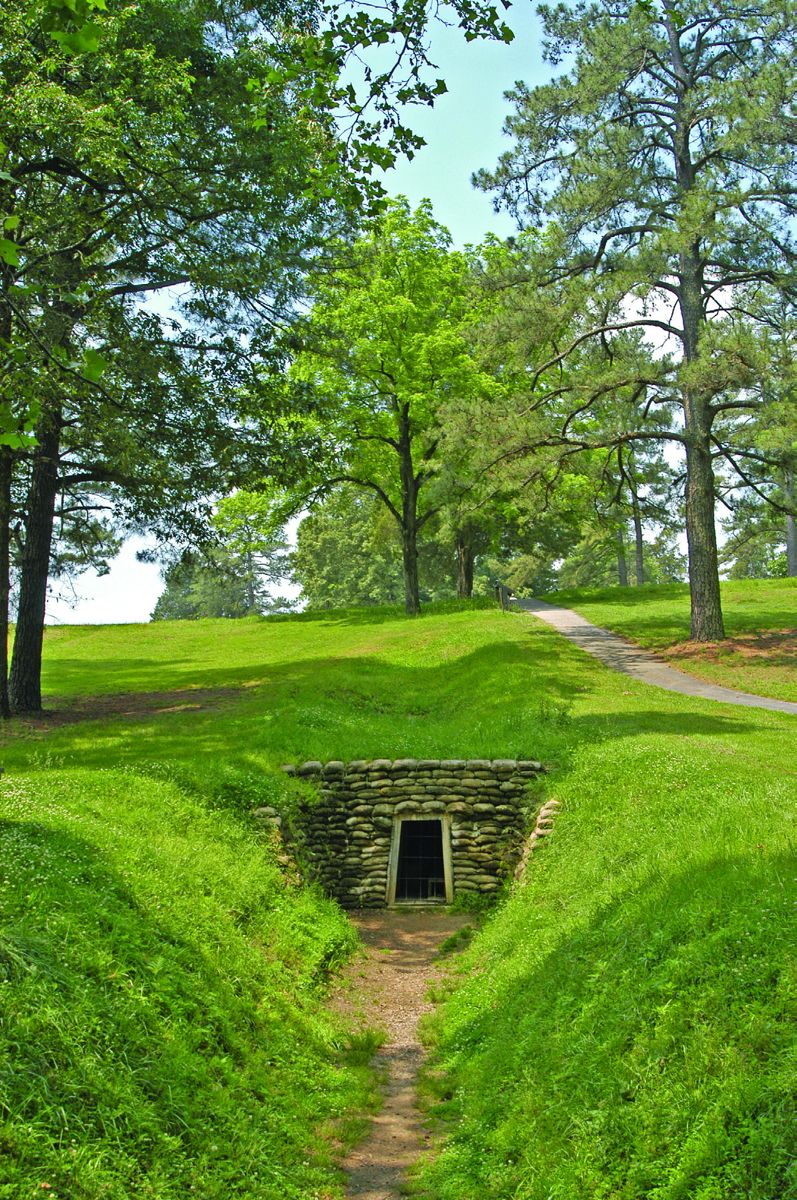
Heroes At The Crater In Petersburg By Carl L. Sell Jr. To date, there are 1,522 Medal of Honor recipients who fought for the Union in the Civil War. The Confederates did not award medals for valor. There is a Confederate Roll of Honor that mentions acts of valor by both soldiers and civilians. The most recent Medal of Honor awarded for valor during the Civil War went to Artillery Lieut. Alonzo Cushing of New York for his actions during Pickett’s Charge on July 3, 1863 when he died while helping repulse the Confederate advance at the Bloody Angle. The honor was bestowed 151 years later. A little over a year later, on July 30, 1864, two members of the 48th Penn. Inf. performed a heroic deed at the Crater near Petersburg. Unfortunately, neither Lieut. Jacob Douty nor Segt. Henry Reese received the ultimate recognition for their dangerous mission that involved reigniting a fuse under the Confederate lines. Union forces had tunneled more than 500 feet and packed more than eight thousand pounds of gun powder under their adversaries. The explosion blew a hole in the defenses, but confusion among attacking Union forces and a quick response by Confederate units turned any advantage into a disaster.
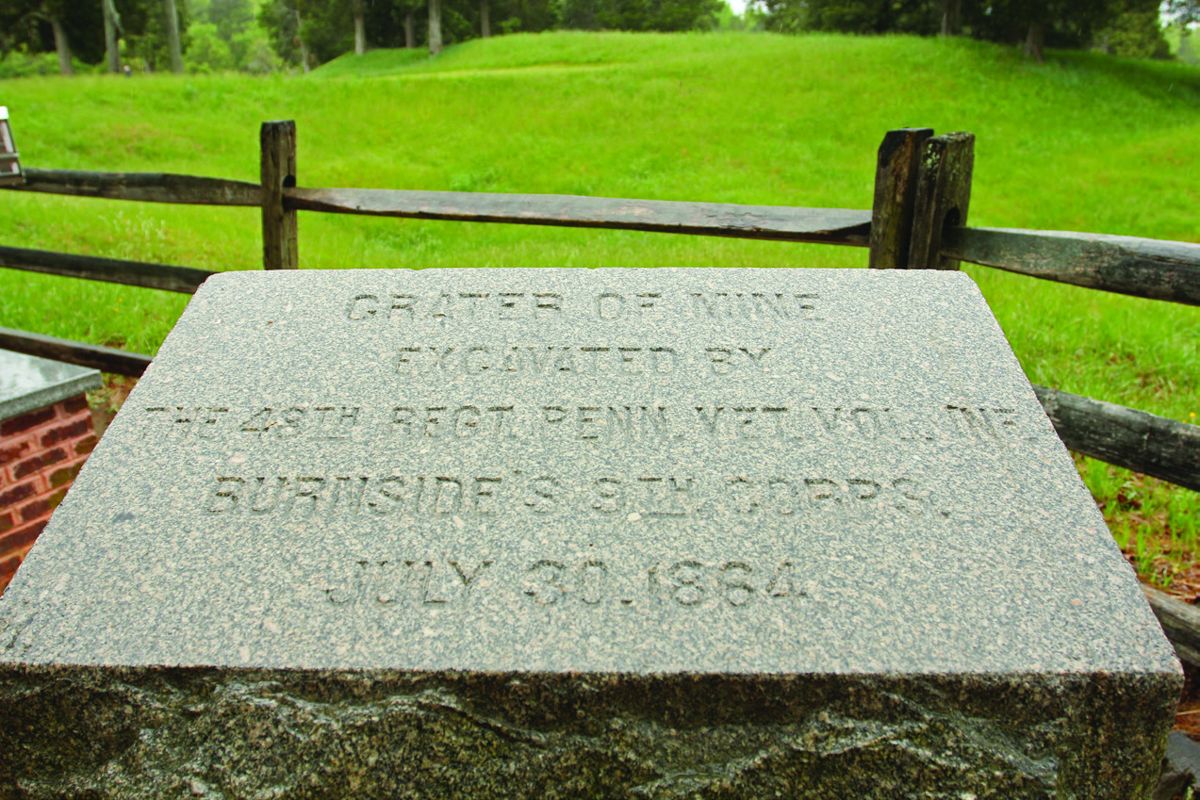
The Forty-Eighth, made up of mostly coal miners from Schuylkill County, Penn., had worked for a month to construct the tunnel. When finished, gun powder was carried in by hand and everything was ready. Union officers, who at first had laughed at the plan, wanted to hurry to avoid a cave in or discovery by the Confederates, who were digging shafts because they heard activity below. The fuse was lit shortly after 3 a.m. on July 30 and everyone awaited the blast. But nothing happened. The fuse had burned at a connection between two sections before it reached the gun powder. Col. Henry Pleasants, a mining engineer who planned the effort, had lit the fuse line that fizzled. When it became evident that the line had been extinguished at a junction box, Lieutenant Douty and Sergeant Reese voluntarily entered the mine and relit the fuse. Pleasants had at first refused their offer. However, he relented and Douty and Reese crawled on their hands and knees into the tunnel, which was about three feet high and tapered at the top. They found the splice where the fuse had burned out. They relit it and crawled back out as fast as they could. The ensuing blast blew a hole more than 150 feet wide, 60 feet long and 30 feet deep in the
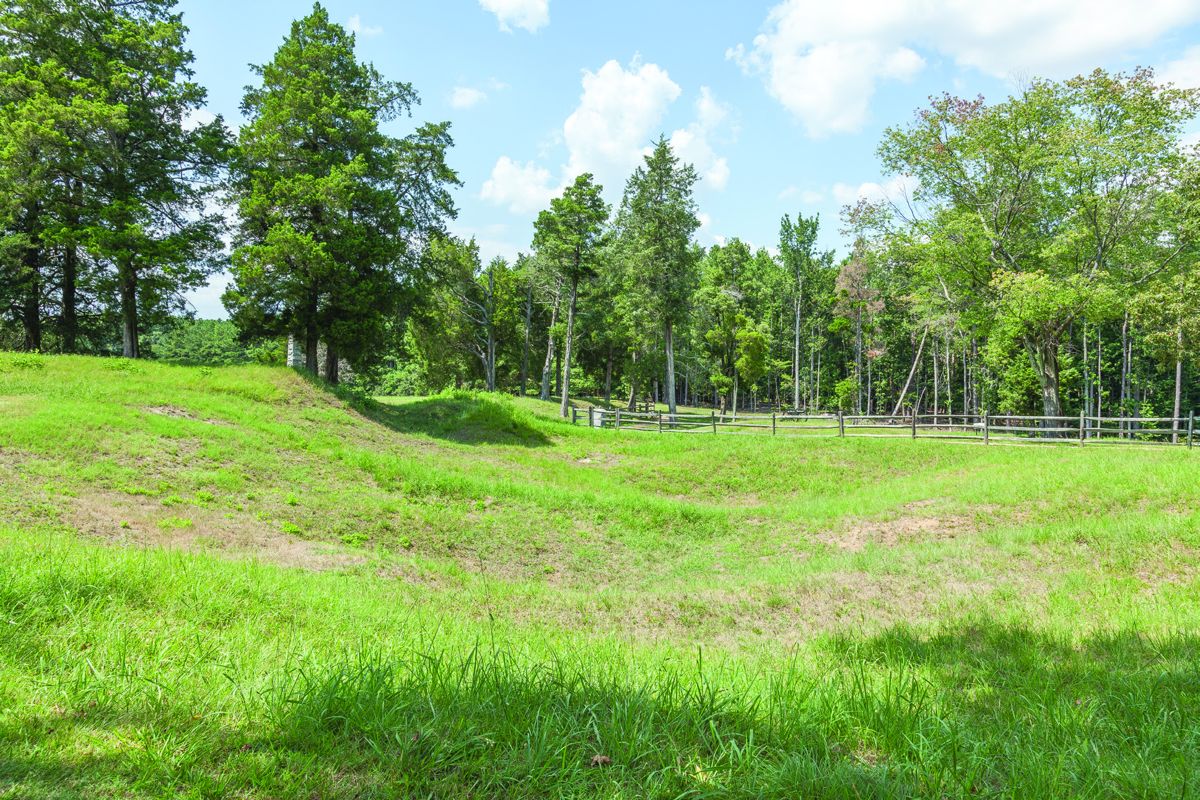
Confederate line at what was known as Elliott’s Salient. More than 250 Confederates, mostly South Carolina infantry and Virginia artillerymen, were killed instantly. After a delay to allow the explosion to abate, the First Division of Maj. Gen. Ambrose E. Burnside’s Ninth Corps under Gen. James H. Ledlie moved out of their entrenchments, crossed no man’s land and entered the crater. They had drawn the short straw when Lt. Gen. Ulysses S. Grant and Maj. Gen. George Gordon Meade overruled Burnside’s plan to send 4,300 United States Colored Troops into battle first. Confederate artillery and infantry stationed on both sides of the crater reacted quickly and sent steady barrages of shot and shell into the Union ranks. Originally ordered to keep moving, the Union troops never advanced past the abyss. They were soon joined by a division of colored troops. The smoldering cavity and nearby Confederate trenches soon were filled with hundreds of soldiers who, instead of advancing, were trying to dodge enemy fire. Confederate reinforcements under Maj. Gen. William Mahone soon arrived on the scene and the pit caused by the explosion became a cauldron of hand-to-hand combat, anger and racial animosity that resulted in cold-blooded killings before the Federals either retreated or surrendered. At the end, officers on both sides were able to control their troops long enough to allow surrenders without the threat of certain death. Casualties among the colored troops were especially devastating. Of the 450 members of the 29th U.S.C.T. who entered the Crater, all but 128 were either killed, wounded or captured. Overall, the Federals had 504 killed, 1,881 wounded and 1,413 captured or missing. Confederate losses were 361 killed, including 258 in the initial explosion, 727 wounded and 403 captured or missing. Members of the 48th Penn. were sent to the rear after the explosion. They had benefited from an ingenious ventilation system designed by Pleasants that used fires to draw oxygen in and carbon dioxide out of the shaft. However, the respite didn’t last long. The 48th was soon back in the Union entrenchments, losing men every day while trying to dodge the fire from enemy sharpshooters. For example, Lt. David Brown was killed instantly on
Aug. 5 by a rifle ball that stuck him while he was in his tent. After the debacle of The Crater, Gen. Grant authorized a raid on the Weldon Railroad at Globe Tavern south of Petersburg. On Aug. 19-21 while serving in a support capacity, the 48th found themselves threatened by a Confederate counterattack after Union forces had cut the rail line. Douty distinguished himself again by going forward to build rifle pits that thwarted any advance. Reese was officially recommended for Medal of Honor consideration in Feb. 1865, by Maj. Gen. John Parke, who assumed command of the Ninth Corps after Burnside’s departure. Captain Oliver Bosbyshell, author of the unit’s history, said about Douty, “The Medal of Honor should have decorated his breast.” Douty ended his three-year tour of duty in Sept. 1864 and returned to Pennsylvania. He settled in Philadelphia and worked for the city’s Bureau of Water in the Construction and Repair shop. He was involved in the 48th Regt. Penn. Veteran Volunteers. The Weekly Miners Journal, published in Pottsville, noted his attendance at the fourth annual reunion in 1874. Douty died at age 63 at his home on South Thirteenth Street in Philadelphia on April 13, 1895. Funeral services were held four days later when he was buried in Mt. Moriah Cemetery. Reese continued on with the 48th until the war was over. He participated in the Grand Parade down Pennsylvania Avenue in Washington, D.C., on May 23, 1865, and was discharged July 17, at Fort Lyon near Alexandria, Va. Fort Lyon had been a munitions storage depot and part of the ring of Union forts that protected Washington City during the war. While Douty quietly enmeshed himself in the fabric of a large city, Reese returned to Shamokin, Penn., and became a local hero. Born in South Wales in 1832, Reese and his family came to the New World prior to the Civil War and settled in Minersville. After the war, he moved to Shamokin, a nearby railroad town in Schuylkill County’s anthracite coal country. Here he became a body guard for a mine superintendent being threatened by the Molly Maguires, a secret organization made up mostly by miners of Irish descent who battled mine owners and police as part of a campaign to improve working conditions and introduce unions Reese also operated a saloon in Shamokin and one of his customers was Buffalo Bill Cody, (Carl Sell Jr.)
who would stop by with Annie Oakley while appearing with his Wild West Show. Cody played many times in the area, including Shamokin on Nov. 28, 1885. Reese also befriended Thomas Alva Edison, who was only 32 years old when he came to Shamokin in 1882 to set up the site of the world’s second threewire electric light station. In his spare time, Reese was the police chief and served as the chief burgess in Shamokin. Nicknamed “Snapper” for the way he snapped one eye shut while making arrests, Reese commanded respect from the Molly Maguires and others who might run afoul of the law. He married Elizabeth Coombs. They had five children. Gwendolen, George, Thomas, John and Margaret Elizabeth, He died at age 59 on May 3, 1893, from a tooth infection. He was buried in Shamokin Cemetery as more than six thousand mourners paid their respects. (Author’s note: Carl Sell spent his early years during World War II in Schuylkill County, Penn., in a small railroad town named Gordon in the coal region. He visited an underground mine as a youngster and quickly decided that wasn’t the job for him. Writing about it is much easier. And safer!)