
Confederate Bible Flags – Charming Variations
By Jessica Hack · Originally published April 2017 · p. 43
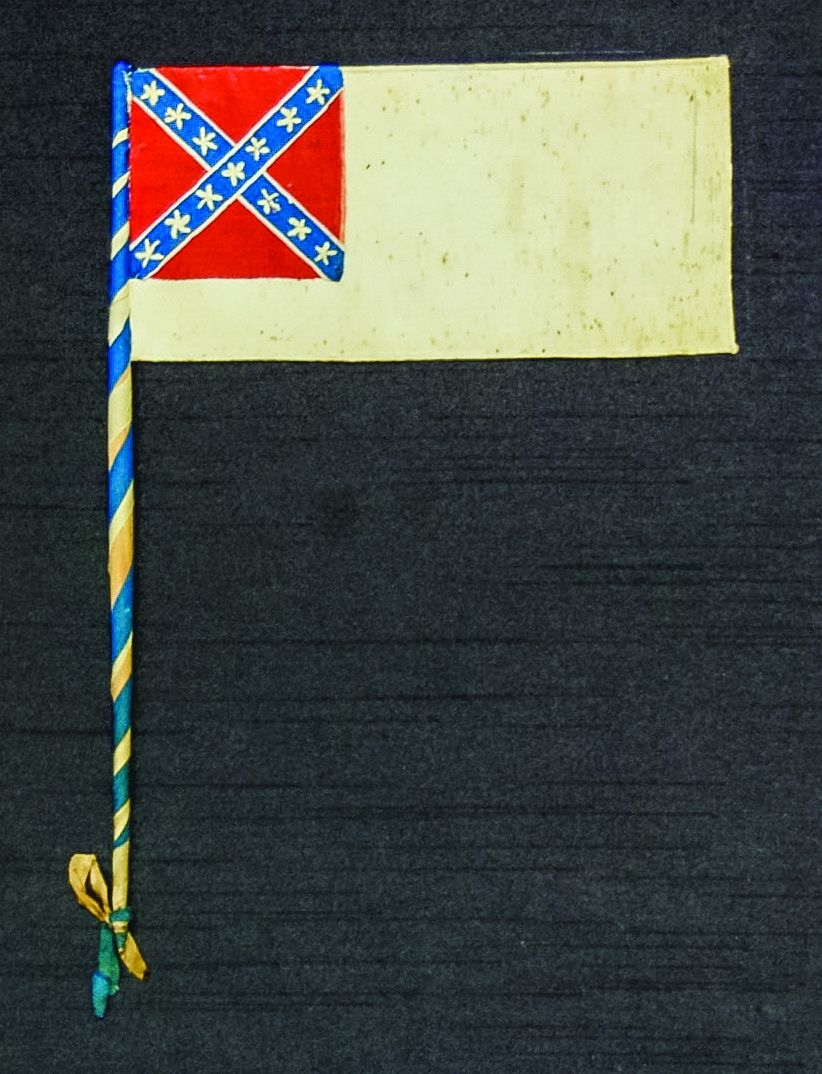
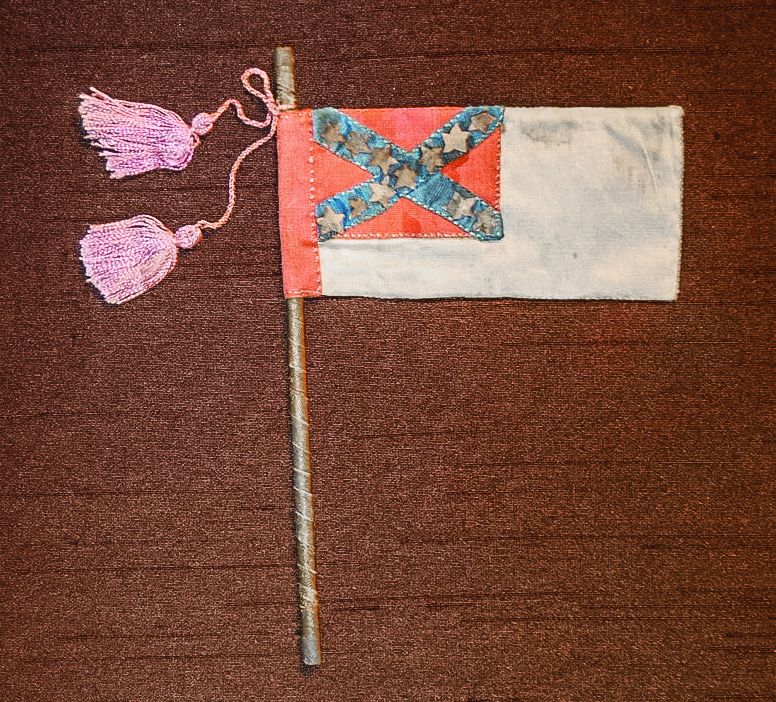
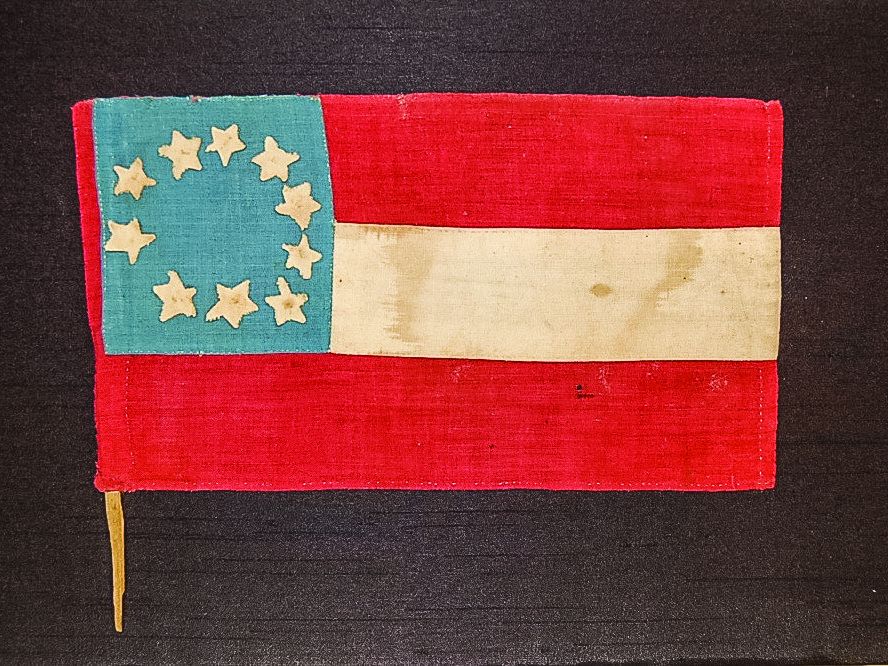
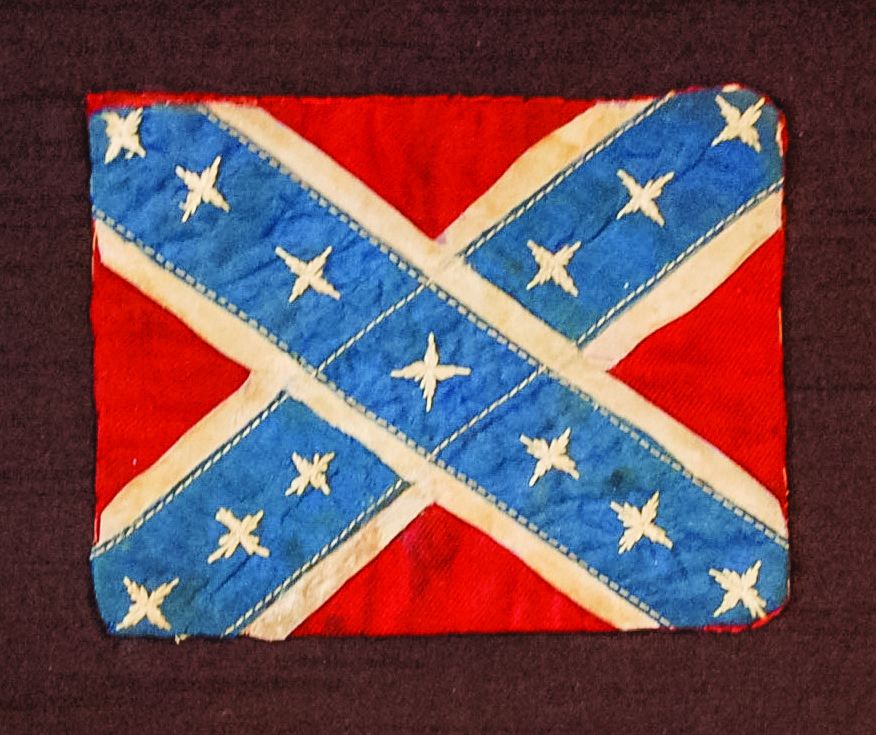
Confederate Bible Flags – Charming Variations By Jessica Hack Among Confederate flags, one of the most charming variations to me is the bible flag, of which I have conserved many during my career. Bible flags range in size from about 1.5 high x 2 inches wide to 5 high x 8.5 inches wide. While most bible flags I conserved have been silk, they are also made of cotton and wool material. They are usually hand sewn. Stars can be painted, embroidered with silk floss, made of paper and glued on, or represented by sequins. Some bible flags are secured to a small “staff”. Others are embellished with tassels. I have seen First National, Second National, and Battle Flag bible flags. There was even a quilt fragment with a Louisiana Confederate bible flag stitched into it. Conservation treatment of a bible flag stitched on a crazy quilt fragment where all the quilt pieces are stitched in a carefully designed, but random pattern is the main focus of this article. First I want to show you some examples of various types of bible flags that I have conserved. The first group is silk flags mounted on a staff: a First National, Second National, and Battle Flag.
This Second National bible flag, was labeled a Parade Flag by its owner. It features a lovely 2 colored alternating ribbon wrapping on its staff.
Flag in Fragment
Flag on Mount 2nd National Here are two very different depictions of a First National Flag:
First National
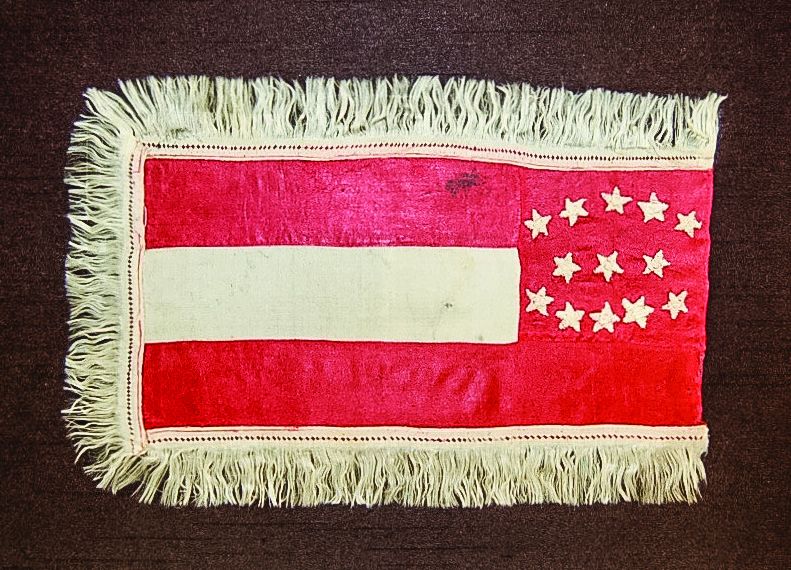
First National First National
2nd National
Battle Flag
Here is a very unusual “Facsimile of and made from a rebel flag” bible flag that was captured in Columbus, Ky., in June 1861:
A lesser number of bible flags that I have seen are made of cotton:
Cotton First National The only wool bible flag that I have treated is shown below.
Wool Battle Flag
The quilt fragment was sent to my studio for conservation treatment of the fragment, which had some small tears, as well as the flag. The silk fabrics of the flag were found to be extremely fragile so the flag was stabilized by heat seal consolidation. China silk fabrics were dyed to blend with the colors of the flag and then coated with Lascaux 498 adhesive (a vinyl acetate copolymer emulsion adhesive). In order to stabilize the flag, it was first un-stitched from the quilt fragment.
The silk material used to make the stars was brittle and shattered. Damage to the stars was stabilized by inserting small pieces of a dry fusible polyvinyl web adhesive underneath the stars and fusing them to the canton ground material. After the quilt fragment and flag were stabilized, the flag was positioned and re-stitched into the fragment with various colored #100 cotton threads.
Detail of flag after conservation.
Cardboard ID Label Over the years I have conserved numerous Crazy Quilts. They are part of a unique Victorian era quilt making fad that lasted from around 1876 to 1910, likely inspired by the English embroidery and Japanese art that was displayed at the Philadelphia Centennial Exposition. The majority of these quilts featured asymmetrical patterns made of small and irregularly shaped pieces of fabric, mainly silk and silk velvet materials. The pieces were stitched to a backing, then embellished with embroidered stitching along the edges between the quilt pieces. There were often embroidered motifs and sometimes a motif was painted into the center of apiece. In these cases, floral themes and animals were favorite subjects. This crazy quilt fragment is of particular interest because the small 11 star Confederate First National silk bible flag is stitched into the top left area of the fragment. The canton has faded to a pale blue/aqua color. The upper and lower bars are coral silk. The center bar is white silk with “Louisiana May 22 1861,” “Mattie.Rosa.Bond,” and a soldier’s verse printed on it. The cream colored silk stars are hand stitched to the canton and are arranged in a circular pattern with one center star.
Flag removed from fragment The dyed and prepared fabrics were then heat fused to the back of the flag, and trimmed as needed.
Reverse of stabilization.
flag, during flag,
I want to thank the owner and collector of these bible flags for his permission to share them with you. Having worked with him for several years to preserve these interesting and diverse artifacts, I have come to share his passion for these little Confederate jewels.
Heat Fusing
Reverse of stabilization.
Quilt fragment after conservation treatment.