
Through The Lens
When Russia Had Our Back
By Stephanie Hagiwara · Originally published September 2016 · p. 7
When Russia Had Our Back “The Czar’s [Alexander II] spokesmen have assured me that in case of trouble with the other European powers, the friendship of Russia for the United States will be shown in a decisive manner, which no other nation will be able to mistake,” wrote U.S. Minster Cameron. In September 18-20, 1863, the river ran red during the Confederate’s victory at the Battle of Chickamauga, Ga. Four days later, Admiral Lisovski on the Russian Atlantic Squadron’s flagship Alexander Nevskii, bristling with 51 guns and the frigate Peresviet, armed with 41 guns, entered New York Harbor. The Variag, Vitiaz and Almaz (with composer Nikolai Rimsky-Korsakov aboard) soon followed. New York City erupted with joy. Russia was “our friend when the world was our foe,” wrote Oliver Wendell Holmes. Sentiment was against the North in England as long as the war was about restoration of the Union and not freeing the slaves. Both France and Spain considered the Monroe Doctrine an inconvenient policy. Aside from needing Southern cotton in her idle textile factories, Napoleon III wanted to set up Maximilian of Austria as Emperor of Mexico. Spain, which was dealing with a revolt in Santo Domingo Island, threatened declaring for the South if the North intervened. On the other hand, America’s formal friendship with Russia stretched back to 1809. As a counter to the other European powers, Russia supported the young nation’s growth. A decade earlier, the United States sided with Russia instead of England and France during Crimean War of 1853-1856. Among other projects, the negotiations to purchase Alaska was interrupted by the War. In New York, European ships were astonished by the arrival of the Russian fleet. Across the continent came word that Admiral Popov with the Russian Pacific Squadron entered San Francisco Bay. London was stunned by the news. The Russian ambassador to England was advised to reply to any questions by saying “the fleet was on a regular cruise to relive other ships, and would probably remain in the United States waters until the European situation cleared.” The South was shocked. If Russia was to side with anyone it should be them. Furthermore, South Carolina’s secessionist Governor Francis Pickens had become good friends with the Czar while serving as the Minster to Russia between 1850-1860. His wife was a favorite. Throughout their stay, the Czar would gift her with jewels and expensive furs. The South’s solution to the fleet’s arrival was to mock the importance of the visit in her newspapers.
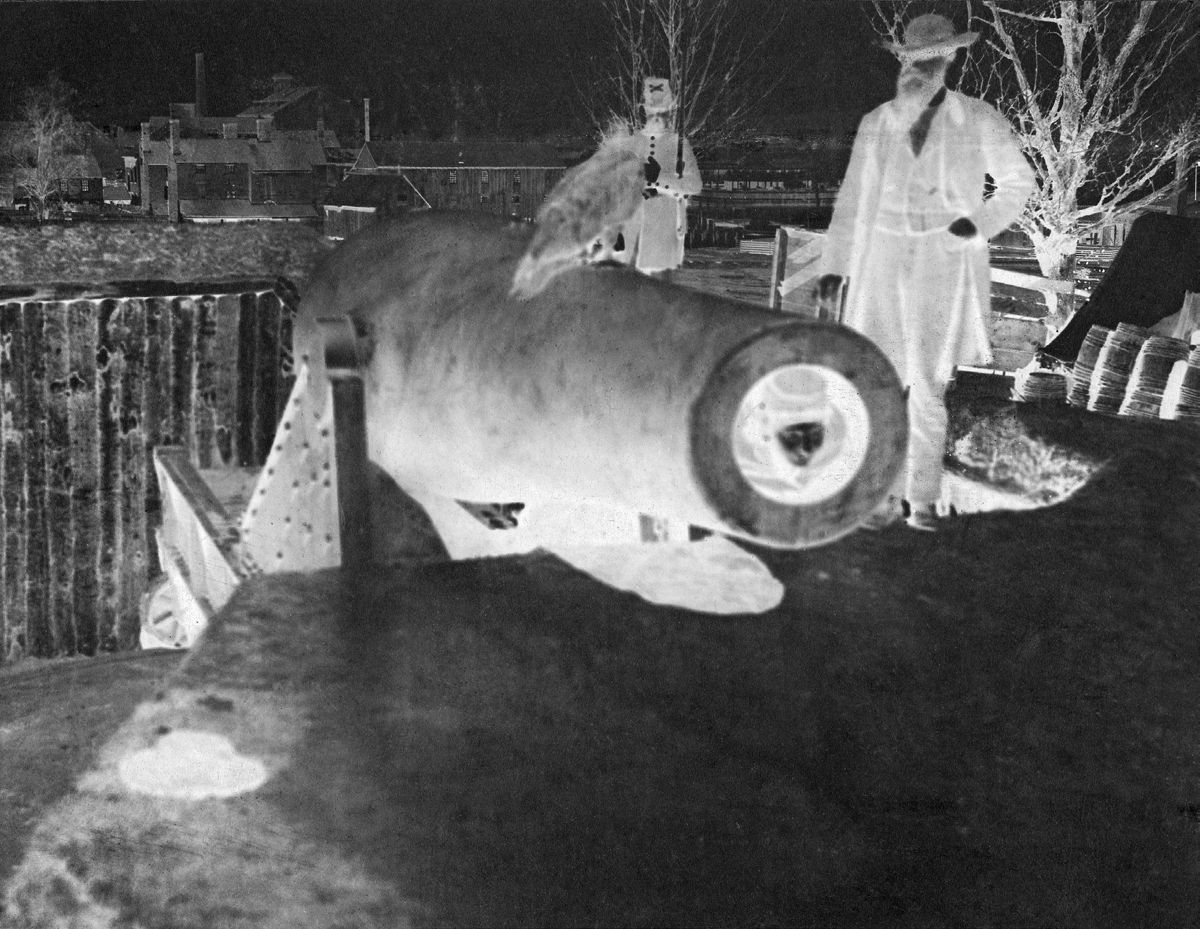
During the Russians’ visit, Harpers Weekly noted that “… every citizen felt bound to do what in him lay to testify to the Russians our sense of gratitude for the friendly manner in which Russia has stood by us in our present struggle, while the Western powers have done not a little to work our ruin.” New York City was “gaily bedecked with American and Russian flags”. Crowds cheered as the Russians were paraded down Broadway in horse-drawn carriages. Banquets were held. The highlight of the 1863 social season was a grand ball, the “Soirée Russe”, where 2,000 of the City’s elite dined and danced in the Russian’s honor. In December, the fleet sailed to Washington D.C., anchoring off of Battery Rodgers in Alexandria, Va. for several months. Lincoln may have been ill after delivering the Gettysburg Address, but that did not prevent the continued celebrations. Steamboats carried sightseers to visit the squadron. Russian sailors happily wandered about Washington. At Battery Rodgers, a photographer and owl happened to be present, when it was discovered that “… a small [Russian] man can crawl clear to the bottom of the bore [of a 15-inch Rodman gun]”. In San Francisco, Popov appreciated the enthusiastic welcome the Pacific Squadron received and proved it with action. A few weeks after arrival, a huge fire broke out in what is now the Financial District. Popov had 400 of his sailors join the local firefighters in fighting the inferno. When reports that Confederate cruisers were coming to attack the City, Popov “gave orders to his officers that should such a corsair come into port, the ranking officer of the fleet should at once give the signal ‘to put on steam and clear for action’. At the same time an officer should be dispatched to the cruiser to hand to its commander the following note: According to instructions received from His Excellency Rear-Admiral Popov, commander in chief of His Imperial Russian Majesty’s Pacific Squadron, the undersigned is directed to inform all whom it may concern, that the ships of the above-mentioned squadron are bound to assist the authorities of every place where friendship is offered them, in all measures which may be deemed necessary by the local authorities, to repel any attempt against the security of the place. If no attention were paid to this warning and the cruiser should open fire, it should be ordered to leave the harbor, and in case of refusal it should be attacked.” Eduard de Stoeckl, Russian minister to the United States, expressed to Popov that “…as he understood (Library of Congress) St. Petersburg diplomacy, so far as Russia is concerned there is neither North nor South but a United States, and therefore Russia has no right to interfere in the internal affairs of another nation and consequently Popov should keep out of the conflict. … But in case the corsair passes the forts and threatens the city, you have then the right, in the name of humanity, and not for political reasons, to prevent this misfortune. It is to be hoped that the naval strength at your command will bring about the desired result and that you will not be obliged to use force and involve our government in a situation which it is trying to keep out of.” Whereas the possibility of Russian involvement may have closed the door to any European power from siding with the Confederacy, the Russian fleet’s timely appearance may not have been solely for the Union’s benefit. In 1861, Poland began to rebel against Russia. England and France were leaning towards Poland. By June of 1863, it looked like Russia would have a war on her hands. Russian General-Adjutant Krabbe decided that in case of war, the best use of the wooden Russian fleet would be “preying on British and French commerce.” Furthermore, “if the fleet remained at home it would probably be blocked in; it was, therefore, necessary that it should be sent away to some place more conveniently situated for the purpose in mind.” On July 7, 1863, Czar Alexander II approved Krabbe’s proposal to send the fleet to the United States. Lincoln and his cabinet were fully aware that the fleet’s arrival may be related to the Poland situation. As Secretary of the Navy Gideon Welles wrote, “In sending them to this country there is something significant. What will be its effect on France and the French policy we shall learn in due time. It may be moderate; it may exasperate. God bless the Russians.” In the end, England decided to stay out of the Polish conflict. The French took their cue from the British. By April of 1864, the threat of war in Poland was over. The War in the United States favored the North. It was time for the festivities to end and the fleet to return home. Afterward, it is said that Alexander II considered this cruise as one of the greatest practical achievements in his reign.
Stephanie Hagiwara provides the trivia and photo info for the 2017 Civil War in Color War calendar. She also writes a weekly column for History in Full Color.com that covers stories of photographs of historical interest from the 1850’s to the present. Her articles can be found on Facebook, Tumblr and Pinterest.