
The Watchdog
Were Civil War Soldiers Good Marksmen?
By Craig L. Barry · Originally published October 2016 · p. 14
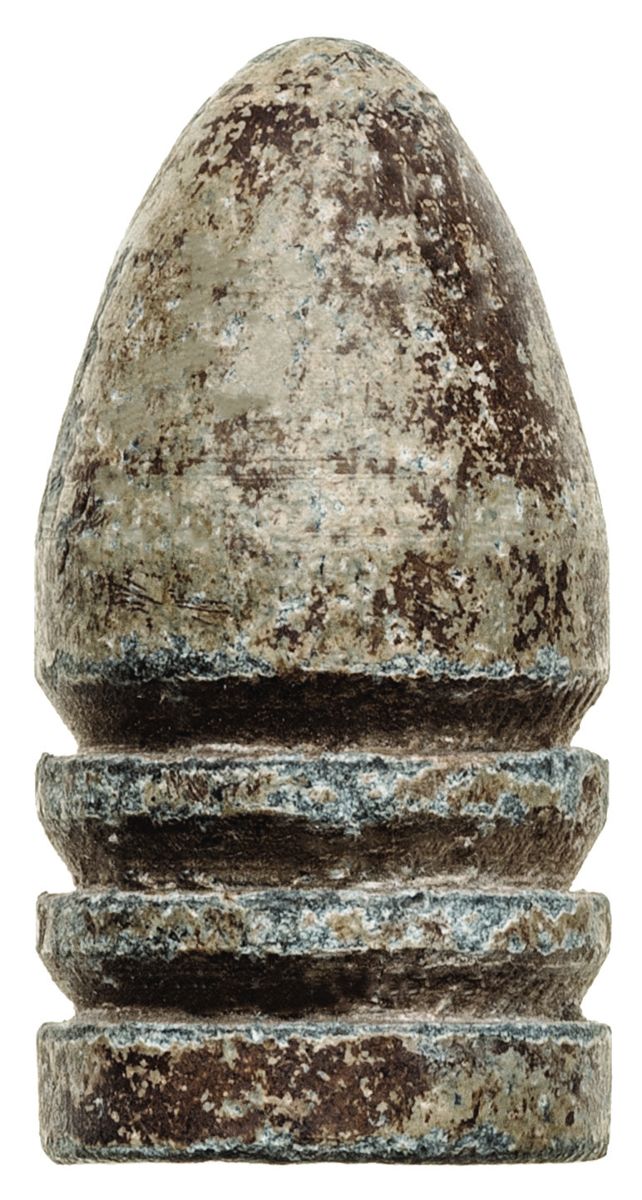
“Training in the use of these weapons was startlingly belated and haphazard.” Orrin W. Cook, 22nd Mass. Vol. Co. B There is a persistent notion that Civil War soldiers were better marksmen than their European counterparts, especially on the Southern side. European soldiers of the time-period, in particular, the sort that made up the bulk of foreign armies, were not similarly reputed to be crack shots. Hans Dieter-Gotz, author of Militarewehre und Pistolen der Deutschen Statten 1800-1870, went as far as to suggest that mid19th-century military arms were equipped with fixed block rear sights because the soldiers were “too dumb to be good shots.” There is some truth to that as any European military arm had to be simple enough for largely illiterate conscripts with little or no firearms experience, especially those from the outlying provinces. The thinking goes that conversely, the American Civil War soldiers were better marksmen due to growing up in the rural countryside which necessitated a familiarity with hunting and firearms. The facts suggest otherwise. Colonel William Church formed the National Rifle Association in 1871 as he was dismayed by the lack of marksmanship shown by (Civil War) troops. He wrote, “The primary goal of the National Rifle Association would be to promote and encourage rifle shooting on a scientific basis.” There were exceptions of course, and this distinction only belongs to a few chosen men in each regiment or brigade. These handfuls of men influenced the course of battle with their marksmanship. Confederate sharpshooter companies and battalions were originally organized during the early months of 1862. Colonel Robert Rodes was the inspiration for the creation of the Confederate sharpshooter. On May 3, 1862, under his and other officers’ pressure, the Confederate Congress passed General Orders No. 34. This act authorized the establishment of one sharpshooter battalion for each brigade, “to be composed of the men selected from the brigade.” These orders were put into effect immediately by all commands. However, the impact was not immediately felt, and the success of elite Confederate sharpshooter battalions was mostly achieved later in the Civil War. Major William Dunlop beginning in 1863 created a draft on the regiments, taking the best marksmen in each company into his battalion. These men trained extensively every day under Captain William Haskell. By the spring of 1864, every member was expected to hit a man sized target at 1,000 yards after hitting on the first shot at 800 yards. These were the experienced and highly trained sharpshooter units that brought themselves notoriety; including the infamous shot that killed Major General John Sedgwick at Spotsylvania Courthouse on May 9, 1864. Sedgwick was recorded as saying, “What? Men dodging this way for single bullets? What will you do when they open fire along the whole line?” When his men continued to flinch at incoming fire, Sedgwick said the famous last words, “Why are you dodging like this? They couldn’t hit an elephant at this distance.” All the same, aside from the tragic irony the reason this particular shot was so well remembered is because that level of marksmanship was actually very rare. Most soldiers were not the highly trained, elite marksman. The average rural American upon entering the Army may have been familiar with firearms of some sort from hunting game. However, this knowledge was not necessarily transferable to the battlefield at much greater distances and under considerably more stress. The rifle-muskets of the time fired heavy, larger caliber conical bullets at low velocities. A heavy bullet fired at a low-velocity travels in a parabolic arc rather that a straight line. It’s relatively easy to overshoot your target when the projectile is rising to reach its point of impact. Also consider that unlike hunting for game, the intended target is intentionally firing back. Finally, with the “haphazard and belated training in the use of the weapon” mentioned by Pvt. Cook, along with the noise, smoke and general confusion…it is easy to understand how even an expert shot in a civilian context would not necessarily be similarly effective at hitting what he was aiming at in battle. Whatever the case, the vast majority of rounds fired in every Civil War battle missed their mark. It has been said of the American Civil War that it took a man’s weight in Minié balls to kill him. This intended exaggeration was not that far off the mark. Union Major General William S. Rosecrans worked out a general estimate of how many shots needed to be fired to inflict one hit on the enemy. He came up with the astounding conclusion that 20,000 rounds of artillery fired during the Battle of Stones River managed to hit exactly 728 men; even more amazing, his troops had fired off
Portrait of Maj. Gen. John Sedgwick. Brady National Photographic Art Gallery (Washington, D.C.), photographer. (Library of Congress) an estimated two million cartridges and inflicted 13,823 hits on the Confederates, all of which meant that it required 27 cannon shots to inflict 1 artillery hit and 145 rifle shots to manage 1 infantry hit. This wasn’t extraordinary. A Federal office in 1862 noted that “In actual service, not more than one shot in six hundred takes effect and, except for the moral effect of the roar of the musketry and the whistling of the balls, the remaining five hundred and ninety-nine might better have been kept in the cartridge boxes.” If one accepts that marksmanship under combat conditions is a skill that improves with practice, then one would expect that the average Confederate soldier in 1864 was indeed a better shot than his Union counterpart. The Union had many more new recruits that were not as battle tested. Also, by later in the war, both sides had the advantage of being more often better equipped with modern rifle-muskets instead of smoothbores. If these factors resulted in any appreciable difference in marksmanship, they are not recorded and did not impact the final outcome of the Civil War. For the sake of comparison, during one battle of the Franco-Prussian War of 1870, the Germans fired
80,000 rounds that resulted in about 400 French casualties and the French fired 48,000 rounds to achieve a similar number of German casualties in return. This level of inefficiency was commensurate with American Civil War soldiers. There lies perhaps the most reasonable conclusion - that Americans on both sides were more or less average shots for the time period and equipment, and came into the Civil War not trained to either judge distance on a battlefield or aim their rifle-muskets properly. Hence they put in a performance typical of European infantry with the same level of training and similar weapons. They were not statistically speaking, better or worse in terms of marksmanship.