
Through The Lens
Ladies’ Gunboat Societies
By Stephanie Hagiwara · Originally published October 2016 · p. 5
“The cause is a noble one, the effort is sublime, and the moral effect will reach far beyond the deadly projectiles which the contemplated gunboat can send. If the women take it up with a will, there is no word as fail”. The Mobile Register & Advertiser, 1862 On Sunday, April 21, 1861, eight days after Federal troops had departed Fort Sumter, S.C., rumor had it that a steam sloop of war, the USS Pawnee, was coming to Richmond, Va. to seize the ammunition that had arrived from Norfolk, Va., the previous evening. “Citizens armed themselves with rifles, pistols, shotguns, and other weapons. … The Governor rode down and gave such orders as were necessary, and steamers were held in readiness for any service required. Cavalry companies scoured the country below; the Howitzer Corps, Company F, and A Company from Manchester marched down on the opposite side of the river. The Young Guard and the Virginia Life Guard were drawn up on the wharf. Several militia companies were also in the neighborhood.” In the end, the report turned out to be false. But the citizens of Richmond had their first taste of what it meant to be living on the possible front lines of a war zone. Believing that ironclad vessels would protect the South from the Federals, the Confederacy commissioned 22. There is evidence that Ladies’ Gunboat Societies either fully or partially funded up to six: Virginia II; Fredericksburg; Lady Davis; Palmetto State; Ladies Ram and the Georgia. The Ladies’ motive in funding weapons of war was to protect “our coast” and to “safeguard our lives”. Unlike today, waterways were a primary means of transportation. In Richmond, the James River flowed through town. The residents of Charleston, S.C. could see the “Floating Battery” built to bombard Fort Sumter from their windows. During the April 24, 1862, Richmond Ladies’ Gunboat Association meeting, it was agreed that the goal was “building a gunboat for the defense of the James River.” To ensure the safety and survival of Richmond, they would “give such ornaments of gold, and articles of silver, as are our private personal property.” The women made clear that for the sake of their children, they were making the sacrifice: “For should it be our sad fate to become slaves, ornaments would ill become our state of bondage; while if God in his infinite mercy shall crown our efforts with success, we will be content to wear the laurel leaves of victory, and point our children to our civil and religious liberty so gloriously achieved and say ‘These be thy jewels’.”
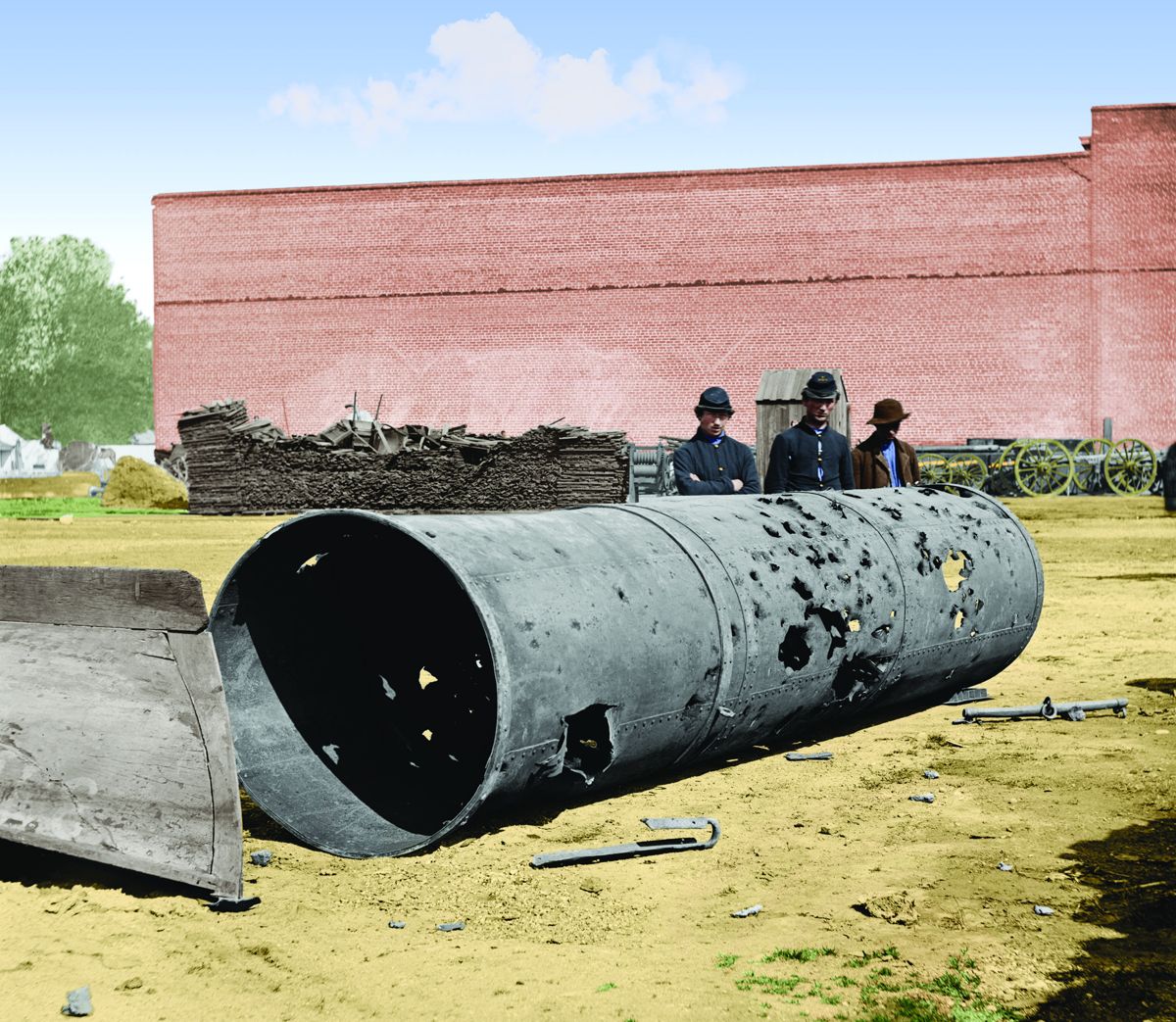
The Societies from different cities would exchange ideas, and a friendly competition arose. Fundraising events included fairs, bazaars, requests to businesses and auctioning off Gunboat Quilts. The Quilts required fine sewing skills to create elaborate medallion designs called broderie perse. It was not uncommon for the same Quilt to be put up for auction more than once to raise funds. However, what drew in the bucks were newspapers listing contributions. It began with a woman’s suggestion to the Charleston Daily Courier. Within a week more than a thousand dollars were donated. The Richmond Society named their ironclad the Virginia II in honor of her famous predecessor the CSS Virginia, which had fought in the original battle of the “ironclads” with the USS Monitor. The other Societies had more difficulty choosing a name. Famed diarist, Mary Chestnut wanted to name the future Palmetto State the “She Devil for it is the devil’s own work it is built to do.” Another woman suggested Nemesis as it was to “defend the relics and the memory of the dead from insult.” The ladies also had to scavenge raw material to build their boats. An ironclad requires about 1,000 tons of metal. Due to the “great scarcity of Iron Lead and Brass,” it was requested that contributors send scrap metal directly to the Tredegar Works. In Savannah, the Georgia’s wooden casement was covered with overlapping rails from train tracks. The Confederates may have lost the war, but the Ladies’ gunboats did fulfill their mandate to protect their home communities. The Palmetto State, due to its iron skins, was slow, heavy and had difficulty crossing the bar to get outside of the Charleston harbor. Although she primarily protected the Harbor, in January of 1863, she raised the town’s spirits by damaging and temporarily scaring off the blockading ships. Without an engine powerful enough to propel her through the tidal inlets, the Georgia became a floating battery. Her presence was enough of a deterrent that Savannah was captured by Gen. William T. Sherman’s troops instead of by naval forces. In 1864, the Virginia II and the Fredericksburg finally joined the James River Squadron, boosting its might. Along with discouraging a naval attack on Richmond, the Squadron took the fight to the Union. In January of 1865, the Federal navy was busy off of Wilmington, N.C. battling to take Fort Fisher. The Confederates saw their chance to save Richmond by disrupting the Union supply chain by attacking City Point, Va. The ironclad Richmond along with the ladies’ gunboats, (Library of Congress) Virginia II and the Fredericksburg led a flotilla of smaller boats downriver. They passed the batteries and sharpshooters at Signal Hill and Fort Brady. But at 10:30 p.m. they reached the obstructions the Federals had sunk at Trent’s Reach. The smaller vessels which passed the barriers began working to remove the obstructions while “a perfect rain of missiles” fell upon them. Despite their valiant efforts, by the time the passage had been cleared, the tide had changed. The Virginia II, the Richmond and some of the smaller vessels became grounded. Northern cannons bombarded the sitting ducks, shredding the unarmored smaller vessels. Their crews transferred to the ironclads. About 6:55 a.m. the sailors of the Drewy managed to evacuate. Fifteen minutes later, a direct hit to her magazine blew the gunboat apart. Her remnants raining down damaging the deck of the Nashville. The shock wave washed away the Scorpion, killing two of her crew. “During the whole time while aground, neither the Richmond nor the Virginia [II] could get a gun to bear upon the enemy,” reported Commander John K. Mitchell. The commander of the Virginia II, Lt. John Dunnington counted more than 70 shots hitting his vessel. In City Point, U. S. Gen. Ulysses Grant, feeling the explosion of the Drewy, ordered: “every gunboat you can get in the river” to destroy the oncoming ironclads. At 10:30 a.m. the Northern flotilla, including the ironclad Onondaga, arrived. In range about one-half mile away, the Onondaga engaged the Confederates. Two solid shots punched the Virginia II, breaking through her iron armor. Meanwhile, the river was rising. The Virginia II floated off the bottom. Now able to aim her 9-inch gun, she fired a single shot hitting the
Onondaga. By proving she was back in the game, the shooting was over. The Virginia II and Nashville turned back upstream, and the Federals returned back down. The Battle of Trent’s Reach was her last fight. A steam leak through her deck made it difficult for the Virginia II’s pilot to see but her firepower and armor survived. The Virginia II ended up being scuttled to avoid capture when Richmond fell.
Only her bullet-riddled smokestack was left behind. Stephanie Hagiwara provides the trivia and photo info for the 2017 Civil War in Color War calendar. She also writes a weekly column for HistoryinFullColor.com that covers stories of photographs of historical interest from the 1850’s to the present. Her articles can be found on Facebook, Tumblr and Pinterest.