
Confederate Nancy Hart Militia
By John A. Punola · Originally published October 2016 · p. 18
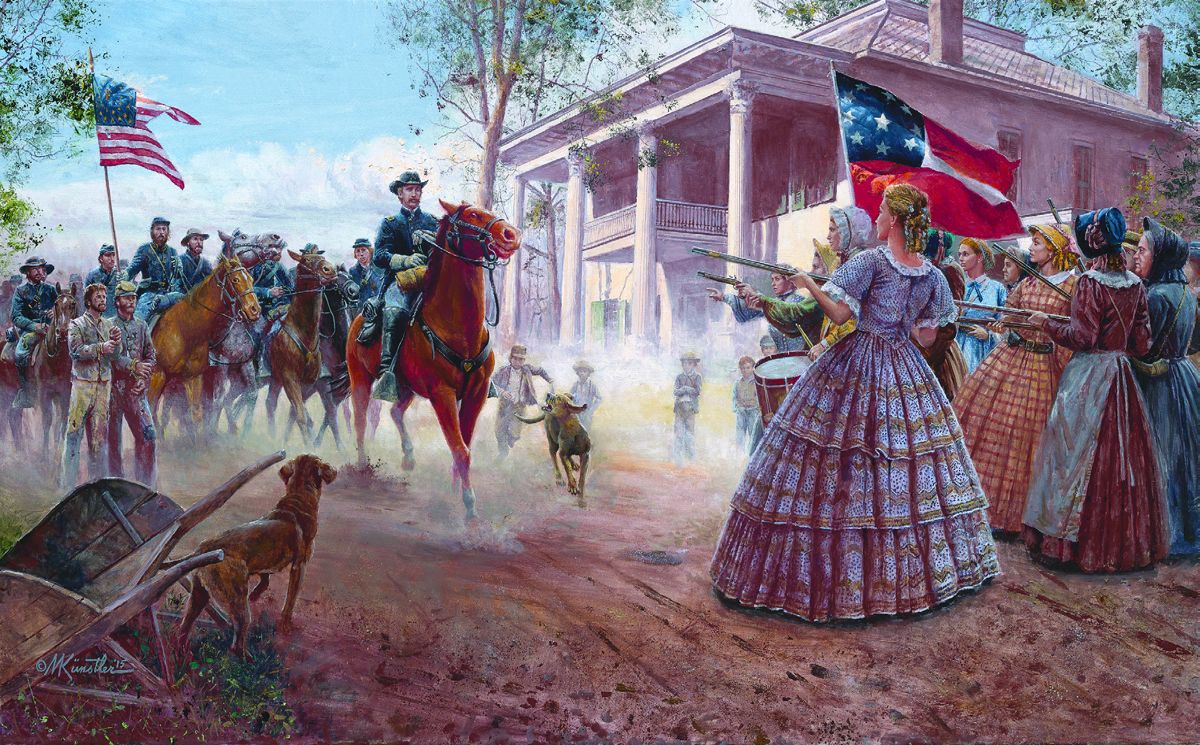
From the years 1861-1865, America was involved in an emotional and deadly war, North vs. South, that resulted in six hundred twenty thousand deaths and lasted for four years. Except for the battle at Gettysburg, Pa, and a few minor skirmishes inside the Pennsylvania border, the remainder of the war was fought in the South. For that reason, we learn more and more of events that happened in the deep South that are not well known in the North. One such event was the formation of a home guard unit in LaGrange, Georgia that was comprised of all females; it was activated in 1861. LaGrange was a thriving small town also an economic leader in the cotton trade that produced a high quality of cotton fabric and was a major supplier of the famous Confederate gray uniform. Once the war began, every available male in the town quickly departed to serve in the military, leaving the town with no military means of defending themselves should Union raiders appear. With a large advantage in men, equipment and food supplies, eventually heavily armed Union raiders became a major worry to the South who were unable to defend every town or region. With almost 1,300 men away serving in the Confederate army, LaGrange’s residents were defenseless. Two soldier’s wives, Nancy Hill Morgan and Mary Alford Heard had an idea to form a female military company to protect their homes. About forty ladies attended the preliminary meeting, ready to band together for mutual protection. Thus was organized an entirely female company called the Nancy Hart Militia. They proved to be a spirited group and dedicated to the Confederacy, and defending LaGrange. The ladies voted Nancy Hill Morgan as Captain, and Mary Heard was 1st Lieutenant. The newly formed female defense unit needed an official name and chose to name their group of ladies after a hero from the American Revolution, Nancy Hart. Legend has it that Nancy bravely defended the farm from marauding British soldiers, who arrived and killed the family turkey. The British soldiers envisioned a tasty turkey meal and ordered Nancy Hart to cook the turkey, then serve them a hot dinner. As ordered, she cooked the turkey, then told them dinner was ready. The British soldiers casually stacked their rifles in a corner and sat down to enjoy the turkey dinner. The soldiers were so focused on the dinner they did not notice that Nancy Hart had quietly gone to the stack of loaded rifles and told the British soldiers they were now her prisoners. One soldier did not take the order seriously and made a threatening move, so Nancy shot him. While a servant ran for help, Nancy calmly kept a watchful guard as the others stayed seated at the table. Soon the Colonial militia arrived, and the hated British were led away and then hung from the nearest tree. Nearly all of the women of LaGrange were mustered into the service, even though they were inexperienced with firearms and had no knowledge of military duty. A Local physician, A. C. Ware, who was partially disabled, taught the women how to operate and fire weapons. Teaching them the “Hardee’s Rifle and Light Infantry Tactics”, the women drilled twice a week. Through dedicated practice, hard work and determination, the ladies became excellent marksmen and good soldiers, some of them became highly skilled shooters, and were ready to defend their town if called upon to do so. The Nancy Hart Militia, or “Nancies” as they were affectionately called, would often march thru LaGrange with muskets on their shoulders, Confederate banners waving as they displayed their military marching skills. Although they had not been called upon for active duty, they were ready and willing to be soldiers if or when they were needed. When not drilling with the Nancy Hart Militia, the women were volunteer nurses for wounded Confederate soldiers housed at various LaGrange facilities. In spring of 1865, nearby Ft. Tyler, which was lightly defended, was attacked by a superior Union force and was quickly defeated. Now the Union troops, who were commanded by Colonel LaGrange advanced towards nearby town, LaGrange, with the intent of burning and destroying all buildings and homes. The Nancy Harts Militia quickly assembled for duty and blockaded the only road into town. In full battle dress and equipment, the Nancy Harts waited for the Union Troops to arrive, and they didn’t have long to wait. The Nancy Harts would soon be tested when they came face to face with the invading Yankees. The following morning the Union troops arrived at the outskirts of LaGrange and were surprised to be confronted by armed, determined females, rifles loaded and ready. Colonel LaGrange observed the Nancy Hart Militia and knew he could not engage them in battle. He asked to speak to the commander of the ladies, and Capt. Morgan Brown stepped forward, as Colonel LaGrange requested to negotiate terms. The Union Colonel was agreeable to surrendering to the women soldiers. The terms were that the ladies cook a hot meal for Colonel LaGrange, his staff, plus a few select Confederate officers who were recently taken prisoner. In return, the Union troops could camp overnight and leave the following morning to continue their journey to Macon, Georgia. The town would not be looted or burned, and
The Nancy Harts memorial marker in LaGrange, Ga. Capt. Morgan Brown was agreeable to the terms, however, he insisted the Yankee soldiers had to pitch their tents in the pastures outside of town. Admittedly, the Union soldiers kept their word and did not loot and burn down the town of LaGrange, but they did destroy and burn the industries and merchandise that were deemed as war material, plus the single track railroad was severely damaged. The woolen mill at LaGrange was the major supplier of gray uniforms for the Confederacy, was destroyed. Without firing a single shot, the Nancy Hart Militia had saved their town from total destruction and the Union troops did not loot the homes as they had been doing in other Georgia towns en route to the coast. But the best news was the day following the Nancy Hart “victory”, Robert E. Lee surrendered his command to U.S. Grant, and the war in Virginia, North Carolina, South Carolina and Georgia was over. Upon learning of the surrender of Robert E. Lee, all recent Confederate prisoners were released to return freely to LaGrange. It was a blessing that Union Colonel LaGrange spared the Georgia town the same day Robert E. Lee surrendered his army. Colonel LaGrange
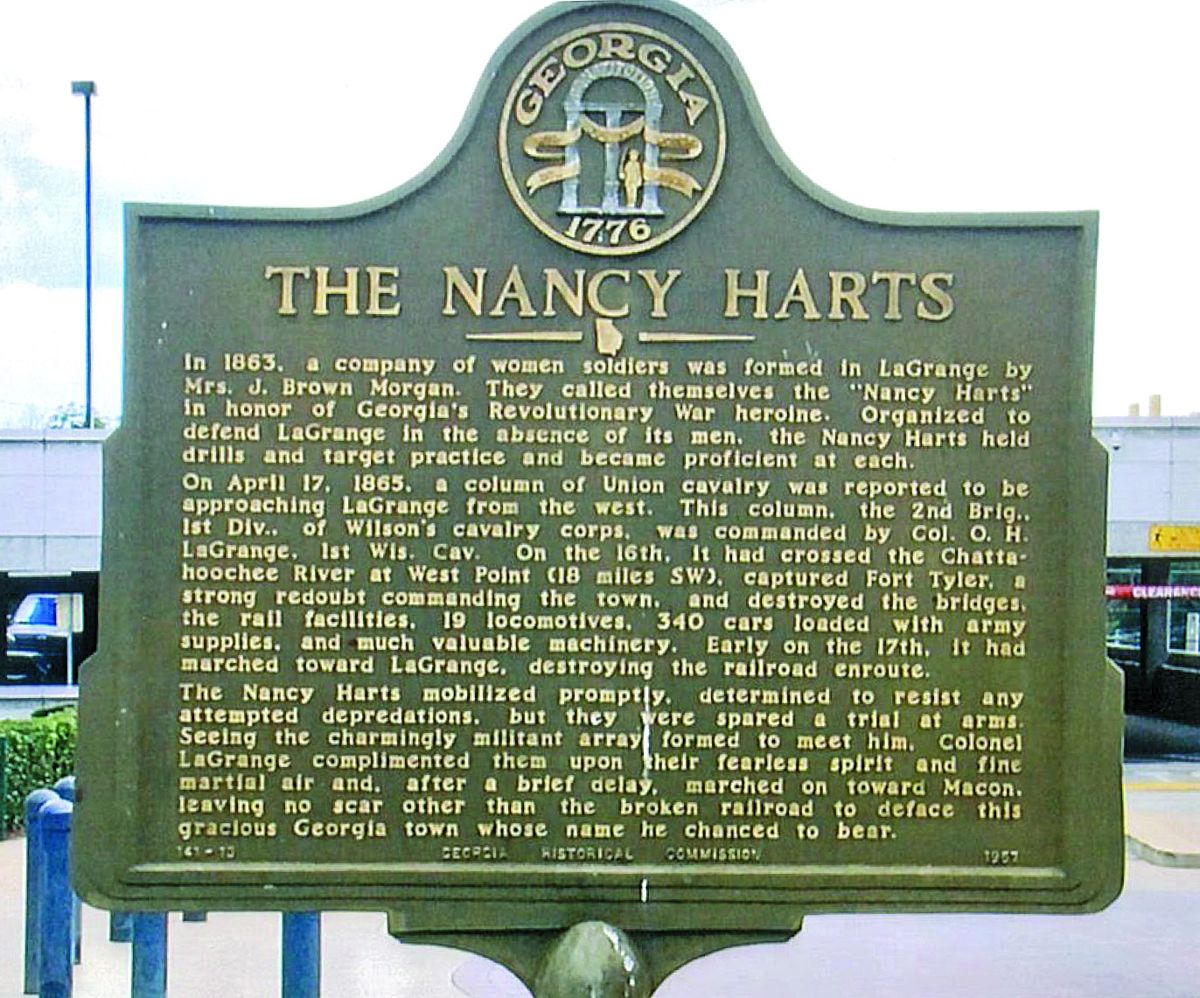
(John Panola)
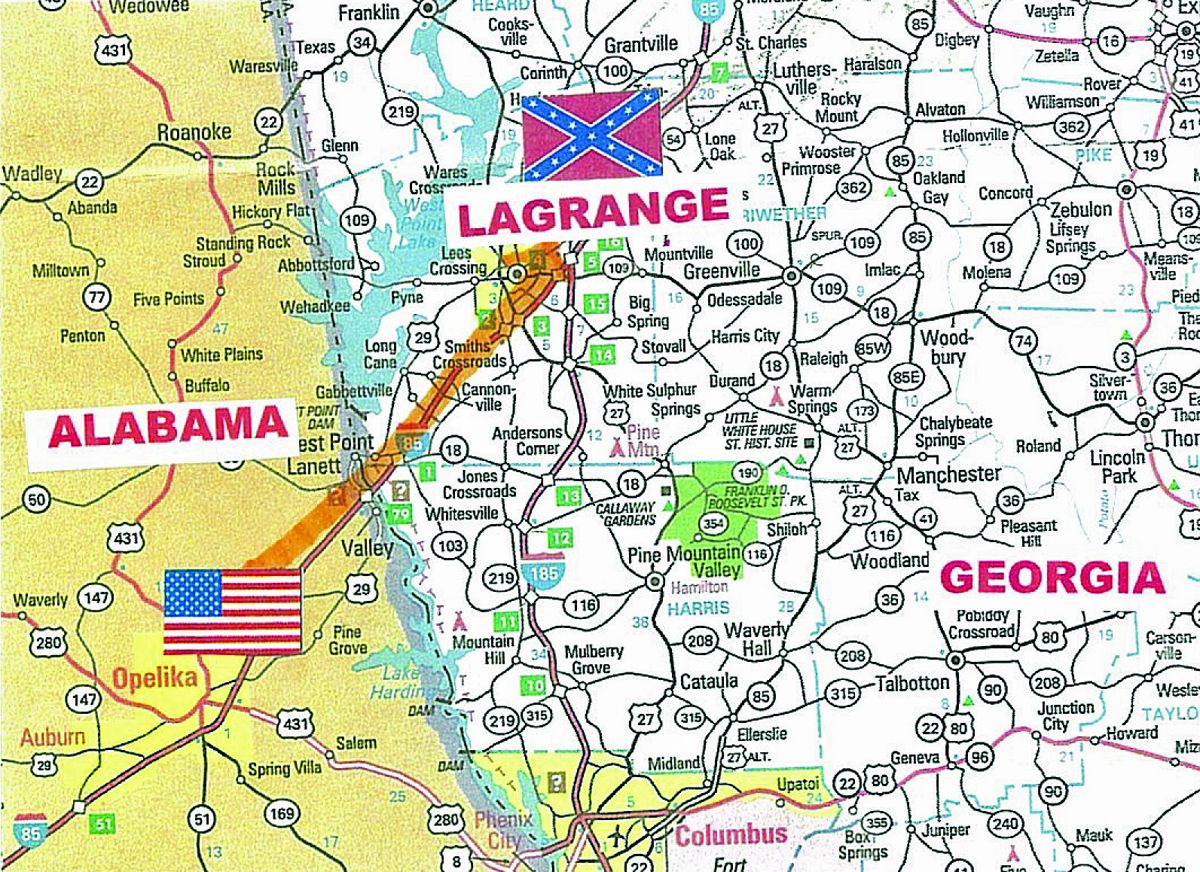
was from Illinois and after the war, he returned to Georgia and married a Georgia lady, which was very rare as Southern women were strongly against fraternizing with the enemy Yankees. On Friday, April 17, 2015, Mort Kunstler, America’s premier Civil War painter, was invited by the Troup County Historical Society to make a special unveiling of his latest, and final Civil War painting, titled LaGrange vs. LaGrange commemorating the famous 1865 encounter between the all-female Nancy Hart Militia and Colonel O. H. LaGrange who commanded the 1st Wisconsin Cavalry. The show of courage and resolve by the Nancy Hart Militia is legendary. LaGrange, Georgia is about 40 miles from Atlanta. You can secure current news about the Nancy Hart Militia by calling the Troup County Archives, P.O. Box 1051, 136 Main Street, LaGrange, GA, 30241. Contact Shannon Gavin Johnson at 706-884-1828. There was a rousing reenactment of the Nancy Hart Militia and the Union Cavalry in 2015 and hopefully another celebration of this historic event is in the future.