Inspection, ARMS!
The Confederate Kerr Rifle
By Tim Prince · Originally published November 2016 · pp. 14–15

Last month we talked about James Kerr’s revolver in Confederate service. Now we turn our attention to his rifle design, a gun that was acquired in very limited quantities but was as important as the Whitworth to Confederate sharpshooters in the Western Theater.
classes that allowed for small-bore rifles. The interchangeability and swappable barrels made the Kerr small-bore Military Target Rifle a popular choice for those competitive shooters. The rifle was also one of the most accurate designs available during the early 1860s, eclipsed in its accuracy some minor improvements as production continued. The most obvious being the adoptions of the rounded Baddeley Patent barrel bands in the lower and middle positions of the stock. These bands had a small, recessed tension screw that eliminated the possibility of snagging the screw from the standard Palmer Patent clamping bands. The Palmer band, however, remained in use in the upper position, where the sling swivel was installed. During the American Civil War era, only those Enfields produced by the London Armoury Company and the Royal Small Arms Factory at Enfield Lock (RSAF) utilized the Baddeley Patent barrel bands. The rifles were marked like most London Armoury produced Enfield pattern arms, with the date of manufacture over L.A.
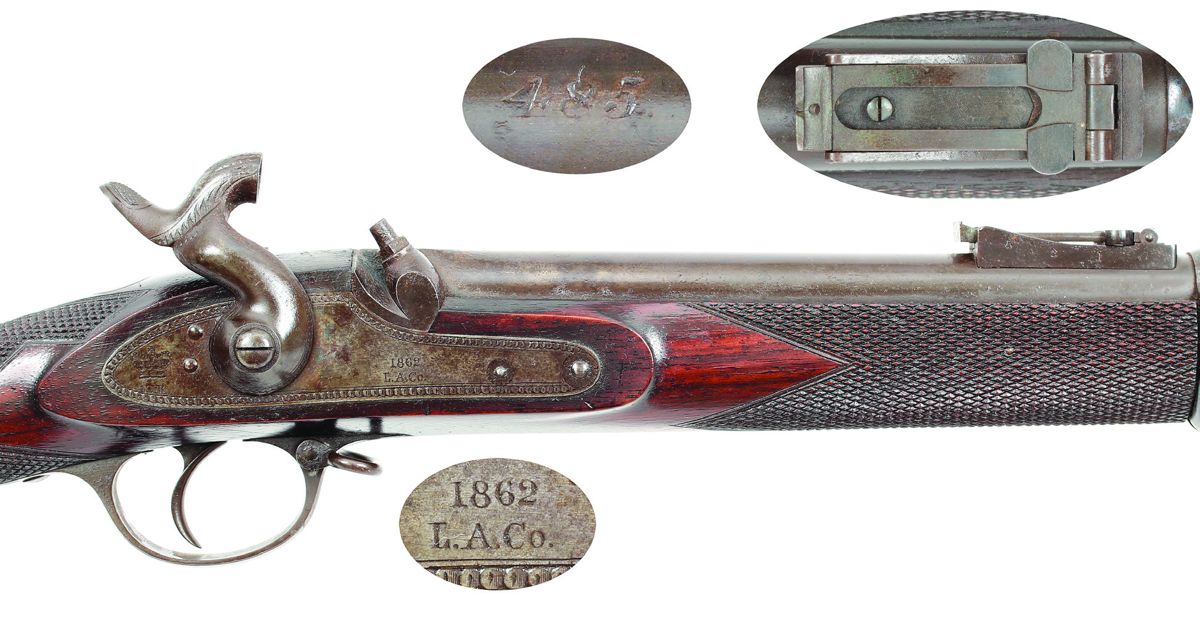
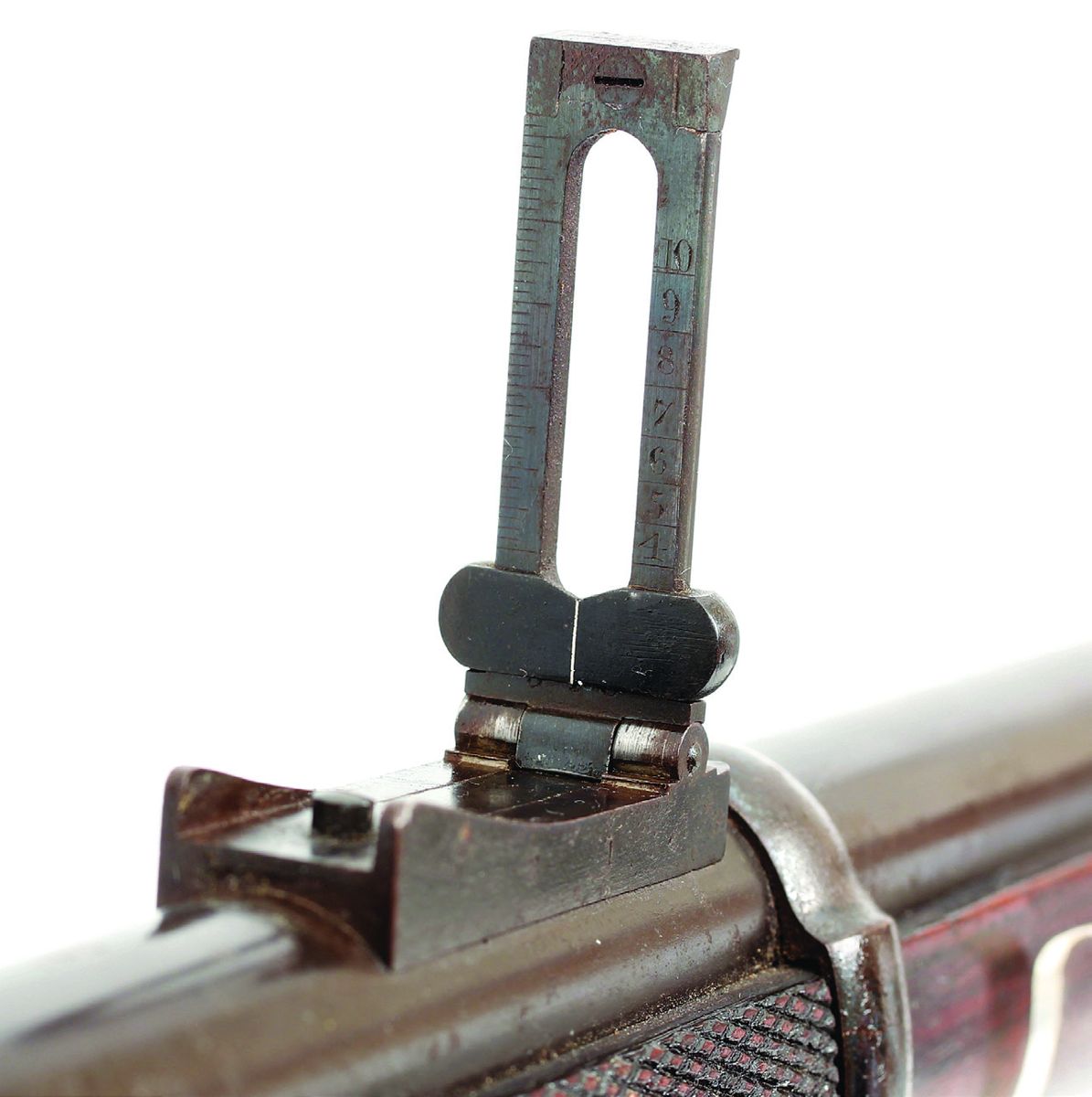
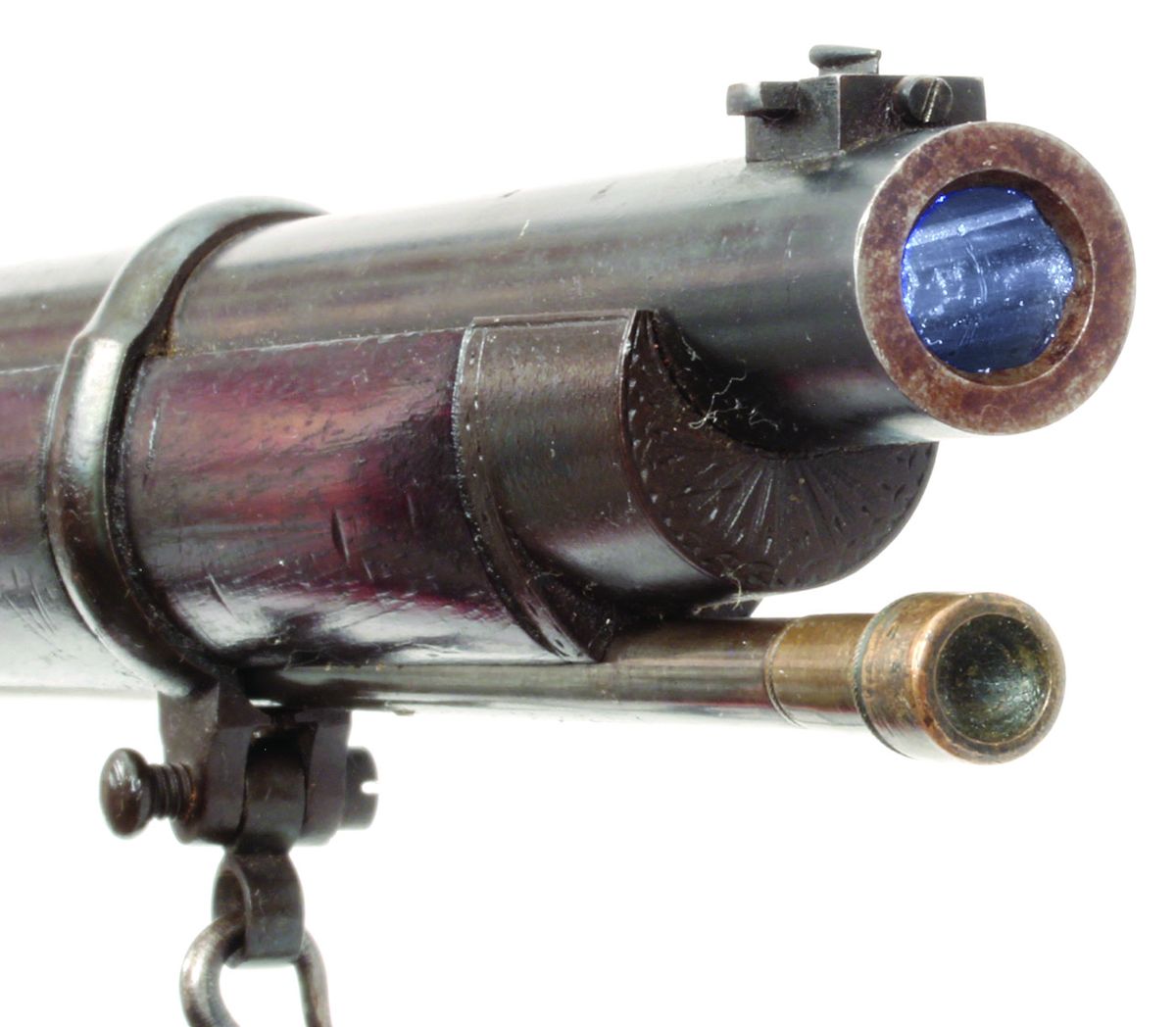
Overall view of Kerr Rifle #485, an iron mounted gun that likely saw Confederate service. (All photos Tim Prince) The Kerr Rifle was designed circa 1860 by James Kerr, who at that time was serving as the superintendent of the London Armoury Company, a position formerly held by Robert Adams of Adams Revolver fame. On May 10, 1861, Kerr received English Patent #4348 (1861) for his unique rifling design. The small bore, .451 rifle had a six groove, 37” barrel that was slightly recessed at the muzzle to protect the rifling and to facilitate the loading of the paper cartridge. The overall length of the rifle was 53”, and it was stocked to within 1-¼” of the muzzle, with no provision to mount a bayonet. All of the guns were produced by the London Armoury Company, and it is believed that only about 800 of the rifles were manufactured between 1861 and the cessation of London Armoury Company operations in 1866, although I am not aware of any Kerr Rifles with dates later than 1864 on their locks. For all practical purposes, the gun was a standard London Armoury P-1853 Enfield Rifle Musket, with an upgraded barrel and finer quality sights. The barrel could be easily exchanged for a standard 39” long .577 caliber barrel for those who wanted a dual caliber rifle. This was important for the military target rifle shooters in England, who often competed in matches that required a standard military pattern rifle in .577 caliber, but who also competed in only by the Whitworth patent rifle, which sold for substantially more money. From an economic standpoint, a Kerr rifle cost roughly twice what a standard P-1853 Enfield rifle musket did, but a Whitworth could cost as much as 20 times more than a Kerr Rifle! The Kerr Rifle was typically equipped with an upgraded and refined version of the standard “Enfield” type rear sight and with a windage adjustable front sight. As production of the rifles continued, more expensive and complicated sights were offered as options on the guns, including various tang mounted “peep” sights. Extended triggerguard spurs, and other target shooting enhancements were also available as special order features on later production rifles. The initial production guns were typically standard brass mounted P-1853 London Armoury Enfields, with the Kerr barrel, enhanced sights, and a special bronze tipped rammer of appropriate length for the shorter barrel. As production continued, better quality wood was used in the stocks, and checkering of the wrists and forends became more common. Iron mountings were also made available as well. Later guns were more often enhanced with engraved locks, screw heads, and forend tips, and of course, a myriad of custom order features were always available. As with all London Armoury produced arms, the Kerr Rifle underwent
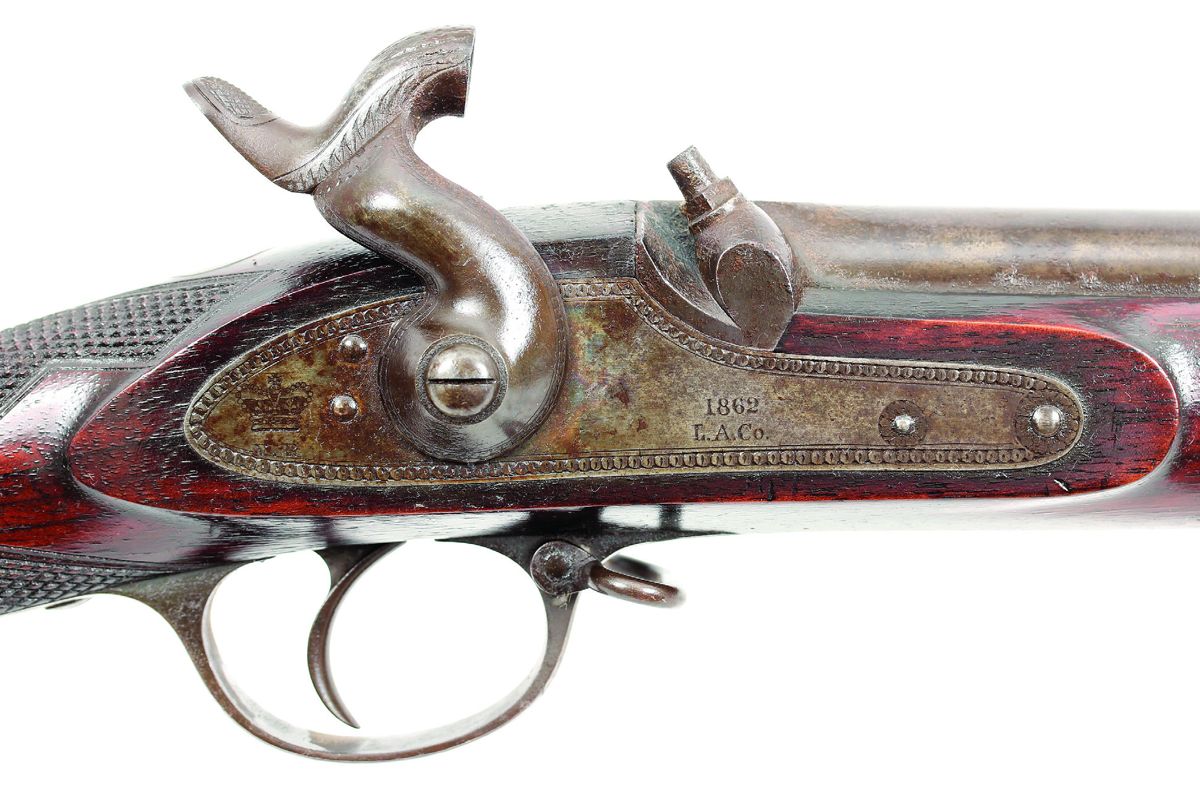
Co. on the lock plate, forward of the hammer. The tail of the lock plate was marked with a British Crown over the initials VR. While normally these initials would indicate British government ownership, it appears that London Armoury used them on nearly all of their lock stampings, even on guns that were clearly for commercial sale and not for sale to the crown. The nocksform of the rifle was marked KERR’S PATENT, and a two-line oval cartouche reading REG’D / 10 MAY 1861 was typically stamped at the upper left of the breech. A serial number was normally engraved on the top of the barrel, between the breech and the rear sight. The extreme accuracy of the Kerr rifles, their reasonable price (when compared to Whitworth Rifles) and the strong relationship between the London Armoury Company and the Confederacy would suggest that a large number of these special rifles would have been acquired by the South for use by sharpshooters. While the Confederacy did, in fact acquire some of these special rifles, it seems unlikely that they obtained more than 60 to 80 of them, and documents suggest that only about half that number ever made it into the field. The only confirmed purchase of Kerr Rifles by the Confederate central government was an order placed with Sinclair, Hamilton & Company in July of 1862 by Caleb Huse. It is important to remember that Archibald Hamilton, the principle in Sinclair, Hamilton & Company was also the Managing Director of the London Armoury Company.
Kerr Rifle #485 lock detail.