
George H. Lomas: Patriarch, Titan, Icon, Mentor And Friend
By Susan Saum-Wicklein · Originally published November 2016 · p. 1
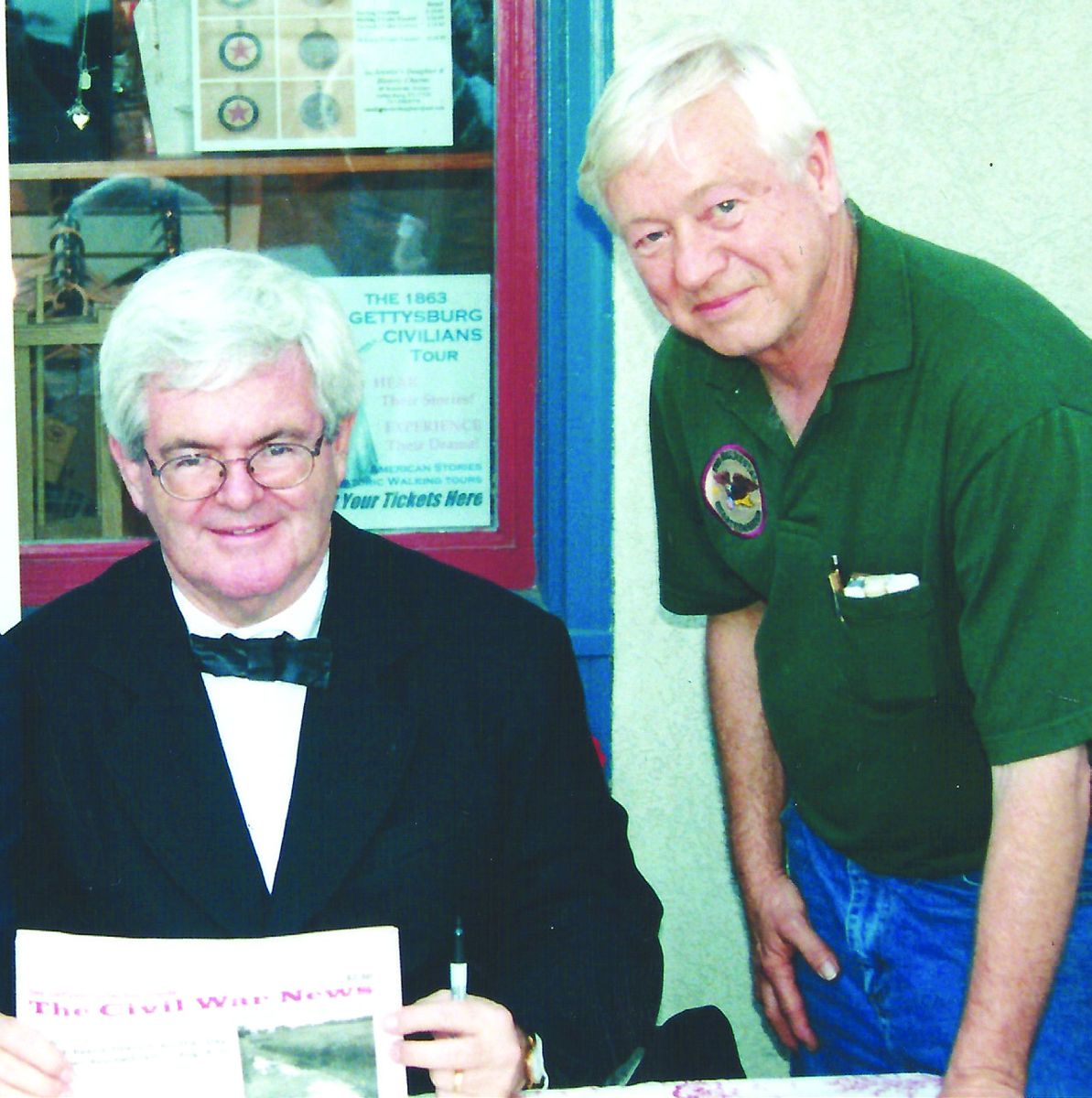
George Henry Lomas was born on September 7, 1942, exactly, as he would recount with a sparkle in his eye, nine months to the day after the Japanese attack on Pearl Harbor. He was born into a working class family in Germantown, Pennsylvania and was the fifth and last child born to Anna and William Lomas.
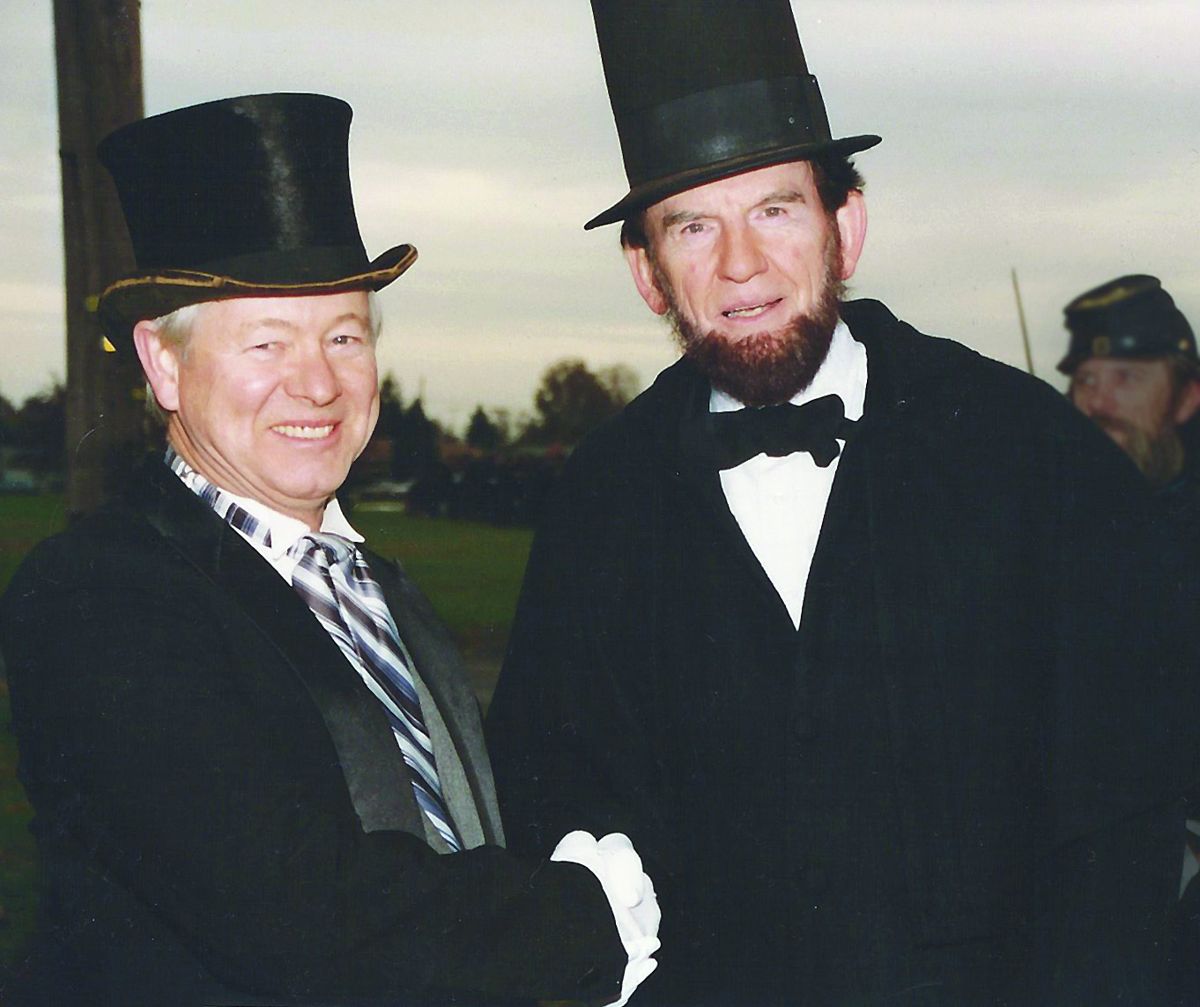
George and James Getty who portrayed Lincoln. From an early age, George exhibited the determination and energy which marked the foundation for his success as an adult. As a youngster, he would sell the local newspaper from his red wagon on the local street corners. His early display of determination and motivation marked the beginning of his entrepreneurial pursuits. The Boys Club became a favorite hangout for George. During his days at the Boys Club, he made the acquaintance of Art Zippler, an adult volunteer active in the club’s activities. Art made a connection with young George and became a mentor to him. Art was involved in competitive black powder shooting and the Civil War. Also, exhibits of Civil War dressed figures in the department store windows in Philadelphia furthered George’s interest. As a young man, George developed a great passion for American Civil War history, so much so that it easily became his second career. In 1964 he received “greetings” from Uncle Sam and joined the United States Army. He served two years
(Julio Zangroniz)
of active duty and four as a reservist. Fort Jackson, South Carolina, was his principal duty station. His assignment as a regimental quartermaster honed his skills of thrift and conservative spending. Unfortunately, the U.S. Army didn’t see these qualities as quite the asset George did. A phone call from his commanding officer emphasized the imperative to spend the budget allocated. George did as he was ordered, but shared with friends throughout his life, that he thought the government spent money too carelessly and with no regard for the taxpayers providing the funding. On May 20th, 1966, George received a letter from Brigadier General L. H. Walker, Jr. informing him he had been awarded a Certificate of Achievement for “Your enviable record” and that “service such as yours represents the finest traditions of the United States Army.” George may have had philosophical differences regarding the spending, but he never would do any less than his best. After the service, George returned to his family home in the Philadelphia area and worked at a tool and die company. Later he took a job with Bell of Pennsylvania which eventually became Verizon. He retired from Verizon in 1998. As a young man, George started making canteens which he would sell to help offset the cost of his black powder shooting and reenacting hobbies.
The first canteens were offered at wholesale to John Ferry of “Old Sutler John” sutlery. John declined to buy them, so George laid out a blanket at the next reenactment and sold them himself, at retail. John would later state, “Not buying those damn canteens was the worst decision I ever made.” Another influence which impacted the development of George’s entrepreneurial dream which would manifest itself as Regimental Quartermaster was Sue Hawkins from the newly formed Taylors and Company. Sue urged George to look at reenactments as a venue for his ever increasing reenacting products. George knew the reenacting community. He participated in the Centennial events commemorating 1st Manassas, Antietam and Gettysburg. His hobby merged with his developing entrepreneurial interests, and a business was born. Still working full time for the phone company, George managed to attend countless Civil War events during the year as well as establishing a mail order operation and a “Shop” adjacent to his then home in Warminster, Pennsylvania. Having attended and participated in so many reenactments across the country, George emerged as a resource for organizing committees and not for profit organizations promoting reenactments. His influence could be felt throughout the hobby as more attention to the details of event production became a standard. George recognized the importance of the reenactors’ experience and safety as well as creating an environment where spectators and visitors could learn more and appreciate better the vibrant and transforming events of 1861 to 1865 in the United States of America. As the “big” anniversary years grew nearer, George transitioned from participant to event organizer. The 135th Gettysburg Reenactment was the product of conflict, compromise and cooperation. Several groups vied for the opportunity to produce this reenactment. The Civil War Reenactors Alliance wanted one event. Their determination to bring the factions together to create the most rewarding experience for the reenacting community succeeded. Civil War Heritage led by George Lomas and Gettysburg Living History headed by Randy Phiel and Tony Strickland joined forces to stage the largest and most successful Civil War reenactment ever. Over 22,500 reenactors participated during that event commemorating the 135th anniversary of that pivotal battle of the Civil War. The 135th created a gold standard for Civil War Reenactment event production. From the relationship forged during the strain of the mega 135th (Julio Zangroniz) Gettysburg event, the Gettysburg Reenactment Committee was formed between George, Randy and Tony and continues to stage the most successful annual Civil War reenactment commemoration in the country. A totally privately funded event, the GAC has contributed hundreds of thousands of dollars to historic land conservation, preservation and veterans initiatives. Regardless of the event’s profitability, George, Randy and Tony fulfilled their commitments to the not for profit organizations in the Gettysburg community. Establishing Regimental Quartermaster retail shop in 1998 in Gettysburg solidified George’s commitment to the town which became his home. George’s story would not be complete without mentioning his avid and voracious need to learn more and become more knowledgeable. He was not a highly educated man, but he was intelligent, thoughtful and very well accomplished. From his younger years helping to unload Bannerman’s Island, handling original Civil War artifacts, to visiting museums and historic sites and learning minute details regarding lock plates, artillery shells, muskets, and cannons, George became a walking encyclopedia of Civil War knowledge. Even with all of his experience and knowledge, he was always open to learning more. He was not prideful and readily embraced new information and insight. To his credit, he was generous with his expertise, never hoarding it like a miser. He was willing to share and impart his experiences and knowledge to anyone seeking him out. George had a twinkle in his eyes, a disarming smile, a generosity of spirit to be envied and a self-effacing, humble personality which was welcoming to everyone he met. George was a man of character; whose word was his bond. George let slip his mortal chains on the morning of September 19, 2016, for his eternal journey, one that we hope he will leave from time to time to grace us with his spirit. George Lomas, “Patriarch, Titan, Icon, Mentor and Friend,” you will be sorely missed. Please join family and friends of George on November 20, 2016, from 1-4 p.m., for his celebration, at the tail end of Remembrance Day weekend at The Lodge (685 Camp Gettysburg Rd, Gettysburg 17325). A trust in George’s honor has been established for disadvantaged young men to pursue higher education. Donations may be made out to the George H. Lomas Scholarship Trust and sent to: Raffensperger, Martin and Finkenbiner LLC, 34 West Middle Street, Gettysburg, PA 17325. The Regimental Quartermaster will continue to operate business as usual continuing George’s legacy.