Still Standing: Confederate Courthouse Monuments in Georgia
By Gould B. Hagler Jr. and Stephen Davis · Originally published May 2016 · pp. 33–35
Still Standing: Confederate Courthouse Monuments in Georgia By Gould B. Hagler Jr. and Stephen Davis Relics and reminders of the Confederacy’s war for independence are under threat by well-publicized campaigns to relocate them, dismantle them and hide their pieces away - and even to destroy them. In New Orleans, the city council has declared that statues of Robert E. Lee, Pierre G. T. Beauregard and Jefferson Davis are “public nuisances.” The councilmen voted to have the statues disassembled and taken to a warehouse. In Baltimore came a recommendation that a dual statue of Lee and Stonewall Jackson be removed from a city park. In Georgetown, Texas, a local church has petitioned the county to take its Confederate monument from the courthouse to a cemetery or a museum. A century ago, Georgians were busily erecting monuments to IN MEMORY OF THE BRAVE CONFEDERATE SOLDIERS OF STEWART COUNTY, BOTH THOSE WHO FOUGHT AND FELL, AND THOSE WHO FOUGHT AND SURVIVED
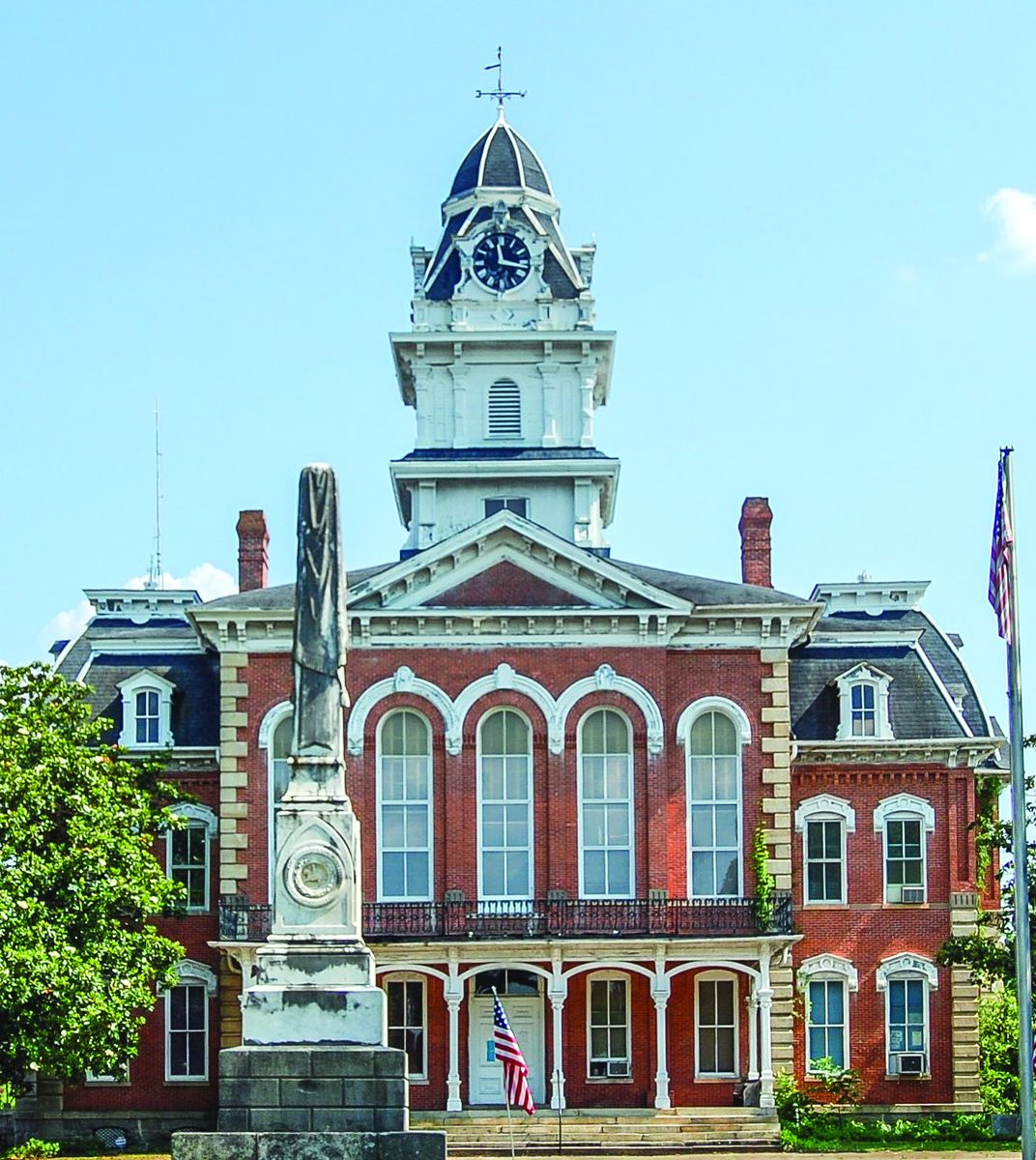
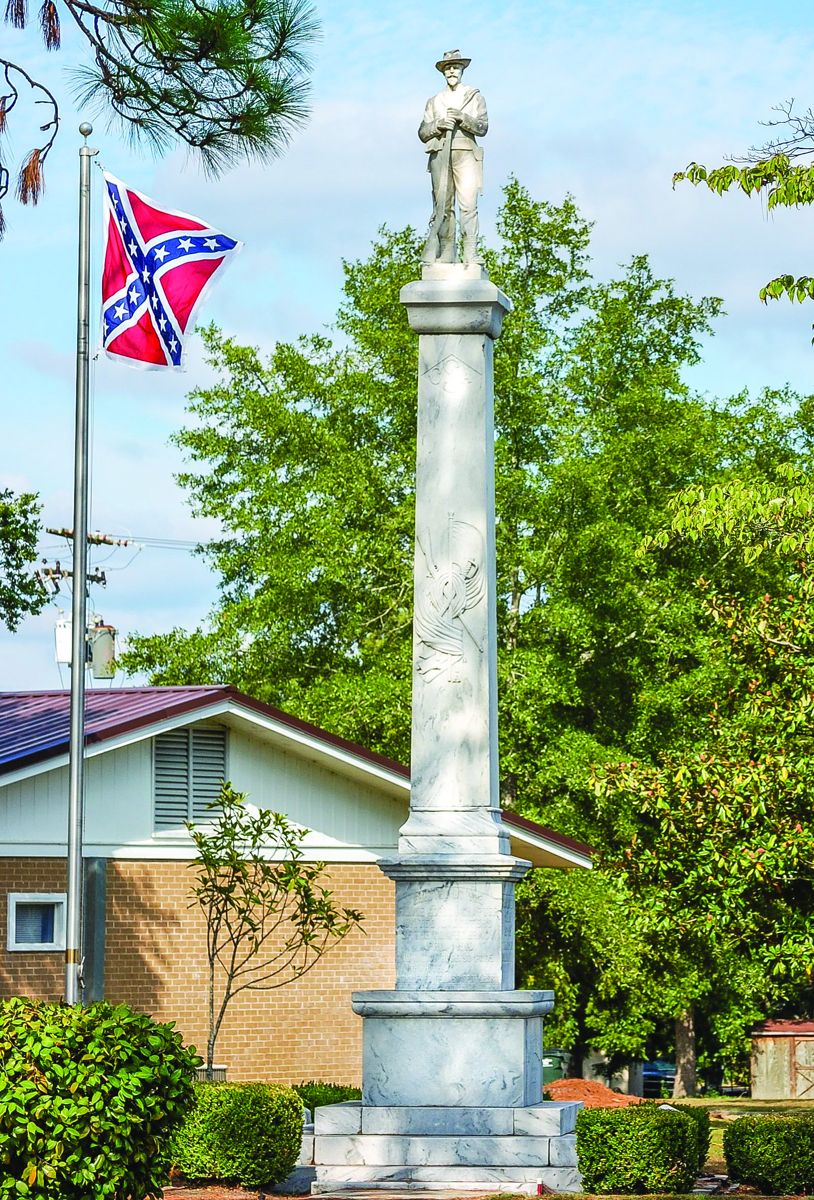
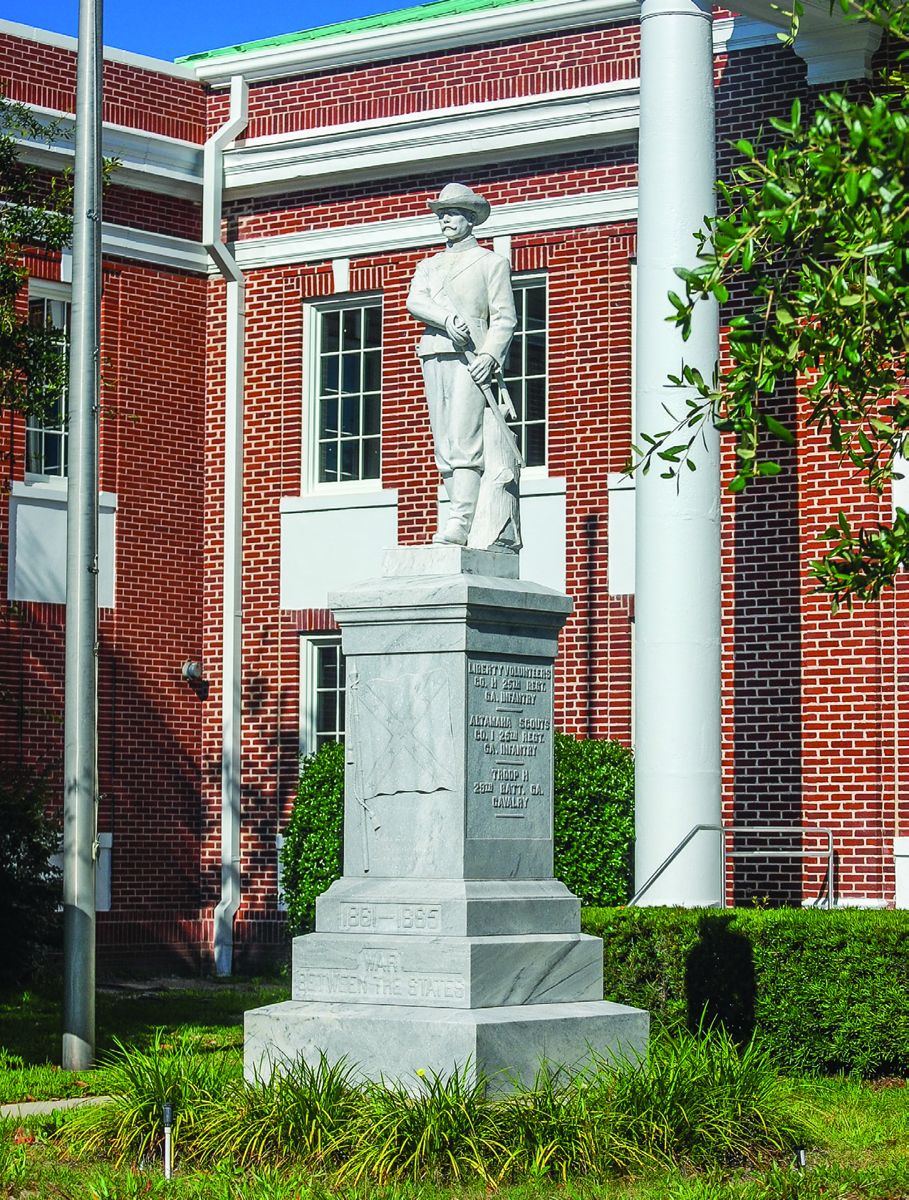
Confederate soldiers on courthouse squares and other locations in communities throughout the state. Huge throngs witnessed the dedication ceremonies, listened to inspiring oratory and paid their abiding respects to the aged veterans still in their midst. In comparison to other places, Georgia has seen relatively little agitation to remove memorials to the Southern Confederacy. However, there is some chatter on the subject, including talk of destroying the carving on Stone Mountain. Destruction of this unique work of art is unlikely, to say the least. But as Yogi Berra said, “It’s tough to make predictions, especially about the future.” Like Yogi, we do not know what the future holds, but for now, Georgia’s courthouse squares contain a rich architectural heritage in the 200plus sculpted memorials to Southern soldiers raised over the decades in every corner of our state. Beginning in the summer of 1865 Southern ladies formed memorial associations to tend to the many cemeteries in which Confederate soldiers had been buried. Confederate Memorial Day is said to have been first observed in rituals on April 26, 1866, in Columbus. Georgia’s first Confederate memorial was raised in June of that year in a rural cemetery in Richmond County, a modest column honoring the 23 men from the small Linwood Church who went to war and did not return. Atlanta was not far behind. In 1869, citizens organized to raise a monument to Confederate soldiers; the 65-foot obelisk was dedicated April 26, 1874, in Oakland Cemetery. Indeed, most of the South’s first Confederate monuments were like these, erected in the many soldiers’ graveyards strewn across our region. However, as time passed memorializers wanted more visible reminders of their Confederate heroes and began to set their statues in county courthouse squares and other prominent sites. In downtown Griffin, for instance, 1909 saw the dedication of a new soldier monument, while the angel erected in 1867 continued to watch over the graves of the fallen in nearby Stonewall Cemetery. The waning years of the nineteenth century and the first decade of the twentieth were the heyday of Confederate monument building in Georgia and across the South. In Lumpkin, the seat of Stewart County, there was raised the tall stone pillar atop which stands a Confederate soldier’s sculpted likeness. He is not holding his musket in a bayonet charge, and not shouldering it on the march. This rather relaxed Johnny Reb, holding his rifle at parade rest, is casually tamping tobacco into his pipe. The Stewart County monument introduces us to the rich variety of Confederate monumentation in our state. Join us on a drive around Georgia to visit these memorials and learn of the men they honor. Stephen Davis is the author of What the Yankees Did to Us: Sherman’s Bombardment and Destruction of Atlanta (Mercer University Press, 2012) and Atlanta Will Fall: Sherman, Joe Johnston, and the Yankee Heavy Battalions (Rowman and Littlefield Publishers, 2001). Davis is also the author of two additional books on the Atlanta Campaign to be published this year as part of the Emerging Civil War Series by Savas Beatie. Gould Hagler is the author is Georgia’s Confederate Monuments: In Honor of a Fallen Nation (Mercer University Press, 2014). All the photos are taken from this book, available from Mercer University Press, retail outlets, online sellers, and directly from the author by email at [email protected].
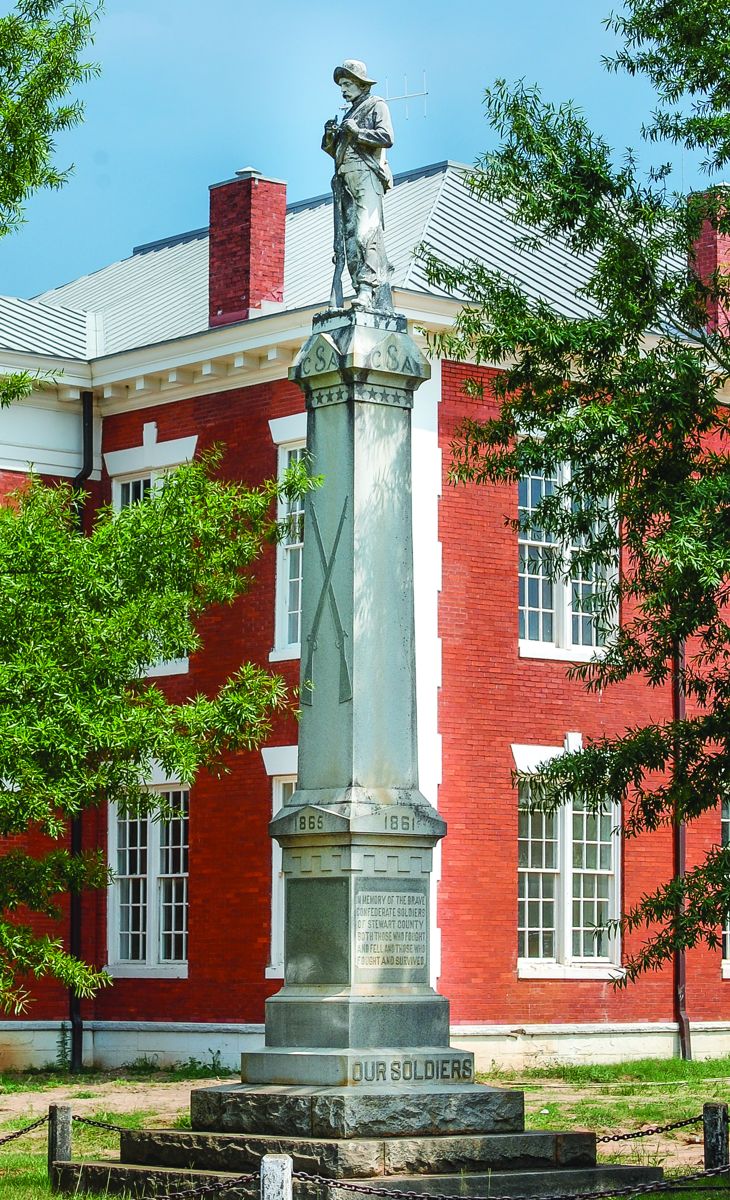
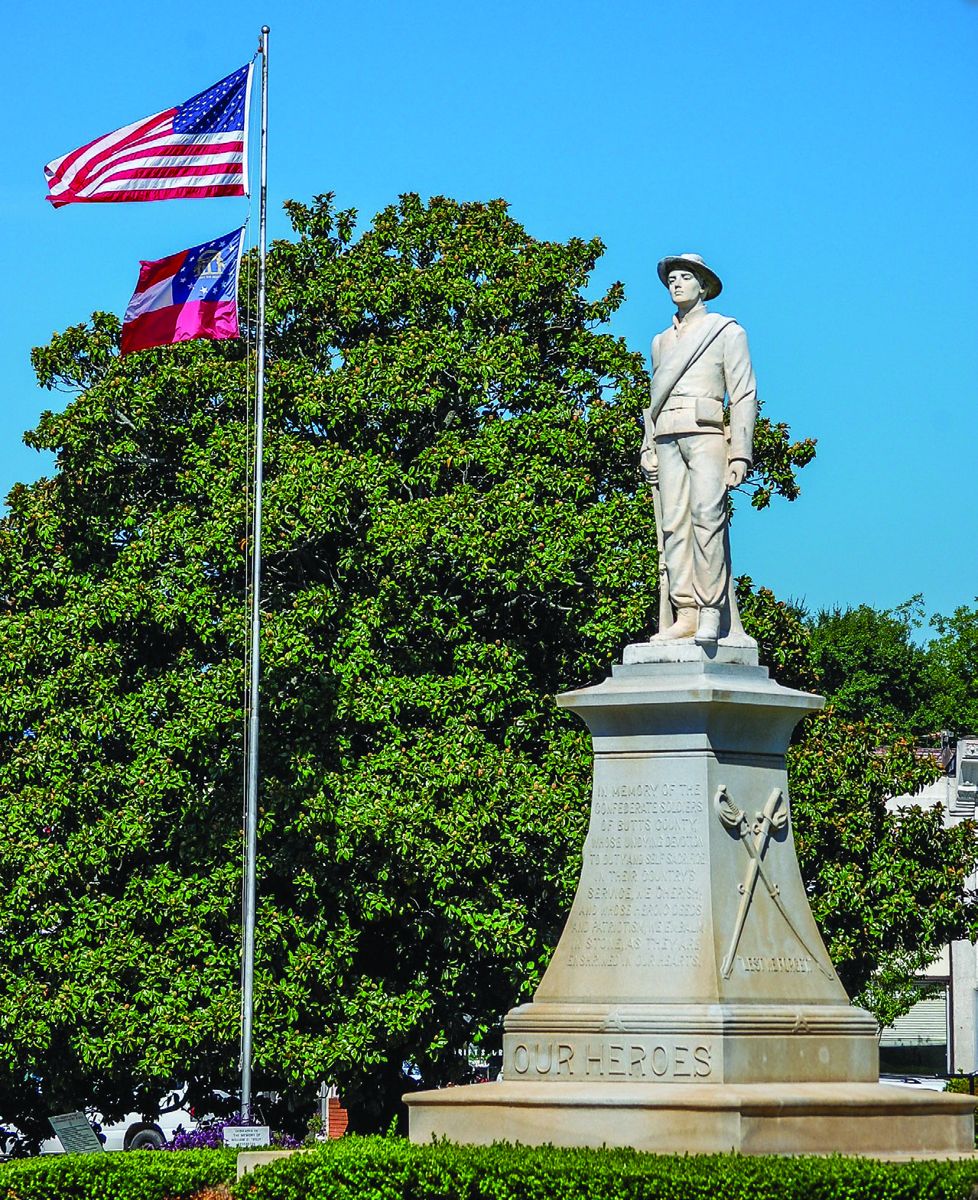
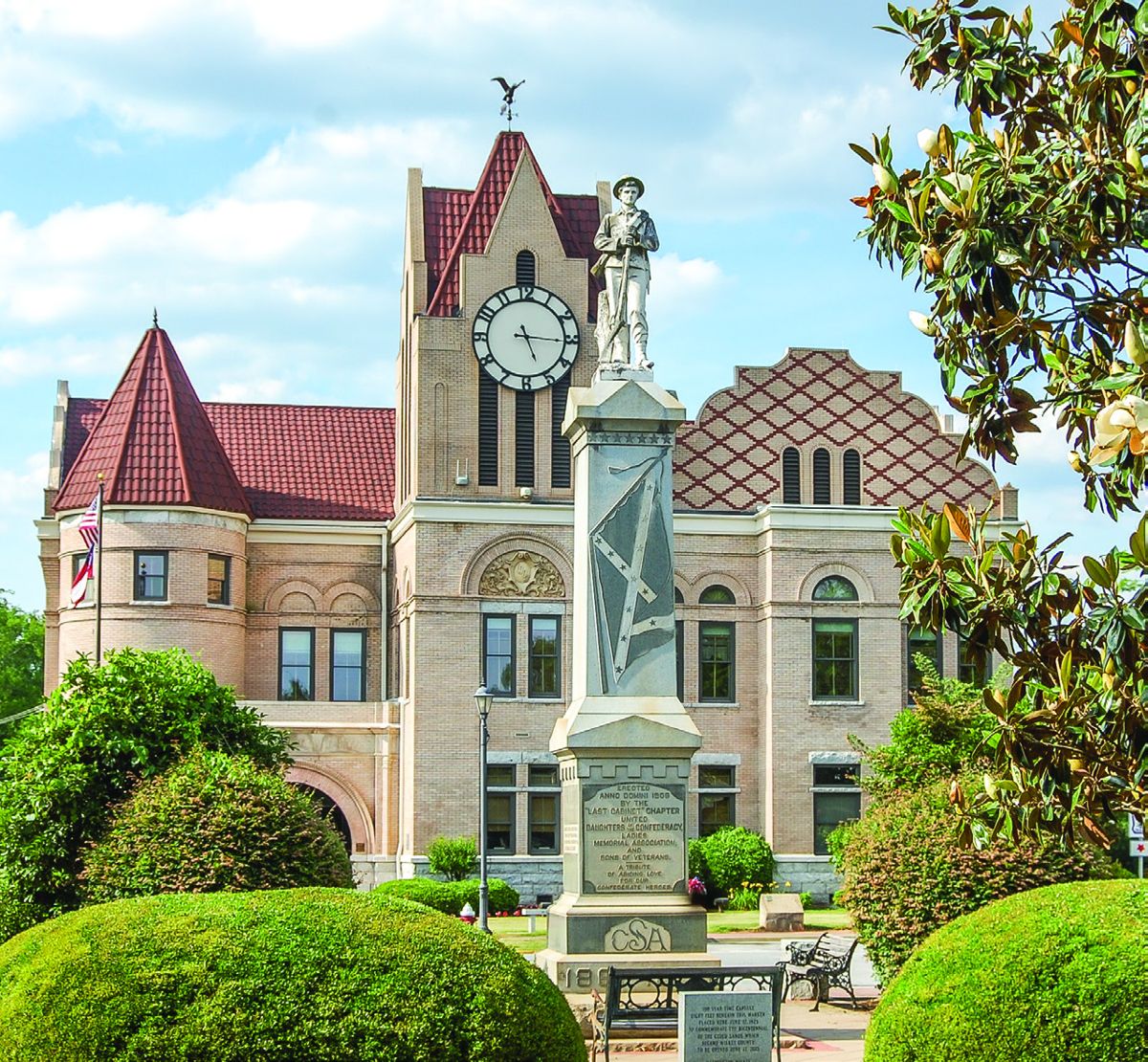
Butts County, Jackson. This youthful soldier greets visitors to the courthouse in Jackson. The monument was erected in 1911 by the Larkin D. Watkins Chapter of the United Daughters of the Confederacy. The fabricator, the McNeel Marble Company of Marietta, built more Confederate memorials in Georgia than any other monument company. Butts County lay on Sherman’s route to the sea, and suffered much destruction as the Union army moved through the area. IN MEMORY OF THE CONFEDERATE SOLDIERS OF BUTTS COUNTY OUR HEROES MEN OF WILKES! KNOW THROUGH ALL TIME THAT THEY FOUGHT TO MAINTAIN A JUST UNION; TO DEFEND CONSTITUTIONAL GOVERNMENT; TO PERPETUATE AMERICAN LIBERTIES, AND LEFT YOU THEIR PATRIOTIC SPIRIT.
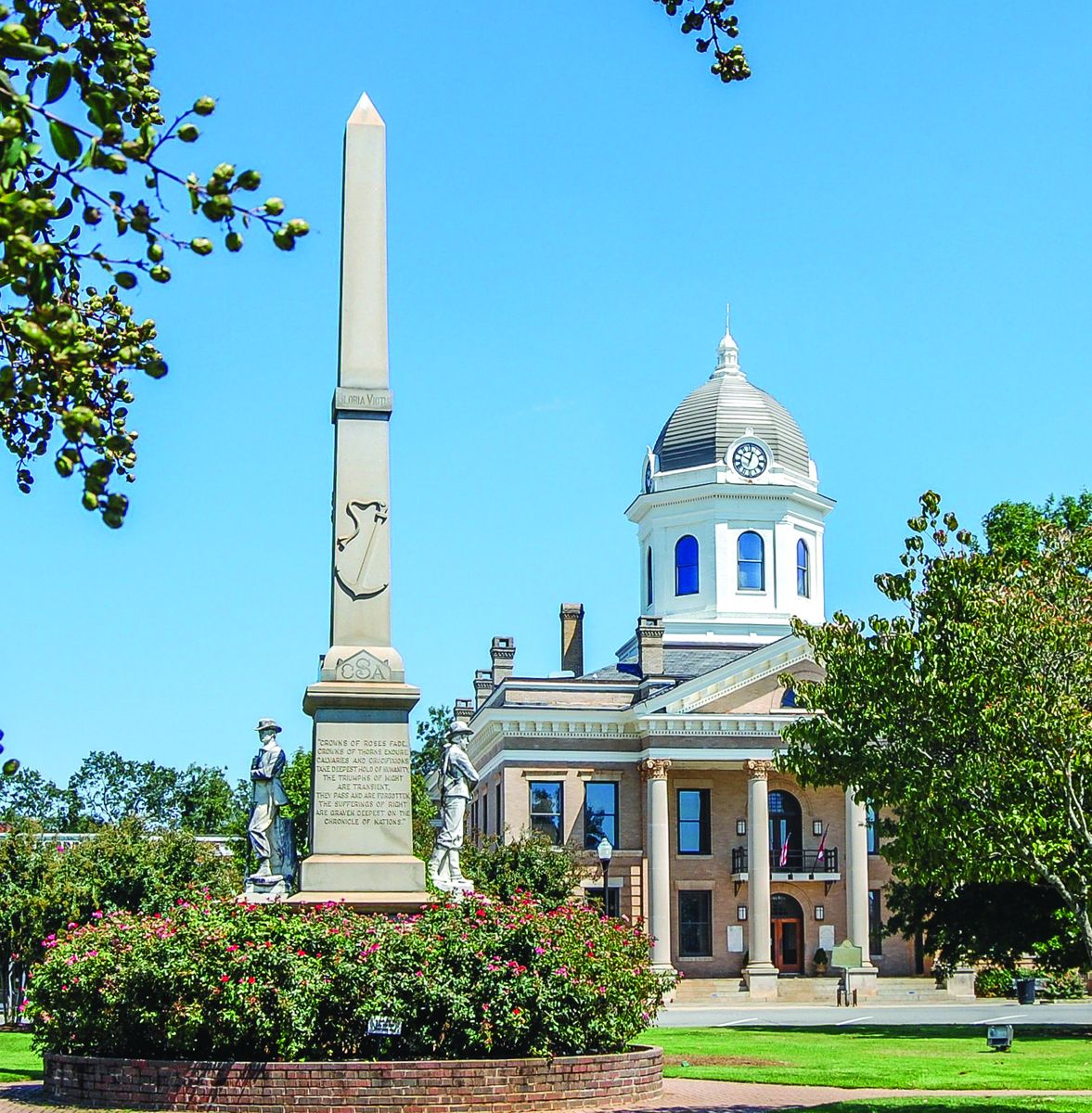
Jasper County, Monticello. Commissioned by the local chapter of the U.D.C., these twin marble statues – a cavalryman and an infantryman – have stood beside the granite obelisk in Monticello’s town square since 1910. The monument is visible in a scene in the 1992 movie “My Cousin Vinnie,” shot partly in the Jasper County Courthouse. Among the inscriptions is a quote from a poem by Father Abram J. Ryan, the poet-priest of the South. IN LEGEND AND LAY, OUR HEROES IN GRAY, SHALL FOREVER LIVE OVER AGAIN FOR US. TO OUR CONFEDERATE SOLDIERS 1861-1865
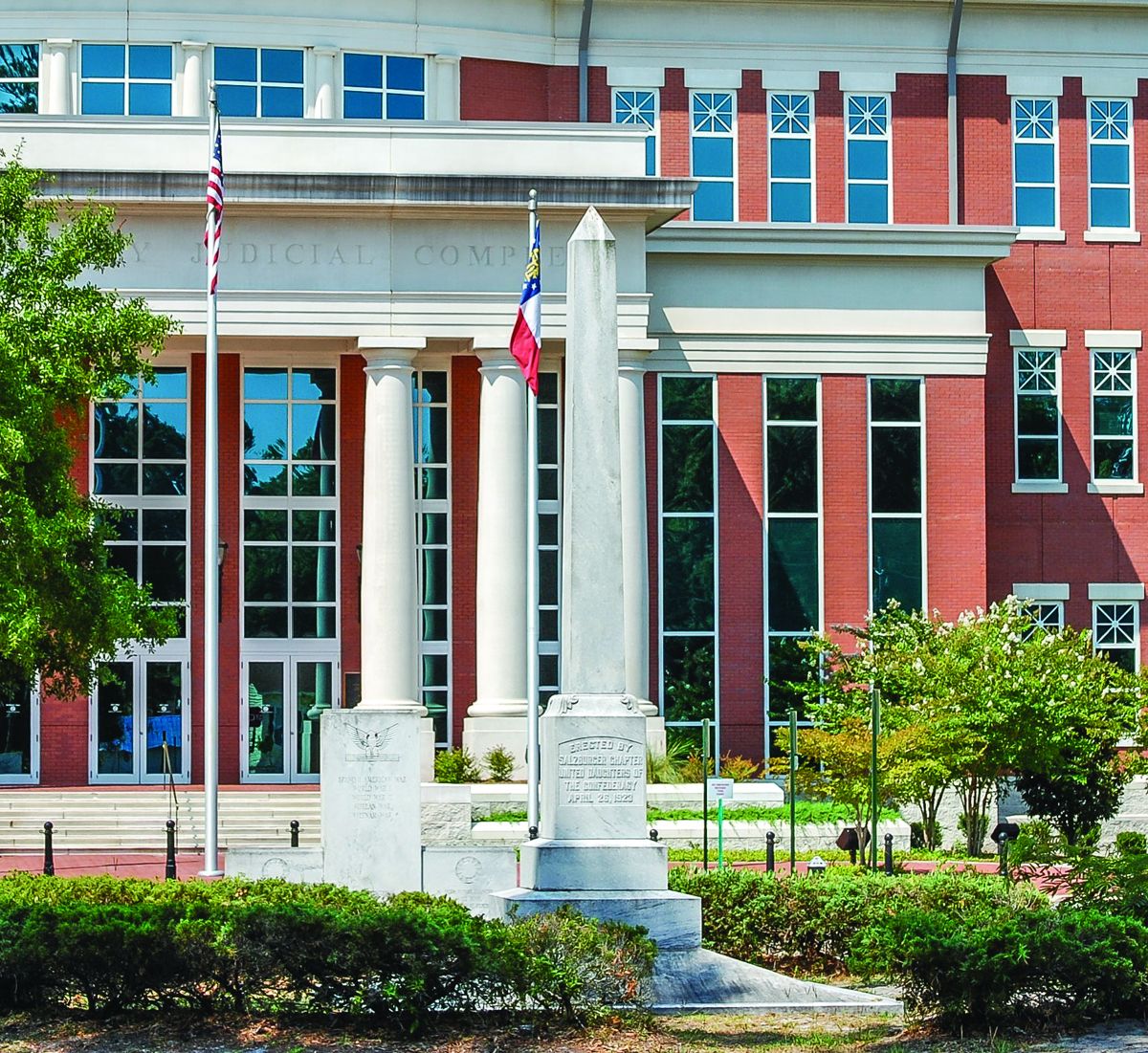
Effingham County, Springfield. ERECTED BY SALZBURGER CHAPTER UNITED DAUGHTERS OF THE CONFEDERACY APRIL 26, 1923
Colquitt County, Moultrie. ON FAME’S ETERNAL CAMPING GROUND, THEIR SILENT TENTS ARE SPREAD, AND GLORY GUARDS WITH SOLEMN ROUND, THE BIVOUAC OF THE DEAD. GEORGIA’S WAS THE WORD, AND THEIRS THE WILL TO DIE. LORD GOD OF HOSTS, DEFEND US YET LEST WE FORGET LEST WE FORGET NOR SHALL YOUR GLORY BE FORGOT, WHILE FAME HER RECORD KEEPS.
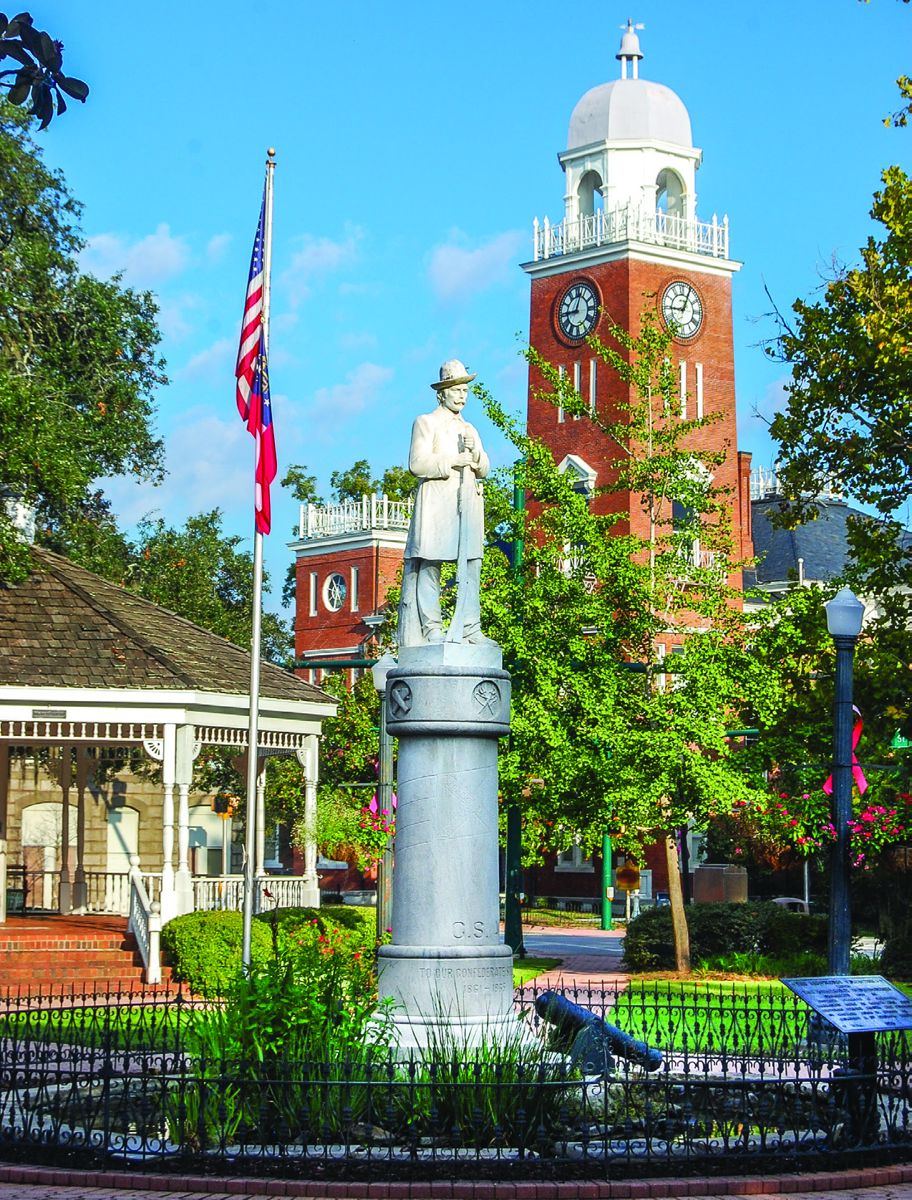
Elbert County, Elberton. The odd-looking soldier who originally stood atop this monument was so unpopular that he was deposed by a group of unhappy citizens just two years after the 1898 dedication. A close examination of the more worthy replacement reveals that it is made of white bronze, not the more usual marble.
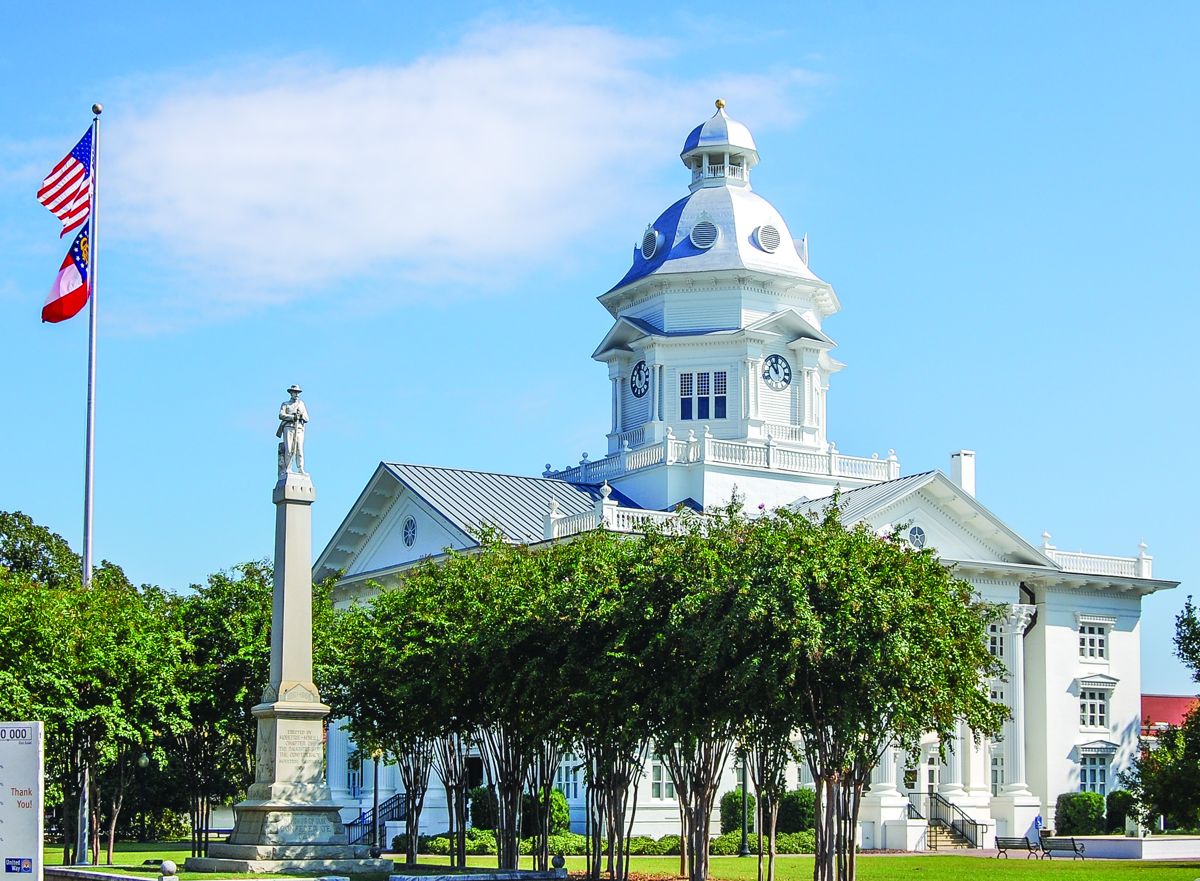
THIS MONUMENT PERPETUATES THE MEMORY OF THOSE WHO, TRUE TO THE INSTINCT OF THEIR BIRTH, FAITHFUL TO THE TEACHINGS OF THEIR FATHERS, CONSTANT IN THEIR LOVE FOR THE SOUTH, DIED IN THE PERFORMANCE OF THEIR DUTY.