
R.E. Lee Camp Hall Revels Its “Mercy Street” Connection
By Nancy Jennis Olds · Originally published May 2016 · pp. 18–19
The Artilleryman is a quarterly magazine founded in 1979 for Subscription only $25/year, U.S. enthusiasts who collect and shoot cannons and mortars primarily ArtillerymanMagazine.com from the Revolutionary War, Civil War to World War II.
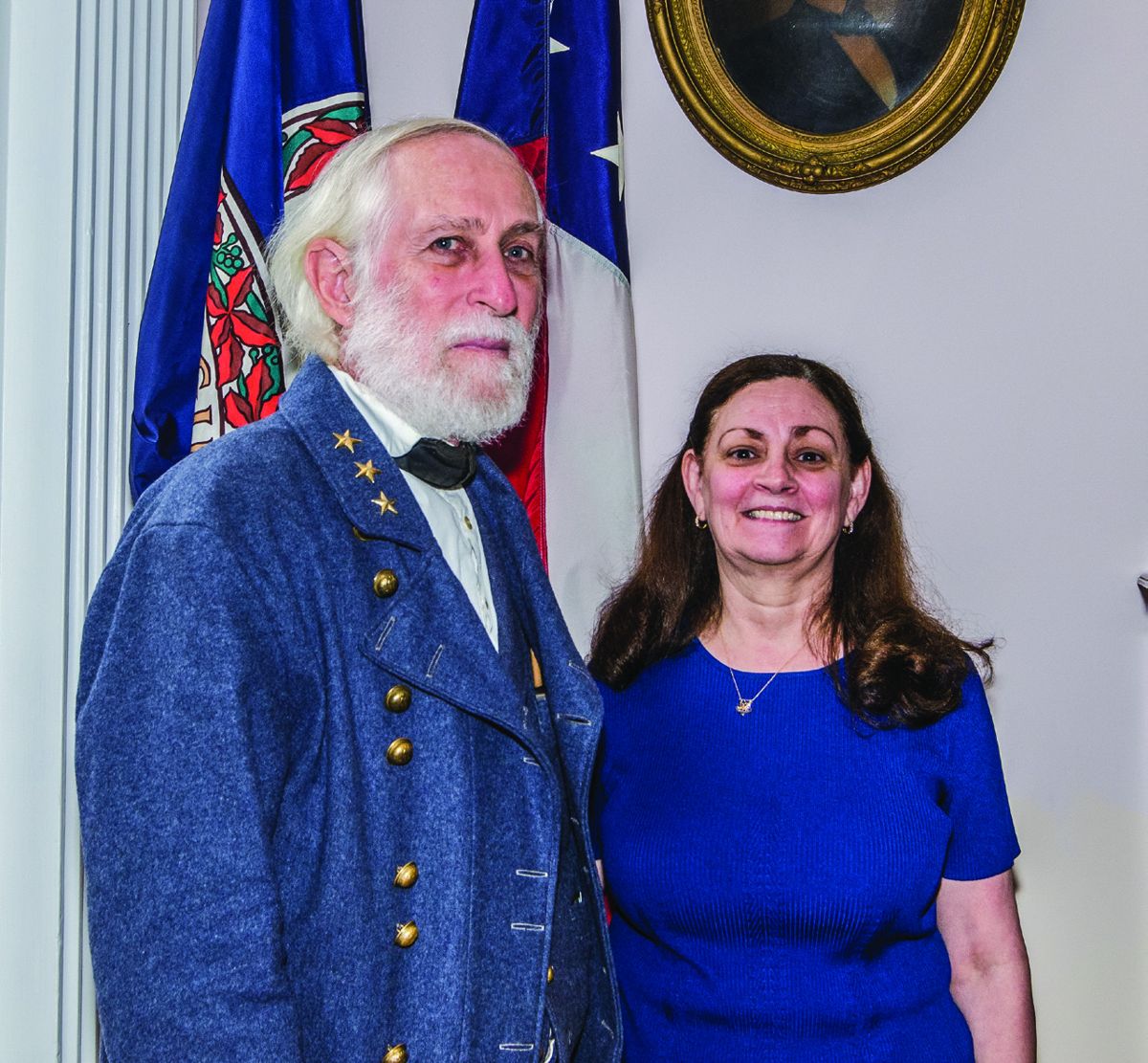
ALEXANDRIA, Va. – The City of Alexandria, established in 1749, has within its streets, monuments buildings and cemeteries compelling stories, which vastly enriches the historical reputation of this port city on the Potomac River in Virginia. Very early on during the American Civil War, Alexandria became a vital region for the Union while maintaining its Southern roots. Visit many of the well-preserved historical buildings in “Old Town” and you will likely encounter numerous stories about the people who endured the ravages of wartime beyond the fields of battle. A distinctive Greek Revival brick home with Italianate touches, the house on 806 Prince Street is just blocks away from Christ Church where the first president of the United States, George Washington, and his family shared a pew during another time and place in American history. Robert E. Lee and his family were respected members of Christ Church before the Civil War changed everything. At the intersection of Prince Street and South Washington Street is a bronze monument of a standing soldier holding his wide-brimmed hat, his arms crossed with his head bowed and faced due south. The stoic soldier wears a haversack and canteen over his shoulder, but his weapons are missing. The house on 806 Prince Street and the Appomattox monument showing a sorrowful but unbroken soldier have more stories in common to share about Civil War Alexandria. On this particular Sunday in January, the members of the Mary Custis Lee-17th Virginia Regiment Chapter 7 of the United Daughters of the Confederacy held an open house for their members and guests in the early afternoon. Engaged in conversation in the R.E. Lee Camp Hall Museum was Al Stone of Lee’s Lieutenants, a Civil War living history organization. Stone, who bears a striking resemblance to Lee, was attired in the general’s uniform. Although he appeared in formal military dress, this was not the General Lee of the Army of Northern Virginia, but Robert E. Lee, president of Washington College in Lexington, Virginia, visiting Alexandria before returning home to face his relentless mission of restoring this financially and academically devastated institution at the end of the war.
The Magazine
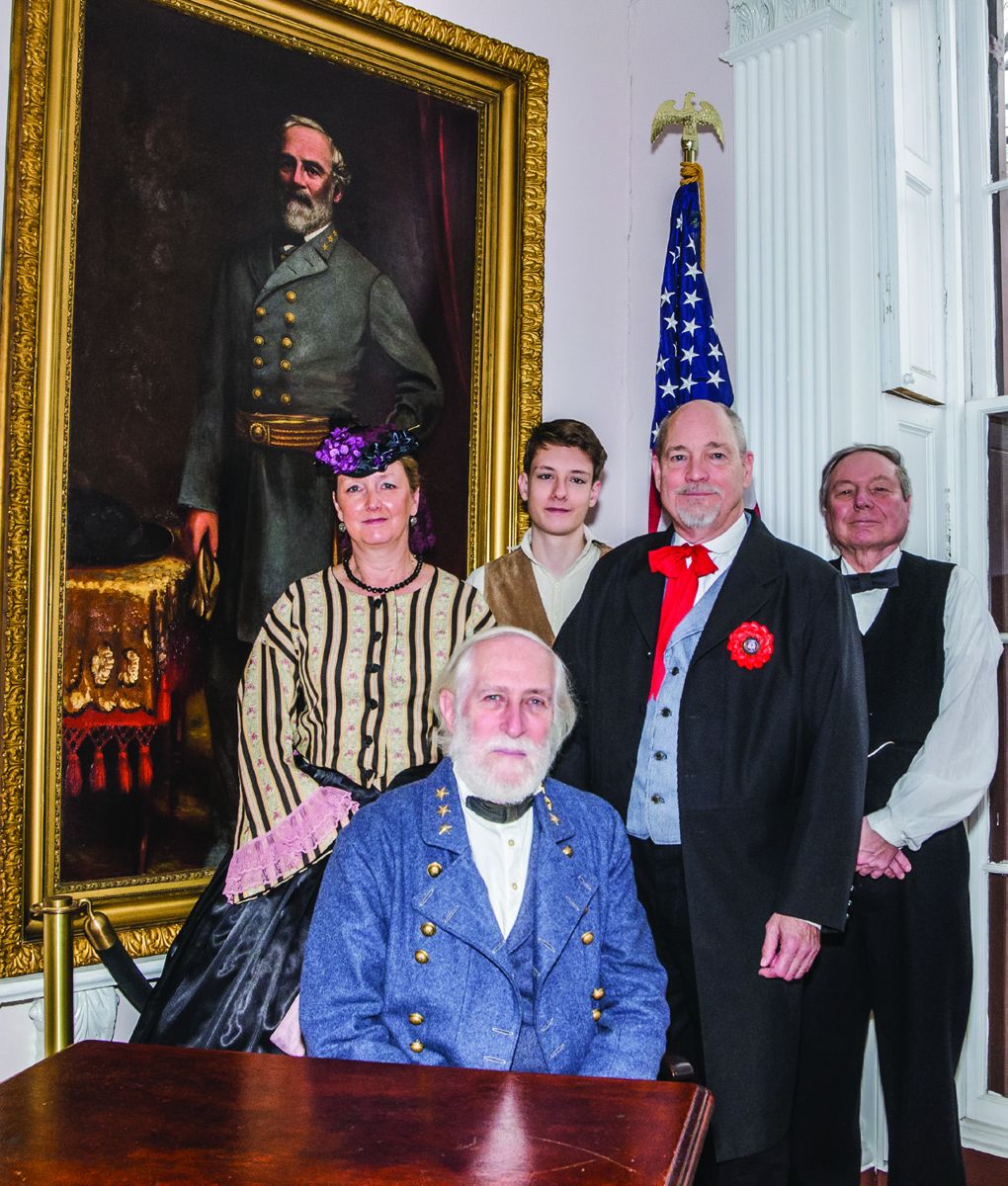
Guests and members, including several representatives from Lee’s Lieutenants and the 17th Virginia Infantry Company D, Fairfax Rifles, were attired in period civilian clothing. Light refreshments were served as sleet and snow fell outside. I enjoyed meeting with some of the UDC members and their affiliates while taking photos of President R.E. Lee in their presence. Caroline “Caro” Eaton served as a docent for all the visitors who wished to join her tour of the house.
R.E. Lee Camp Hall Museum. Caroline “Caro” Eaton served as a docent for the Mary Custis Lee17th Virginia Regiment Chapter 7, UDC. Al Stone portrays President Robert E. Lee of Washington College in Lexington, Va. (Nancy Jennis Olds) This immaculately preserved house and museum are symbolic of the Confederate influences during the war, but the building contains traces of what happened to the City of Alexandria after Virginia seceded from the Union on May 23, 1861. Martial law was enforced when Federal troops occupied Alexandria. The previously prominent port city was transformed into a federal supply depot, military posts and hospitals, many hospitals. A good number of residents fled the city and their homes were seized. Those who remained
Cannon safety, artillery history, places to visit, projectiles, fuses, equipment, book reviews, shoot reports, how-to articles, and artillery news U.S. and abroad.
faced uncertainty if they did not take the oath of allegiance. The new PBS series, “Mercy Street”, concentrates mainly on the activities that occurred at one hospital, the Mansion House General Hospital, formerly the Mansion House, a luxury hotel owned by the wealthy Green family. However, the Johnston House at 806 Prince Street, built in 1852, and owned by Reverend James T. Johnston, and the house directly across the street from the Johnston House, the Fowle House, were well known as the Prince Street General Hospital during the war. These two buildings became a branch of the Mansion House General Hospital from March 1862 to September 1862. Afterward, the buildings became part of the 2nd Division General Hospitals. Reverend James T. Johnston and his wife vacated their home and lived in Richmond after their house was seized. These hospitals received patients transported from the field hospitals on the battlefields. The sick and the wounded were transported by train to Alexandria to provide long-term care and convalescence for these patients. Dr. Alfred Summers was the medical director of the 2nd Division and Dr. St. John was the surgeon in charge of the Prince Street General Hospital. Confederate wounded were said to be sheltered in the Johnston House basement. The president of the Mary Lee Custis-17th Virginia Regiment Chapter 7 of the United Daughters of the Confederacy, Debby Mullins, was able to provide me with more insight into the medical aspects of the Johnston House (Prince Street Hospital). According to President Mullins, the two parlors on the first floor (where the meeting rooms are for the UDC members) would have had room for fourteen patients and two attendants. The entire house would have provided enough capacity for ninety-five people. Mullins recollected a story that she read in a book edited by Michael Stevens called As If It Were Glory: Robert Beecham’s Civil War from the Iron Brigade to the Black Regiments. Robert K. Beecham, who had initially enlisted in the 2nd Wisconsin Infantry Regiment, was a patient at the Prince Street General Hospital in April 1862. He was able to provide vivid accounts of the hospital as well as a telling account of the food served to the patients who were deemed “convalescent”, or almost ready to return to their regiments. Beecham described the hospital as “neat, clean and orderly”. However, the menu, “a la Prince Street Hospital”, prepared for the “convalescent” patients, was sparse, highly salted, with the bread nearly the only item of any redeeming quality. Moreover, the patients had “neither a chair, bench nor stool”, so they were forced to eat “sat upon our feet”. On occasion, Beechman wrote, they received some vegetable soup, sometimes boiled potatoes and a tiny portion of meat, without the vegetable soup.
Perhaps, as Mullins suggested, this method was conceived to convince the patients to leave the comforts of the hospital with more urgency! Unfortunately for Private Beechman, he became infirmed again after joining his regiment and repeated the whole ordeal as a patient at Mansion House General Hospital with the same semi-humorous and bleak assortment of culinary delights! However, Beechman decided to persevere, finding a kind chaplain who offered to “consolidate forces with mine and together we captured the fort”. Some of the UDC members have experienced the smell boiled potatoes in rooms where they have encountered spirits or the paranormal. Yes, the Johnston House seems to be haunted. About eight years ago, according to Mullins, a group specializing in the paranormal was invited to conduct their investigations. They indicated that the basement possessed a greater degree of supernatural activity. Coincidentally or not, Confederate prisoners were kept in a cell in the basement. The partition to the holding cell was constructed with wooden slats. A restorer confirmed that the hinges supporting the lockup were 1860s vintage. As President Mullins was walking by the cell one day while describing the history of the basement to two members, she felt a chilling blast of air down her back. One of the participants tried to take a photo of the supporting brick post. The resulting image was of
“an amorphous mass”, according to Mullins. Homes, churches, hotels and other buildings, which were converted into hospitals, were places where surgeons, stewards and nurses worked tediously around the clock to care for patients who suffered agonizing pain, and who were traumatized and maimed both physically and mentally. There is no doubt that the City of (Nancy Jennis Olds)
Alexandria had more than its share of misery during the Civil War. It would be highly unlikely that their spirits would leave such hallowed places. For more information: R.E. Lee Camp Hall Museum 806 Prince Street Alexandria, Virginia 22314 Phone: (703) 519-2123 Email: [email protected]
Gathered by General Lee’s portrait: Front: Al Stone. Rear, L-R: Debbie Page-Maples, a member of the 17th Virginia Infantry, Co D, Fairfax Rifles. Tom Maples (son), a member of the 17th Virginia Infantry, Co D, Fairfax Rifles. Mark Whitenton, a member of the 17th Virginia Infantry, Co D, Fairfax Rifles, a member of Lee’s Lieutenants portraying General Joseph E. Johnson and vice president of the BRCWRT (Bull Run Civil War Round Table). Drew Pallo, a member of Lee’s Lieutenants who usually portrays General Samuel Cooper.