
Full-Throated Defender Of Hood
By Stephen Davis · Originally published May 2016 · pp. 16–17
Upon learning that John B. Hood had been placed in command of the Army of Tennessee in mid-July 1864, Confederate Maj. Gen. William H. T. Walker, division commander in the army, wrote his wife Mary, “Hood has ‘gone up like a rocket.’ It is to be hoped…that ‘he will not come down like the stick.’” Well, we know that six months later, Hood had come down like the stick—or worse. After losing Atlanta to Sherman in September, two months later he led his army, more than 30,000 strong, on a quixotic campaign into Tennessee. He ordered a frontal assault at Franklin on November 30 that cost 6,250 casualties. Then, even more quixotically, he marched north toward Nashville and dug in, awaiting attack by George H. Thomas’ army. When Thomas did so with overwhelming numbers, Hood’s line collapsed in utter rout—the only one in the war for a Confederate army. By the time it hobbled back to Tupelo, Mississippi in January 1865, the Army of Tennessee had essentially ceased to exist as an organized fighting force. Hood may have sensed that he was about to be relieved of command—
he was—but he beat the government by offering his resignation in mid-January. It was accepted in two days. You’d think that an army commander’s colossal collapse, such as Hood suffered, would have led his officers after the war to remember him bitterly and condemningly. This was not the case universally. Just look at Lt. Col. Bushrod Washington Frobel of Virginia (1825-1888). A graduate of the U.S. Naval Academy, Frobel acquired engineering skills at Annapolis. He offered his services to Governor Letcher after the state seceded, and was quickly commissioned lieutenant in the Virginia state navy. In early October Frobel transferred to the army artillery, in which service he was promoted to captain. Frobel commanded a battery on the lower Potomac in the autumn of 1861. Gen. Chase Whiting, in charge of the area, took a shine to Frobel, and appointed him to his staff. In the Seven Days’ Battles Frobel distinguished himself, such that he became Chief of Artillery for John B. Hood’s infantry division and promoted to major in July ’62. His battalion comprised three batteries from the Carolinas. He directed their action in Lee’s next battles, Second Manassas and Sharpsburg. On the morning of September 17, against Hooker’s I Corps attack on the Confederate left, Frobel’s gunners fired until they ran out of ammunition. Two months later, on November 8, Frobel was ordered to a new front, Wilmington, North Carolina. He would report to his former commander, Major General Whiting, who had taken charge of the Military District of Cape Fear. Frobel assumed the position of Whiting’s artillery chief, directing the guns which were being placed to protect the important port city. He also supervised the building of fortifications. Despite the work, life at the beach was pleasant. “We live very nicely, have everything we want,” he wrote his sister Elizabeth in the spring of 1863. Frobel was promoted lieutenant colonel in midJune1863. Frobel had won promotion from lieutenant to lieutenant colonel largely as an artillery officer, but it was his talent as engineer which brought him his next major assignment. On August 4, 1864 Frobel was ordered by the War Department to report to Gen. John B. Hood, commanding
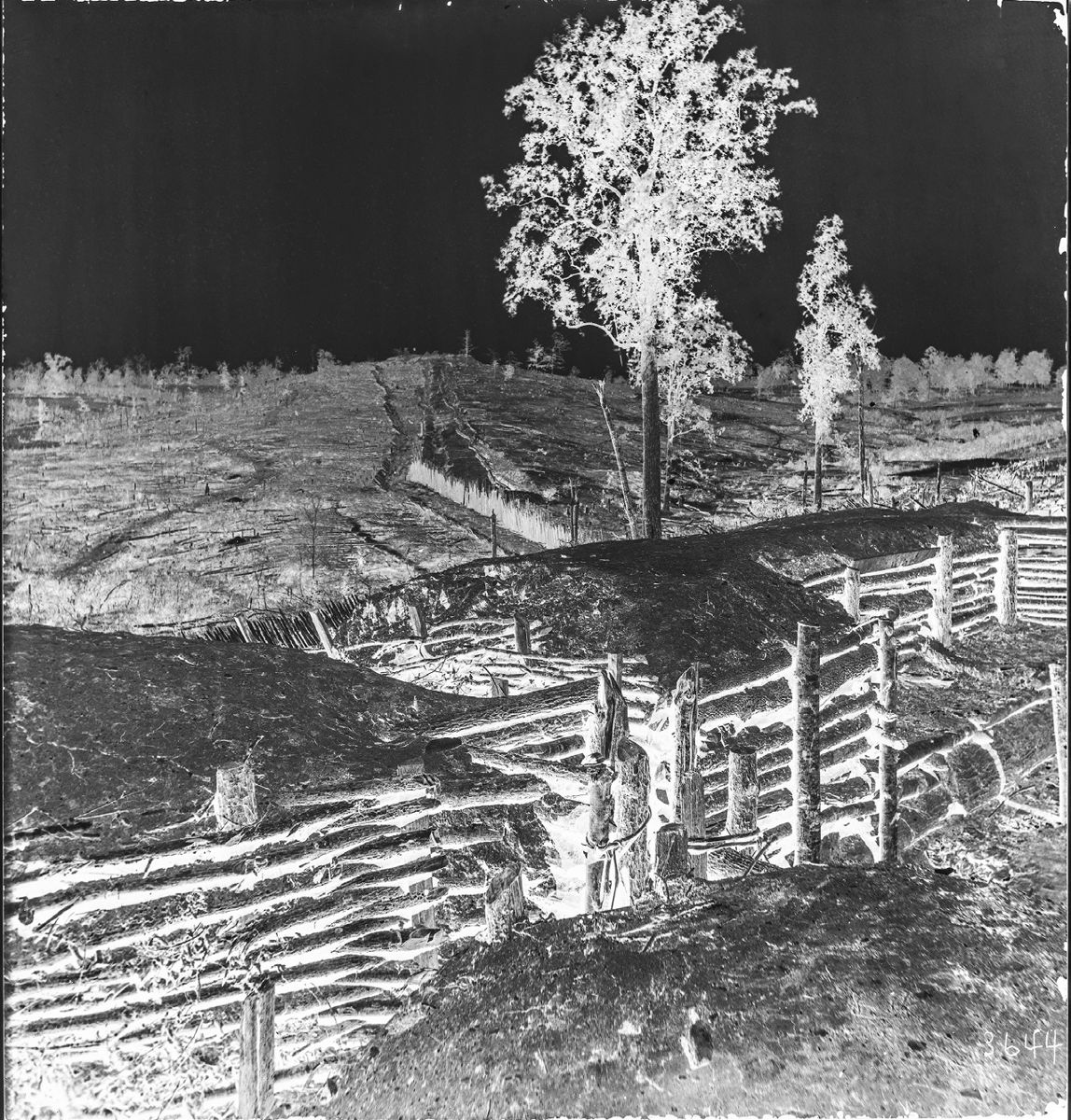
After arriving in Atlanta as Assistant Chief Engineer for Hood’s army, Lieutenant Colonel Frobel spent the rest of August supervising workers strengthening the city’s fortifications. His diary reads: “August 31st. Large details, together with six hundred and fifty negroes, have been set to work on the inner line, completing the redoubts and strengthening the position by connecting them with a heavy stockade of green timber.
the Confederate army defending Atlanta. The month before, Richmond had already transferred one of Lee’s leading engineers, Maj. Gen. Martin L. Smith, to become chief engineer of Hood’s army. It is not known whether Hood, given Frobel’s service under him in Virginia in 1862, had asked the War Department to send him to Atlanta. But it was logical for the administration to send another good engineer to help Hood with his fortifications protecting the vital city. After a circuitous train trip, Frobel arrived in Atlanta, and sought out Hood’s headquarters, which were at John S. Thrasher’s house on Whitehall Street. “I met my old commanding officer, General Hood, who received me cordially,” Frobel later wrote. Frobel pitched his tent in Thrasher’s backyard, and assumed his role as Assistant Engineer-in-Chief for the Army of Tennessee, reporting to Major General Smith. There was much work for Frobel. Sherman’s three armies were investing Atlanta in a semi-siege; their lines stretched from east of Atlanta, around its north to west and southwest of it. Sherman’s goal was to cut the last railroad feeding Hood’s army from Macon to the south. As the campaign settled into a kind of sitzkrieg, Yankee artillerymen cannonaded the Confederates in their entrenchments daily, as well as lobbing shells into the city against the remaining populace. Hood kept his engineers and soldiers constantly strengthening their works; Frobel sited new artillery forts, occasionally in company of Maj. Gen. Gustavus W. Smith, commander of the Georgia Militia in the city. Sherman broke the deadlock in the last days of August by swinging six infantry corps in a wide march southwest of Atlanta. In mid-afternoon of the 31st, Federals descended upon the Macon & Western Railroad eight miles north of Jonesboro. Word quickly got back to General Hood, who was compelled to order an evacuation of the city. Sherman allowed Hood to withdraw his army southwest of Atlanta. At Palmetto, September 25-27, Jefferson Davis met Hood, reviewed the troops, and talked strategy. With the president’s approval, Hood led his army on September 29 northward into Sherman’s rear, where he planned to tear up the single-track railway supplying the enemy forces in Atlanta, and from there head into north Alabama. Hood’s new campaign, of course, laid open to Yankee raiders the important manufacturing cities of Macon and Augusta. Hood dispatched Lieutenant Colonel Frobel to Macon to become engineer-in-charge of fortifying that city. Two months later, Frobel was in Savannah, helping efforts to strengthen its defenses. When Sherman approached the city in December, Frobel oversaw the laying of the pontoon bridges across the Savannah River which allowed General Hardee’s troops to escape. In spring 1865 he was in Macon, where he presumably surrendered himself to Federal forces. After the war Frobel did not return to Virginia, but took residence in Georgia. In December 1865 the state legislature created the position of Superintendent of Public Works. Frobel got the job and spent the next few years in Milledgeville, then the state capital, rebuilding the governor’s mansion, statehouse and other buildings. It is not known whether Frobel wrote for publication before the war, but afterward he proved himself a talented writer. After Rev. William J. Scott launched Scott’s Monthly Magazine in Atlanta in December 1865, Frobel contributed two series of articles about the war and his Confederate service. A thirty-chapter series entitled “Field and Camp; or. The Recorded Facts of an Eye-witness to Numerous Important Events and Occurrences Both in Field and Camp, During the Late Four Years’ War” appeared in fourteen installments running in Scott’s from September 1866 to December 1867. Curiously, Frobel never identified himself by name—he signed himself merely “An Officer”—but his narrative is clearly autobiographical. His first article begins, “on the 20th of April, 1861, I took the cars at Alexandria, Virginia, and started for Richmond by way of Gordonsville.” “Field and Camp” ends with General Whiting calling Frobel to Wilmington in the fall of 1862. While much of his attention is on “the General”—Whiting—Frobel offers occasional glimpses of John B. Hood. They are uniformly flattering. “It was an easy matter to find Hood” on the battlefield, he writes of the engagement at Eltham’s Landing on the Peninsula in May 1862. “As the fire from his brigade was almost continuous, I had only to go to where the fight was the hottest, and there he was sure to be.” Frobel seems not to have written about his year-and-a-half at Wilmington. When he continued his war-narrative, it was in a series for Reverend Scott entitled, “The Georgia Campaign; or, a South-side View of Sherman’s March to the Sea.” Here again, Frobel did not sign his name to his writing, only referring to himself as “the author of ‘Field and Camp.’” Eleven chapters of “The Georgia Campaign” were published in Scott’s during February 1868-March 1869. As with his earlier series, this one is also strongly autobiographical. With his subtitle “South-side View,” Frobel clearly signals to readers his pro-Confederate perspective on the war. Indeed, he does not confine himself to the Georgia Campaign, but surveys events in the western theater, such as Shiloh and Bragg’s raid into Kentucky in 1862. Early on, Frobel establishes himself as a strong admirer of General Hood. In his second installment he recalls Hood’s battles in Virginia, 1862-63, referring to “Hood, the idol of his division, and the pride of Lee’s army.” “It is true Gettysburg claimed an arm, and Chickamauga a leg,” he concedes, “but it was still Hood—unconquered and undaunted as ever.” In his description of the Atlanta Campaign, with its disagreements between Joe Johnston and Hood, Frobel obviously sides with the latter. President Davis was right in relieving Johnston in mid-July 1864. “He had abandoned the mountains because he did not believe he could longer hold them,” he explains, “and had been forced back, step by step, to the flat lands of Georgia to a point where no strong natural barrier presented itself between the invading army and the sea. Georgia was thoroughly alarmed.” Then, when Hood took command of the Army of Tennessee, Frobel defends every decision he made trying to save Atlanta from Sherman’s capture. At Peachtree Creek, July 20, Hood had “met the enemy in open fight, had foiled his movement and had for the time saved Atlanta.” On July 22, his flank attack on Maj. Gen. James B. McPherson’s army had failed to roll it up (like Stonewall Jackson’s had at Chancellorsville the year before). Yet “the partial success is but stronger evidence of the victory that would have resulted to our arms had Hood’s order been fully executed”—Frobel sided with Hood, too, in his criticism of Lt. Gen. William J. Hardee’s handling of the assault. Even the battle of Ezra Church, July 28, which resulted in a costly Confederate repulse, was seen positively. Because of it, the last railroad supplying the city, which Sherman hoped to break, “remained in our possession.” As a result of these three battles, the Southern people “began once more to take heart” and “confidently expected that Sherman would not only be met, but hurled back in one grand and overwhelming victory.” In late July Sherman sent mounted columns raiding south of Atlanta; all Southerners rejoiced in their rout by Joe Wheeler’s cavalry. Hood then dispatched Wheeler on a raid of his own to tear up Sherman’s railroad supply line. This Wheeler failed to do, but Frobel absolves Hood of blame for the decision: “The raid, though a failure so far as its main object was concerned , had the effect of causing Sherman considerable uneasiness—compelling him to send large bodies of troops to the rear for the protection of his communications.” In late August Sherman, stymied by Hood’s defense of the railroad to Macon, broke the deadlock by leading most of his army in a march toward Jonesboro. When Federals cut the Macon & Western, Hood was finally forced to evacuate Atlanta. But even here Frobel finds no fault with the Confederate commander. “From the beginning Gen. Hood had been satisfied that the move was designed to cut his communications,” Frobel writes, so he sent two corps to Jonesboro to prevent it. “This, it was hoped, would draw the attention of Sherman in that direction, and that he would abandon his works on the left, giving Hood a favorable opportunity of attacking him in flank.” What?! I’ve read a lot about Hood’s decisions during August 2531, the decisive days of the Atlanta Campaign, but I’ve never read anything like this. In the literature Hood is usually criticized for a tardy, ineffective response to Sherman’s grand sweep to the right. Here, Bushrod Frobel lauds his sending of Hardee’s and Stephen D. Lee’s corps to Jonesboro, as it would divert Sherman and give Hood “a favorable opportunity of attacking him in flank.” After this exoneration, Frobel’s conclusion is predictable: “The defense of Atlanta, under the innumerable disadvantages with which it was conducted, reflected highest credit upon both the army and the General.” Lieutenant Colonel Frobel’s defense of John B. Hood in the Atlanta Campaign is remarkable for three reasons: first, for its steadfastness, but also for its timing. The war had not even been over three years when Frobel began his “Georgia Campaign” series. Ex-Confederates were still publicly lamenting their defeat and searching themselves for the causes of their failure. Instead, Frobel was leading discussion on how, for one, John B. Hood had done his best to help the South win its War
Bushrod Washington Frobel (1825-1888) is buried in Atlanta’s Oakland Cemetery. He spent his last years in nearby Marietta, earning his living as an engineer. (Daniel T. Davis)
for Independence. Finally, Bushrod Frobel’s articles are remarkable because they are so little known today. Sources: Bushrod Washington Frobel Compiled Military Service Record, copy courtesy of W. Gaines Burnette of Tucker, Georgia (a greatgrand nephew); Ray M. Atchison, “Scott’s Monthly Magazine,” Georgia Historical Quarterly, Sept. 1965, 294-305. Stephen Davis is a longtime Civil Warrior and avid book collector. His two paperbacks on the Atlanta Campaign, A Long and Bloody Task and All the Fighting They Want, will be published this summer as part of Savas Beatie’s Emerging Civil War Series.