
The Source
Using The ‘Official Records’
By Michael K. Shaffer · Originally published March 2016 · p. 15
The Source By Michael K. Shaffer Using The ‘Official Records’
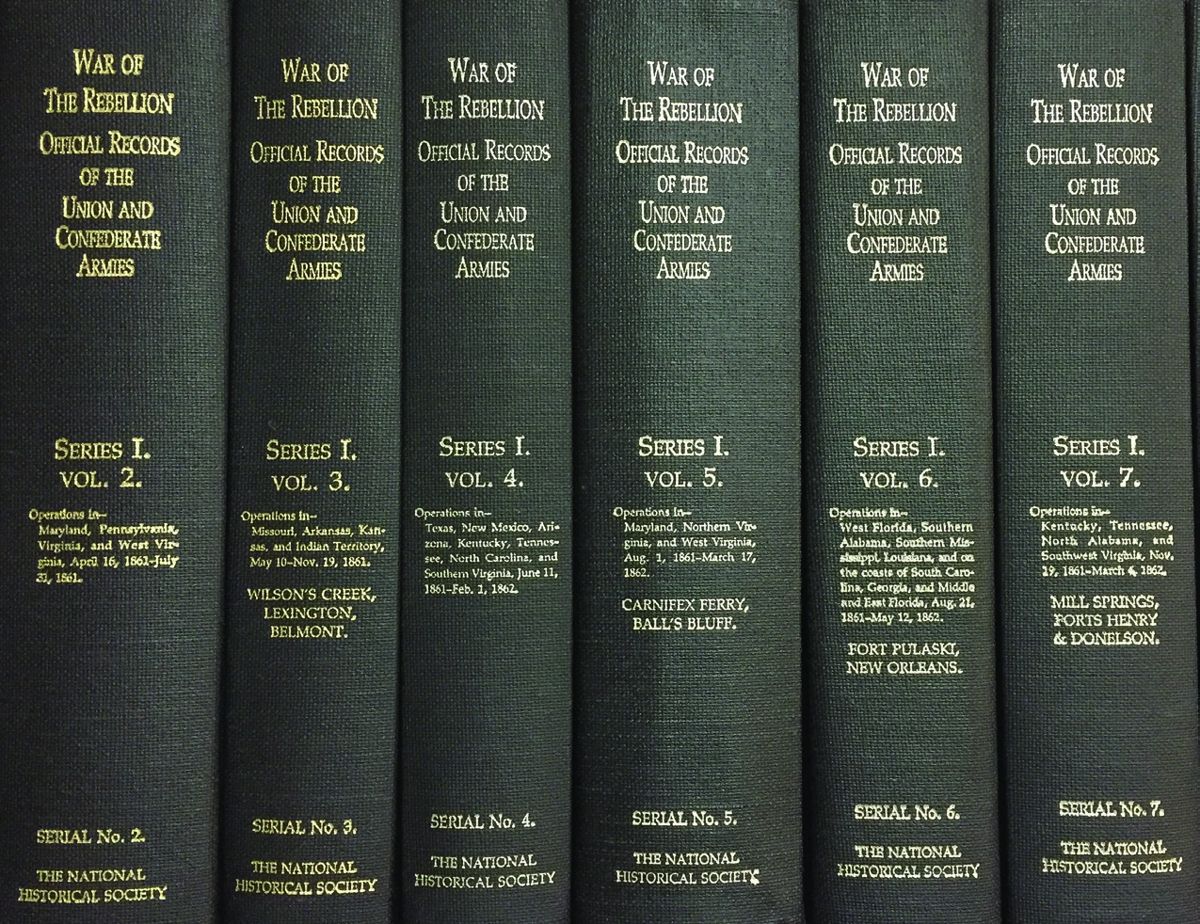
Welcome to a new Civil War News column. “The Source” will highlight various research materials, which can aid readers in their search to learn more about the American Civil War. To begin, we will focus on primary source materials, accounts written when they occurred, as participants and witnesses placed their observations on paper or sent dispatches via telegraph. In the future, we will examine different secondary sources — accounts written later, by historians or other parties – and explore some of the more important works on various topics. Conducting research involves many detailed steps. This column will guide you through some of the numerous print and online sources available. One must consider several questions when evaluating any source. They will help a researcher understand and evaluate the source’s integrity of a source. Who wrote the particular account? When were their remarks written? What audience did the writer intend? Did the author have an agenda that might have influenced this version of events? Finding a Civil War historian whose library does not include the Official Records might prove a difficult task. Long considered the cornerstone for Civil War research, the 128-volume set started publishing in 1881 through the U.S. War Records Office and was completed in 1902 with the release of a revised index. Officially known as The War of the Rebellion: A Compilation of the Official Records of the Union and Confederate Armies, one will typically find the source referenced as the O.R. Historians use the Chicago Manual of Style for writing, and this produces an initial citation as follows: U.S. War Department, The War of the Rebellion: A Compilation of the Official Records of the Union and Confederate Armies, Series I, Vol. 16, pt.2. (Washington: Government Printing Office, 1880–1902), 300. The author or compiler comes first; the title follows; then an indication of the specific series, volume and part. Finally, the location, and name of the printer appear, with the page number(s) referenced. Subsequent citations might appear as follows: O.R. I, Vol. 38, pt. 2, 250. Frequently, historians will drop the series reference in each citation, having previously described, for example, all O.R. citations from Series I unless otherwise noted. Serial numbers, added to aid users after the series had already produced several volumes, sometimes confuse researchers. Numbers 112 and 113 do not exist, as they represented serials for two volumes never printed. Thankfully, however, several earlier tries to produce a compilation of records from the war, eventually resulted in a refined format, which exists today. Revising the index in the early 20th century still did not make the O.R. incredibly easy to use. Researchers need to understand the sequencing of the collection to find material of interest to them. Four different series comprise the O.R. Series I, which consists of 53 volumes, details reports and correspondence from various battles and campaigns. These volumes run in chronological order, with Fort Sumter in Vol. 1 and final operations from 1865 in Vol. 53. Each volume opens with Federal reports, followed by Confederate reports. If the mass of material warranted, the publisher carried reports over into the next part of the
A Commitment to
Honor & Integrity
Reflected in the Fit & Finish of Our Product volume, thus, some volumes have multiple parts. For example, Vol. 38, which deals with the Atlanta Campaign, consists of five parts. Correspondence appears in the same order – Federals first, Confederates second – and follows the reports. Capturing the particulars of prisons and prisoners comprises Series II, as these eight volumes cover penal records from the war. Series III contains various Federal correspondence as supplements and reports overlooked or received too late for inclusion in the printing of earlier volumes. Series IV contains Confederate correspondence, which follows the same format as Series III. Finally, an index directs researchers to the proper volume(s), where one must then consult the respective volume’s index to find specific material. The Internet allows users to more quickly find subject matter in the O.R., as various websites have digitized the collection. Using several keyword search techniques, users can quickly retrieve different hits on a subject.
This writer prefers to use Cornell University’s website as an index. Visit it at http://ebooks.library.cornell.edu/m/moawar/waro.html and view scanned OR pages in PDF, JPG or text formats before reading hard copy versions. For others who prefer hard copies, the helpful WorldCat website, www.worldcat.org, will help researchers find OR sets near their locations in various public and university libraries across the country. Next month, we will explore a few finding aids for the O.R., and examine the Official Records of the Union and Confederate Navies in the War of the Rebellion. Please send suggestions for future “The Source” columns to the e-mail address below.
Michael K. Shaffer is a Civil War historian, author, lecturer and instructor. His memberships include Society of Civil War Historians, Historians of the Civil War Western Theater and Georgia Association of Historians. He can be contacted at [email protected] and www.civilwarhistorian.net and followed on Facebook www.facebook.com/michael.k.shaffer and Twitter.