
‘Texas’ Locomotive In North Carolina For Restoration
Originally published March 2016 · pp. 1–4
ATLANTA, Ga. — The Texas steam locomotive, which gained fame for its role in the April 12, 1862, Great Locomotive Chase, is undergoing restoration before it returns to Atlanta and display in a new facility at the Atlanta History Center. The Center assumed responsibility for the Texas in 2014 as part of a 75year license agreement with the City of Atlanta that included “The Battle of Atlanta” cyclorama painting and other Civil War artifacts The locomotive arrived at the North Carolina Transportation Museum in Spencer on Dec. 22. Once restoration work begins visitors will be able to watch at the museum’s Bob Julian Roundhouse, once part of Southern Railway’s largest steam locomotive repair facility. The Texas and the General, the star attraction at the Southern Museum of Civil War and Locomotive History in Kennesaw, Ga., are the only surviving locomotives that once served the Western and Atlantic Railroad (W&ARR). In what is known as Andrews’ Raid for leader James Andrews, 22 Union Army loyalists commandeered the General from Big Shanty (now Kennesaw) and took it north toward
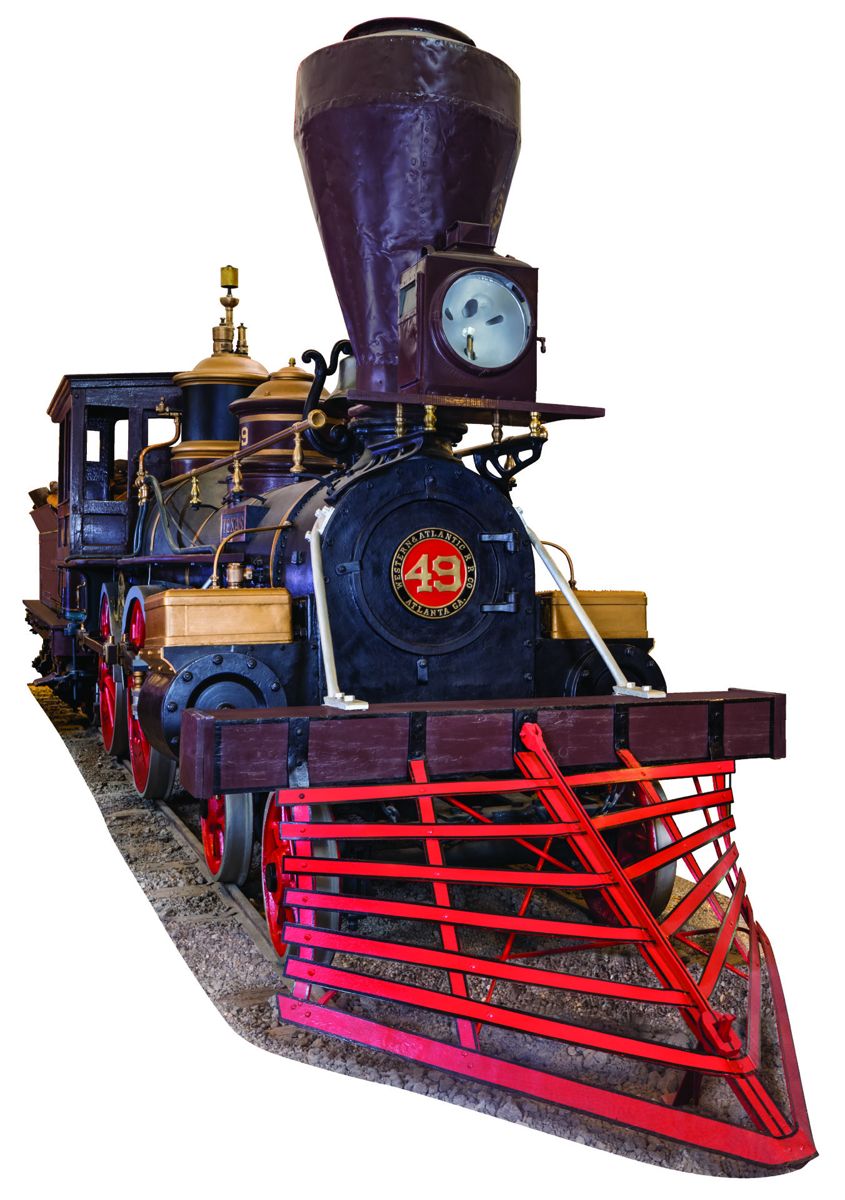
The Texas as it was displayed in the old Atlanta Cyclorama building since 1927. (Peggy Melton)
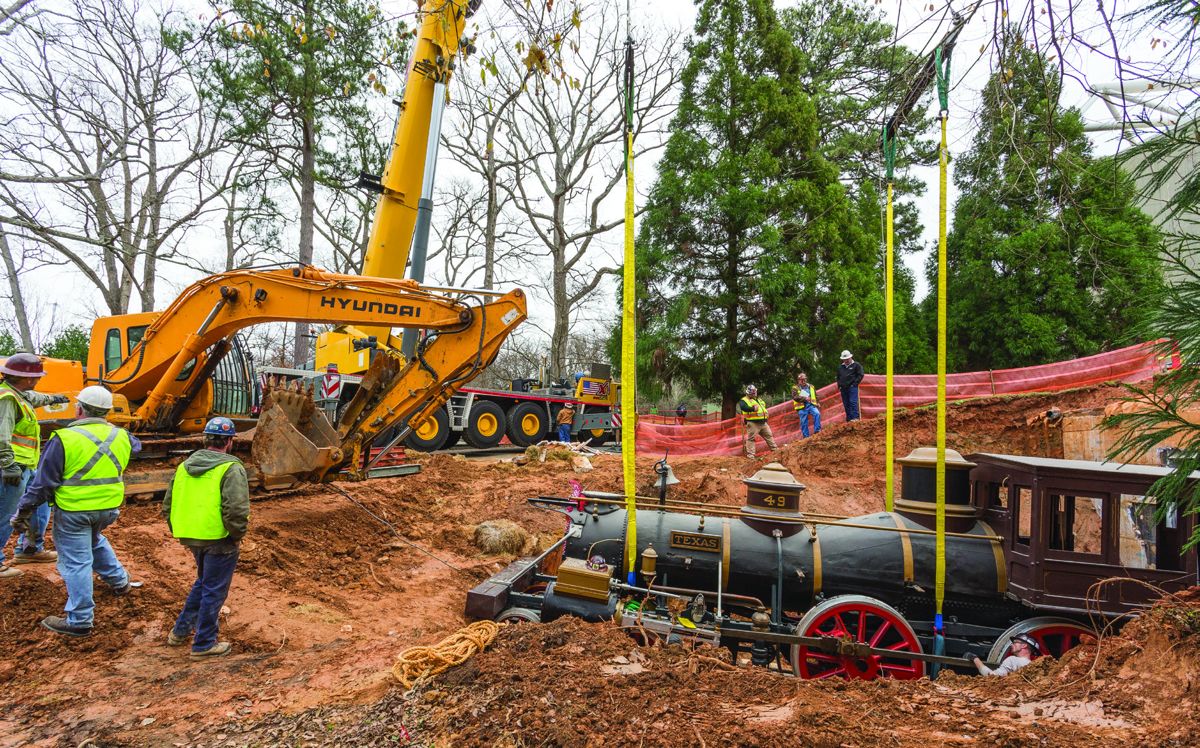
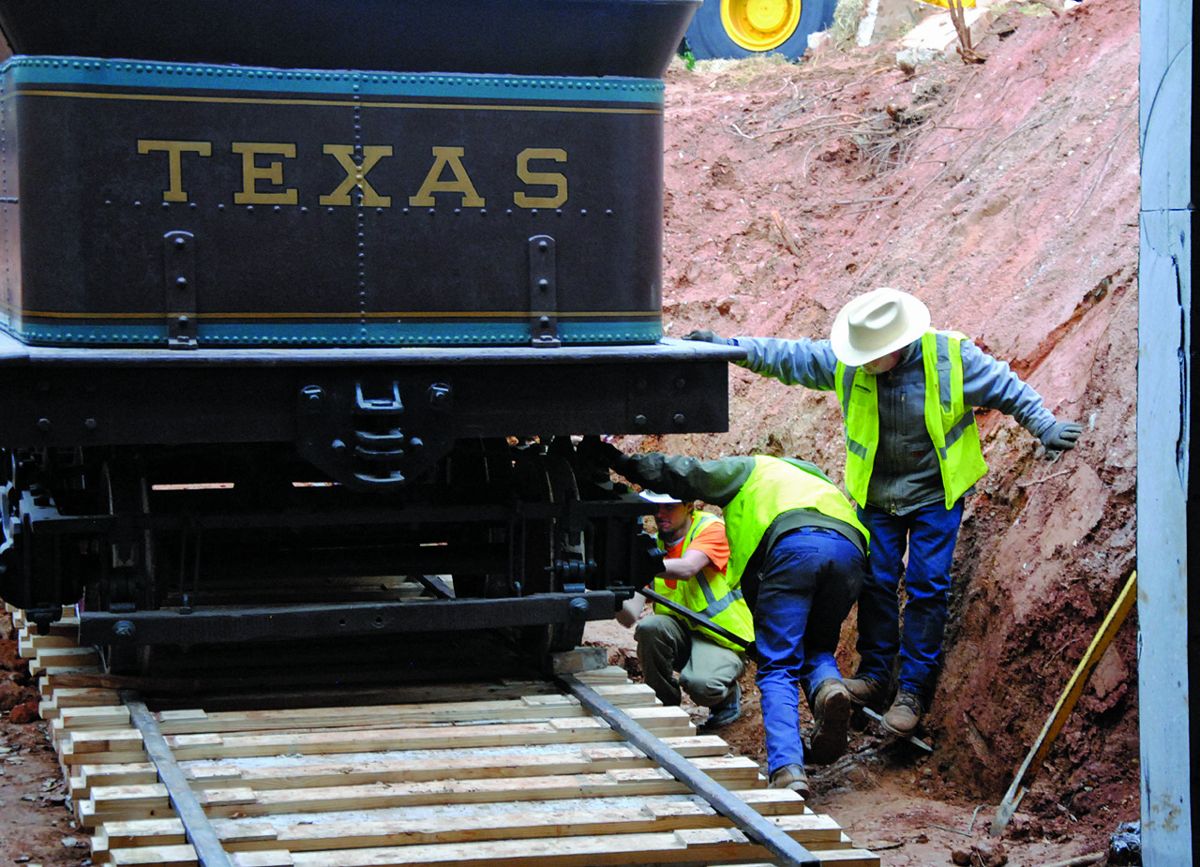
Chattanooga, wreaking destruction on the rail line, with Confederates in pursuit aboard the Texas. The raiders were caught, eight were executed and the others imprisoned. The Texas, with engine and tender, is 51 feet long and weighs 73,000 pounds. Its removal from the Atlanta Cyclorama building on Dec. 21 was planned for months by the Atlanta History Center and an expert adviser, crane operators, grading contractors and crew members. From its longtime display on the Cyclorama building’s lower level, it was pulled more than 30 feet through the old auditorium, from which seating was removed. It was removed through a temporary hole in the wall of the Cyclorama’s 1982 addition in a trench dug 18 feet deep to avoid building structural supports. Once outside, the Texas was rolled more than 15 feet in an additional trench before a crane lifted it onto two lowboy trailers. The History Center will make full repairs to the Cyclorama building, in cooperation with Zoo Atlanta, which plans to develop it into a premier community event space and an extension of its African Savanna exhibit.
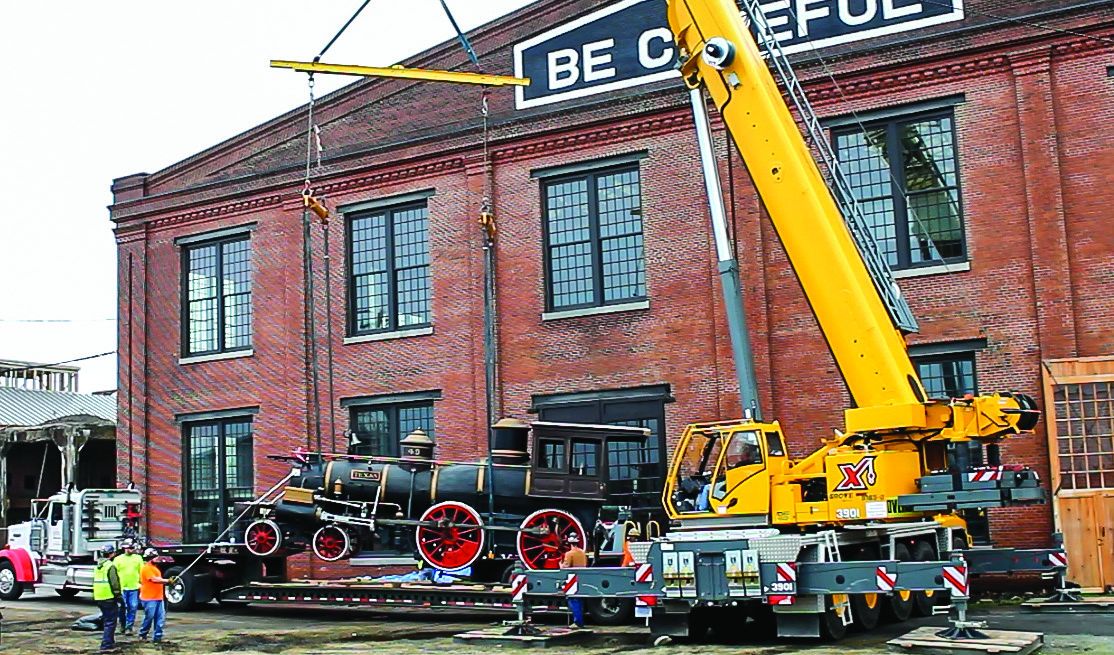
Suspended from a crane, the Texas is carefully lifted from the Atlanta Cyclorama building by Georgia Rigging, Inc., of Palmetto, GA. (Jack Melton) Experts from Steam Operations Corporation of Birmingham, Ala., will carry out the locomotive’s extensive restoration at the North Carolina museum. The Atlanta History Center has dedicated $500,000 to the work. The Texas will be the subject of detailed historic research before restoration begins. The locomotive is expected to return to the Atlanta History Center by 2017. It will be permanently featured in a custom-built glass-walled enclosure where it will be illuminated at night and clearly visible from West Paces Ferry Road at all hours. The enclosure will connect the Atlanta History Center Museum to the new Lloyd and Mary Ann Whitaker Cyclorama Building, which will house the painting. It is expected to open late 2017. “After many years of limited view in the basement of the Cyclorama building in Grant Park, we are putting the Texas in a place where it is going to be front and center,” History Center Vice President of Properties Jackson McQuigg said. “This engine that has been at times forgotten in its long lifetime is going to become a focal point.” The Western and Atlantic Railroad (W&ARR), which the Texas and General served, was central to Atlanta’s beginnings. The town was established in 1837 as the terminus of the new railroad line that ran northwest to Chattanooga, Tenn., and grew to one of the nation’s most important transportation centers. Noting the Texas’s symbolic importance to the city, Atlanta History Center President and CEO Sheffield Hale said, “No artifact can be more important for telling the story of Atlanta’s beginnings than this Western & Atlantic locomotive.” Hundreds of locomotives serviced the W&ARR and its successors. All but the Texas and General were scrapped over the decades. They were saved because of their roles in the Great Locomotive Chase. It was the subject of a 1926 Buster
Keaton film and a popular 1956 movie of the same name as well as books. Atlanta History Center historians believe the Texas has even greater importance as an artifact of Atlanta’s beginnings. The Texas pulled passenger and freight trains in Atlanta and around North Georgia for 51 years, retiring from service in 1907 and headed for scrap. In 1911, it was moved to an outdoor shelter in Grant Park. In 1927 the Texas occupied the park building erected to house it and the cyclorama painting.
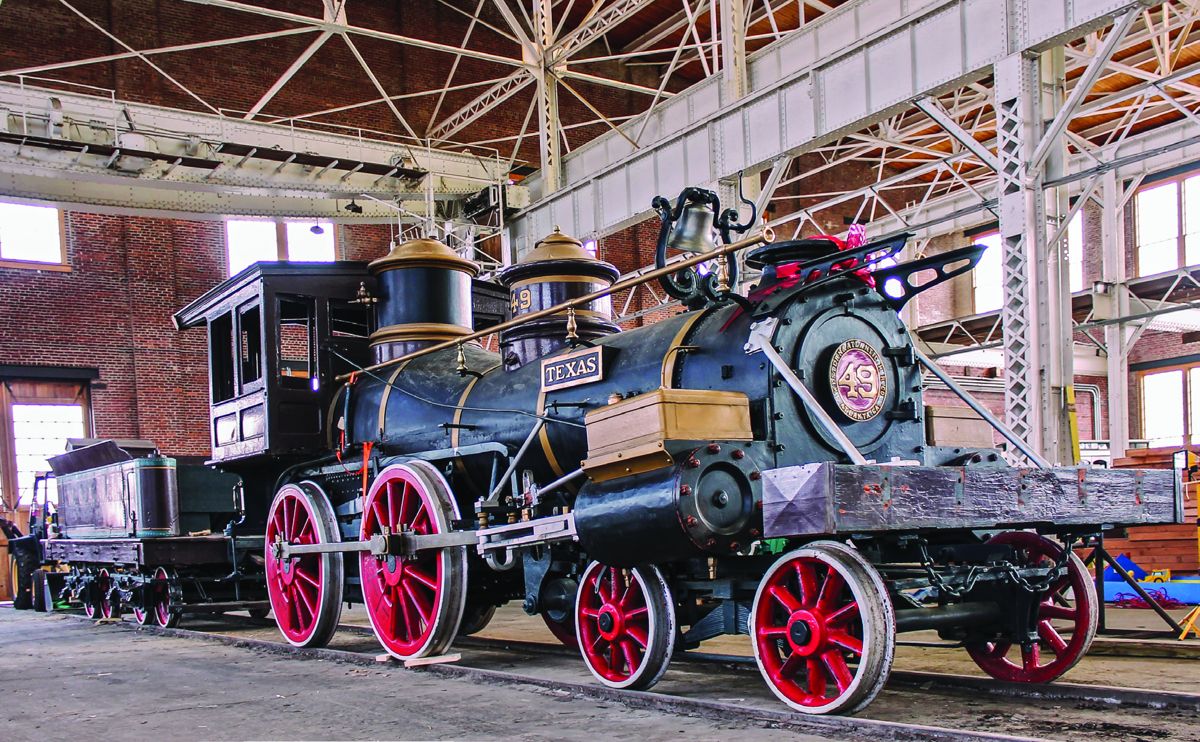
Atlanta History Center Senior Military Historian Gordon Jones said, “We want to show it as the hard-working engine that it was, not just as one of the engines in the Great Locomotive Chase.” He said that for the first time, before its restoration, the Texas will be examined as a historic artifact, part by part and inch by inch. Like any locomotive of long service, it was significantly altered over the years and has many replacement parts. It was converted from a wood-burner to coal-fired. Even its name was changed, to the Cincinnati, after the war. Preservation issues to be addressed include corrosion in the tender and under the boiler jacket, similar rot in the smokebox and a broken bolster on one of the tender’s trucks. While the restoration will not turn the Texas into a working engine again, the History Center intends to make it mechanically sound. The restoration team will conduct research before any decisions are made about color, numbering and other matters of appearance. McQuigg said the paint and looks are the easy part. “We want to address the rust and structural issues, the things that have been ignored over the years in favor of cosmetic restoration.”
There are no specific records of what the Texas looked like brand new in 1856, but the History Center has drawings and photographs documenting the engine’s early 20th century appearance. Construction on the 23,000-squarefoot Lloyd and Mary Ann Whitaker Cyclorama Building at the Atlanta History Center’s 33-acre Buckhead campus began in December and is expected to be complete late this year. The History Center intends to restore the 128-year-old cyclorama painting to its full hyperbolic (hourglass) shape, size and overall height, and to recreate the painting’s original visual perspective, both of which have been lost for nearly a century. The plan is to open the building in early 2017 to allow the public to view the ongoing restoration. Once the painting has been fully restored, visitors will see “The Battle of Atlanta” as it was intended to be viewed when it was painted in 1886. According to Jones only four of 17 surviving cyclorama paintings from the 1880 to 1920 period are in North America. The City of Atlanta saved this one in the 1890s. “It is one of the most intact examples in the world today,” he said. For more information on the Atlanta Cyclorama project visit AtlantaHistoryCenter.com or follow Atlanta History Center on social media for updates, videos and images.