
Researcher Says Famous Lee Image Is Postwar Lexington, Not In Petersburg
By Ron Coddington · Originally published March 2016 · p. 23
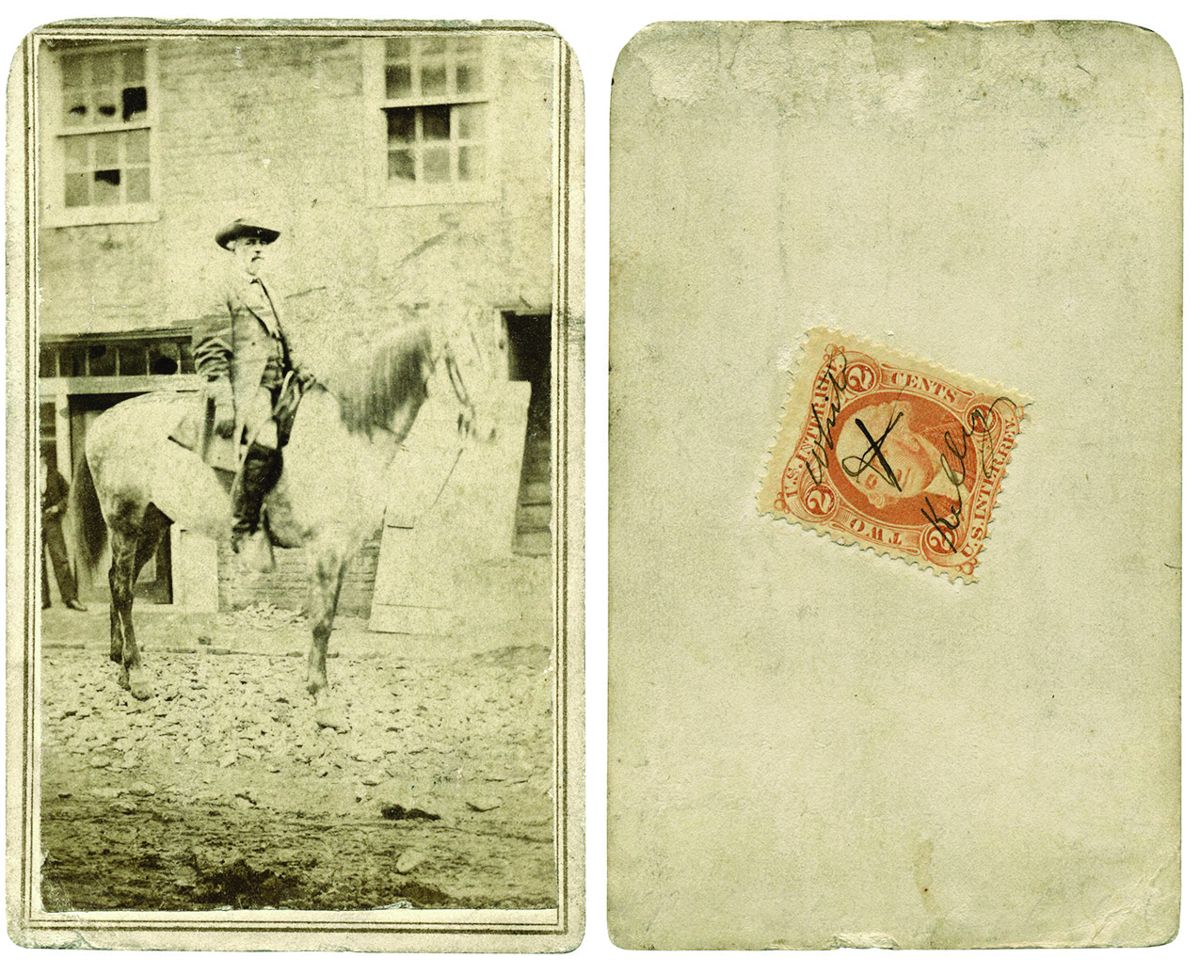
John O’Brien of Charles Town, WV, has long questioned the location of the iconic image of Gen. Robert E. Lee and Traveller. In an independent study of existing period prints of the photograph, the retired historian and journalist concluded that the widely accepted location and timeframe of the photograph is wrong. He revealed his findings in the current issue of Military Images magazine (militaryimagesmagazine.com). According to tradition, the image was made in Petersburg, Va., during the last month or months of the war in 1865. Since that time, however, little scrutiny has been given to several features in the image that actually date it to the postwar period. O’Brien observed that Lee wears his Confederate uniform stripped of all military insignia — no stars on the collar, no brass buttons or sleeve decoration. The absence of military insignia is consistent with a Union law issued after the end of the war that forbade the wearing of the Confederate uniform. Accounts prove that Lee did, in fact, adhere to the regulation. A closer look at the street scene is also revealing. What appear at first glance to be broken windows and debris may have reinforced the belief that the image was taken in wartorn Petersburg. The windowpanes are not broken, but are reflecting shadows cast from buildings or trees on the opposite side of the street. The debris below Traveller’s hooves are leaves. It is reasonable to conclude that the horse would have difficulty standing upon broken bits of brick, wood and stone. O’Brien examined a half-dozen cartes de visite (CDVs) of Lee on Traveller, including the print reproduced here. All of them feature an orange, two-cent U.S. revenue stamp on the back of each cardboard mount. This stamp was payment for a tax on photographs levied on Aug. 1, 1864, to help pay for the war. The photograph tax was mandatory throughout the country, including the South, and remained in effect until its repeal on Aug. 1, 1866.
Several of the Lee CDVs are hand-cancelled with the monogram “W. & K.,” while others include the surnames “White & Kelly.” These photographers were active in Lexington, Va., as early as the 1850s.
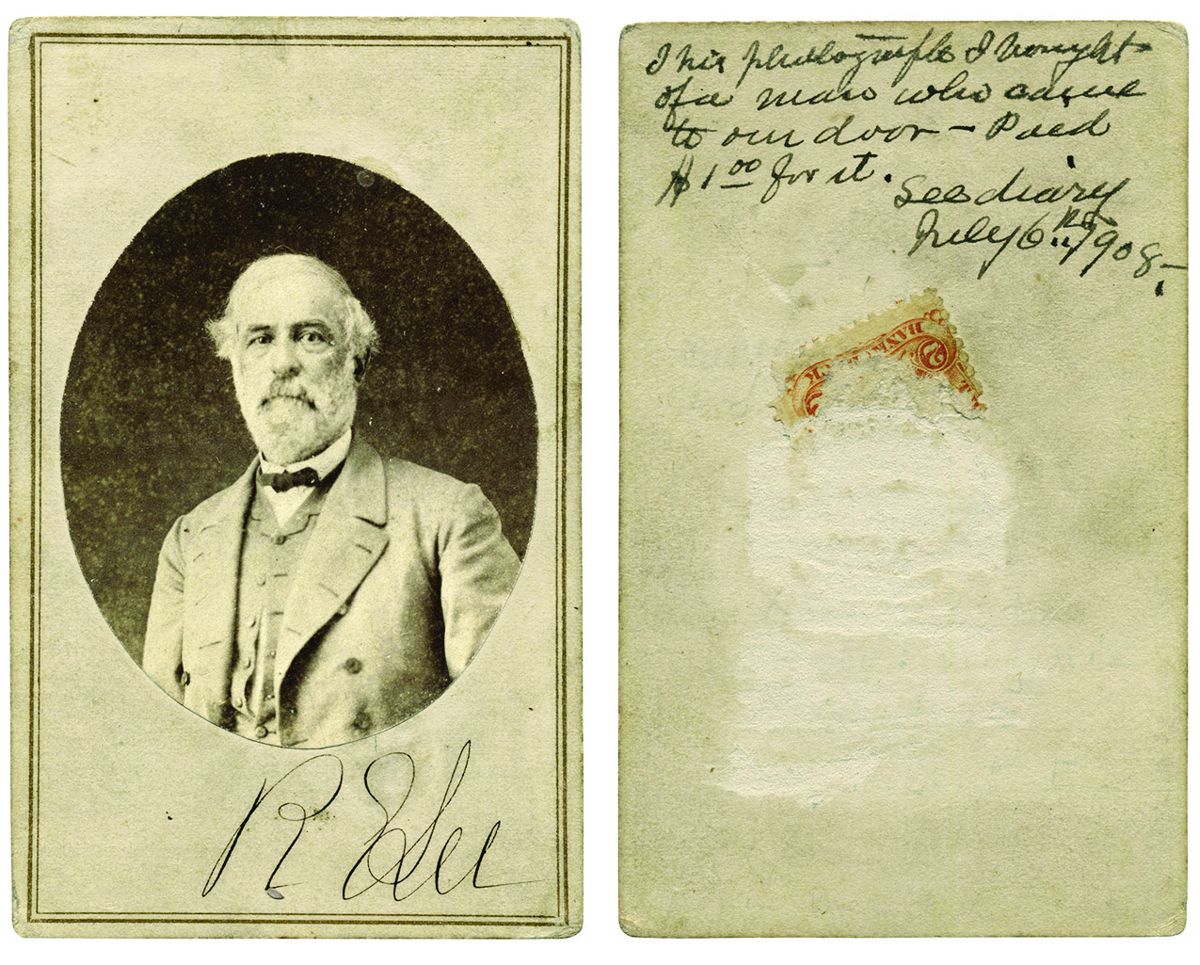
Another photographic portrait by White & Kelly presents Lee, fullfaced and poignant, dressed in the same attire. The photograph, also shown here, was likely made about the same time as the image of Lee and Traveller. The cause for the original mistaken attribution of the Lee and Traveller image to Petersburg is not known. The error may have originated with the Dimenti Studios of Richmond, a 20th century photo firm, which cited the photo as being taken in Petersburg in 1864. For decades, those who glimpsed this image and read the caption no doubt came away with a lasting impression of a proud, defiant Lee among the ruins of his beloved Virginia. Thanks to O’Brien’s efforts, a new caption might be written: Lee, the defeated warrior, bravely riding into the next chapter of our American story — not at the head of a rebel army, but as president of an institution of higher education in a reunited and still recovering country. Ron Coddington publishes Military Images magazine and for 15 years wrote the Faces of War column in Civil War News.