Treasures from the Museum — June 2016
By Gordon Blaker · Originally published June 2016 · p. 35
FORT SILL, OK.—Opened in 2009, the US Army Artillery Museum tells the history of American artillery from 1775 to the present. The 20,000 square foot building houses 85 artillery pieces dating from 1500 to the present and ranging in weight from 90 pounds to 29 tons. The museum is currently building a privately-funded 75 x 150 feet addition which will exhibit the history from the Korean War to present. In the Civil War area, there are 15 artillery pieces, four flags and five uniforms along with a growing number of smaller artifacts. Among the Confederate pieces are a Noble & Brothers 3-inch Tredegar bronze rifle, an iron 12-pounder Napoleon and the famed Whitworth rifle. Upcoming exhibits on ammunition, fuzes and implements are in the works. The Museum continues to actively its collection, adding three Confederate cannon last year, two Leeds and one Tredegar gun. Among the Civil War artifacts are the two highlighted in this article.
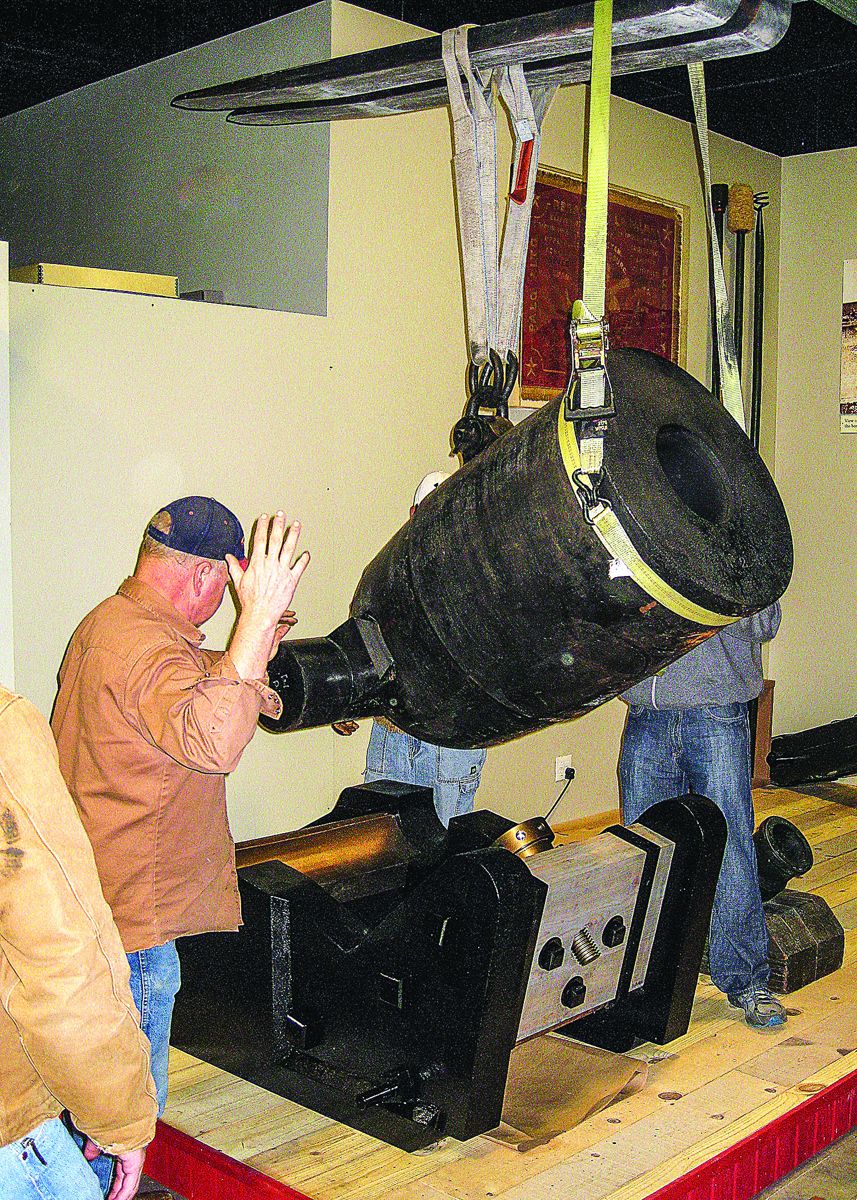
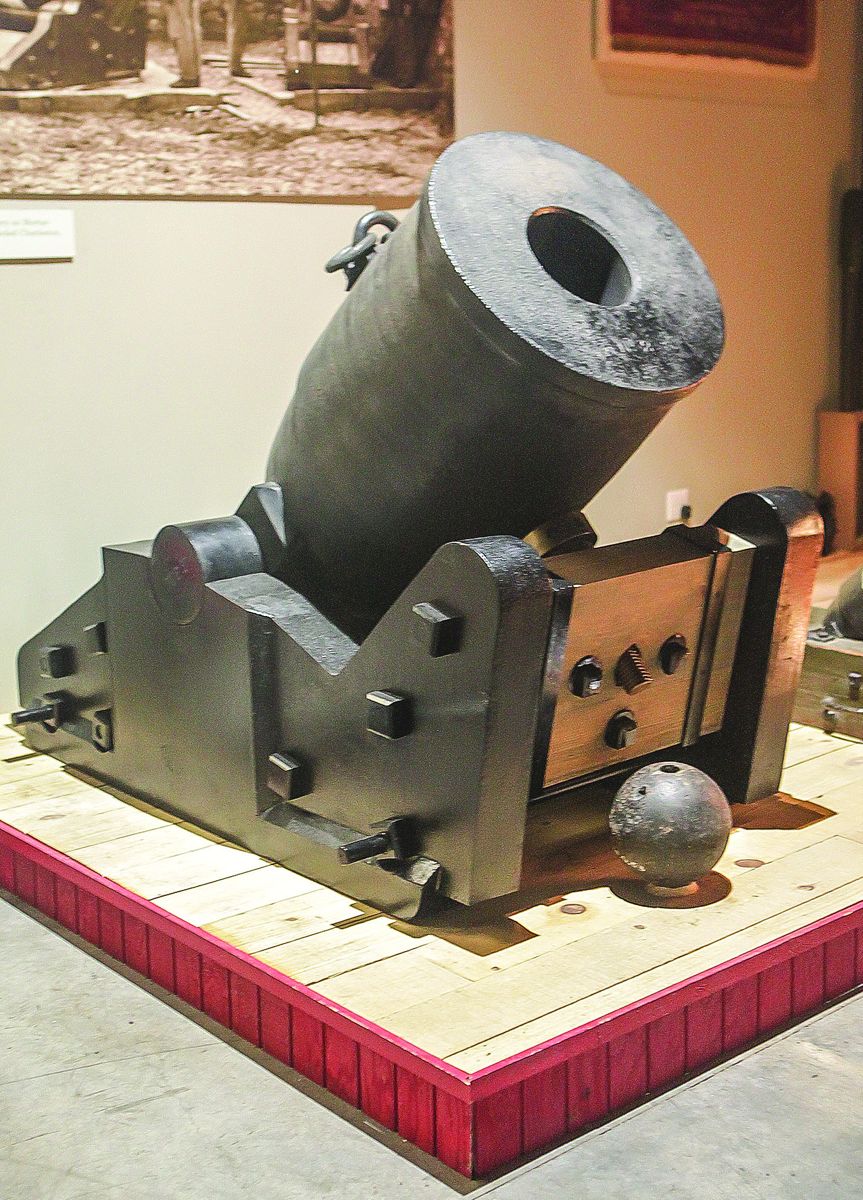
M1841 10-inch Seacoast Mortar In the first half of the 19th Century, the U.S. Army used two different types of 10-inch mortars. The Siege mortar was smaller, lighter and had half the range of the larger and heavier Seacoast mortar. Seacoast mortars were intended to defend the nation’s coastal forts against enemy warships but saw considerable use as a siege weapon to shell enemy fortifications during the Civil War. Ten pounds of powder was used to launch this mortar’s 92-pound explosive shell a distance of nearly 2-1/2 miles. It was a 10-inch Seacoast mortar that fired the opening shot of the Civil War at Fort Sumter at 4:30 a.m. on April 12, 1861. This mortar was cast at the West Point Foundry in June 1842 and came to the museum from Watervliet Arsenal, NY in 2014. The tube weight is 5,704 pounds. A total of 33 of these massive mortars were cast, 10 in the early 1840s and the remainder in 1861-62. Five of these mortars survive, four in Binghamton, NY, which were cast in 1861 and this one, the only surviving example cast prior to the war.
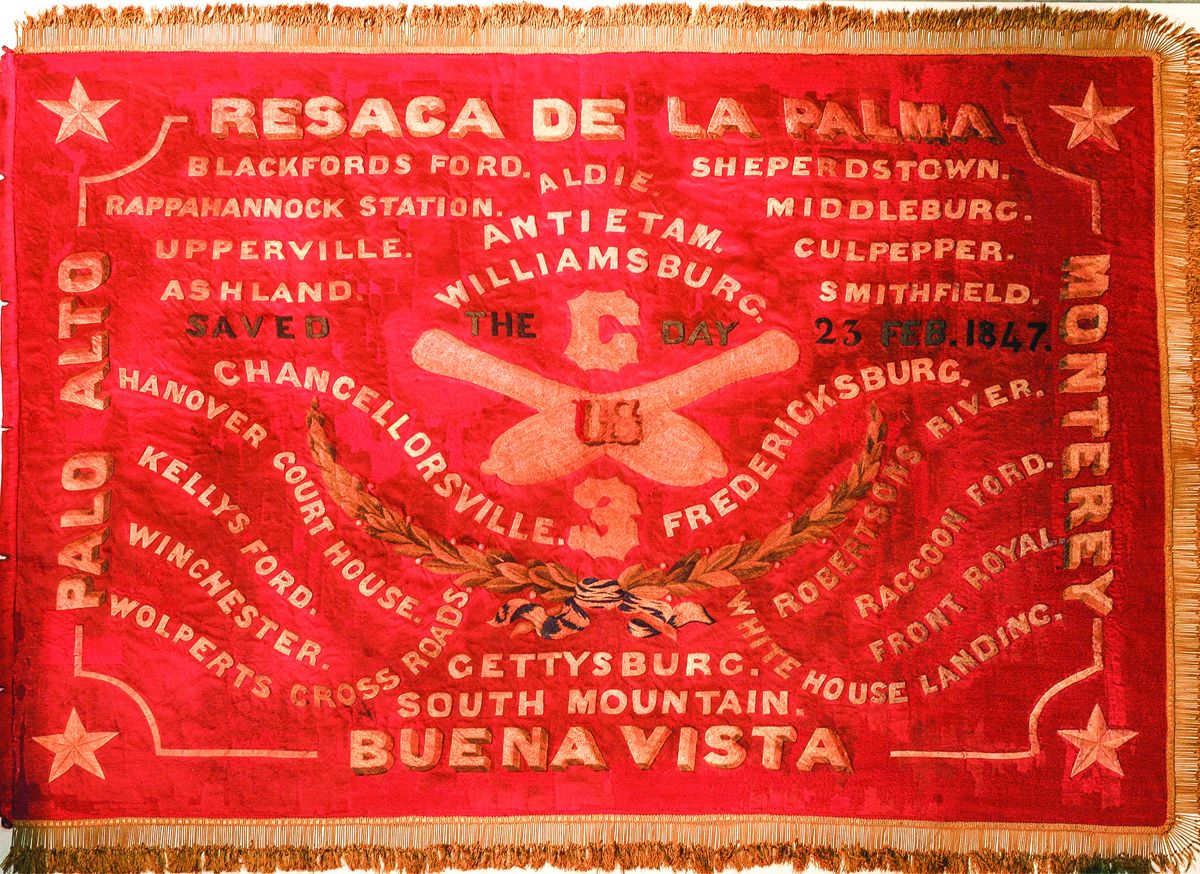
Flag of Battery C 3rd Artillery Regiment This is the Civil War flag of Ringgold’s Battery, the first “Flying Battery” in the U.S. Army. In 1838, Brevet Major Samuel Ringgold was sent to Europe to study artillery in the British and French armies. Upon his return, he was directed by the Secretary of War, Joel Poinsett to organize a battery of horse artillery. Battery C, 3rd Artillery Regiment, commanded by Ringgold, became the first artillery battery to receive horses so that every soldier was mounted. Commonly known as a “Flying Battery” because of their capability for rapid movement, Ringgold’s Battery was soon followed by three other batteries, one from each of the four artillery regiments. The flying batteries played a decisive role in winning the Mexican War, 1846-48. This flag includes the Mexican War battle honors around the edge Palo Alto, Resaca de la Palma, Buena Vista and Monterey. The “Saved the Day February 23, 1847” refers to the Battle of Buena Vista where the battery was instrumental in defeating a much larger Mexican force. The numerous Civil War engagements the battery fought in, completely fill the rest of the flag. The most famous of these battles include; Antietam, Chancellorsville, Fredericksburg and Gettysburg. The museum is open from 9 am to 5 pm, Tuesday through Saturday. The museum is on Facebook, and its website is at http://sill-www.army.mil/FAMuseum. Visitors who do not have a Department of Defense identification are required to obtain a pass at the Visitor’s Control Center prior to entering Fort Sill. Call (580) 442-1819 for further information.