Norfolk Light Artillery Blues Step Into The Future - Again
By Bob Ruegsegger · Originally published June 2016 · p. 30
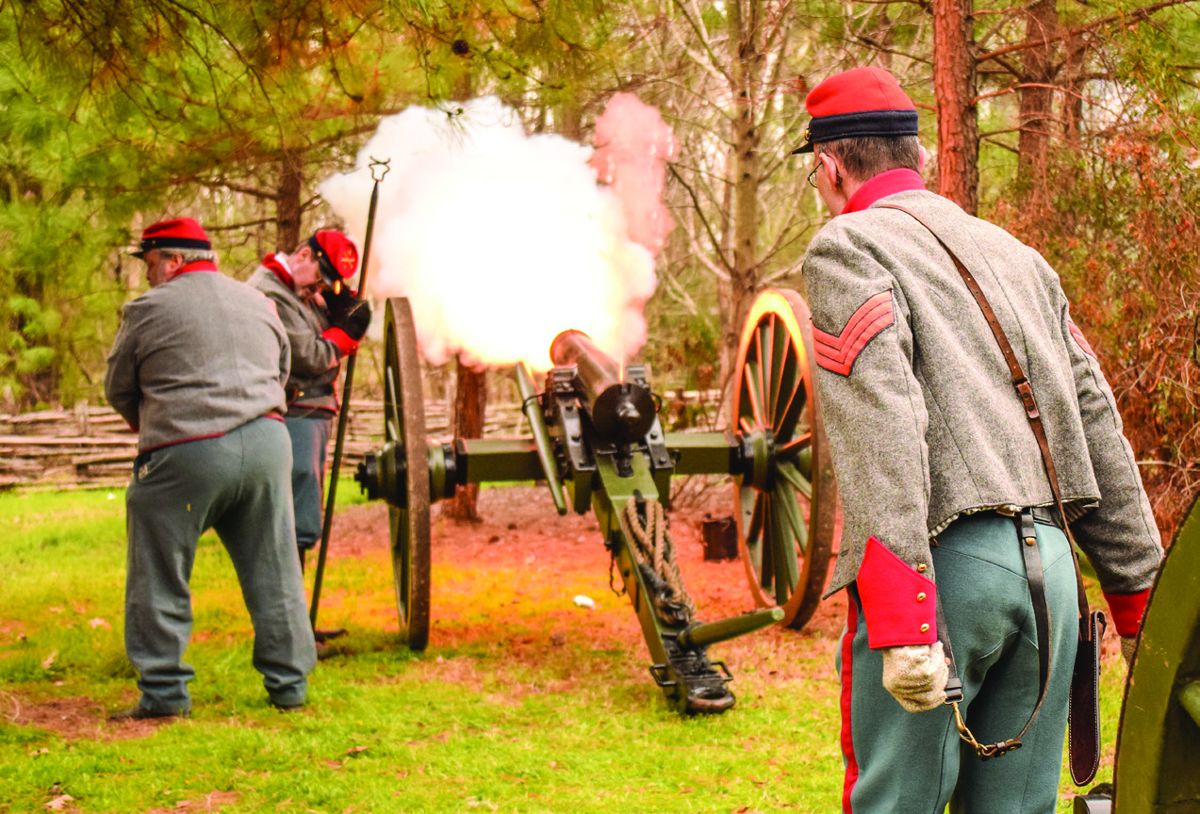
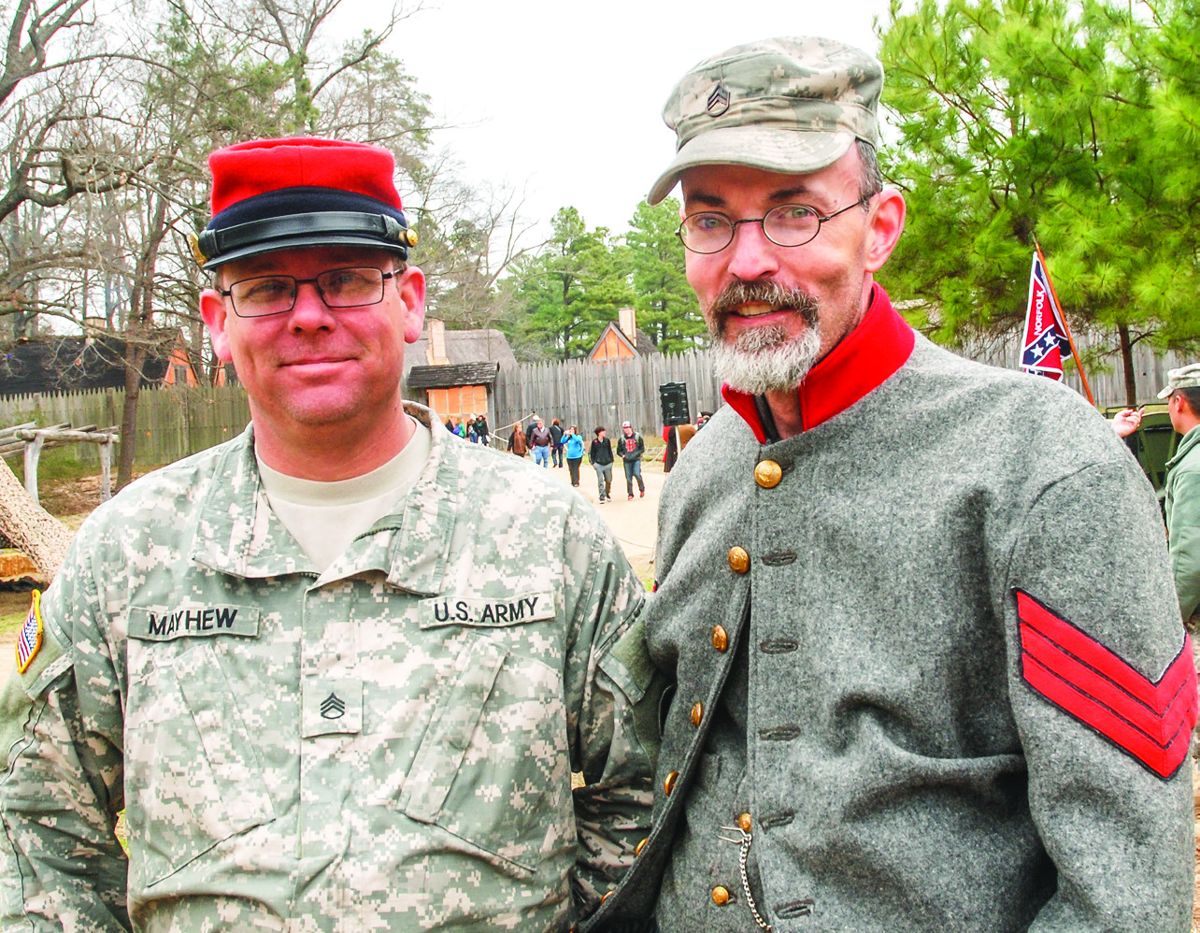
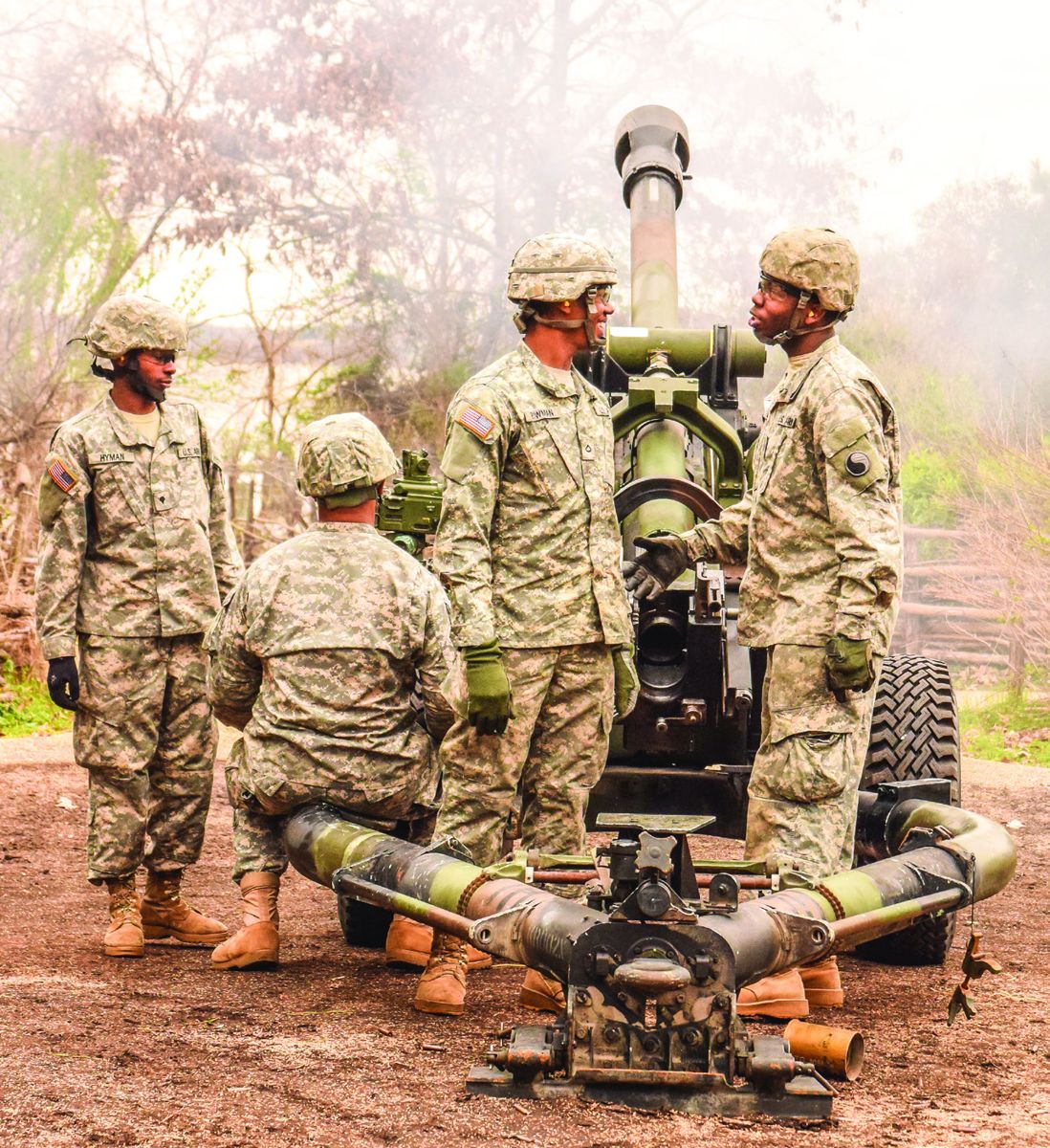
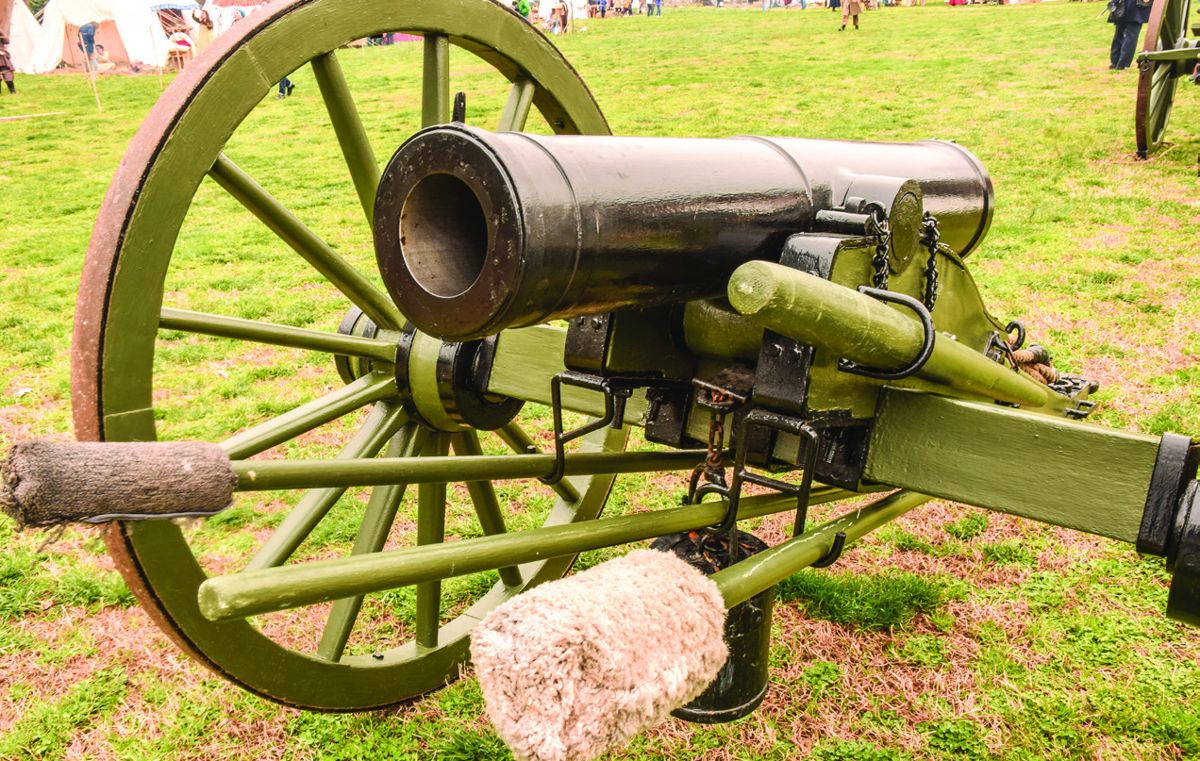
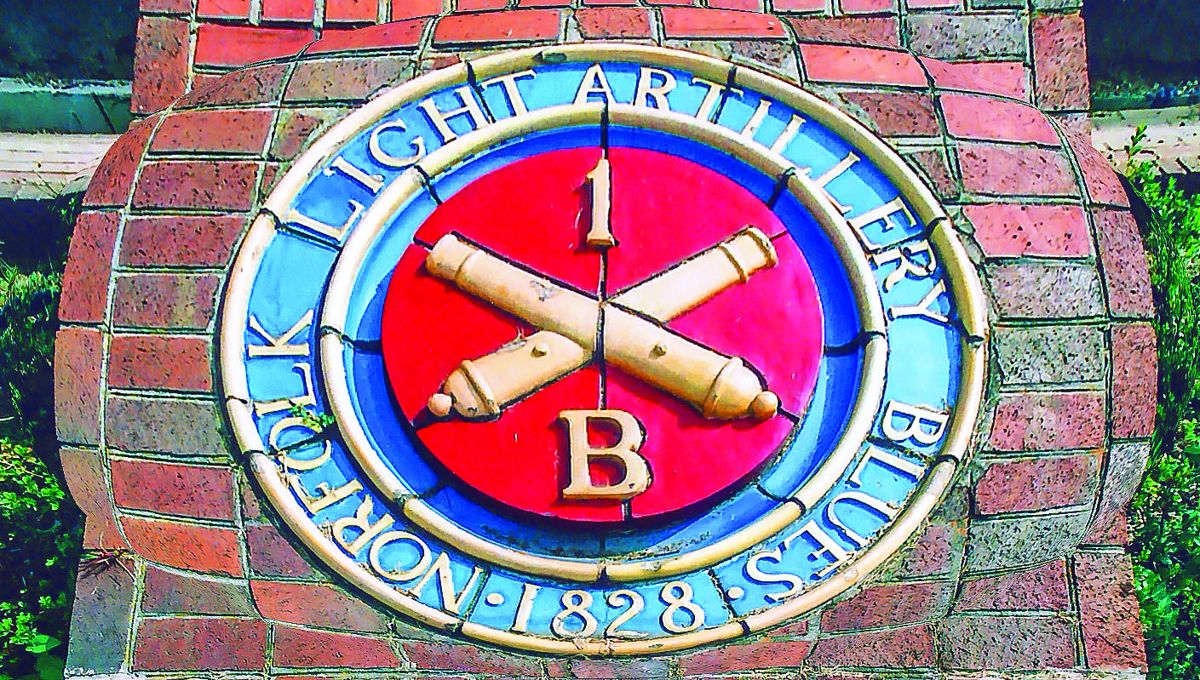
JAMESTOWN, Va.—Military Through the Ages at Jamestown Settlement offers reenactors with the Norfolk Light Artillery Blues an opportunity to bring the past to life for event patrons. The popular annual event also provides these Confederate artillerists an occasion to step into the future150 years into the future. For the Norfolk Light Artillery Blues, meeting their descendant unit in the Virginia Army National Guard, 1st Battalion 111th Field Artillery, Battery B on the demonstration field has been a special treat. It’s not the first time that these dedicated reenactors have stepped – so to speak – into their future. These Civil War artillerists and Virginia National Guard unit both bear a common moniker – Norfolk Light Artillery Blues. They both employ artillery, but their weapons are separated by a 150-year gulf in technology. The Confederate reenactors fire a replica of an M1841 12-pounder howitzer. The howitzer is a direct fire weapon with an effective range of about 1,000 yards. The M1841 can fire an average of two rounds per minute. On the other hand, the Virginia National Guard’s 111th Field Artillery uses an M119 Alpha 2, a British-made 105 mm howitzer. It is employed as an indirect fire weapon with a maximum range of about eight miles. Guardsmen can easily fire six rounds per minute – without breaking a sweat. Civil War reenactors, with black powder artillery experience, fully respect the massive disparity in firepower between the weapons. Modern guardsman can appreciate the limitations of the 19th-century howitzer. Chris Hoggard, who currently commands the Norfolk Light reenactment artillerists, hails from Hampton, Virginia. Hoggard has recently taken over for the late Richard Cox of Norfolk, who founded the unit nearly three decades ago. Most of Hoggard’s crew live in Norfolk.
This Model 1841 Field Howitzer was used in both the Confederate and Union armies during the Civil War. It was also used in the Mexican War and Indian wars. (All photos Bob Ruegsegger)
Hoggard joined Cox’s Norfolk Light Artillery Blues 12 years ago because he was interested in re-enacting and he preferred to do his re-enacting as an artilleryman. “My dad and grandfather were in the 111th Field Artillery with the National Guard back in the ‘50’s,” said Hoggard. “They were in Battery C, which was out of Hampton at the time,” he said. “They were all under the Norfolk Light Artillery Blues banner.” When Hoggard attended Old Dominion University in Norfolk, he recalled folks referring to a storage building as “the barn.” It’s now called the Stables Theater. It once sheltered the horses that served the unit. During Military Through the Ages, both artillery units participate in an exhibition called Four Hundred Years of Virginia Artillery. The program is an artillery firing demonstration beginning with the firing of a replica of an artillery piece used by the first English colonists at Jamestown and concluding with the firing of a modern National Guard howitzer. Side by side on the demonstration field, the Civil War Blues and the modern-day Blues fire their weapons. The contrast is amazing, even to the artillerists. “Our unit is Bravo Battery, 111th Field Artillery. We’re out of Norfolk, Virginia,” said Master Sgt. Kenneth Blood, the unit’s NCOIC. “Basically, our ancestors were the Norfolk Light Artillery Blues. We’re still the Norfolk Light Artillery Blues, but the modern unit.” On the demonstration field, the artillery crews alternate firing. Spectators can compare and contrast the rate of fire, the smell of smoke and burnt powder, and the relative volume of noise from each explosion. “They’ll shoot their piece. We’ll shoot our piece. We’ll let them shoot ours, and they’ll let us shoot theirs,”
John Stansell explains to camp visitors how artillery shells were fused in the 19th century. said Master Sgt. Blood. “We usually have our new guys come out to give them a chance to experience this.” The differences in technology are enormous. Modern weapons use special optics and computers for accuracy. Loading and firing the contemporary howitzer is relatively simple and surprisingly fast – with the well-trained crew. Each shell encases the primer, powder, and projectile. Shells can be cranked into the breech in rapid succession. With the more primitive black powder howitzer the tube must be cleaned after each round. Firing one round requires that a powder charge and a projectile must be loaded from the muzzle and a primer installed. The barrel is swabbed after the shot and the process starts all over again. “We’ve interacted with them [Va. Army National Guard 111th Field Artillery] quite a bit. I like the continuation of the history part,” said Kevin Rimrodt, a five -year member of the Civil War unit. “It’s not just a piece of history that stands by itself. It’s a living history. Even today - it still exists.”