Namozine Church – A Still, Silent Witness To War
By Sandy Goss/Eagle Bay · Originally published June 2016 · p. 36
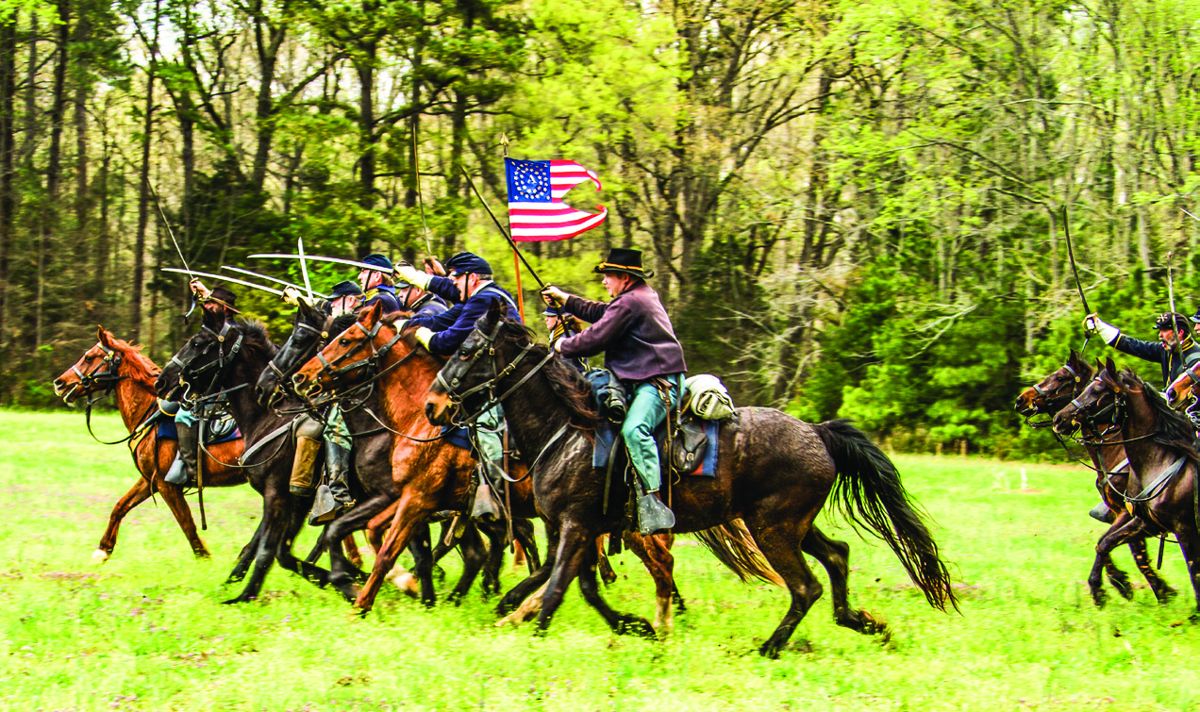
The white, two-story Presbyterian church, built in 1847 still stands. In the backcountry of Virginia’s southern, hilly farmlands, this structure, surrounded by gently swaying pines, is a place of tranquility and peace far beyond the ravages of war. It was here, 151 years ago, where Confederate cavalrymen made a valiant effort to block the steadily advancing Union Army of the Shenandoah. While it was the first battle between the opposing forces since the fall of Richmond and the flight from Petersburg, the 800 grayclad remnants of the 1st, 2nd and 5th N.C. Cavalry Regiments knew their situation was desperate. As they hoisted themselves into their saddles, many knew that for them, it would be their last fight; there were too many Yankees and not enough Johnny Rebs to hold them off very long. Their orders were simple: hold at all costs. As the Yankees from the 8th New
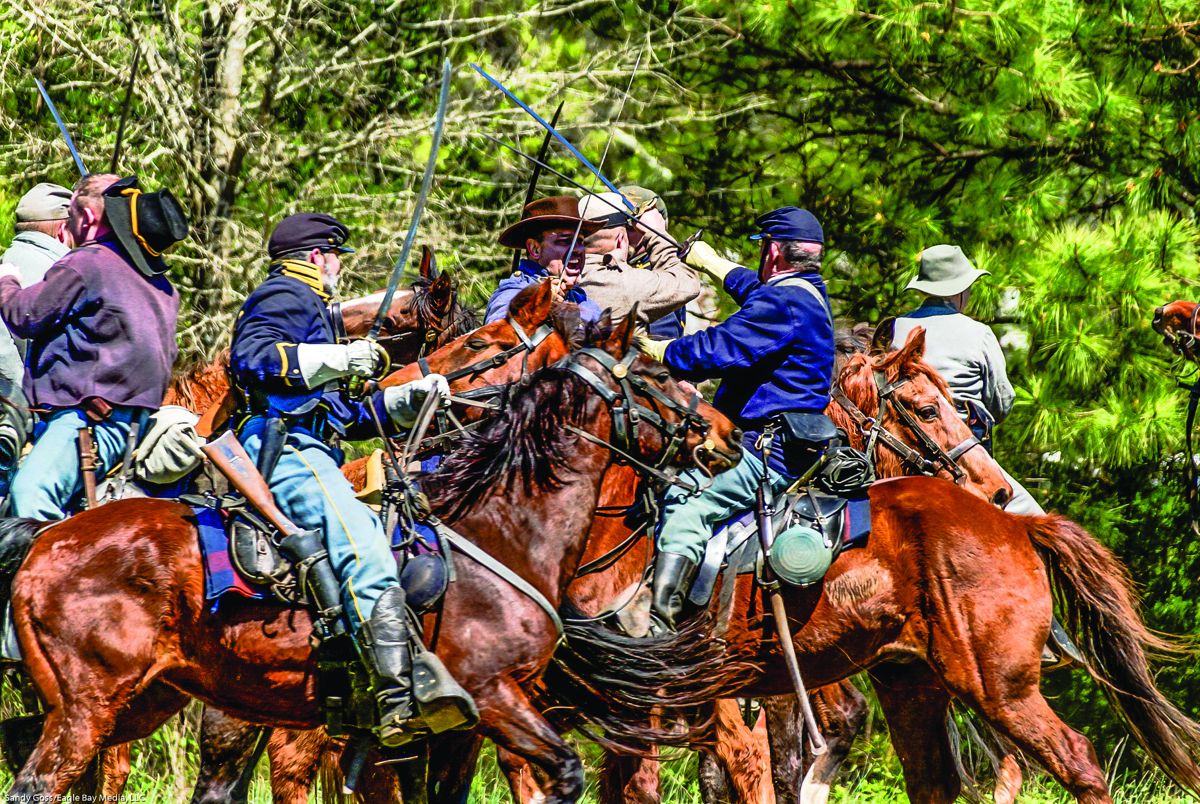
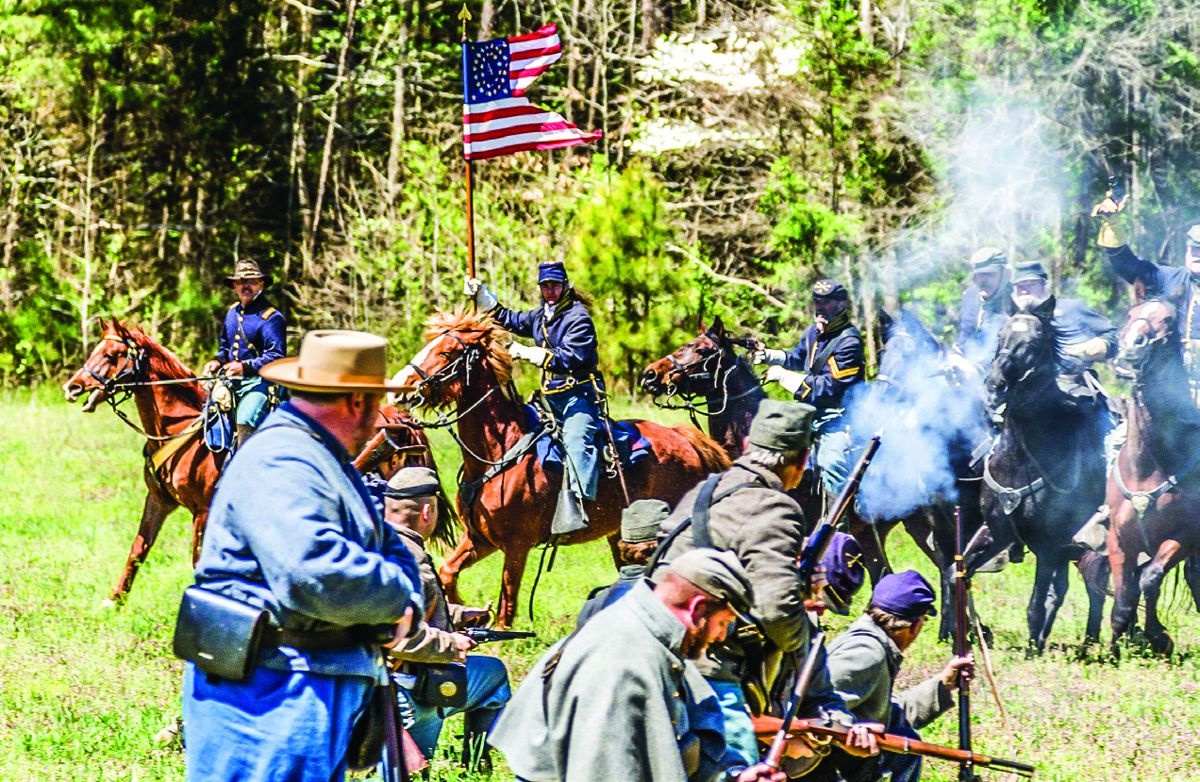
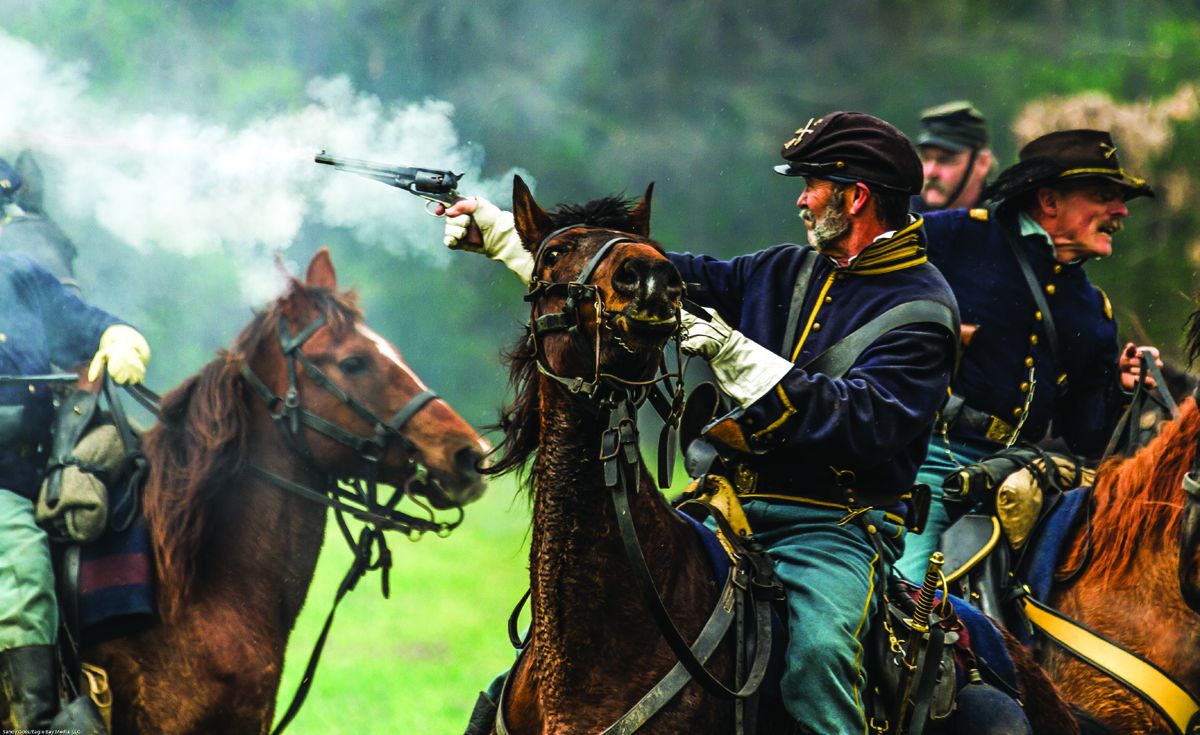
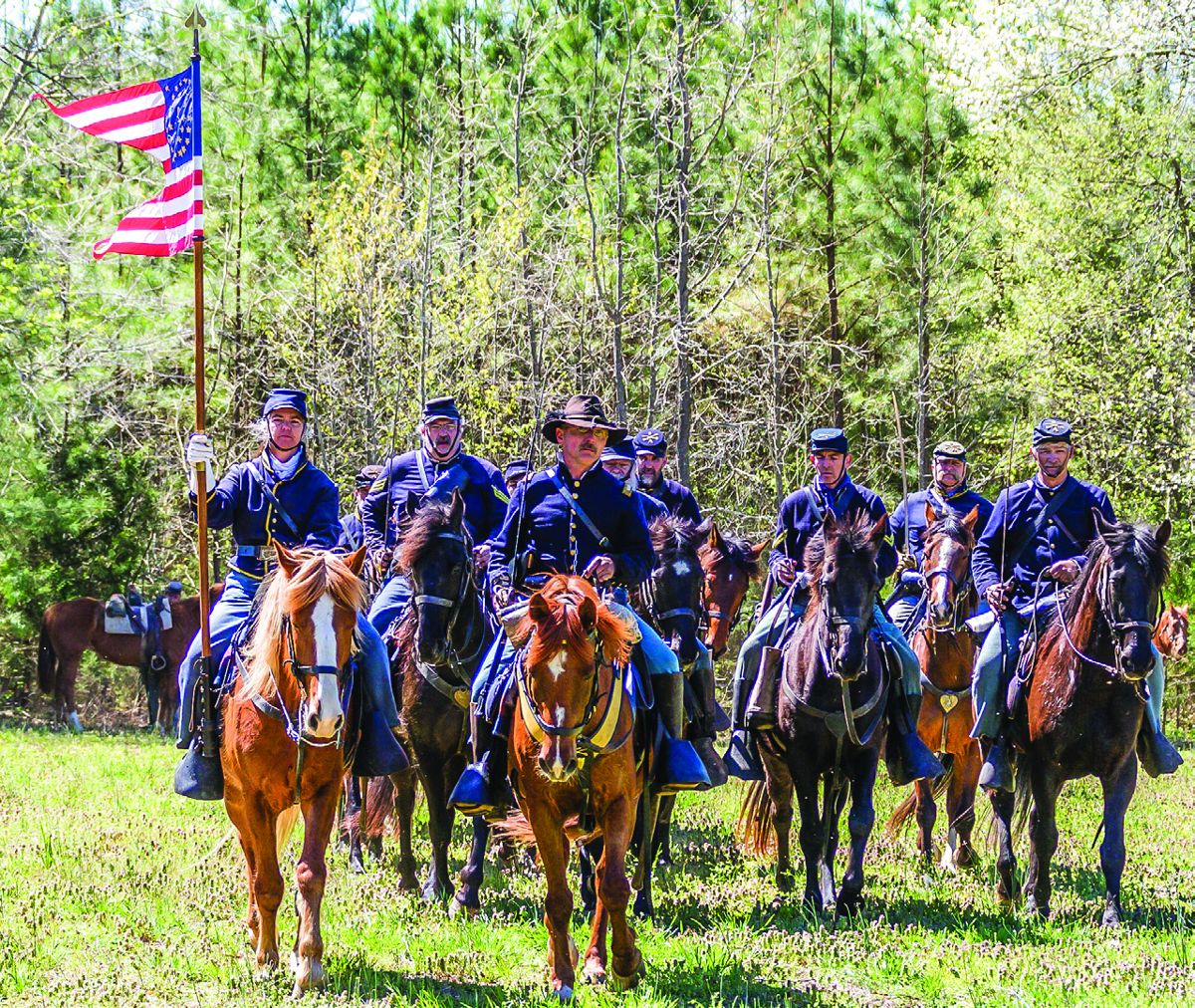
York Volunteer Cavalry Regiment closed on Namozine Church, they were initially met by the counter-attacking 1st and 2nd North Carolina Volunteer Cavalry Regiments. To the rear was the 5th North Carolina Cavalry Regiment. The Confederates had a single piece of artillery. The fight did not last long; it was sharp and violent. The Confederates were compelled to withdraw in the face of unrelenting pressure from the Union forces. Reinforcements from the 15th New York Volunteer Cavalry Regiment had joined the 8th New York Cavalry. The 1st Vermont Volunteer Cavalry Regiment also moved into the fight. As the Yankee cavalry brigade launched their concerted attack against the desperate Confederate defenders, Captain Tom Custer, younger brother of the Cavalry Division Commander Maj. Gen. George Armstrong Custer, spurred his horse over a hastily thrown up barricade of the still deploying Confederate cavalry. He captured three Confederate officers and 11 enlisted men, as well as the battle flag of the 2nd North Carolina Cavalry. For these actions, he would eventually be awarded a Medal of Honor, one of two he would earn within four days. Nevertheless, the stubborn Tarheels repulsed the first Union attack and then Custer brought up his Cavalry division’s support artillery. The three Confederate regiments were wiped out. When the battle was over, Union forces had lost 95 blue-coated cavalrymen, either killed or wounded. Total Confederate losses are not known, but Custer’s men snatched up some 350 prisoners, 100 horses, and the single artillery piece while clearing the road as far as the Namozine Church. Many of the North Carolinians had been killed or wounded during the fight. Some had fled to North Carolina, leaving only 11 men left to surrender at Appomattox. After the battle, Namozine Church served as a field hospital and later as Maj. Gen. Sheridan’s temporary headquarters. Bloodstains on the second story floor are still visible. The engagement signaled the beginning of the Union Army’s relentless pursuit of the Confederate forces – what was left of the Army of Northern Virginia and Richmond local defense forces after the fall of Petersburg and Richmond. In short order, Lee’s forces began to disintegrate, which led to the Army of Northern Virginia’s surrender at Appomattox Court House, Virginia on April 9, 1865. The reenactment of this battle is conducted every five years said Chris Cook, who is a member of the 1st N.C. Cavalry, ANV. “We have been asked to do the battle more frequently; I spoke to the Anderson family (who) might support that. We may look at doing it again in two to three years.” One of the considerations to more frequent observances of the battle is that it cannot conflict with the larger events. Another is the partnership with the 2d US Cavalry, Co A which has “supported the battle the last three times we did it. Without them, it could not be done.”