
Lost African American Grave New Discovery
By Gregory L. Wade · Originally published June 2016 · p. 8
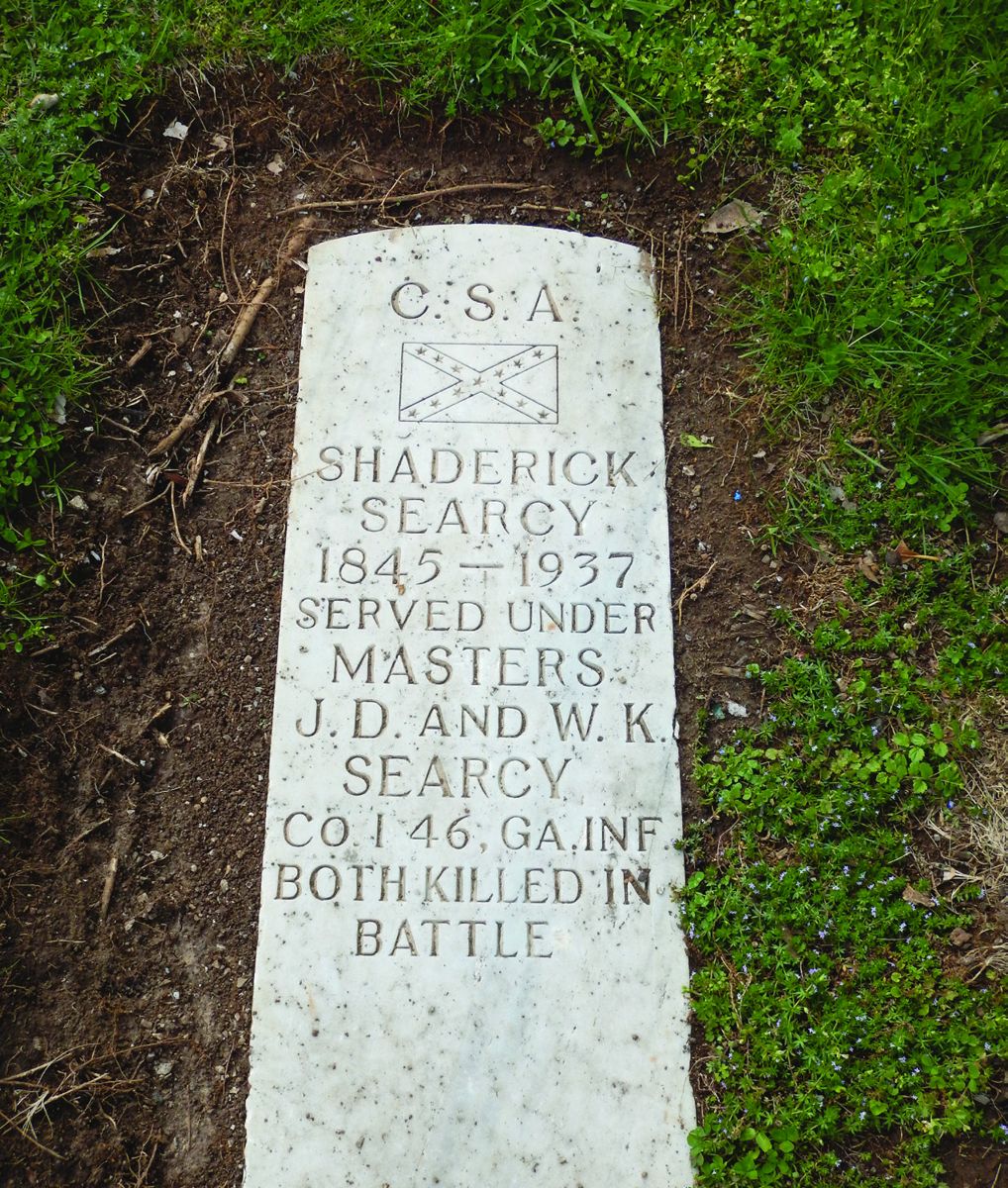
CHATTANOOGA, Tenn.—A recent discovery of an African American’s actual headstone at Chattanooga’s Confederate Cemetery is the result of thirty years of research to determine the exact location of Shaderick Searcy’s final resting place. Surrounded by stone walls and often overlooked in this urban environment, the cemetery is located in a busy section of Chattanooga, just across the street from the local university and near a major medical center. Chattanooga Civil War historian Anthony Hodges said “we discovered that Searcy was buried in the cemetery roughly thirty years ago” from a letter written by a Confederate veteran, “but the exact location wasn’t known.” Until now, a headstone for Searcy was located in a random spot. According to published reports, members of the Nathan Bedford Forrest Camp, Three of the Sons of Confederate Veterans were restoring part of the stone wall when attempts to remove a rock revealed Searcy’s true marker, lying flat and covered by grass. Many of the soldiers in the cemetery died in area hospitals during the war and buried on the banks of the Tennessee River and later reinterred to higher ground as the war ended. Searcy’s pension application says he came to Chattanooga in 1903, but it is not known how he came to rest in this cemetery. Searcy’s masters, James D. Searcy and W.K. Searcy of the 46th Georgia Infantry were both killed in battle, James at Franklin and W. Kitchen at Kennesaw Mountain. Shaderick apparently stayed in the Confederate Army and even received a pension, according to Confederate pension applications. On April 9, 1921, the Tennessee legislature passed an act providing a pension for, “Those colored men who served as servants and cooks in the Confederate Army in the War Between the States.” These applications can be found in the Tennessee State Library and Archives. Hodges recalled that several local historical groups spent a lot of time probing the ground over the years, finding headstones which were placed back up in their proper upright position. “This stone is a great piece of historical art, and it is a thrill to see “emerge from the soil,” he added.