
Zooming Into Gettysburg Photography
By Garry E. Adelman · Originally published July 2016 · p. 42
Within months of the Battle of Gettysburg, documentary cameramen captured some of the most compelling photos of the Civil War. And yet, even in the most well-known photographs, details are hidden within, just a few clicks of your zoom button away.
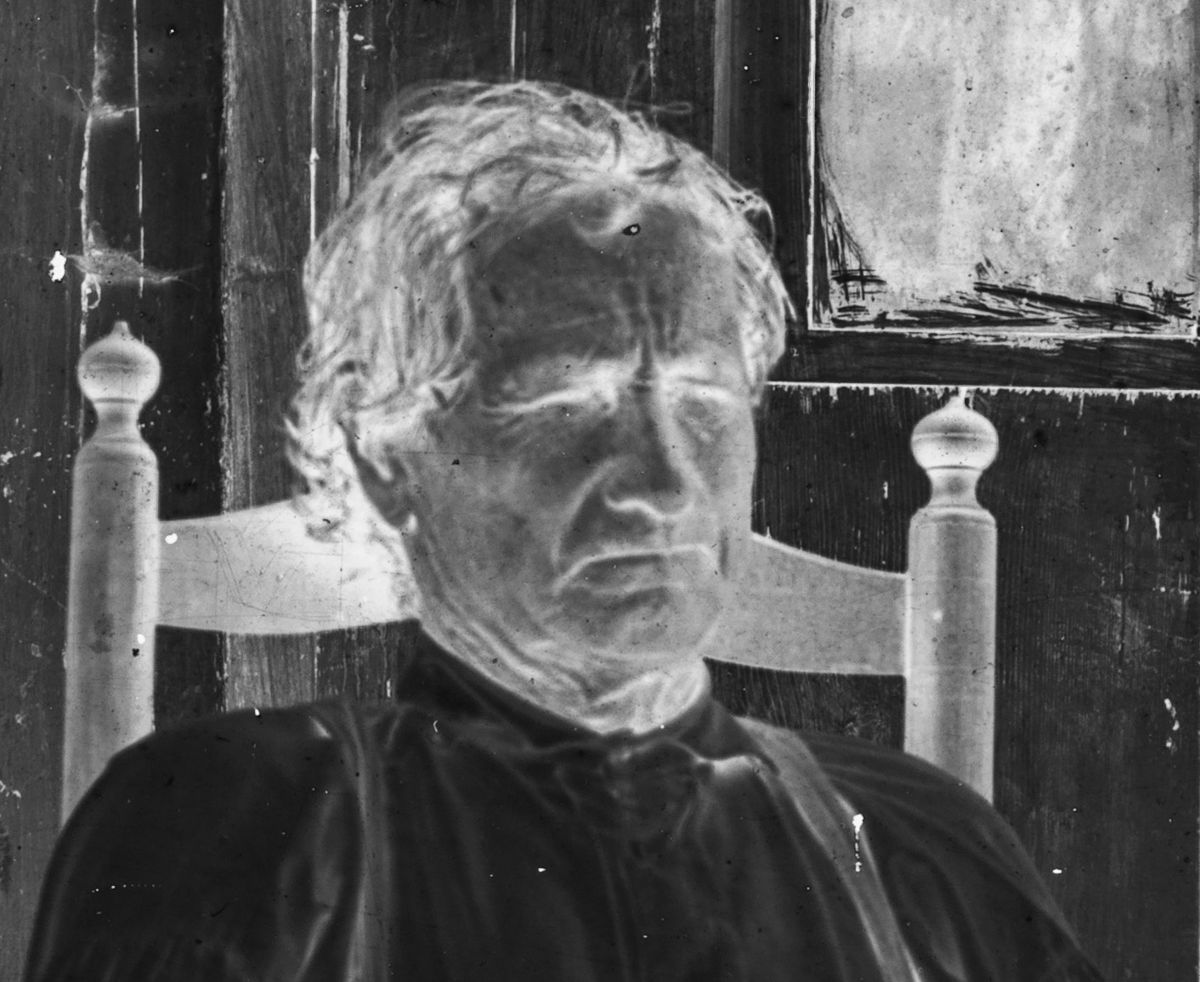
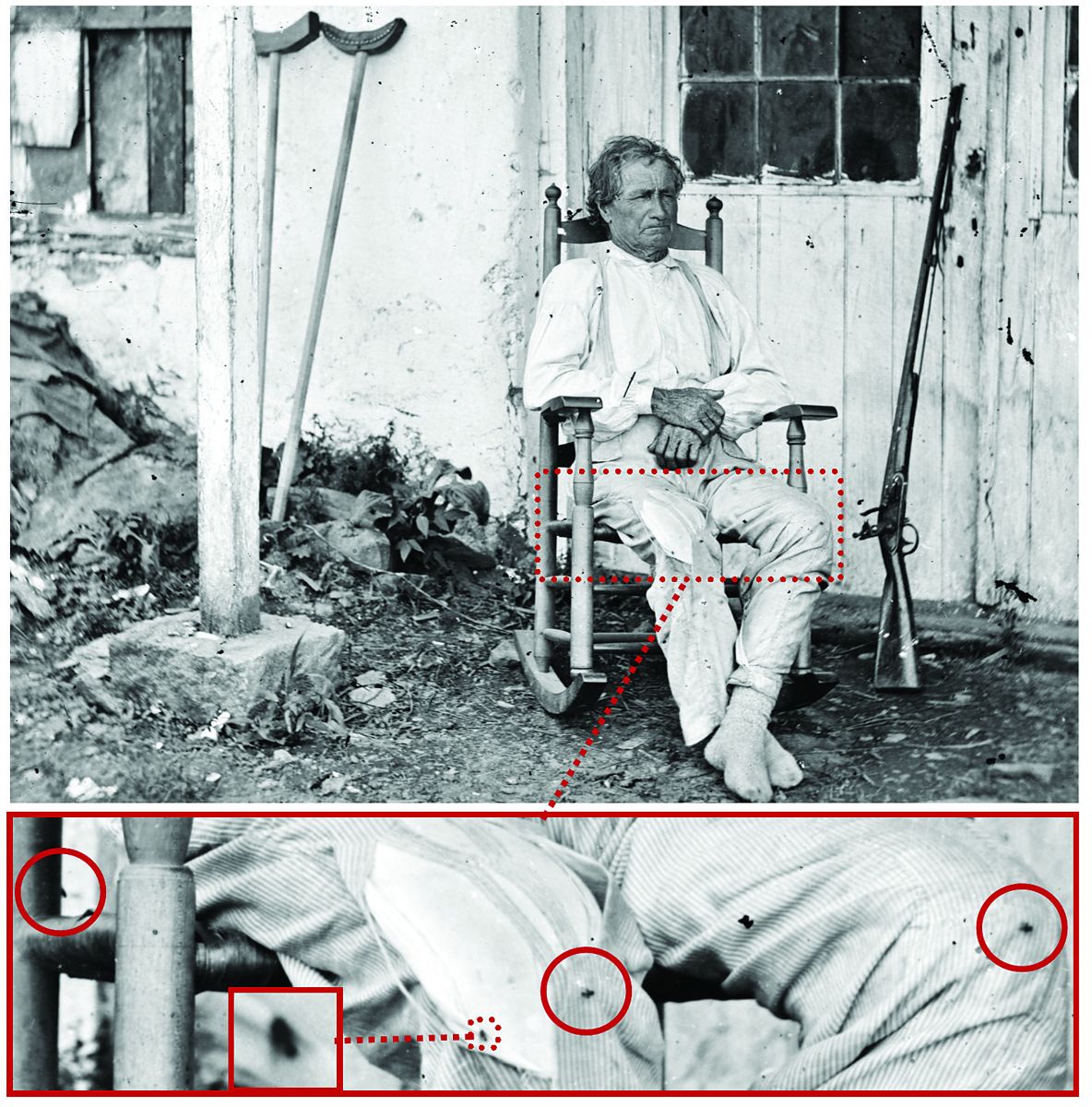
In the same series that included the Gettysburg panorama, Mathew Brady’s crew recorded photos on the First Day’s Battlefield, at Lee’s Headquarters, of three Confederate prisoners and at least three views of John Burns and his house on Chambersburg Street, including that shown here. We see the grizzled old warrior just weeks after he sustained battle wounds just a mile from his house. Others were not so lucky as to be simply wounded and the thousands of decaying corpses and horse carcasses created a fertile breeding ground for flies, which were said to have covered everything in Gettysburg, even weeks after the battle. Using the high-resolution scans of the original glass plates, photo historians John Richter and Steve Woolf spotted the four flies that had landed and stayed long enough on Burns’ knees and chair to appear in the several-second exposure. The flies do not appear in the other close-up photo of Burns taken in the same sitting.
The extremely high-resolution scenes captured on the Civil War’s large glass plates exceed that of even today’s best digital cameras and the cool details you can detect are not merely curios – they can actually help teach us about the Battle of Gettysburg, the Gettysburg Battlefield, the Civil War and American history.
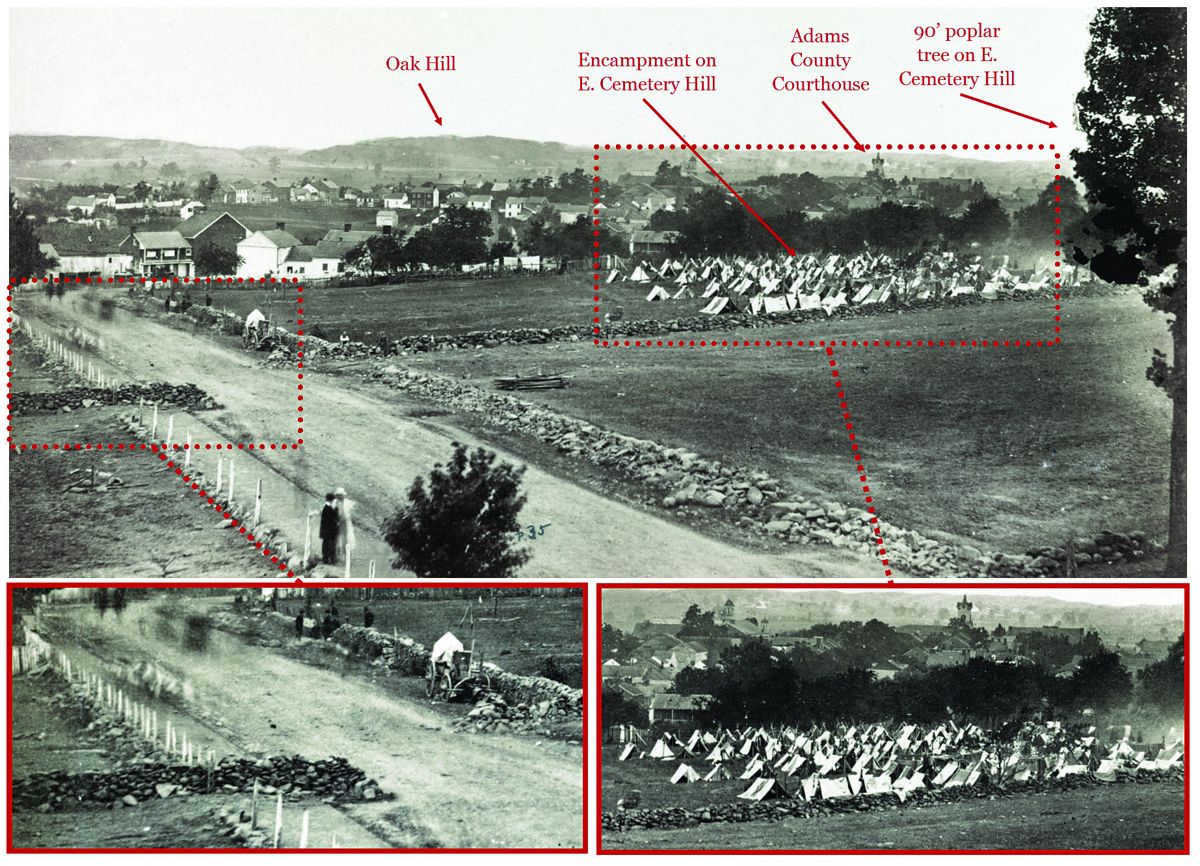
You can, for instance, start with one photo and not only zoom in, but connect the details within with other photos, and glean details from those! For the past 15 years, since high-resolution scans of the original negatives went online at the Library of Congress, members of the Center for Civil War Photography have been exploring the depths of the war’s documentary photos, discovering countless exciting mini-scenes and details from the photos that expand our knowledge about the conflict.” Here are just a few of the scores of 1863 photos you can explore, but you can do it yourself by downloading some of the 10,000 high-resolution photos available at www.loc.gov/ pictures/collection/civilwar. Just enter whatever battle or person interests you in the search field and download what you’d like. Garry Adelman is director of history and education at the Civil War Trust and vice president of the Center for Civil War Photography.
Right: John Lawrence Burns, a veteran of the War of 1812, was a 69-year-old civilian who fought with the Union Army at the Battle of Gettysburg. He was wounded, but survived the battle. (Library of Congress)
(Library of Congress)
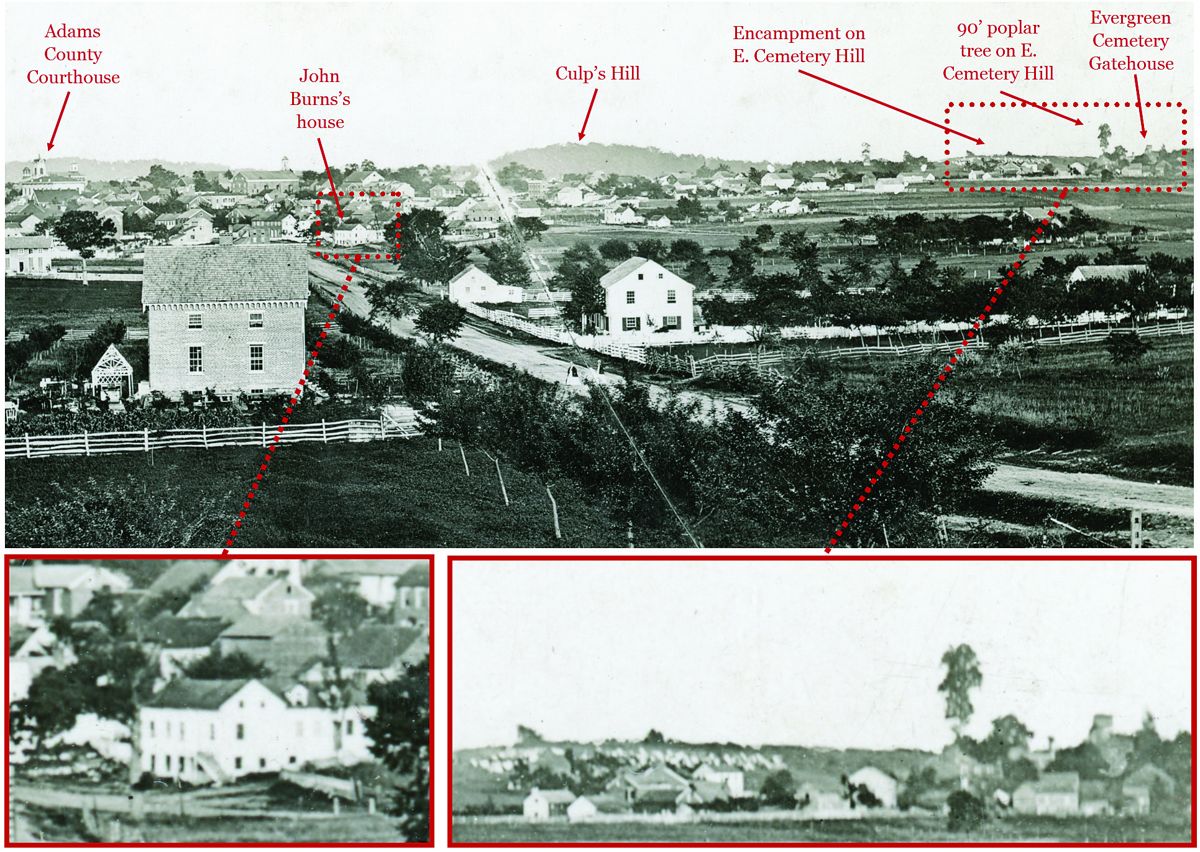
Left: The photo at top is just one portion of a two-plate panoramic photo taken by Mathew Brady’s crew in mid-July 1863. It provides a beautiful view of the town from Seminary Ridge as it appeared during the battle and also shows the very routes of retreat of the Union First Corps from Seminary Ridge southeast toward Cemetery Hill. I have denoted just some of the visible features as described by photo historian William A. Frassanito, which help to link and pinpoint the locations of other photos recorded that month, year, decade, and beyond. See the close-up details of the house of John Burns – known as the Hero of Gettysburg for aiding in the Union defense of McPherson’s Ridge on July 1 – and of East Cemetery Hill, scene of heavy fighting on July 2 and Gettysburg’s most iconic Civil War-era structure, the Evergreen Cemetery Gatehouse. (National Archives)