Meade Made A Name For Himself At Gettysburg
By Joan Wenner, J.D. · Originally published July 2016 · p. 43
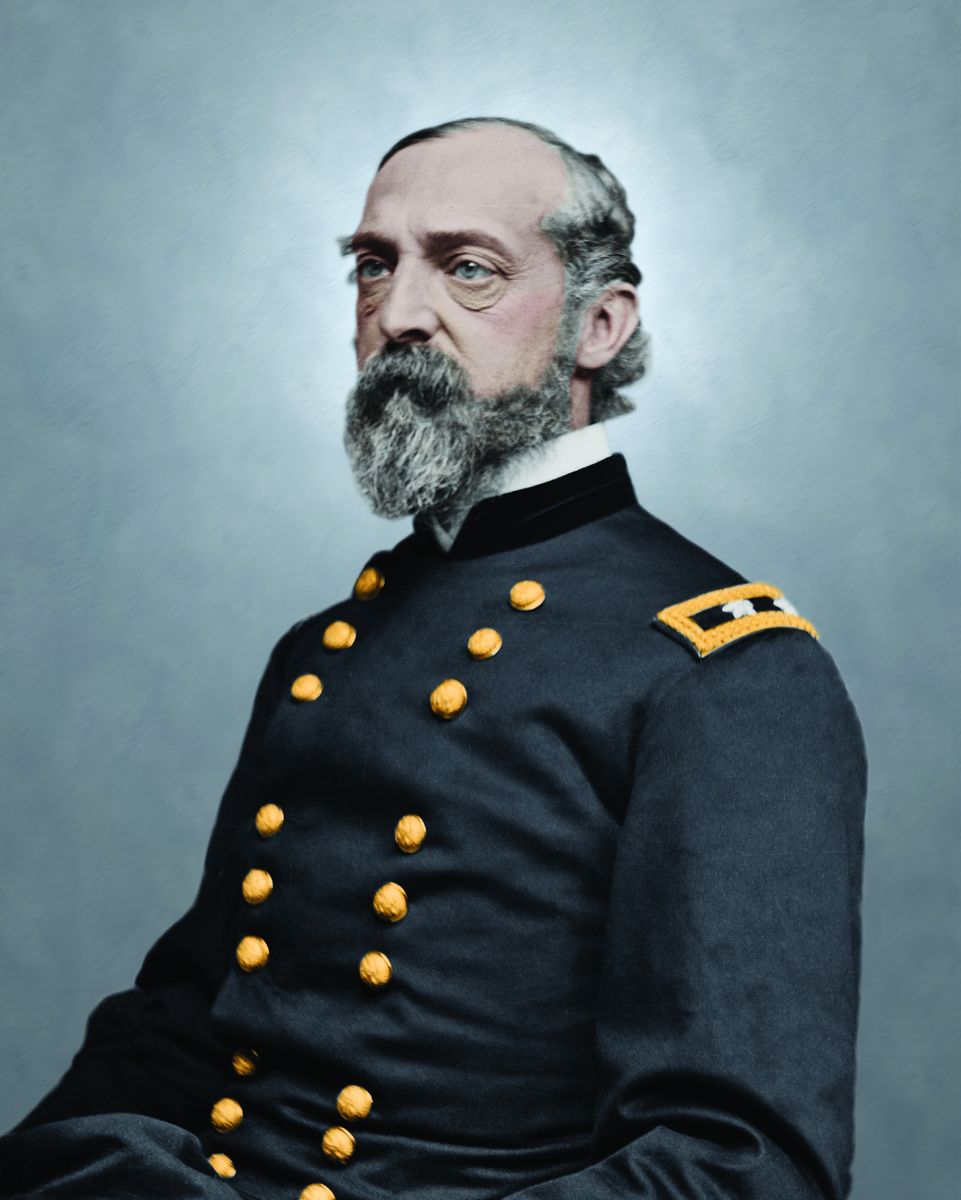
Confederate Gen. Robert E. Lee invaded Pennsylvania at the end of June 1863, soon after his “great victory” at Chancellorsville, Va. The Richmond Daily Dispatch of May 6, 1863, reported Lee’s brief message “so glorious for Southern valor” that the enemy “was dislodged from all his positions…and driven back towards the Rappahannock” was in keeping with the “distinguished military leader whose modesty is equal to his merits unless the triumph was of a character to make the announcement most scrupulously and religiously true to the letter.” Lee’s Pennsylvania target had been the state Capitol at Harrisburg. Historians say he could not have guessed the significance of his stop in Gettysburg say historians. Earlier in the Spring of 1862, Union Gen. Ulysses S. Grant had told George Gordon Meade that “Wherever Lee went Meade would go also.” Hooker resigned from command of the Army of the Potomac and on the morning of June 28, 1863, Lincoln appointed Meade to assume command of the Army of the Potomac as Hooker’s replacement. He would soon be where Lee arrived. This appointment was only days before the battle at Gettysburg. When Lee learned of the appointment, fully understanding the competency of Meade, he was said to remark, “He will commit no blunder on my front, and if I make any he will make haste to take advantage of it.” Meade justified caution regarding Lee’s movements after the battle as concern for the weary Union troops, huge logistical problems as well as the many killed, wounded and missing especially among his officers. He repeatedly told his staff, a senior aide recalled, “I’m not Napoleon.” When the two Generals clashed, Meade had 92,000 soldiers under his command and would prevail amid a horrific “frenzy of smoke, yells and exploding shell.” Though at times maligned, the Union’s ‘Hero of Gettysburg’ had the ability to accomplish results for the North when it mattered most is what he left as his legacy. Even a harsh critic, William Swinton of the New York Times, wrote long after the war that Meade “in his judgment was singularly the one who truly earned the fame he had achieved.” Learn about Meade by contacting the General Meade Society, PO Box 45556, Philadelphia, Pa. 19149. Visit its website at www.generalmeadesociety.org The State Museum of Pennsylvania, a flagship destination along the Pennsylvania Trails of History, has Civil War exhibitions that include artifacts and works of art that commemorate the Battle of Gettysburg and Pickett’s Charge and much more. They are located at 300 North St., Harrisburg, Pa.. See also their website at www.statemuseumpa.org and a magazine published by the Pennsylvania Historical and Museum Commission by visiting www.paheritage.org