
Civil War Trust – Battlefield Restoration at Lee’s Headquarters
Originally published July 2016 · pp. 36–37
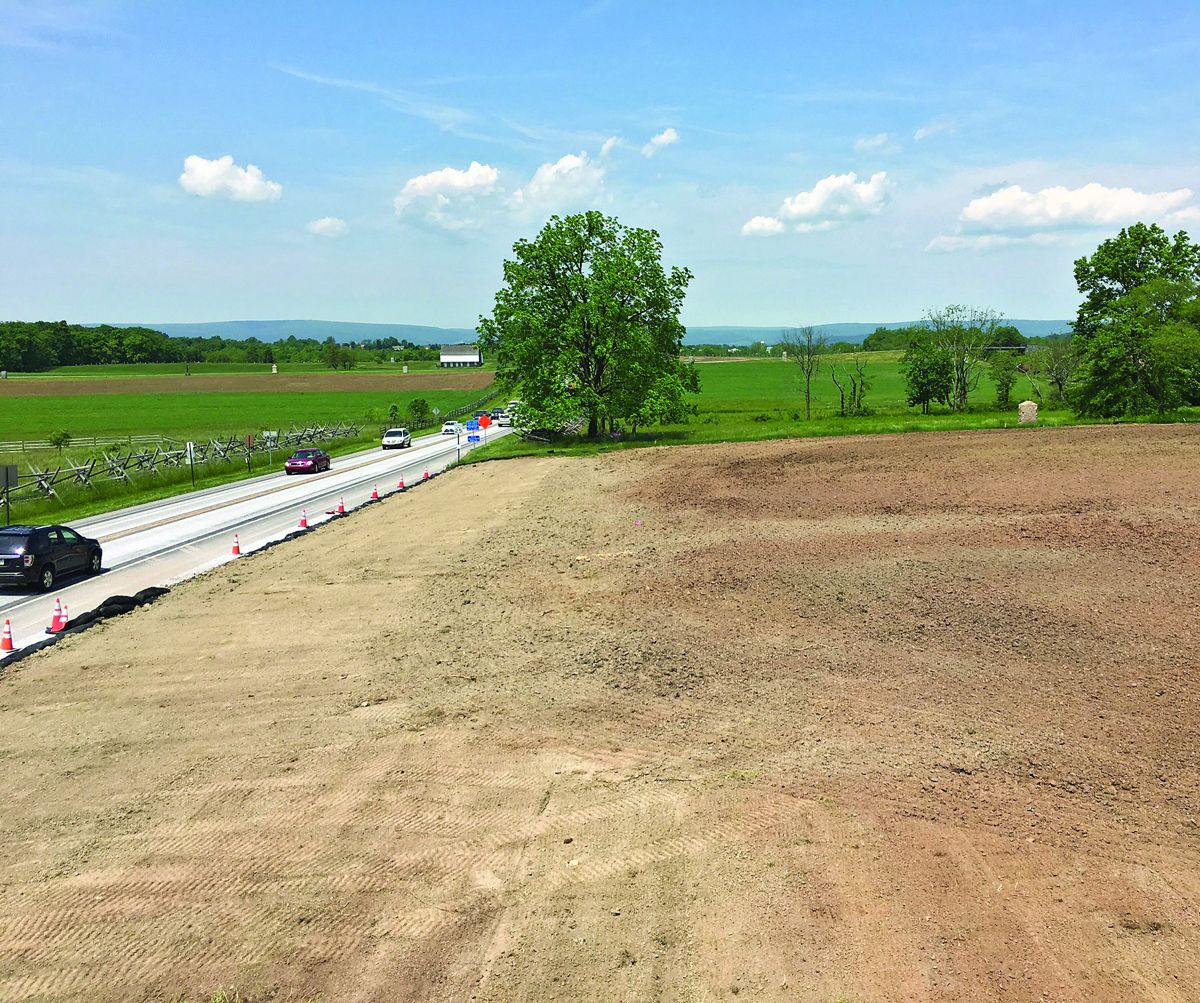
Civil War Trust – Battlefield Restoration at Lee’s Headquarters The Civil War Trust moves forward with its restoration of a key portion of the Gettysburg Battlefield known as General Lee’s headquarters For decades, the site of Confederate General Robert E. Lee’s headquarters at Gettysburg was a sort of lost attraction, outside the boundary of Gettysburg National Military Park and surrounded by hotels and restaurants. Yet the one-and-a-half story Mary Thompson house and the 4-acre surrounding plot was central to the three-day battle in July 1863. With the help of thousands of members and supporters, the Civil War Trust acquired the site in 2014 with the intent to restore the property to it wartime appearance and craft a new interpretive experience. Nearly two years later, the Lee’s Headquarters site looks more like 1863 than it has in a century. The house and property have a historic pedigree that precedes the Civil War. Built in 1833, the Mary
(Library of Congress)
Thompson house is situated just northwest of town on Seminary Ridge. At the time of the battle, it was occupied by Mary Thompson, a 70-year-old widow, though the property’s co-owner is more notable: radical Republican Congressman Thaddeus Stevens. On July 1, 1863, Mary Thompson found her house and property in the epicenter of fierce fighting between Confederate and Union forces. As Union troops retreated from McPherson Ridge to the west, they formed a new defensive line on Seminary Ridge. Guns of Battery B, 4th U.S. Artillery occupied the area around the Thompson house with Pennsylvania and Wisconsin regiments to the north, south and rear. The cannons, smoothbore 12-pounder Napoleons under the command of Lieutenant James Stewart, rained canister on North Carolina regiments under General Alfred Scales as they advanced toward the Union lines.
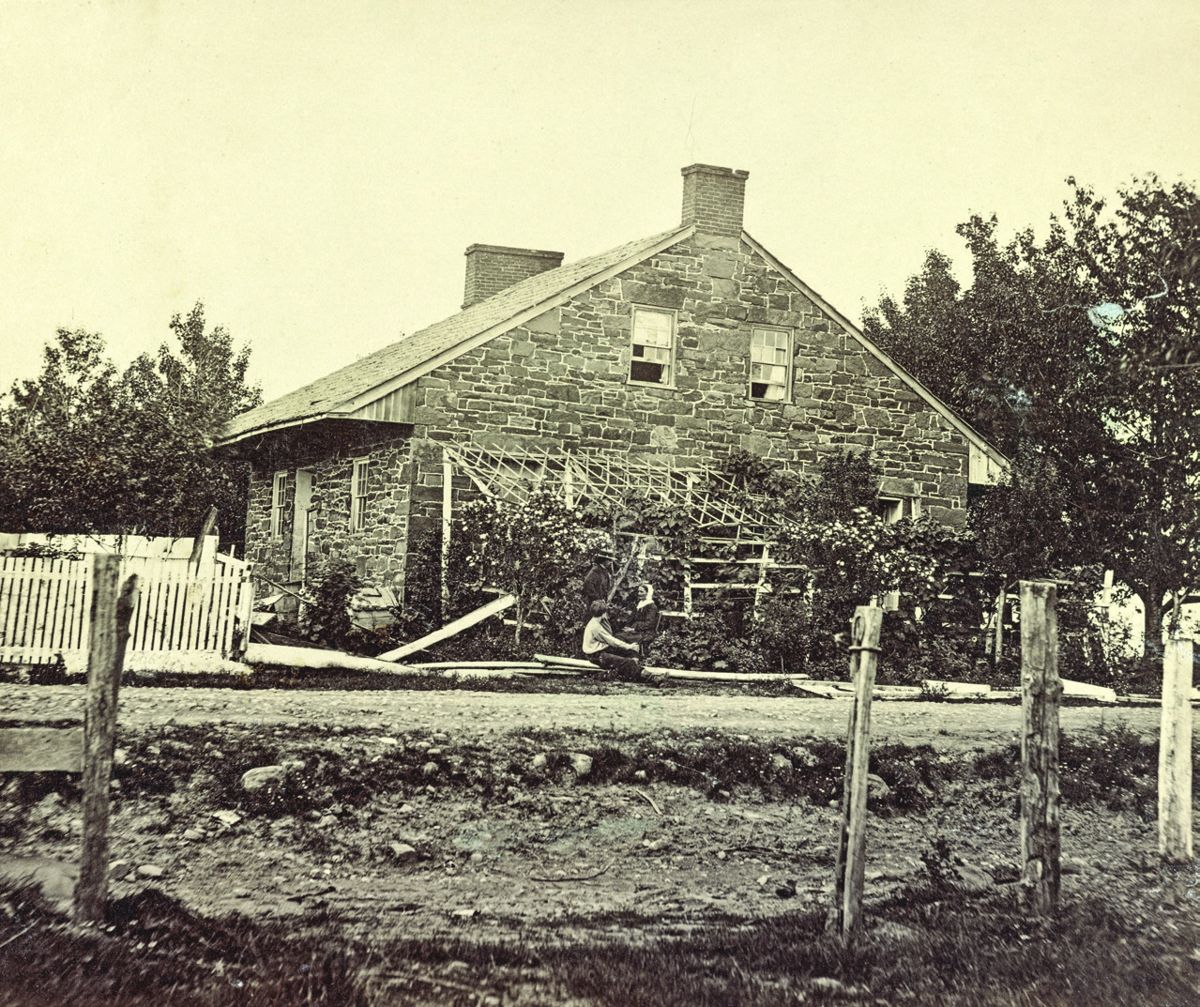
The guns were ruthlessly effective; the 13th North Carolina alone lost more than half of its men. Green troops of the 143rd Pennsylvania, part of Colonel Roy Stone’s 2nd Brigade, also made a stand “at the old stone house.” As Union positions to the left and right of the property buckled under bloody combat, the Pennsylvanians held firm for a time. The position around Mary Thompson’s house was the last to fall before a general Union retreat through the town to high ground on Cemetery Hill. Even as the fighting raged, General Lee’s staff selected the Thompson house as the Confederate chieftain’s command post. Soon Lee’s sprawling headquarters complex dominated the ground around the stone house. Confederate guns also unlimbered just east of the house, taking advantage of its height and central location. Throughout the rest of the battle the Thompson house and the tents around it served as the headquarters of the Army of Northern Virginia. Lee is known to have used the house and the grounds around it to direct Confederate efforts during the battle. All of the early maps denote the Thompson house as General Lee’s Headquarters. Mary Thompson’s own role throughout the battle is also noteworthy. Although she sympathized with the Union, she responded to the crisis unfolding literally all around her by offering her home as a hospital to wounded Union and Confederate soldiers after the fighting of July 1. Using her clothes and bedding as bandages, she cared for the wounded and wrapped the dead in her carpets. Her own sacrifice may have saved many men from needless death. In the aftermath of the battle, relatives of the wounded and fallen poured into Gettysburg after the battle, along with visitors curious to see the sites associated with the titanic conflict. The Thompson house was a particular draw for these early tourists. Thompson did not particularly enjoy the home’s newfound fame, but lived in the house for most of the time until her death in 1873. The home has a varied post-war history. A fire consumed its contents in 1896, but the stone structure was undamaged. In 1907, its proprietor, Emma Feister, was arrested for running a “bawdy house.” Later stories claimed the house was not the site of Lee’s Headquarters at all, and a marker still stands across the Lincoln Highway claiming that distinction. Tourism associated with the battle made it a popular visitor attraction. The house became the General Lee’s Headquarters Museum in 1921, with cottages and a hotel later built on the adjoining property. In July 2014, the Civil War Trust publicly announced an ambitious fundraising campaign to acquire the site for $5.5 million, and the Trust’s members and supporters from coast to coast responded with generosity and enthusiasm. Their donations were matched with financial support from the American Battlefield Protection Program, corporate donors such as FedEx, and other leadership gifts including a commitment to cover the cost of the property’s restoration made by John and Bobbie Nau of Houston, Texas. With the home and surrounding grounds under the stewardship of the Civil War Trust, the site and house will be faithfully restored to their wartime appearance. Partnerships with the National Park Service, Pennsylvania Historical and Museum Commission, the Gettysburg Foundation and local officials will help guide the restoration process. As of spring 2016, the Trust has secured permits and completed asbestos abatement. All of the modern structures adjacent to the property have been removed, including a restaurant, the 1960s-era hotel and its swimming pool, and a putting green. Restoration has begun on the Thompson house itself. With the help of contemporary accounts, period photography, and early maps, we can reconstruct the house’s roof, fences that adorned the property, and rebuild the period porch. The postwar dormers will also be removed. The Trust and the Journey Through
5G Hallowed Ground Partnership will replant the historic orchard that existed on the property. By the fall of 2016 the Civil War Trust aims to complete and open to the public a new interpretive loop trail that will tell the story of the battle, the role of the property as Lee’s Headquarters, and the fascinating postwar history of the site. The restoration of the house, apple orchard, period fencing, and original landscape grade will add a serenity that belies the ferocity of the battle and the momentous decisions made during the Civil War’s bloodiest battle. For updates on the Lee’s Headquarters restoration project, visit Civilwar.org/LeesHQ.