
Andersonville Revisited: Encountering Fact And Fiction In Popular Culture
By Hank Segars · Originally published July 2016 · pp. 40–41
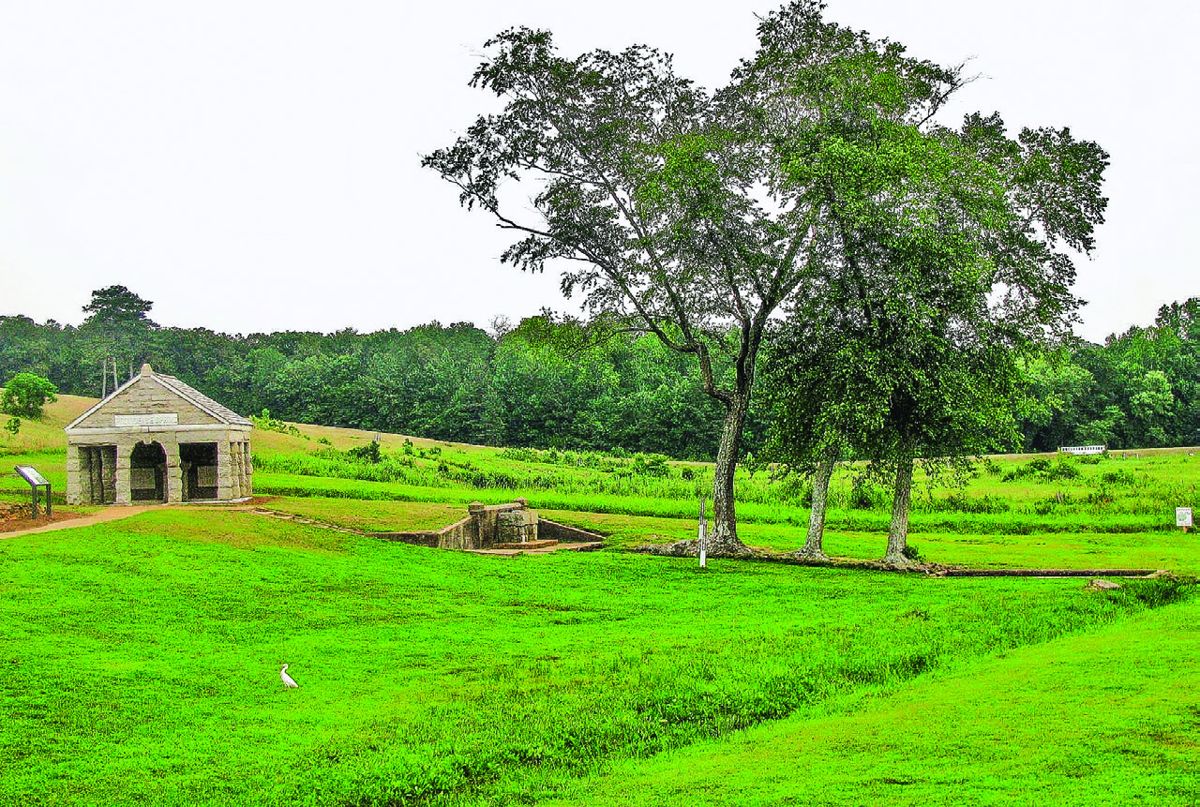
Most travelers have heard of Andersonville, but few seem to understand the full story of the Civil War POW camp. The breadth of knowledge about this historic site, situated on Georgia Highway 49 near Americus in Sumter County, Georgia, could be summed up in a simple statement: Andersonville was a dreadful place where thousands of Union prisoners died. While this fact is well known, as one of our greatest national tragedies there’s more to the story … much more.
Andersonville The Southern Perspective. Edited by J. H. Segars. Book cover of wartime image of Captain Henry Wirz. The very name of Andersonville brings to mind a place of infamy where thousands of emaciated captives lived and died in pitiful, inhuman conditions. Yet, beyond this, little else seems to be remembered: The collective memory of the nation has grown dim, almost to the point of amnesia. For Southerners it appears that a national jury once convened, intently listened to the prosecution, and quickly announced a verdict of guilty—all on the testimony of questionable witnesses and without viewing the full scope of evidence. This terrible chapter of American history had been opened and shut, all in one swift motion. Many of the details about the camp are largely forgotten; even the official name of the prison—Camp
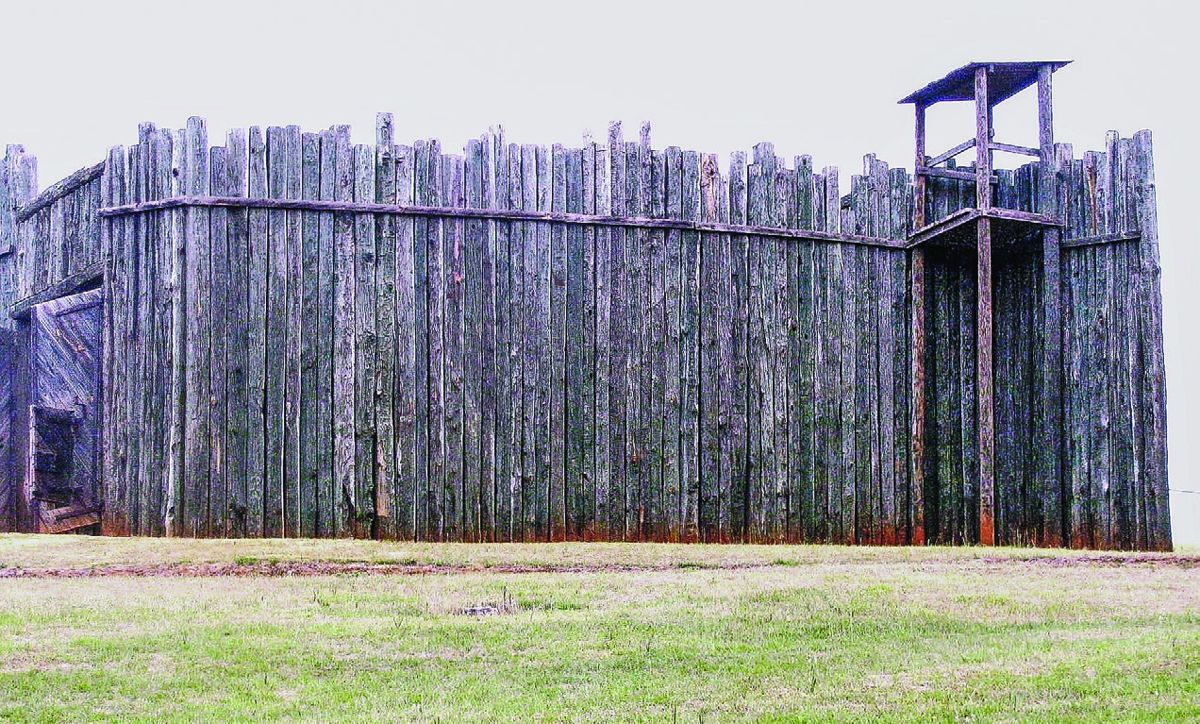
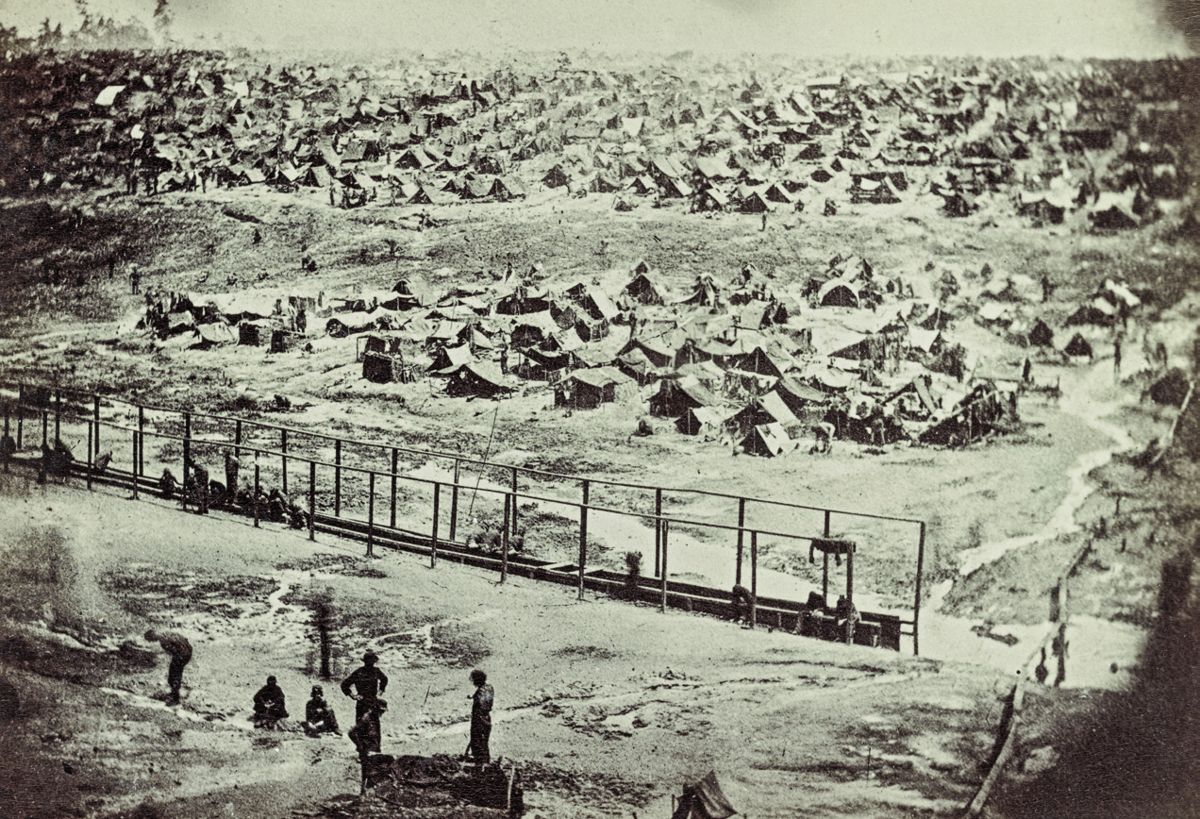
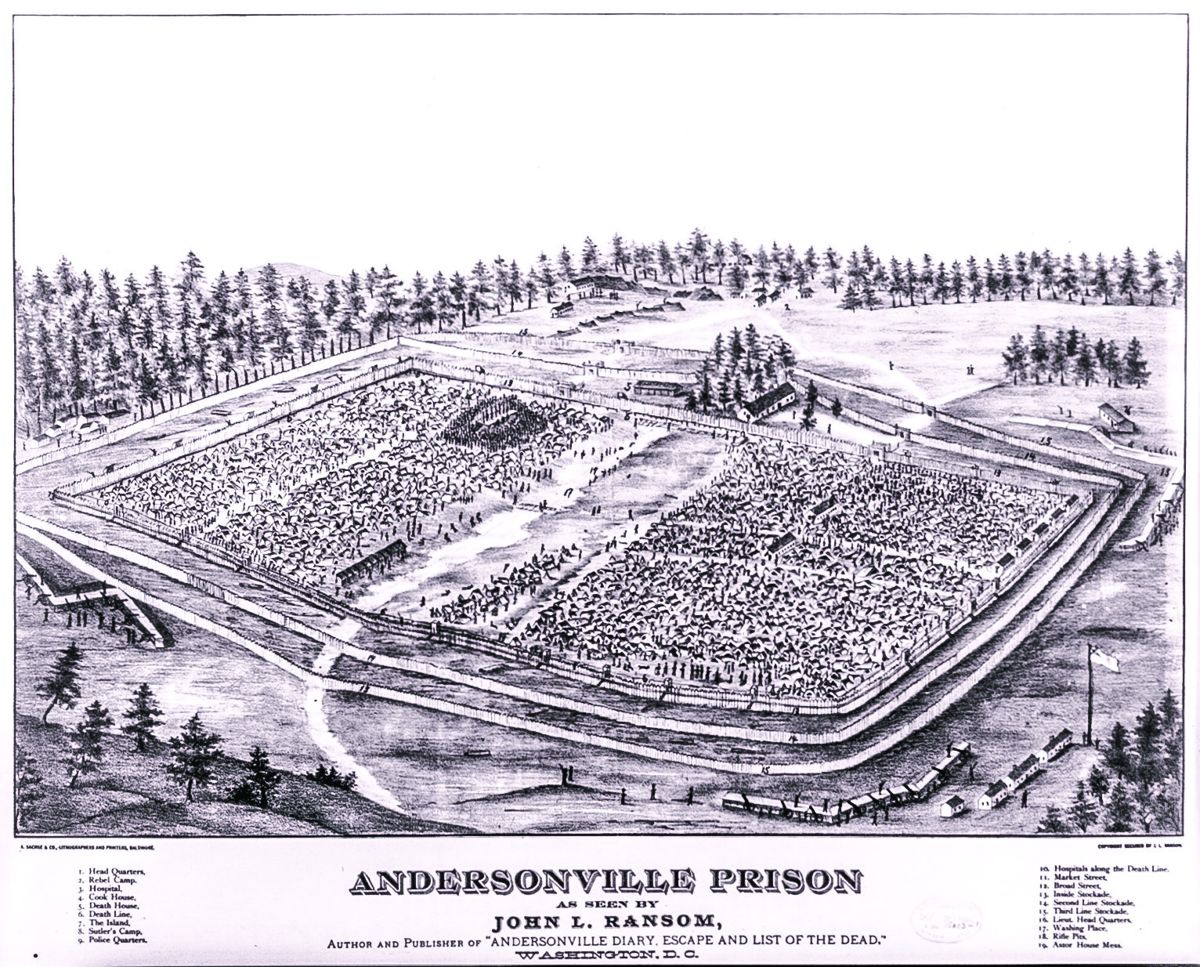
Sumter—is no longer recalled. This site in southwest Georgia, along with other locations in the lower South, was chosen by Confederate officials to relieve the crowded facilities in and around Richmond, Virginia. The idea was to move prisoners away from the threat of Union cavalry raids and near openly accessible rail lines. Warmer climes would be beneficial to captives and guards alike; and by relying on crops grown locally, hard-pressed military commissaries could be spared the additional burden of feeding captured Union soldiers. It also seemed logical that the Confederate government wanted to construct stockades in areas where natural resources were in abundance, especially timber for firewood and shelter, and clear running streams for sanitation and food preparation. Consequently, the site selected at the tiny railroad crossing near Americus seemed ideal for holding Yankee prisoners until they could be exchanged. But, then again, things don’t always work out as planned— especially during times of war and when dealing with governmental officials. Andersonville prison was open for only fourteen months from February, 1964, to late spring of 1865 and the death rate was high: 12,912 Union prisoners and an estimated 250 Confederate guards perished. Over 45,000 captives passed through the gates of the POW camp, and many soldiers were already in a weakened condition upon arrival. The 26 ½ acre open stockade was designed to hold no more than 8,000 to 10,000 men; yet, in August of 1864, the inmate population swelled to 32,000 as the death rate continued to climb. The most frequently mentioned reasons for deaths were the scarcity of food and contaminated drinking water; inadequate shelter and lack of sewage control; the absence of essential medicines and the constant outbreak of diseases; and, the overall stress of living in crowded, life-threatening conditions. All of this, of course, a recipe for disaster. Although other Civil War prisoner-of-war camps were guilty of similar living conditions and high death rates, Andersonville is the name that
(Library of Congress)
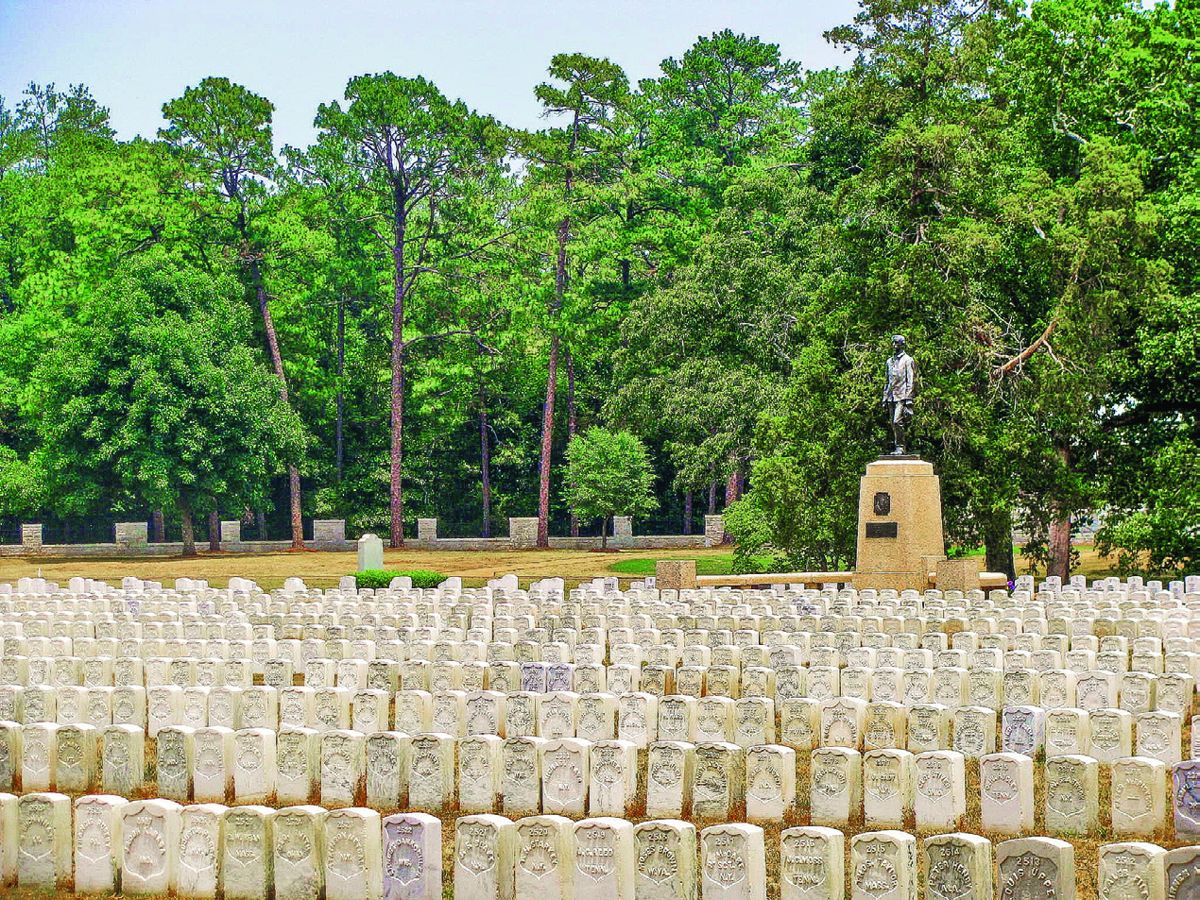
remains infamous in our nation’s memory. And there is good reason for this: No other Civil War POW camp received as much sustained, negative publicity. “Even before the war ended, the Northern Press had started publishing sensational stories on the horrors of Andersonville,” writes Peggy Sheppard, a transplanted New Yorker and local resident since 1946 in her popular book entitled Andersonville, Georgia, USA. The U.S. War Department stoked the flames of anger after the war by circulating photographs of emaciated prisoners which were reprinted over and over again. Harper’s Weekly and other Northern publications printed critical articles and inflammatory illustrations which produced the same effect. People became aroused and historical fact began to break down into mythology, fiction, or legend. Public opinion began to take shape and, ultimately, after a hundred years of Northern interpretation, Federal orthodoxy became the official explanation for all that happened at Andersonville. American history books—the majority being edited and published above the Mason-Dixon Line—had little need to include Southern interpretations; thus, the war of words over Andersonville be- (Hank Segars) uments located within the site.” Thousands of closely aligned headstones gleam ivory white in the bright Georgia sunshine; sprinkled throughout are impressive state monuments portraying mythic imagery, grieving goddesses, and emotive language signifying Honor, Peace, and Tranquility. A narrow roadway brings visitors through a piney forest into an open panorama where the prison camp once stood. came just another Southern defeat. The negative portrayals of Andersonville never subsided and became a part of popular culture, continuing well into the twentieth century and beyond. Today, visitors to the Andersonville National Historic Site will encounter lovely scenery in total contrast to those dismal days of 1864 and 1865 when the POW camp was operational. Located only twelve miles northeast of Americus, a serene pastoral setting has replaced the scarred landscape where once stood the stench-smelling stockade bounded by the rough-hewn timbers that held too many desperate and dirty men. The National Park Service maintains 515 acres of beautiful, manicured grounds with a stated mission to “provide an understanding of the overall prisoner of war story of the Civil War, and to interpret the role of prisoner-of-war camps in history, to commemorate the sacrifice of Americans who lost their lives in such camps and to preserve the mon-
(Hank Segars)
The stockade and deadline are now outlined by governmental markers and, in the distance, gentle hillsides descend into the little branch that once held unfathomable amounts of disease-causing filth and human excrement. Also visible are Providence Spring and some of the Confederate earthworks, escape tunnels, and surviving well pits. For those intent on discovering the true story of Andersonville, the search is not always easy. This historical topic is submerged beneath years of sensational reporting, strong sectional feelings, and a lack of objective research. The basic understanding of the general public seems to be derived from the imagination of writers of historical fiction and, in particular, from MacKinlay Kantor’s Pulitzer Prize-winning novel Andersonville (New York, 1955). Also, the 1996 televised (TNT) broadcast of the movie Andersonville presented the story to millions of Americans with a noticeable bias and questionable interpretations, especially in the characterization of Captain Wirz. The debate about the treatment of Civil War prisoners had begun with the old veterans and members of the United Daughters of the Confederacy and the Women’s Relief Corps of the Grand Army of the Republic. Each side made charges against their captors of gross mismanagement, intentional neglect, and purposeful cruelty. Former prisoners published detailed narratives about their tribulations in POW camps, and, understandably, many were bitter and partisan. There remains a shortage of contemporary studies about Civil War POW camps, especially those operating in the North. William Marvel’s Andersonville: The Last Depot, published in 1994, remains one of the best and most recent. Ironically, some of the best accounts that substantiate Southern perspectives were penned by former Union prisoners to include John L. Ransom’s Andersonville Diary (The Author, 1881); John Maile’s Prison Life in Andersonville (Los Angeles, 1912); and James Madison Page’s The True Story of Andersonville (New York, 1908). Kate Cumming, a Confederate nurse, wrote a notable diary is entitled A Journal of Hospital Life in the Confederate Army of Tennessee From the Battle of Shiloh to the End of the War (Louisville, 1866). What seems to be most forgotten is the North’s adopted policy of retaliation against Confederate prisoners. This is documented in U.S. House Resolution 97 which says as preamble: “Rebel prisoners in our hands are to be subjected to a treatment finding its parallels only in the conduct of savage tribes and resulting in the death of multitudes by the slow but designed process of starvation and by mortal diseases occasioned by insufficient and unhealthy food and wanton exposure of their person to the inclemency of the weather” (Congressional Globe, 38th Congress, 2nd Session, 1/16/1865, 26726). “Though moderate senators argued against HR 97, declaring it legal murder of prisoners of war,” said Mauriel Joslyn, history professor at Georgia Military College, “it passed, and was put into effect.
(Hank Segars)
(Library of Congress)
Thousands of Southerners died in Northern prisons simply because the North chose not to provide the necessities of life.” William G. Burnett tells in his National Park Service booklet entitled The Prison Camp at Andersonville (1995) about the 17% death rate at Point Lookout, a Union prisoner-of-war camp in Maryland, and said: “The deaths came from bad management, lack of adequate supplies such as clothing, blankets, wood and food, failure to establish sanitary conditions and brutality and senseless killing by the guards (p.35).” Burnett also says that the photographs of Andersonville prisoners “were later published in Northern newspapers and used as propaganda against the South and used as evidence to help convict Captain Wirz (p.38).”
Today, misunderstandings and provocative debate in America’s popular culture about Andersonville continues. Yet, inside the park, things remain about the same. As the sun beginning to descend behind the distant Georgia pines, a lonely wind whispers gently over the land and visitors are sensing a feeling of uneasiness and reverence. For many of us, it now seems that the tears of twelve thousand sleeping prisoners have cleansed the dirty soil beneath our feet. And, of course, this place remains as hallowed ground. Hank Segars is the editor of Andersonville: The Southern Perspective (Pelican Publishing Company) and a popular speaker on Civil War topics. The author can be contacted via e-mail: [email protected].