
An Army On The Move: Robert E. Lee & His Confederates In June, 1863
By Dr. Allen C. Guelzo · Originally published July 2016 · pp. 50–51
“We are on the move…to Maryland and Pennsylvania,” wrote Jerome Yates, a soldier in the 16th Mississippi on June 17th, 1863, and “I am in hopes that we will gorge Lincoln with his own blood and put an end to the war.” Or if not gorging Lincoln, then “it is my honest wish that my rifle may draw tears from many a Northern mother or sighs from many a father.” Not everyone among his fellow-soldiers of the Army of Northern Virginia nursed quite the same bloodthirsty intentions. But in that summer of 1863, Confederate soldiers like Yates had every reason to expect that they were on a campaign which would bring the Civil War to an end by bringing its costs directly to Northern homes, Northern politicians and the principal Northern army, the Army of the Potomac.1 Clearly, all the political balances in the North seemed to be dipping in favor of a negotiated peace. The previous September, President Lincoln’s Emancipation Proclamation had been met with something less than enthusiasm. “While commendation in newspapers and by distinguished individuals is all that a vain man could wish, the stocks have declined, and troops come forward more slowly than ever,” Lincoln admitted to vice-president Hannibal Hamlin. “This, looked soberly in the face, is not very satisfactory.”2 In the off-year elections that fall, Lincoln’s party had lost over thirty seats in the House of Representatives because of the Proclamation, and seen two key Northern governorships fall into the hands of rabidly anti-war Democrats, Horatio Seymour in New York, and Joel Parker in New Jersey. Coming up over the horizon in 1863 were two more key governors’ elections, in Pennsylvania and Ohio. If those states were lost to anti-war Democrats, then that solid block of hostile governors and legislatures could demand that Lincoln open negotiations with the South. “I fear our country is on the verge of anarchy and despotism,” wailed John A. Geary, a division commander in the
Army of the Potomac’s 12th Corps, “God save us individually and our country from the treason which surrounds us on every hand.”3 The fragility of the Union’s politics was appreciated by no one more keenly than by the Army of Northern Virginia’s commander, Robert E. Lee. “We should neglect no honorable means of dividing and weakening our enemies,” he wrote to Jefferson Davis on June 10th, and for Lee, the most direct way to weaken and divide the North was to strike into Pennsylvania. Invading the Quaker State would paralyze the political hand of Lincoln’s Republicans still further, and “give all the encouragement we can…to the rising peace party of the North.” True, the “peace party” imagined that it was merely promoting peaceful reunion of the country, not Confederate independence. But Lee did not care. Once peace talks began, nobody would be eager to go back to war, and the result would, by default, be “a distinct and independent national existence” for the Confederacy.4 Lee’s soldiers were even more contemptuous of Northern political stamina. Southerners had no respect for what Stephen Dodson Ramseur, a division commander in the Army of Northern Virginia, called the “cold distrust and mean deceit, which is inborn with the Yankees.” A Catholic chaplain with the 14th Louisiana was “sensibly struck” by how Northerners had “none of that grace of manners, high-toned sentiment, or intellectual culture that you find in old Virginia.” David Johnston of the 7th Virginia regarded “Mr. Lincoln” as “a very homely, ugly man…not at all prepossessing…the ‘Illinois Ape.’” Johnston rejoiced that he “lived in the South, among a southern people in thought, feeling and sentiment.” Another Virginian, William Henry Morgan, admitted that his fellows of the 11th Virginia were “quite green and inexperienced in military affairs generally.” But unlike their opponents, they were “as brave and faithful soldiers as any…always ready to their duty, to go wherever ordered; standing firm in action.”5
This was an army that was not shy about understanding its mission as the defense of black slavery. Slavery, said Dodson Ramseur, is “the very source of our existence, the greatest blessing both for master and slave, that could have been bestowed upon us.” More than one in ten soldiers in the Army of Northern Virginia actually owned slaves. And if we remember that three-quarters of the army were young, single men who were not yet old enough to have acquired substantial property and that we might better base our calculations on whether they came from slave-owning households, then the number of those with personal involvement in slave-owning rises to nearly 40%, and the percentage among the officers rises to fully half.6 Nor did the Army of Northern Virginia show much sign of the war being a ‘rich man’s war but a poor man’s fight.’ Of the 1,900 men who served in the 9th Virginia during the war, 205 were farmers, 56 were carpenters, 18 were house-painters, and 30 were “mechanics.” But the 9th also listed on its rolls 20 merchants, 7 professors, 6 doctors, 5 lawyers, an editor, an accountant and a piano maker. The 19th Virginia, recruited mostly from Albemarle County, listed the usual farmers (299 of them) and forty laborers, but also 38 clerks, 8 lawyers, an “ambrotypist,” a dentist, a distiller, a well-digger, and a carriage-maker. Four of the company commanders were farmers, two were lawyers, one was a teacher and one was a merchant. One lieutenant, John L. Cochran, was wealthy enough to bring along his own slave.7 A military observer from the imperial Austrian army was surprised to find that Col. James B. Walton’s Washington Artillery was, “every member of it,” a “gentleman of property and position,” while Walton himself was “a wealthy merchant” who “had cheerfully sacrificed all his worldly advantages…preferring the hardships of camp life and ‘the cause,’ to luxury and ease at home under Yankee tyranny.” The Army of Northern Virginia “was the most enthusiastic and irresistible fighting machine on the face of the earth,”
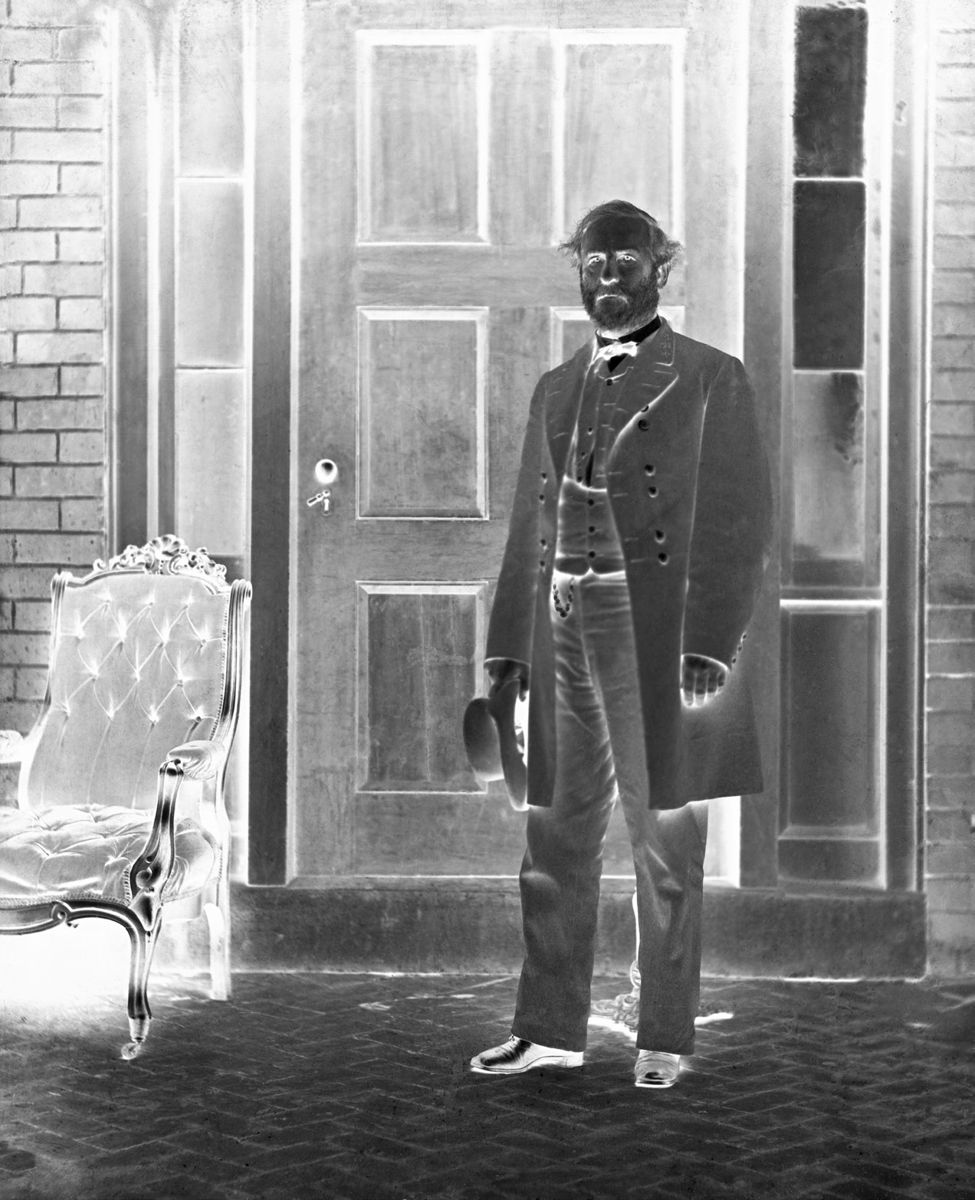
(Library of Congress)
remembered a captain in the 1st Texas, “thoroughly trained and inured to every hardship and danger, yet full of patriotism and enthusiastic life and vigor.” Even Robert E. Lee, a man not inclined to boasting, was happy to affirm that “there never were such men in an army before. They will go anywhere and do anything…”8 The Army of Northern Virginia returned the compliment by boasting of Lee. “Oh!” wrote Lee’s adjutant, Walter H. Taylor, “he’s a trump, a soldier, gentleman & above all a Christian.” And successful: Lee had saved Richmond from capture in the spring of 1862, won overwhelming victories at Manassas, Fredericksburg and Chancellorsville, and staved off defeat at Antietam against overwhelming odds. Lee and his army had “performed the most brilliant and daring feats of Generalship and soldiership ever performed,” wrote William Dorsey Pender.9 Lee’s opponents joined the chorus, one federal officer telling a captain in the 1st Tennessee that “Robert E. Lee combines the organizing capacity of a Marlborough, the intuition of a Turenne, the celerity of a Napoleon, and the tenacity of a Wellington.” And Charles Marshall, Lee’s military secretary, never forgot the tumultuous greeting Lee received at Chancellorsville from “fierce soldiers with the faces blackened with the smoke of battle.” It was “one long, unbroken cheer…high above the roar of battle.” Marshall could only think that “it must have been from such a scene that men in ancient times rose to the dignity of gods.”10 But Lee could also be something of an enigma to those who worked closely with him. For one thing, he was not a very good communicator, especially when it came to unpleasant communications. Union General Abner Doubleday remembered Lee from “when he was a Captain of Engineers” in the old Army, and although Lee was known for being “very considerate and careful in his intercourse with his inferiors…he never seemed to convey reproof” except “in the driest manner.” In the Confederate War Department, Lee was known for being “as silent as the grave,” and limited his official communications to the “brief and jejune.”11 And not just in the War Department. George Campbell Brown, a staff officer, “frequently noticed… that Gen. Lee’s instructions to his Corps Comrs are of a very comprehensive & general description & frequently admit of several interpretations – in fact will allow them to do almost anything, provided only it be a success.” Even his nephew and biographer Fitzhugh Lee admitted that Lee’s “reluctance to oppose the wishes of others, or to order them to do anything that would be disagreeable and to which they would not consent” was a serious shortcoming. “There was but little of the stern Agamemnon in the character of Lee,” recalled John S. Mosby.12 That did not mean that Lee lacked severity, especially when subordinates failed to discern intentions he thought he had made clear. Alexander Pendleton was so coolly treated by Lee after Pendleton’s commander misread Lee’s directions that “I never felt so small in my life. I lost no time bowing myself out and riding away, firmly resolving never to hazard any inquiry or conjecture to General Lee again.” Much as he revered Lee, Walter Taylor had to admit that Lee could be aloof and unappreciative. “I never worked so hard to please any one, and with so little effect as with General Lee,” he complained, “The truth is Genl. Lee doesn’t make our time pleasant here.”13 And then there were the occasional explosions of public anger. When the Army of the Potomac managed to slip away after its catastrophe at Chancellorsville, Lee angrily pursued Dorsey Pender with the accusation, “I tell you what to do, but you don’t do it… That is what you young men always do. You allow these people to get away.” The common private might adore Lee, but those who had to work closely with him found Lee demanding, quick to blame, and slow to forgive.14 It was just as well that Lee did not admit people to his secrets because Lee harbored serious doubts that the Confederacy had much chance of success. Lee had never been an enthusiast for either secession or slavery. In the years before the war, his political profile had been meager, tending generally in the direction of the Whigs, and he had the reputation of being “a thorough emancipationist.” It was not until he was confronted with the likelihood of taking charge of a federal invasion of Virginia in 1861 that he finally decided to cast his lot with “my native State.”15 Even then, his lack of fire-eating enthusiasm was noticeable. Lee carried around within him the knowledge that the sheer weight of Northern manpower and production would, slowly but inevitably, overwhelm the Confederacy, and he felt like a Cassandra, struggling to “get our people, unaccustomed to the necessities of war, to comprehend & promptly execute the measures required for the occasion.” Even in South Carolina, the birthplace of secession, he complained that “the people do not seem to realize that there is war.” Still less did they realize that there would be no intervention by France or Britain to save them because Europeans understood the war as “a contest in which one party is contending for abstract slavery & the other against it.”16 If there were any chance for the Confederacy to succeed, it would have to hit hard and hit early, and nowhere could he hit harder or more quickly than by invading Pennsylvania. Within a week of taking command of the Army of Northern Virginia, Lee was urging Davis to abandon the idea of a defensive war and strike north across the Potomac. The Army could “in that event cross Maryland into Penn – It would call all the enemy from our Southern Coast” and “change the character of the war.”17 But Lee could never be satisfied that his exhortations to sacrifice had any effect. The Confederate Congress did not seem “to be able to do anything except eat peanuts and chew tobacco, while my army is starving.” Much as he was proud of an Army that would “go anywhere and do anything,” he railed continuously against its propensity for looting and lack of discipline. “The material of which it is composed is the best in the world,” but it sorely needed to be “properly disciplined and instructed.”18 Still, the real fault was of the Southern people in general, who did not seem to take their situation with the requisite seriousness. “Our people,” he wrote in 1862, “have not been earnest enough, have thought too much of themselves & their ease, & instead of turning out to a man, have been content to nurse themselves & their dimes, & leave the protection of themselves & families to others. …This is no way to accomplish our independence.” Without that earnestness, the war would end “just as I have expected it to end from the first,” in a Union triumph.19 Only one thing might snatch away a victory from “the most desolating war that was ever practiced” and that was “a revolution” in the North. And the best way to incite that revolution was to invade Pennsylvania, the key state linking the Union west and the Union northeast, and occupy its farms and valleys with enough impunity to demonstrate the folly of Lincoln’s war. “Our true policy is, as far as we can, so to employ our own forces as to give occupation to his at points of our selection.”20 If by one mistake or another, the Army of the Potomac straggled itself in pursuit into unsupported fragments, then Lee could turn and defeat them piecemeal, and add to the Northern political terror. The Union army would be “obliged to follow us by forced marches” and wear themselves into exhaustion and disorganization, and that might allow the Confederates to “crush them, beat them in detail, and in a few hours throw the whole army into disorder… The war will be over and we shall achieve the recognition of our independence.”21 The Army of Northern Virginia set off for Pennsylvania on June 3rd, leaving the baffled Federals chasing their dust. As the lengthy coils of Confederate infantry swayed up to the Potomac, William Seymour, a Louisianan, laughed “to see the long lines of naked men” fording the river, “their clothing and accouterments slung to their guns and carried above their heads to keep them dry.” But the laughing was replaced by cheering when Robert E. Lee rode along. “Old Gen Lee passed us yesterday morning,” John Lee Holt in the 56th Virginia wrote to his wife, “We gave the old fellow a lusty cheer & as he passed he took off his hat & saluted us & passed on & seemed as tranquil as the morning sun.” The tranquility would not last for long.22
- Jerome B. Yates to Marie Yates (June 17, 1863), in The 16th Mississippi Infantry: Civil War Letters and Reminiscences, ed. Robert G. Evans (Jackson: University Press of Mississippi, 2002), 170. 2. Lincoln to Hannibal Hamlin (September 28, 1862), in Collected Works of Abraham Lincoln, ed. R.P. Basler (New Brunswick, NJ: Rutgers University Press, 1953), 5:444. 3. Geary to Mary Geary (September 25, 1862), in A Politician Goes to War: The Civil War Letters of John White Geary, W.A. Blair, ed. (University Park, PA: Pennsylvania State University Press, 1995), 56. 4. Lee to Davis (June 10, 1863), in The Wartime Papers of Robert E. Lee, eds. Clifford Dowdey & L.H. Manarin (Boston: Little, Brown, 1961), 508-9. 5. Gary W. Gallagher, Stephen Dodson Ramseur: Lee’s Gallant General (Chapel Hill: University of North Carolina Press, 1985), 15-16; James B. Sheeran, Confederate Chaplain: A War Journal, ed. J.T. Durkin
(Milwaukee, WI: Bruce Publishing, 1960), 47; Johnston, The Story of a Confederate Boy in the Civil War (Portland, OR: Glass & Prudhomme, 1914), 3, 5-6; Morgan, Personal Reminiscences of the War of 1861-5; In camp-en bivouac-on the marchon picket-on the skirmish line-on the battlefield-and in prison (Lynchburg: J.P. Bell, 1911), 24-5. 6. Gallagher, Ramseur, 17; Joseph Glatthaar, General Lee’s Army: From Victory to Collapse (New York: Free Press, 2008), 18-22. 7. Benjamin H. Trask, 9th Virginia Infantry (Lynchburg: H.E. Howard, 1984), 45, 47-8; Ervin L. Jordan and Herbert A. Thomas, 19th Virginia Infantry (Lynchburg: H.E. Howard, 1987), 2-3, 39-41. 8. Fitzgerald Ross, A Visit to the Cities and Camps of the Confederate States (Edinburgh: William Black-wood, 1865), 53-54; George T. Todd, A Sketch of History: The First Texas Regiment, ed. H.B. Simpson (Waco, TX: Texian Press, 1963), 14; Lee to John Bell Hood (May 21, 1863), in Wartime Papers, 490. 9. Lee’s Adjutant: The Wartime Letters of Colonel Walter Herron Taylor, 1862-1865, ed. R.L. Tower (Columbia: University of South Carolina Press, 1995), 6; Pender to Fanny Pender (September 2, 1862), in One of Lee’s Best Men: The Civil War Letters of General William Dorsey Pender, ed. W.W. Hassler (1965; Chapel Hill: University of North Carolina Press, 1999), 171. 10. Capt. J.N. Turney, “The First Tennessee at Gettysburg,” Confederate Veteran (December 1900), 537; Marshall, An Aide de-Camp of Lee, ed.
19G F. Maurice (Boston: Little, Brown, 1927), 173; Mosby, “A Rejoinder to General Robertson,” Century Magazine 35 (December 1887), 323. 11. My Life in the Old Army: The Reminiscences of Abner Doubleday from the Collections of the New-York Historical Society, ed. Joseph E. Chance (Ft. Worth: Texas Christian University Press, 1998), 214-5; Inside the Confederate Government: The Diary of Robert Garlick Hill Kean, ed. Edward Younger (New York: Oxford University Press, 1957), 85. 12. Campbell Brown’s Civil War: With Ewell in the Army of Northern Virginia, ed. Terry Jones (Baton Rouge: Louisiana State University Press, 2001), 248; Fitzhugh Lee, General Lee (New York: D. Appleton, 1894), 280. 13. Taylor to Bettie Saunders (August 8 & November 15, 1863), in Lee’s Adjutant, 68; Susan Pendleton Lee, Memoirs of William Nelson Pendleton, D.D.: Rector of Latimer Parish, Lexington, Virginia (Philadelphia: J.B. Lippincott, 1893), 295. 14. Ethan S. Rafuse, Robert E. Lee and the Fall of the Confederacy, 1863-1865 (Lanham, MD: Rowman & Littlefield, 2008), 28. 15. John B. Jones, A Rebel War Clerk’s Diary at the Confederate States Capital, ed. J.I. Robertson (Lawrence: University Press of Kansas, 2015), 2:360. 16. Lee to Mary A.R. Lee (August 4, 1861) and Annie C. Lee (December 8, 1861), in Wartime Papers, 61, 91; Lee to Davis (July 6, 1864), in Lee’s Despatches: Unpublished Letters of General Robert E. Lee, CSA, to Jefferson Davis, eds. D.S. Freeman &
G. McWhiney (New York: G.P. Putnam, 1957), 219. 17. Lee to Davis (June 5, 1862), in Lee’s Despatches, 5-6. 18. Roy Blount, Robert E. Lee: A Life (New York: Penguin, 2003), 136; Michael Fellman, The Making of Robert E. Lee (New York: Random House, 2000), 128. 19. Lee to Annie Lee (March 2, 1862), in Wartime Papers, 121; John Sergeant Wise, End of an Era: The Last Days of Traditional Southern Culture as Seen Through the Eyes of a Young Confederate Soldier, ed. P.D. Sporer (1902; Chester, NY: Anza Publishing, 2005), 301. 20. Lee to Davis (June 25, 1863), in Wartime Papers, 532. 21. Trimble, “The Battle and Campaign of Gettysburg,” Southern Historical Society Papers 26 (January-December 1898), 120-121; Trimble to John C. Bachelder (February 8, 1883), in The Bachelder Papers: Gettysburg In Their Own Words, eds. Audrey & David Ladd (Dayton, OH: Morningside, 1994), 2:925-926. 22. Seymour, diary entry for June 23, 1863, in The Civil War Memoirs of William J. Seymour: Reminiscences of a Louisiana Tiger, ed. Terry Jones (Baton Rouge: Louisiana State University Press, 1991), 64-65; Holt to (June 16, 1863), in I Wrote You Word: The Poignant Letters of Private Holt, ed., J.A. Mumper (Lynchburg, VA: H.E. Howard, 1993), 140.
Dr. Allen C. Guelzo is the Director of the Civil War Era Studies Program at Gettysburg College. He is the author of Gettysburg The Last Invasion and three-time Lincoln Prize winner.
End Notes: