
Civil War Sea Commands: ‘The Sting Of The Mosquito Fleets’
By Joan Wenner, J.D. · Originally published December 2016 · p. 18
COLUMBUS, GA.—A class of quick, shallow-draft vessels known as “Mosquito Fleets” were utilized by both sides during the Civil War for wartime naval coastline and port strategies in attempts to gain an advantage over enemy forces. As students of the war are familiar, by early April of 1861 a Federal flotilla lead by the Star of the West was on its way to reprovision the newly garrisoned Fort Sumter at Charleston Harbor’s seaward end four miles from the city’s downtown. Soldiers watched said somewhat shocked “as battery after battery opened fire” on the fort after surrender negotiations with its Union commander by southern emissaries proved fruitless. Perhaps providentially, the South Carolina legislature had a decade earlier earmarked the huge sum of $300,000 for the creation of a State Ordnance Department and a stockpile of arms and ammunition, with a substantial quantity close by Charleston Harbor. When resulting Union expeditions were launched to secure Virginia boat building facilities including the Norfolk Navy-Yard and related property, the U.S. government was said to have ninety warships – more than half sailing vessels plus roughly forty steam-driven. A significant number of those were totally out of commission, more in need of repairs, and still others at foreign stations. Crafts of every conceivable variety were commandeered and refitted. When Lincoln proclaimed a blockade of the 3,000 miles of the Southern coast, the U.S. Navy reportedly had only eight ships in commission in home waters. Practically anything that floated and could carry a gun was hastily refitted, armed and pressed into service for this so-called “soap-box navy” – small freighters, ferryboats and large side-wheeler harbor tugs, along with others useful for penetrating the narrow channels and sounds of coastal Georgia and the Carolinas. David Glasgow Farragut would use ocean ships to blockade the Red River and other waterways. James Eads, the wealthy St. Louis salvor and subsequent bridge designer, took plans to Washington for armored gunboats. Navy Commander John Rodgers traveled to Cincinnati to purchase three river steamers that he would modify and make into warships. Sheathed in 5 inches of oak they provided remarkably good service throughout the war as did the rams each side utilized. The Confederacy quite miraculously created a fleet of vessels solid enough to challenge the Federal navy, and all things considered say historians, the Confederate Navy Department acquitted itself very well. At its helm as Secretary of the Navy and architect of the fledgling armada was Florida’s Stephen Mallory. He also made the frequently treacherous coastal waters more so when early on he ordered lighthouses on the Southern coast shut down in an attempt to thwart as much as possible Federal troop landings, while helping guide blockade runners at night. Joining the assembled sailing sloops (corvettes), auxiliary cruisers, steam frigates, subs, torpedo boats and the mighty ironclads were the tinclad “Mosquito Fleets” that virtually became a class of their own; so-called as they could in effect only ‘sting’ an adversary, as opposed to a total obliteration. Although Mallory favored the large, expensive ironclads, it was the Confederate States of America’s Matthew Maury who believed in the worth of the “Mosquito fleet strategy” being small, quick gunboats “to swarm like mosquitos around their large and slower opponents.” A concerned Confederate Congress had appropriated funds for a hundred gunboats for use in the strategically important offshore sounds of North Carolina, although only six were said ready to reinforce North Carolina troops defending Hatteras Inlet, when a joint army-navy Union force swooped down on the Inlet in August of 1861 to capture Forts Clark and Hatteras. Here the tiny ‘mosquitos’ were easily swatted away, being forced to retreat north to Roanoke Island waters, with the objective to forestall movement of Federal forces who had gained control of Hatteras Inlet. The entire Pamlico Sound north to Roanoke Island was now open to Union activity, “and for the Confederates, the great highway linking coastal shipping to the rivers of interior North Carolina was beginning to [sic] close.” Much of the information in this article is expertly chronicled in Jay Simson’s wonderful book, Naval Strategies of the Civil War: Confederate Innovations and Federal Opportunism, including the interesting naval story during those first uncertain months of the Civil War being the capture of the U.S. transport Fanny with a cache of equipment on board with an estimated value of $150,000 near Loggerhead Inlet on October 1, 1861, by three boats of the CSA’s Mosquito Fleet. While not “a titanic battle between great warships,” noted author Bennet R. Moss, it was the “first capture of a Union warship by Confederate arms anywhere in the Civil War.” (Nathan Bedford Forrest led the only cavalry capture of the Federal gunboat Undine 55 in the Civil War in the Tennessee River near Johnsonville and an amazing story itself.) Moss relates that after a Confederate infantry colonel spotted the Fanny he at once determined to intercept and capture her for learning the intentions of the Federals. Three craft of the Mosquito Fleet, including the tug boat Junaluski under the command of Commodore W. F. Lynch, former U.S. Navy Captain, the Raleigh, and the Curlew, descended upon the Fanny with guns blazing and after a halfhour chase and about two dozen shots, one shell managed to land on the deck and sufficient to cause its captain and crew to abandon ship to their small boat. The report of U.S. Army Brigadier General Joseph Mansfield is the official explanation on the incident to his superiors at the Headquarters of the Army. To summarize, the steamer Fanny had been chartered as a tender for defense at Hatteras Inlet. Having left there at dawn with ammunition and supplies for an infantry regiment stationed 40 miles on the beach northward at a locality called Chicamacomico, or Loggerhead Inlet with also some twenty-three more troops, and a Sawyer gun, she met within five miles of her destination the U.S. steamer Putnam which turned around and convoyed her to anchor in six feet of water of a landing of some three miles where a rifled cannon with its ammunition was loaded and departure for Hatteras. During this same time the crew had seen a “rebel steamer westward, and gave as reason for returning that she was short of coal.” In about an hour and a half, the report continues, another boat came alongside and downloaded troop supplies. Not long after, “Three steamers approached from the westward, and at a long range commenced an attack. No shots struck the Fanny but “then the cable was slipped” and she was run ashore. Her crew abandoned ship while the officer in charge hoisted a white flag. “Some ammunition was thrown overboard, but the guns were not thrown overboard nor the boat sunk, as was recommended by the mate and engineer.” The official Confederate report of the capture noted the thirty-five-minute engagement, “the crew of the Curlew working their gun beautifully,” the ship’s surrender and their ‘Mosquitos’ taking forty-seven men and two officers prisoner. The report also notes that intelligence had been received just a day earlier that the Yankees were landing men at the location, so time was of the essence to get the ‘Mosquitos’ in position. All the men were set about cutting wood for fuel so they could return to base with the prisoners. After interrogation, the captives reported a large Union force at Hatteras. The narrative ended with, “Look out for something stirring in a few days.” The Burnside Expedition would be arriving at Hatteras of course, but not for a few months. After that a flotilla of nineteen naval vessels and forty-six army transports carrying over 12,000 troops achieved its objective of capturing Roanoke Island (located at the crucial position between the Pamlico and Albemarle Sounds), on February 8, 1862. The Union fleet pursued the smaller and weaker vessels of North Carolina’s “Mosquito Fleet” up the Albemarle Sound and into the Pasquotank River; two days later destroying the state’s meager Navy during the Battle of Elizabeth City, and in a month rested in the Neuse River. The ‘Mosquitos’ while badly battered had however harried the Union ships as best it could. In Port Royal Sound in South Carolina, a too-small Mosquito Fleet (Josiah Tattnall’s Savannah Squadron), darted from its safe anchorage in a creek at the northwest end of Hilton Head Island a few miles up the sound from Fort Walker, after intelligence reports marked the Union’s target, in a futile attempt to have Federal ships grounded on the shoals where they could be pounded by Confederate batteries. What ‘mosquitos’ remained returned to Savannah and Charleston as the
(National Civil War Naval Museum) Federal juggernaut continued. In the meantime, the North Carolina ‘fleet’ in February 1862 battled to save Fort Bartow and others of the state’s coastal towns, along with a vain effort to defend the Dismal Swamp Canal as the link to Norfolk. The Union’s victories weren’t pressed according to naval historians; the Confederate army high command losing interest in the “strategic uses of sea power” (discrediting the Mosquitos Fleet’s effectiveness). However, by utilizing its other classes of vessels was able to “stop any further incursions along the Southern coastline.” Confederate Major General T. H. Holmes, for example, made a valiant attempt to turn the Union left flank at Turkey Bridge during the well-known battle of Glendale, Virginia at the end of June 1862, “but were driven back by Federal gunboats in the James River, and Robert E. Lee’s “best chance to cut off the Union army from the James River.” Meanwhile, Grant was moving full steam ahead in April 1863 pursuing the Vicksburg mission. In a speech by Wisconsin Governor Phillip on April 20, 1915, celebrating the surrender at Appomattox, the Milwaukee Sentinel newspaper reported thus: “In aiding Gen. Grant in his Vicksburg Campaign, the military authority deemed it an opportune time to organize a fleet and go on an expedition to points where there were Confederate forces and stores to capture. A number of the light draft boats were selected, a few of the smaller cannon put upon them, and they were supplied with infantry. Among the soldiers was the Twenty-eighth Wisconsin, then in camp at Helena. It was known as the
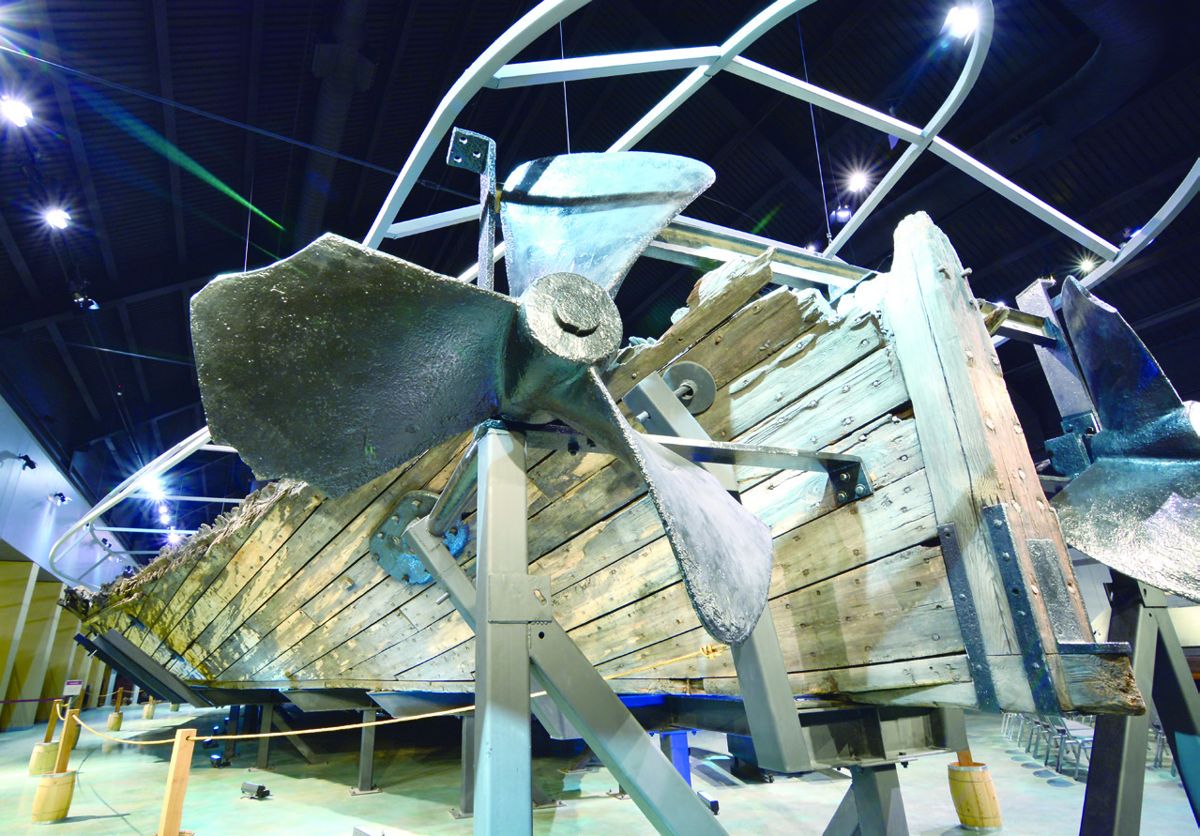
Mosquito fleet.” The first part of 1864 saw the Confederacy’s West Gulf Blockading Squadron in support of Admiral Buchanan but reports of a lack of mechanics, in particular, were frequent, and in San Bernard the Confederate engineers were “so much annoyed by gunboats” that the only good news was that “no injury was done, the working parties being covered by the bombproofs.” And, as if for emphasis concluded, “The boat that shelled us last night laid for anchor in front of the fort until broad daylight this a.m., when she commenced again.” The remaining ‘Mosquitos’ of the South tried to repel the Union’s gunboats wherever and whenever they could but their decreasing numbers, and the rapidly decreasing armament, and gray-clad sailors, would be increasingly ineffective in providing relief from the incessant shelling in many quarters of the Southern theater of operations. The Confederacy’s impending demise was closing in. The last Confederate vessel commissioned for those interested was the CSS Jackson with her 1,900 tons of combat weight, 4 inches of iron and 24 inches of oak. Her remains sit today in the National Civil War Naval Museum in Columbus, Georgia, resting only a thousand yards from her first berth, the Confederate Naval Yard. She was set afire to keep out of Union hands and drifted 30 miles downriver until discovered 95 years later and recovered. The museum’s contact information can be found at https://www.portcolumbus.org and phone: 706327-9798 for days and times of operation.