
Book Reviews
Book Reviews — December 2016
Originally published December 2016 · pp. 28–36
Reviewed by Robert L. Durham GeneraLee Speaking: My Life as a Living Historian. By Allan K. Stone. Photos, 232 pp., 2016, self-published, [email protected] $20.
Let me start off by saying that Al Stone is a raconteur extraordinaire. This volume is written in a conversational style that makes one feel that he/she is sitting with Al while he spins out his stories and anecdotes. Allan has led an unusual and interesting life. Al and I are the same age but he has packed a lot more life into the same number of years than I could have ever hoped for. This volume starts with a chapter Al calls “Antebellum,” before the war. The Civil War that is. He tells of his early life but I was most drawn into his adventures in l
Vietnam. Due to space limitations, and a desire not to bore the reader with Vietnam war stories, he did not provide many details. What he did tell, I found anything but boring. I have a strong feeling that there is enough material for an additional book if he will but write it. He was awarded the Bronze Star, the Army Commendation Medal with an Oak Leaf Cluster, and the South Vietnamese military campaign ribbon with three stars. After Vietnam, he and the love of his life, Shirley, opened a private investigation agency. Some of his stories from when he was a PI could probably fill an entire book on their own if told in full. This brings us to his “other career” as Robert E. Lee. His physical resemblance to Lee is uncanny. When he first started going to reenactments with his wife, they dressed in civilian clothing of the Civil War period. At a reenactment, while sitting in the tent of the living historian portraying Gen. Robert E. Lee, a courier came up to deliver a message. He presented the message to Al Stone. When Stone told him that he wasn’t General Lee, and indicated the fellow who was, the courier said, “I don’t know who he is, but YOU’RE General Lee.” This and other occurrences led Al to decide to adopt the persona of the famous Confederate general. Already a student of the war, he began to study all he could find about Lee. Slowly, he perfected his performance until he “became” Lee to a lot of people. Stone is not only a reenactor, but an actor, who can be compared with Hal Holbrook (Mark Twain) and Sam Waterston (Abraham Lincoln). He portrays General Lee in numerous venues. In 2015, after the 150th anniversary of the surrender at Appomattox, Al hung up his uniform and began portraying Lee as a civilian. This is a fun, and interesting, interpretation of what it feels like and means to be a living historian. Not only does the reader find out about Stone’s adventures as a Lee impressionist; in many ways, this book reads like a travelogue. It describes some of the towns where he has presented Lee in a way which makes you want to visit. Not only that, but Al describes and recommends restaurants and the like, sometimes even telling the reader whom to look up while visiting. One of the places he performed (and added to his bucket list) was a paddle wheeler. His take on that experience makes me want to add it to my own bucket list. As you can tell, I like this book. Not only did I find inside stories on what it’s like to be a living historian, I also learned a lot of facts about General Lee that were new to me. I recommend picking this one up. Robert Durham of Centerville, Ohio, has been a student of the Civil War since visiting the Gettysburg Battlefield as a Boy Scout. He’s written articles for several magazines. His latest piece treats the 116th Pennsylvania at Fredericksburg.
Reviewed by Jay Jorgensen Confederate Cabinet Departments and Secretaries. By Dennis L. Peterson. Photos, appendices, notes, bibliography, index, 286 pp., 2016, McFarland & Company, www.mcfarlandpub.com, $35 softcover.
Dennis Peterson’s Confederate Cabinet Departments and Secretaries is a valuable reference book for all readers with an interest in the government of the Confederacy. The author reminds us that his book “is not intended to be an exhaustive, definitive academic textbook on the Confederate cabinet. It is merely a survey, an attempt to provide in one place basic information about the Confederate government that rarely is covered elsewhere.” In this regard it more than succeeds. Jefferson Davis had six departments in his cabinet: Justice, Treasury, War, Navy, Post Office and State. In that respect it mirrored the departments in Lincoln’s cabinet, save for Lincoln’s additional cabinet position of Secretary of the Interior. As in the case of the United States government, Davis’s departments were established to help him conduct his work in an orderly fashion. Davis initially encouraged his cabinet officers “to express their opinions frankly with him, to run their departments as they saw fit, choose their own subordinates—and be responsible for their own actions.” Yet in reality, Davis tended to meddle and micro-manage every aspect of the government. In six sections, one for each of the Davis administration departments, Peterson surveys what the department was, how it operated, and how successful or unsuccessful it was in accomplishing its functions. These overviews are a particular strength of the book. Each section provides pertinent biographical information about the various department heads. Sixteen men served at one time or another as a secretary. During the life of the Confederacy there was frequent turnover of cabinet positions, except in two departments. Stephen Mallory was the only Secretary of the Navy, and John Reagan served throughout the war as the head of the Postal Department. Both Justice and the War Department had five different leaders. One officer, Judah Benjamin, served in three different departments as secretary during the war—Justice, War, and State. The biographical information on each secretary is well researched and well written. Readers get a complete review of the person’s life, as well as the impact each man made on his department. Peterson’s Confederate Cabinet Departments and Secretaries thus offers readers much helpful information on the inner workings of the Confederate government. Jay Jorgensen of Colonia, N.J., is author of Gettysburg’ s Bloody Wheatfield (2002).
Reviewed by Timothy J. Orr An Indispensable Liberty: The Fight for Free Speech in Nineteenth-Century America. Edited by Mary M. Cronin. Illustrations. 310 pp., 2016, Southern Illinois University Press, www.siupress.com, $35 paper.
An Indispensable Liberty examines free speech, the free press, and free expression in the 19th-century. Eleven authors provide essays profiling First Amendment controversies. They argue that 19th-century Americans earnestly debated the limits of the country’s civil liberties, perhaps more ardently than citizens do today. In their introductory chapter, Mary Cronin and Sandra Davidson emphasize their book’s modern appeal. “Freedom of expression is not determined in a vacuum,” they write, “and the more one understands history, arguably the more one can address the problems of expression that still simmer and erupt.” Civil War enthusiasts might be a little disappointed. Only five of the 11 essays address First Amendment issues from the Civil War era. The remaining six essays describe free expression during the period more generally. Those essays deal with such issues as newspaper libel cases, anti-obscenity laws, labor activism, women’s suffrage, the National Defense Association (a Gilded Age organization that defended free speech), and the Davis v. Massachusetts case. The Civil War era essays deal with a variety of interesting subjects, including suppression of abolitionist newspapers, the Lincoln administration’s relationship with the press, newspapers under Union occupation, the Confederate Congress’s relationship with the First Amendment, and Reconstruction-era newspapers. However, readers should be aware that the essayists are not trained historians. Nearly all of them are professors of communication, journalism, or media studies. This gives the book something of a onesided tone. The essayists’ expertise refreshingly allows them to place First Amendment issues at the center of their analyses, but because this volume included no historians, important Civil War issues get relocated into the background. In some ways, the first five essays are a mix of excitement and disenchantment. They emphasize the external threats to the First Amendment—anti-abolition mobs, the Union and Confederate governments, and Union military authorities—but not the internal ones. Not all of the essayists make it clear that the greatest threat to freedom of the press was the press itself. By overemphasizing the roles played by vigilante mobs, generals and politicians, the writers ignore the most systematic effort to destroy freedom of the press, the influential journalists who egged on legitimate authorities to kill rival publications. For instance, in describing the Lincoln administration’s checkered history with newspaper suppression, one essayist laments that the administration represented a paradox because it superintended one great expansion of human freedom— emancipation—while simultaneously supervising the “most intense degree” of newspaper suppression in American journalism history. Inclusion of proper context—a healthy discussion of the state of the 19th-century press—might have solved that writer’s befuddlement. Prior to the war, journalists seldom adhered to professional scruples. They ran down their political opponents, published unreliable reports, plagiarized articles and maintained a rancorous atmosphere of party politics. The Civil War provided an opportunity for editors to make use of their atmosphere of petty jealousy, painting political dissent with the brush of treason. It should be said that not all of the essayists avoid discussing the
First Amendment’s inconsistent relationship with the preservation of the American Republic. Arguably the best essay, Mary Cronin’s analysis of the 1897 Supreme Court case Davis v. Massachusetts, reveals the ways that civil liberties and the public good came into conflict. In 1887, police arrested the Rev. William F. Davis for haranguing people in Boston Common—part of a larger effort by Protestant ministers to saturate the city with anti-Catholic propaganda. A former abolitionist, Davis defended his public speaking by claiming that the law he had purportedly violated—proselytizing in Boston Common without a permit— violated his First Amendment rights. Davis lost his case when the Supreme Court decided that preservation of the public good—the maintenance of law and order—trumped Davis’s civil liberties. Cronin’s essay reminds readers that free speech did not always stand in high regard in a society that ardently pledged to preserve the public good. The popularity of the First Amendment was always a product of its own times. Criticisms aside, An Indispensable Liberty is a well thought-out volume which reminds us that the First Amendment formed a crucial component of the Civil War generation’s way of thinking. Its contributors are exactly right. If we want to give the First Amendment value today, we should understand how a previous generation valued it 150 years ago. Timothy J. Orr is assistant professor of history at Old Dominion University in Norfolk.
Reviewed by Joseph A. Derie
The Rest I Will Kill: William Tillman and the Unforgettable Story of How a Free Black Man Refused to Become a Slave. By Brian McGinty. Notes, illustrations, index, 256 pp., 2016, Liveright Publishing, www.wwnorton.com, $26.95.
This book tells the story of how a free black sailor rescued his vessel from a Confederate prize crew. The crew was taking the vessel to a Southern port to sell it and its cargo, and sell William Tillman into slavery. On July 7, 1861, the armed sailing vessel Jefferson Davis, carrying a C.S. letter of marque that granted it privateer status, captured the schooner S.J. Waring, a U.S. flagged merchantman three days out of New York on a voyage to South America.
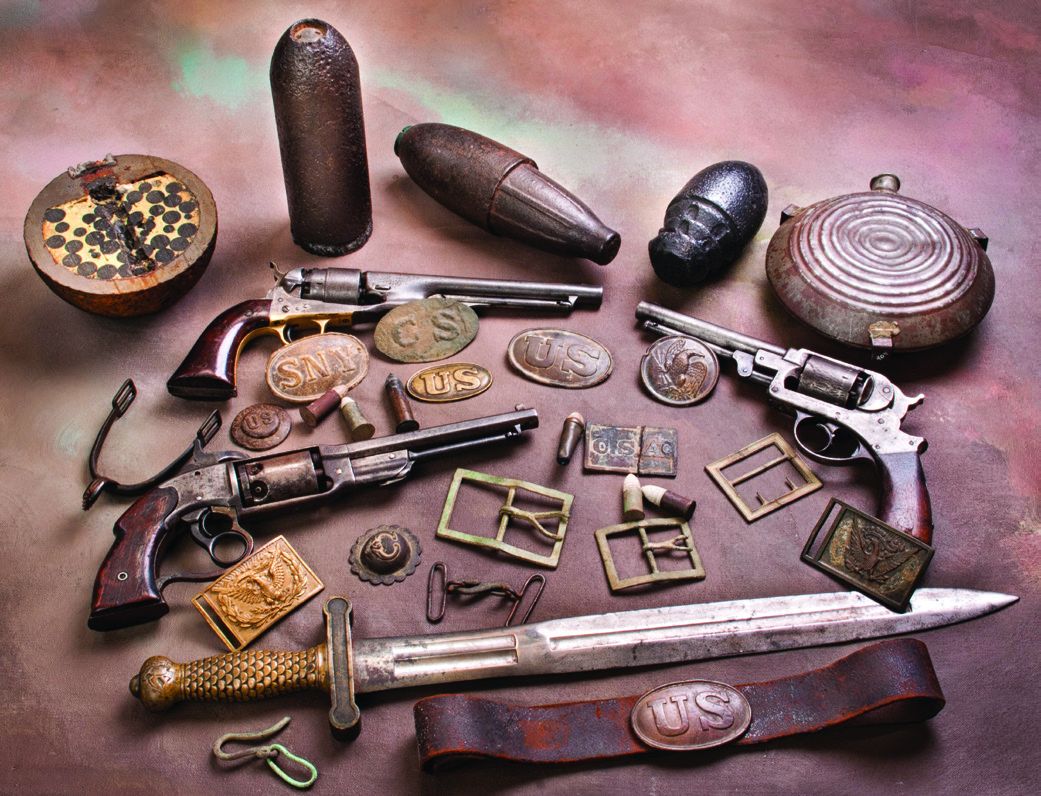
Schooner S. J. Waring. The unarmed Waring and its nineman crew quickly surrendered without bloodshed. The vessel was looted of usable items, and the Waring’s three officers and two of its crew were taken aboard the Jeff Davis. A prize crew of three officers and two crew members boarded the Waring and set sail with its valuable cargo for Charleston or another port in the Confederate States.
Among the crew left behind on the Waring was cook/steward, William Tillman, a free black man from Delaware and a seasoned sailor. Having sailed to Southern ports before the war he knew much about slavery and how slaves were treated. Refusing to allow himself to be taken south and sold into bondage, Tillman recaptured the vessel three days after the Waring was taken. He killed or injured the three prize officers with a hatchet he had concealed and, with assistance from another crew member, threw them overboard. The two remaining prize crew members were confined below. Five days later, with Tillman the acknowledged leader, the Waring sailed back into New York Harbor. Tillman’s triumphant return, coming just after the Union disaster at Manassas, made him one of the Civil War’s early Union heroes. The resulting Admiralty trial kept Tillman in the public’s eye for months. The court case was to determine whether Tillman and the remaining Waring crew were due money for salvage under the laws of the sea for recovering the vessel, or were just doing their duty and deserved no reward. Paralleling this were the trials of the captured Davis crew from the Waring and other Confederate privateers to determine whether they were pirates or prisoners of war. In the end the courts rendered a mixed verdict, but no one was hanged as a pirate. Much of the volume comes directly from the records of the Admiralty trial. Other parts are from newspapers, census and other records and the little that is known about Tillman’s life before and after the war. There is no record of him serving with the U.S. Colored Troops. Of interest is the fact that although Tillman was awarded salvage, how much and whether it was ever paid is unknown. This book is apparently intended for Civil War buffs and the general public who might be interested in a good story. For that reason, much of what the author writes about secession and slavery will not be new to readers familiar with the Civil War. Nonetheless, it is an interesting and well-written account of William Tillman, a forgotten hero. Capt. Joe Derie is a longtime Civil War buff with a special interest in Civil War naval history and the Civil War in the West. He is a retired USCG officer and a licensed Merchant Marine officer, currently self-employed as a marine surveyor and marine accident investigator in Portland, Ore.
Reviewed by Wayne L. Wolf Dark Work: The Business of Slavery in Rhode Island. By Christy Clark-Pujara. Map, photos, notes, index, 205pp., 2016, New York University Press, http://nyupress.org $40.
From 1636 until it was abolished in 1842, slavery, both Indian and black, dominated Rhode Island’s business endeavors. Slavery fueled its economy, built its infrastructure, provided slaves and raw materials to other colonies as well as Europe and the West Indies, and was responsible for the rapid growth of the rum industry, the manufacture of Negro cloth, and the extensive Atlantic slave trade. Christy Clark-Pujara uses the North’s smallest state as a microcosm of how slaves led their lives, rebelled against their enslavement, and fueled the growth of Rhode Island’s economy. It is a story vastly different from Southern plantation slavery, yet bears many of the same elements of economic interest, rebellion and struggle as its Southern counterpart. Dark Work provides a plethora of historical data to support the author’s premise that the business of slavery encouraged the perpetuation of the slave trade, slowed the drive toward emancipation, and prohibited blacks from attaining full citizenship. Additionally, diaries, letters and court documents interweave personal stories of defiance to illustrate how slaves affected their own path to emancipation. Rhode Island, long neglected by scholars of slavery, is thus added to the rich Northern literature on the subject, including seminal works by Christian Koot on the Atlantic Slave trade and Beverly Tomek’s work on emancipation and the anti-slavery movement. Together these works show that Northern states shared with their Southern neighbors a lively slave trade, slave business, and symbiotic relationship that enriched the slave owner and grew the industrial base in the North. The myth that slavery was only a Southern sin is dispelled. The peculiar institution reached beyond mere economics. It also provided class distinctions, allowed white residents to feel superior because of their whiteness, and established two societies in America—one white and superior the other black and inferior. These premises are traced from the beginnings of slavery in the colonial era. The impoverishment, alienation and exploitation of blacks are all discussed as well as the abolition movement and how black family structure suffered from the system’s cruelties. To illuminate these trends, the author provides voluminous data on autonomous African Mutual Aid Societies, the struggle for integrated schools, and blacks’ quest for voting rights and full citizenship. Only one small data error occurs in this section, as the amount of property owned by blacks in Rhode Island in 1820 should read $18,000 not $10,000. This aside, the depth of research is laudable and confirms the author’s thesis. This work is particularly appropriate for scholars of the Atlantic slave trade, the origins of Northern abolitionism, and the aspirations of slave and free blacks in both the Colonial Era and antebellum America. Wayne L. Wolf is Professor Emeritus at South Suburban College (South Holland, Ill.) and author of numerous Civil War books and articles including Two Years Before the Paddlewheel and Soldiers, Sailors and Scoundrels of the Civil War.
Reviewed by John Foskett Liberty & Union: The Civil War Era and American Constitutionalism. By Timothy S. Huebner. Illustrated, photos, maps, tables, notes, bibliography, index, 576 pp., 2016, University Press of Kansas, www.kansaspress.ku.edu, $34.95.
Anyone who studies the Civil War sooner or later encounters a paradox. In the context of secession and then war, the two sides held irreconcilable views, but both traced those views to the same founding fathers and to the same two seminal documents which they authored. Thus a confirmed Confederate, just like his committed Yankee opponent, could with a straight face invoke George Washington, Thomas Jefferson, the Declaration of Independence, and the Constitution as justification for secession or for war in response. In a well-written and wide-ranging survey, Professor Timothy S. Huebner explains this conundrum by tracking it from the antebellum period through the Civil War, ending with Reconstruction. He shows how the two fundamental, and opposing, perceptions of “constitutionalism” found tangible expression when they collided in the forms of slavery and of union. He adds as a consistent undercurrent a third viewpoint which in broad context ultimately prevailed—black Americans’ notion that equality and freedom for all lay at the heart of the source documents. As Huebner explains, the founders failed to resolve the basic questions of slavery and the nature of union, accounting for divergent, conflicting beliefs during the antebellum period. Simply put, those in the slaveholding South took the view that slaveholders’ rights lay at the core of the Constitution and that the matter of Union was subordinate and voluntary. In the North, on the other hand, it was understood that the founders had created a single, irrevocable Union of the constituent states from which none could simply choose to leave. As statutes (primarily in the form of fugitive slave laws) and Supreme Court decisions increasingly seemed to come down on the Southern side of this debate, strife was inevitable and it touched off in the winter and spring of 1860-61. Huebner shows that war resolved this conflict firmly on the side of Union, the abolition of slavery, and the freedom and (to some extent, at least) equality of black Americans under law. Ironies were abundant. For example, Abraham Lincoln began the war as a constitutionalist who believed that a federal union and the toleration of slavery where it existed were compatible elements of the founders’ structure. At the end, of course, he was transformed into a leader who decided that the Constitution vested in the President the authority to end slavery through his war powers and to enact a legal framework which realized the promise of equality in the Declaration—all while dramatically expanding the power and role of the federal government. Those who established the Confederacy witnessed an ironic change in their own constitutional ideals prior to suffering eventual defeat. Huebner relates the South’s struggle to accommodate “state’s rights” with the war-driven need for greater central authority and even the prospect of limited emancipation. As Huebner shows, the postwar Reconstruction era saw significant legal gains for newly-freed black Americans in the realm of civil rights, primarily through the enactment of constitutional amendments. While corresponding social and political rights would prove harder to come by in what was still a largely racist culture, Huebner concludes that the questions of liberty and union had been altered forever and that a more uniform and modern constitutional vision had taken hold. Huebner’s endnotes reveal his use of extensive primary and reputable secondary sources. While there is no bibliography, he provides a bibliographic essay which refers to many of the sources which he consulted. Especially given the breadth of his subject matter, Huebner’s writing is smooth and his narrative style makes for easy reading. His discussion of legal enactments and judicial decisions renders them readily understandable for non-lawyers. Huebner skillfully weaves a range of social, cultural and political information into the narrative. While he necessarily devotes several pages to military events during the war, that portion of his book can profitably be skimmed or even ignored by knowledgeable Civil War students without cost to fully comprehending the remainder. Huebner’s purpose seems not to present new information so much as to take a vast amount of known facts and gather them into a common theme. There are occasional departures from the conventional wisdom. For example, Presidents Ulysses Grant and Rutherford Hayes both come across as stronger advocates for the nation’s new black citizens than has generally been conveyed. This is a highly recommended “view from 30,000 feet” of the way in which Americans’ understanding of their constitutional origins transmogrified in the middle of the 19th century. It is very worthwhile reading. John Foskett is a practicing attorney in Boston with a lifelong interest in the Civil War. He is descended from Isaac Foskett, who served for three years in the Engineer Battalion with the Army of the Potomac. In addition to numerous reviews in this newspaper, he has given a Civil War Roundtable presentation on the subject of Civil War field artillery tactics.
Reviewed by Jonathan W. White Inventing Loreta Velasquez: Confederate Soldier Impersonator, Media Celebrity, and Con Artist. By William C. Davis. Photos, notes, bibliography, index, 358 pp., 2016, Southern Illinois University Press, www.siupress.com, $39.95.
In 2013, PBS aired a documentary film called “Rebel,” which purported to tell the story of Loreta Janeta Velazquez, a Cuban immigrant who dressed as a man and fought for the Confederacy during the Civil War. Based largely on Velazquez’s popular 1876 memoir, The Woman in
Battle, the film was named an honorable mention for the Erik Barnouw Award of the Organization of American Historians. “Rebel” concedes that some aspects of Velazquez’s story may be embellished or untrue, but depicts her as a generally reliable victim of a deliberate smear campaign by leading Confederate veterans who sought to silence her story. The film asks provocatively, “What made her so dangerous she has been virtually erased from history?” In other words, what was it about this Latina woman—or Hispanics in general—that led whites to suppress her story? And yet the premise of this question is flawed. Velazquez never suffered from suppression. True, Confederate Gen. Jubal Early privately questioned her veracity, but he did nothing to censor her voice. In fact, her memoir appeared in three editions that were widely reviewed in newspapers throughout the nation. And her story has appeared in books and articles many times since it first appeared in 1876. In truth, the film may say more about the filmmakers’ contemporary political agenda regarding America’s current debates about immigration and race than it does about Velazquez. Indeed, this new biography points out that “the filmmakers compromised objectivity by editing out the historians’ caveats about
Lauretta’s story.” (In the interest of full disclosure, I participated in a public discussion with “Rebel’s” director following a screening at my university in March 2016.) In this path-breaking new biography, acclaimed historian William C. Davis reveals that The Woman in Battle is an utter fabrication. Whereas Lauretta (as he spells her name) claimed to have been a Cuban-born, aristocratic immigrant who served in the Confederate army and then doubled as a Union spy, Davis shows that she was likely a native of New Orleans who earned a living as a prostitute before the Civil War. She claimed a number of different birthplaces throughout her life and may not have even been Hispanic. During the war she traveled around the North and South occasionally dressing as a soldier and always spinning a tale for reporters. In many ways, the research for this book must have been far more complex than is typical for a modern biography. Not only are the sources scarce, but Loretta changed her name and her story many, many times. “Every time she told her story, it changed,” writes Davis. As she traveled the country both during and after the war she told reporters “uncountable cocoons of myth [that] she would spin around the modest and often unseemly facts of her life.” Only a historian of Davis’s ability and experience could have written a book like this. Drawing from his extensive knowledge of the war itself, he deftly combed through Lauretta’s various and entangled fictions, turning the many inconsistent, implausible and conflicting fragments into an engaging life story. In the process Davis sheds new light on things that historians thought they knew for certain about Lauretta. A number of historians, for example, cite a document at the National Archives in which Union Gen. Robert C. Schenck appointed an “Alice Williams” a “special agent” in Baltimore in November 1863. Davis persuasively argues that this appointment was for a different person because Lauretta was living in Indianapolis at the time that Schenck issued the order in Baltimore, the signature does not match Lauretta’s, and she never went by the name “Alice.” Quite importantly, Davis is the first historian to uncover Lauretta’s later years. She remained a con artist into the 20th century, scheming to defraud investors throughout the United States. According to Davis, she targeted men “who thought themselves too shrewd to be fooled in business and [who] would be reluctant to admit their victimization by filing charges.” Suffering from poverty and dementia toward the end of her life, she became an inmate at St. Elizabeth’s
Hospital, in Washington, D.C., from 1912 until she died in 1923. Inventing Loreta Velasquez could not have been written a generation ago. Indeed, the blossoming of digitized newspapers made Davis’s research possible. And he has packed this book—including the extensive footnotes—full of his findings. At the same time that Davis shows the inconsistencies and falsehoods in Lauretta’s story, he does so with a certain sense of humility, acknowledging the limitations of the available record and the many unknowns that may never be answered. No longer should historians ever rely on The Woman in Battle when they write about women in combat or women and the Civil War. From this point forward, those who wish to know the story of “Loreta Janeta Velazquez” should turn to Inventing Loreta Velasquez: Confederate Soldier Impersonator, Media Celebrity, and Con Artist. Jonathan W. White is associate professor of American Studies at Christopher Newport University and author of several books on the Civil War, including Midnight in America: Darkness, Sleep, and Dreams during the Civil War, which will be published by the University of North Carolina Press in March 2017.
Reviewed by Jay Jorgensen Don’t Give an Inch: The Second Day at Gettysburg. By Chris Mackowski, Kristopher D. White and Daniel T. Davis. Maps, 192 pp., 2016, Savas Beatie, www.savasbeatie.com, $14.95 softcover.
Don’t Give an Inch: The Second Day at Gettysburg is one of the latest in the ever-growing excellent Savas Beatie Emerging Civil War Series. Authors Chris Mackowski and Kristopher White are the cofounders of Emerging Civil War, and coauthor Daniel Davis is its managing editor. The series provides excellent, readable accounts of important engagements during the Civil War, and this book continues that pattern. The fighting at Gettysburg on July 2, 1863, saw some of the fiercest fighting during the entire battle. This book focuses on the action on the southern end of the battlefield. Little Round Top, Wheatfield, Peach Orchard and Cemetery Ridge would become part of the military lexicon because of the incredible efforts of soldiers that day, both North and South. This book’s format is that of a driving tour of the battlefield. Beginning at the Seminary Ridge Museum, readers will follow the action over a series of 10 stops, ending the tour at the High Water Mark. The authors provide well-written narrative accounts for each of the stops, giving tour participants a good understanding of the action. The text is not limited to the battle action itself. The authors include interesting side notes about things that have occurred to the landscape subsequent to the completion of the Gettysburg Campaign. By way of example, at Stop #3 the authors discuss the statue of Gen. James Longstreet which was erected in 1998. Similarly, they present interesting information at Stop #6 relating to Round Top Park and the Gettysburg Electric Railway. Another interesting component of the book is the inclusion of side stories about some of the participants involved in the action. Soldiers like John Bell Hood, Gouverneur Warren, Paul Semmes and Samuel Crawford are presented by way of a brief outline and a photograph. In addition to the tour, the authors have included four extensive appendices. One of them is a walking tour of the Wheatfield, designed to enhance the readers’ tour experience of this very confusing part of the battlefield. One appendix deals with the famed “Rebel Sharpshooter” photograph taken by Alexander Gardner shortly after the battle. Don’t Give an Inch is a wellwritten, fast-paced guide that provides readers with a good introduction to the fighting on July 2. The book is not designed to be a detailed account of the battle action
Digital Issues of CWN are available by subscription alone or with print plus archives at CivilWarNews.com
– Harry Pfanz’s Gettysburg: The Second Day remains the definitive work. Nonetheless, these authors have written a cohesive tour account which people interested in the battle should read. The text is enhanced by excellent maps prepared by Hal Jespersen. There are many current photographs of the battlefield, although some of them are a bit on the dark side. Still, they serve as an enhancement to the tour. The footnotes and sources for the book are to be listed on the
Emerging Civil War Series website, although as of Sept. 23 they had not been posted. This book is an excellent addition to the growing literature on the Battle of Gettysburg and is well worth the purchase price. Jay Jorgensen’s Gettysburg’s Bloody Wheatfield (White Mane, 2002) received the BachelderCoddington Literary Award from the Robert E. Lee Civil War Round Table of Central New Jersey.
Reviewed by Stephen Davis Slaughter at the Chapel: The Battle of Ezra Church, 1864. By Gary Ecelbarger. Maps, illustrations, appendices, notes, bibliography, index, 288 pp., 2016, University of Oklahoma Press, www.oupress.com, $26.95 cloth. It’s not very often that two authors turn out books on the same subject within a year or so of one another. William J. Cooper’s Jefferson Davis, American appeared in 2000; Felicity Allen’s Jefferson Davis: Unconquerable Heart preceded in 1999. Noah Andre Trudeau’s Gettysburg: A Testing of Courage was published in 2002; Stephen W. Sears’ Gettysburg arrived the following year. Sometimes the writers are aware of each other’s work-in-progress, sometimes not. I can’t recall knowing that Richard McMurry was writing a summary of the Atlanta Campaign when I was writing mine. His Atlanta 1864 came out in 2000, my Atlanta Will Fall in 2001. I, therefore, did not cite Richard’s book in my notes. But in my bibliographic essay, which I wrote just before we went to press, I acknowledged it, adding that Atlanta 1864 “offers benefits that my own slight book will not afford.” It helped that Richard and I share many of the same views and interpretations about the Atlanta Campaign. You can see the quandary. Another writer has just beaten you to the punch, publishing his book before yours. What do you do? It’s happened again. Earl J. Hess’ The Battle of Ezra Church and the Struggle for Atlanta (Chapel Hill, 2015) was published last year. Gary Ecelbarger, Slaughter at the Chapel: The Battle of Ezra Church, 1864 has just come out (University of Oklahoma Press, 2016). My task as reviewer of Ecelbarger’s new book is to keep Professor Hess’ in mind. They’re both very good works, setting forth the basic story of Ezra Church in sound, authoritative narrative, well buttressed by documented research. They both explain the battle fought July 28, 1864, west of Atlanta in greater detail than any previous work. They make some of the same points, such as how the Confederate attacks achieved greater success at some places than the previous literature has noted. They also offer clarifying maps to dissect the fighting, although those in Ecelbarger’s study, drawn by professional cartographer Hal Jesperson, are better. In mid-July 1864, Union Maj. Gen. William T. Sherman’s three armies, 100,000 officers and men, had pushed to within five miles of Atlanta, the Confederacy’s secondmost important city. The alarmed Southern government relieved Gen. Joseph E. Johnston, commander of the Army of Tennessee, and replaced him with Gen. John B. Hood. The Confederate forces, some 60,000, were secure in strong fortifications surrounding the city. Sherman would not attack them there, but instead set out to cut the railroads bringing supplies into Atlanta. After wrecking the rail line leading east to Augusta, Sherman aimed for the last one, the Macon & Western running south. On July 27, Maj. Gen. Oliver O. Howard’s Army of the Tennessee started marching toward it, west of the city.
Maj. Gen. Oliver O. Howard. (Library of Congress) Hood determined to block the Yankee advance by sending two of his three infantry corps on the attack. But it would not be a frontal one. On the morning of July 28, Lt. Gen. Stephen D. Lee (just arrived from Mississippi) was ordered to march his troops out west of Atlanta on the Lick Skillet Road and take a defensive position at a key crossroads near Ezra Church, toward which the enemy was heading. Lee was to hold the enemy in check on the 28th while Lt. Gen. A. Peter Stewart guided his corps behind and beyond Lee, then on the next day launched a flank attack against the Federal right (westmost) flank. So far, so good.
S. D. Lee. (Library of Congress) Lee was assigned the task
Reviewed by David J. Coles Decision at Tom’s Brook: George Custer, Thomas Rosser, and the Joy of the Fight. By William J. Miller. Illustrated, photos, maps, notes, bibliography, index, 267 pp., 2016, Savas Beatie, www.savasbeatie.com, $29.95 hardcover.
Author William J. Miller has produced a well-written and well-researched monograph on the cavalry battle at Tom’s Brook, one of the lesser-known yet still significant engagements of the 1864 Shenandoah Valley Campaign. He places Tom’s Brook in its proper context in relation to the broader campaign. He also examines the friendship and careers of two of the prominent Union and Confederate officers on that battlefield—George Armstrong Custer and Thomas L. Rosser—and the impact that the battle had on both their reputations and on the reputations of the Union and Confederate cavalry that fought there. Miller contends that Custer and Rosser “possessed the crucial trait of the warrior—they enjoyed the fight.” Prior to the October 1864 battle, both men “had followed similar trajectories,” and “were well on the road toward achieving the dreams of martial glory they had nurtured and shared at West Point.” Following Custer’s overwhelming victory at Tom’s Brook, his star continued to rise while that of the humiliated Rosser declined. Though he became wealthy in the postbellum years as a railroad developer, the ex-Confederate general entered into a bitter literary battle with other veterans over responsibility for the Tom’s Brook defeat. “As time passed,” Miller writes, “his name became ever more firmly connected with the most widely remembered defeat in the history of the Confederate cavalry.” The battle of Tom’s Brook took place in the aftermath of the September 1864 Union victories at Winchester and Fisher’s Hill. After defeating Jubal Early’s army in those two battles, the Yankee cavalry of Philip Sheridan’s army next focused on destroying any resources in the Shenandoah that might benefit Southern forces. Twenty-four-year-old George Custer, described by the author as “the right man in the right place,” commanded one of the mounted divisions that enthusiastically carried out Sheridan’s orders. Early ordered his cavalry to harass the Federals as they moved slowly down the Valley. This included the recentlyarrived Rosser, placed temporarily in command of the wounded Fitzhugh Lee’s division. As background, Miller next provides a detailed summary of Rosser’s career to that point, from his 1861 resignation from West Point just weeks prior to graduation, to his subsequent command of a cavalry regiment and brigade in the Army of Northern Virginia. Rosser earned accolades for his aggressive leadership, but he also bickered frequently with superiors, including his mentor Jeb Stuart. Miller contends that “honor and the necessity of fighting for it” represented the “dominant theme” of Rosser’s life. Typical of his self-confidence or braggadocio is the fact that, shortly after reaching Early’s command, either Rosser himself or one of his supporters dubbed the young general “The Savior of the Valley.” Confederate cavalry under Rosser and Lunsford Lomax skirmished vigorously with the Federals on Oct. 6-8. Infuriated by the Yankees’ devastation of the Valley, the Confederates executed a number of captured Union troopers who fell into their hands. During the period preceding the fighting at Tom’s Brook, Miller faults Jubal Early for not designating a chief of cavalry to coordinate the operations of his mounted forces. From surviving correspondence, however, it appears obvious that Early desired his cavalry to ascertain Sheridan’s future intentions and to “strike a blow” against the Federals if possible. Union forces instead would strike first, with Sheridan angrily ordering his cavalry commander Alfred Torbert to advance two divisions under Custer and Wesley Merritt against the harassing Rebels. On the Valley Pike Merritt’s division faced a smaller force under Lomax, while to the west at Coffman’s Hill along the Back Road Custer faced off against his former classmate Rosser. Before the fighting began Custer famously advanced in front of his lines, removed his hat and bowed ostentatiously towards Rosser, who then returned the salute. It was a poignant touch of chivalry in a war becoming ever more brutal. Miller does an excellent job of describing the confused fighting that followed at Coffman’s Hill and along the Valley Pike. At both locations the Federals ultimately turned the Confederates’ flanks and forced their withdrawal. Rosser’s command put up a stiffer fight but was eventually overwhelmed and fled in confusion. Miller colorfully describes the battle’s conclusion, with Federal cavalry chasing their quarry 20 miles southward in what Confederate Col. Thomas Munford aptly called “’more a contest of speed than valor.” History records the rout as the Woodstock Races. The author writes that Tom’s Brook represented a final vindication for Union cavalry in the east. “Having learned well from their early defeats and embarrassments,” he writes, “the Federals had … produced a mounted arm superior in equipment, logistics, organization, tactics, and leadership.” While Yankee cavalry may have gained “parity” with their Southern counterparts in 1863, it was at Tom’s Brook where they “assumed … the mantle of mounted supremacy previously owned by the Confederates.” William Miller’s Decision at Tom’s Brook should be considered a model history of a small-scale Civil War battle. In 240 pages he places the engagement in the broader context of both the war and the 1864 Shenandoah Valley campaign. He provides vivid character studies of the leaders on both sides, particularly Custer and Rosser, and his concluding chapter, documenting Rosser’s postwar life and the former general’s efforts to defend his wartime record, is especially well done. Decision at Tom’s Brook is a significant contribution to the scholarship on cavalry operations in the Eastern Theater and on the Confederacy’s unsuccessful defense of the Valley during the war’s final months. David J. Coles is Professor and Chair of the Department of History at Longwood University, Farmville, Va.
Reviewed by Krista Castillo
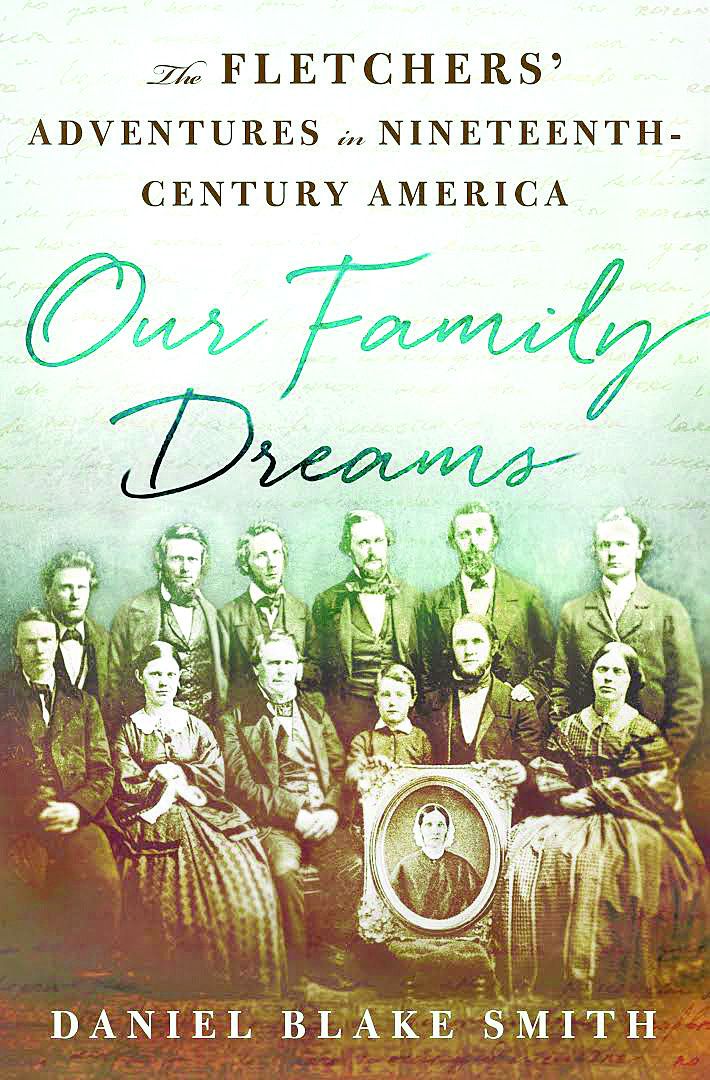
Our Family Dreams: The Fletchers’ Adventures in Nineteenth-Century America. By Daniel Blake Smith. Photos, notes, index, 275 pp., 2016, St. Martin’s Press, us.macmillan.com, $26.99 hardcover.
More than 200 years ago, two brothers left their family farm on the Vermont frontier in search of their own versions of the American Dream. Though separated by hundreds of miles and vastly different beliefs and ideologies, Elijah and Calvin Fletcher maintained an extraordinary life-long bond. Based on Calvin’s journal spanning 50 years and nearly 5,000 pages and hundreds of family letters, this intriguing tale chronicles two branches of the Fletcher family as they struggle to find their places in the old South and on the new western frontier. Despite the economic hardships of raising a large family, Jesse and Lucy (Keyes) Fletcher cultivated a central belief that hard work alone did not guarantee success and usefulness. Fully aware of the challenges of obtaining formal education for all 15 of their children, the Fletchers focused their energies and their finances on educating Elijah at Middlebury, Dartmouth and the University of Vermont. When a teaching position took him to central Virginia, the family rejoiced in his impending success. Five years later, 17-year-old Calvin left home under very different circumstances. Frustrated and resentful of his parents’ lack of concern for his scholarly ambitions, Calvin struck out for the western frontier.
Determined to avoid the suffocating poverty he left behind, Calvin attended school and studied law under James Cooley. Calvin’s adventurous spirit and obsession with self-improvement eventually took him to Indianapolis where he pursued law, banking, farming, land speculation, and public office. He worked tirelessly for universal public education, abolition, and temperance. In contrast, Elijah quickly found his place among the Southern aristocracy. Abandoning his New England anti-slavery roots, he married into a prominent family and retreated into the daily responsibilities of managing a network of plantations and hundreds of slaves. Although Calvin disagreed with his favorite brother’s collusion with slavery, he remained Elijah’s closest friend and confidant. Upon Elijah’s death in 1860, his daughter Indiana gained control of his vast landholdings and other property. During the Civil War, the Fletchers found themselves on opposite sides of the conflict. Calvin secured weapons for Indiana troops, was elected to the Indianapolis Freedmen’s Aid Society, and enthusiastically supported arming slaves. Three of his sons served in Indiana regiments. One of them spent four months as a prisoner of war in Richmond. While Elijah’s children did not aid the Confederacy, their Uncle Calvin refused to vouch for their loyalty. Throughout the narrative, Smith expertly interweaves the Fletchers’ human drama, spanning three generations, into the timeline of early American history. While Our Family Dreams may seem like a family history on the surface, Calvin, the family’s most prolific writer, emerges as the most prominent figure. Through him, the Fletchers’ story unfolds gradually, exposing and humanizing an extraordinary, and at the same time, ordinary American family. Smith’s blend of exhaustive research and artful storytelling makes for an enjoyable and informative read. With this issue we welcome reviewer Krista Castillo, manager of the Fort Negley Visitors Center and Park in Nashville, Tenn., and president of the Nashville Civil War Round Table. Fort Negley, built during the Union occupation of Nashville, was the largest inland masonry fortification constructed during the war.
Reviewed by Jason M. Frawley
GETTYSBURG AS THE SOLDIERS EXPERIENCED IT FROM CEMETERY RIDGE TO LITTLE ROUND TOP, JULY 2, 1863
“Stand to It and Give Them Hell”
John Michael Priest
Gettysburg (2002). His most recent installment is “Stand to It and Give “Stand to It and Give Them Them Hell”: Gettysburg as the SolHell”: Gettysburg as the Soldiers diers Experienced it From Cemetery Experienced it From Cemetery Ridge to Little Round Top, July 2, Ridge to Little Round Top, July 2, 1863. A retired high school history 1863. By John Michael Priest. Maps, photos, notes, index, 528 pp., 2016, teacher, Priest has published a Savas Beatie, www.savasbeatie.com, number of books on other Civil War campaigns and battles, and $22.95 paperback. according to Edwin C. Bearss, he has distinguished himself as the Ernie John Michael Priest TPyle of Civil War soldiers, given his penchant for presenting history from their perspective. Priest’s rank-and-file approach continues in “Stand to It and Give GETTYSBURG AS THE SOLDIERS EXPERIENCED IT FROM Them Hell.” As he notes on the CEMETERY RIDGE TO LITTLE ROUND TOP, JULY 2, 1863 book’s opening page, this “is the story of what happened from Cemetery Ridge to the Round Tops on July 2, 1863, from the perspective of the men who fought there.” Priest makes it clear that he began his work “with no specific goal or thesis in mind except to learn more about the action as seen through the eyes of the men who were there,” and he has “no proverbial ‘axe to grind,’ no cause to defend, and no underlying agenda.” While some readers will be disGettysburg is one of the most over-studied topics in American appointed to find that the book is history. Massive tomes and concen- not driven by a compelling thesis, trated essay collections have been it does make for a stirring narrative published on each of the three days of the common soldiers’ experiences of the great battle, and literally thou- on the southern end of the battlefield sands of books and articles have on the second day of fighting at Getbeen written on the overall cam- tysburg, which to be fair is Priest’s paign. Despite the crowded field, stated goal. Somewhat disorienting is Priest’s both ambitious academics and eager enthusiasts continue their efforts to decision to break up his chapters into leave their marks on Gettysburg’s a series of vignettes. For example, Chapter Eight, a 37-page chapter that historiography. While the prospects may seem covers events from 4 p.m. to 5 p.m., dim for saying anything new about is divided into 29 subsections. The the topic, John Michael Priest has other chapters are similarly orgarecently published his second mono- nized. While such an approach might graph on Gettysburg. His first was play well on the silver screen given Into the Fight: Pickett’s Charge at the use of commonly employed film transitions, it could make for a bewildering read for the uninitiated. “Stand to It and Give Them Hell” is packed with great information and wonderful anecdotes, but someone relatively new to Gettysburg should probably start with something less dense and with fewer abrupt shifts in the narrative. One thing that is very evident is Priest’s passion for his subject. His attention to detail, demonstrated in the accompanying appendices, maps, notes and photographs, is undeniable. His capacity as a researcher is also quite impressive as even a cursory glance through his bibliography will attest, and his devotion to primary sources is clearly demonstrated throughout the book. Again, while readers should probably begin their journey into the study of Gettysburg with Allen C. Guelzo’s Gettysburg: The Last Invasion (2013) or Edwin B. Coddington’s The Gettysburg Campaign: A Study in Command (1968), and while one may prefer the organization and style of Harry W. Pfanz’s exhaustive Gettysburg: The Second Day (1998) if interested in those specific events, there is much to appreciate about and to learn from “Stand to It and Give Them Hell,” especially pertaining to the common soldiers’ experience. Jason M. Frawley, Ph.D., is a history professor at Tarrant County College, Northwest Campus, in Fort Worth, Texas. He most recently published a chapter on the Battle of Port Gibson in Steven E. Woodworth and Charles D. Grear’s The Vicksburg Campaign, March 29-May 18, 1863, and he continues to conduct research on the relationship between Confederate soldiers and Union civilians during the Gettysburg Campaign.