A Photographic ‘4-D’ Experience At Gettysburg
By Bob Zeller · Originally published December 2016 · p. 21
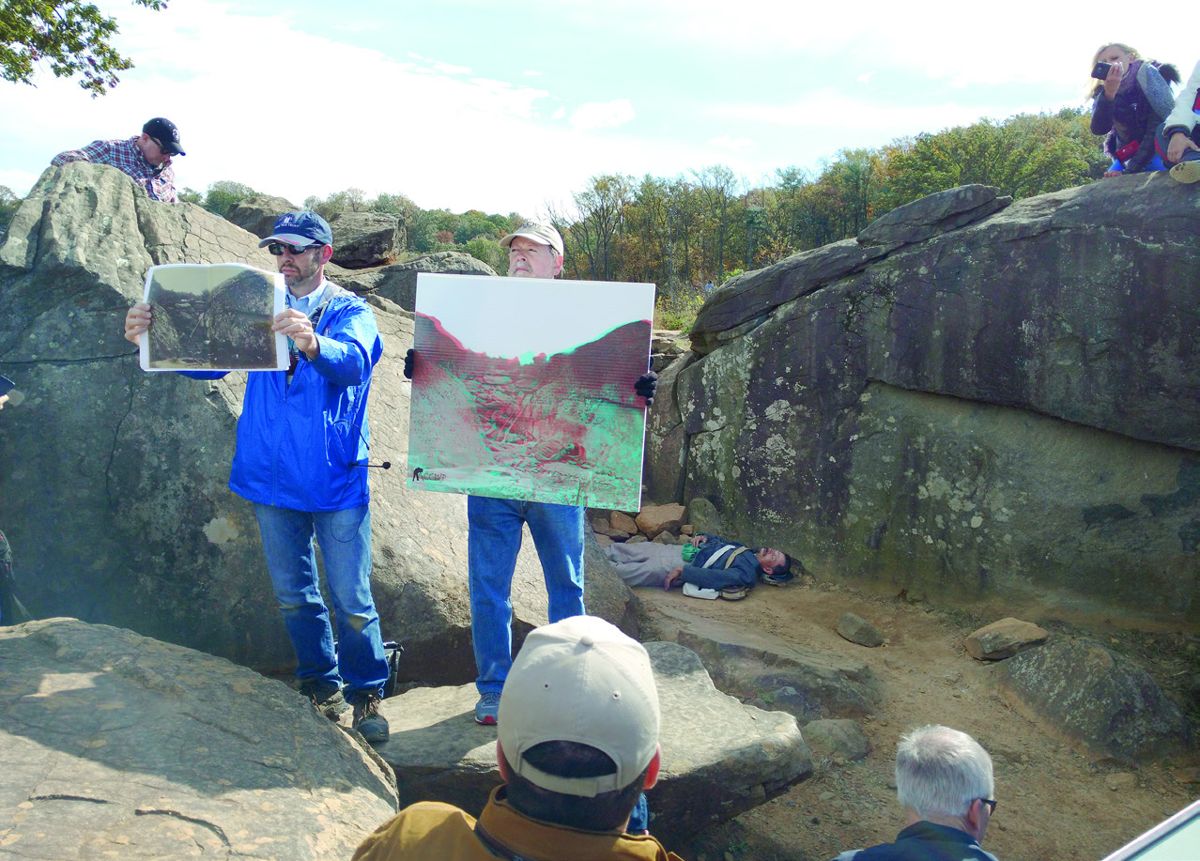
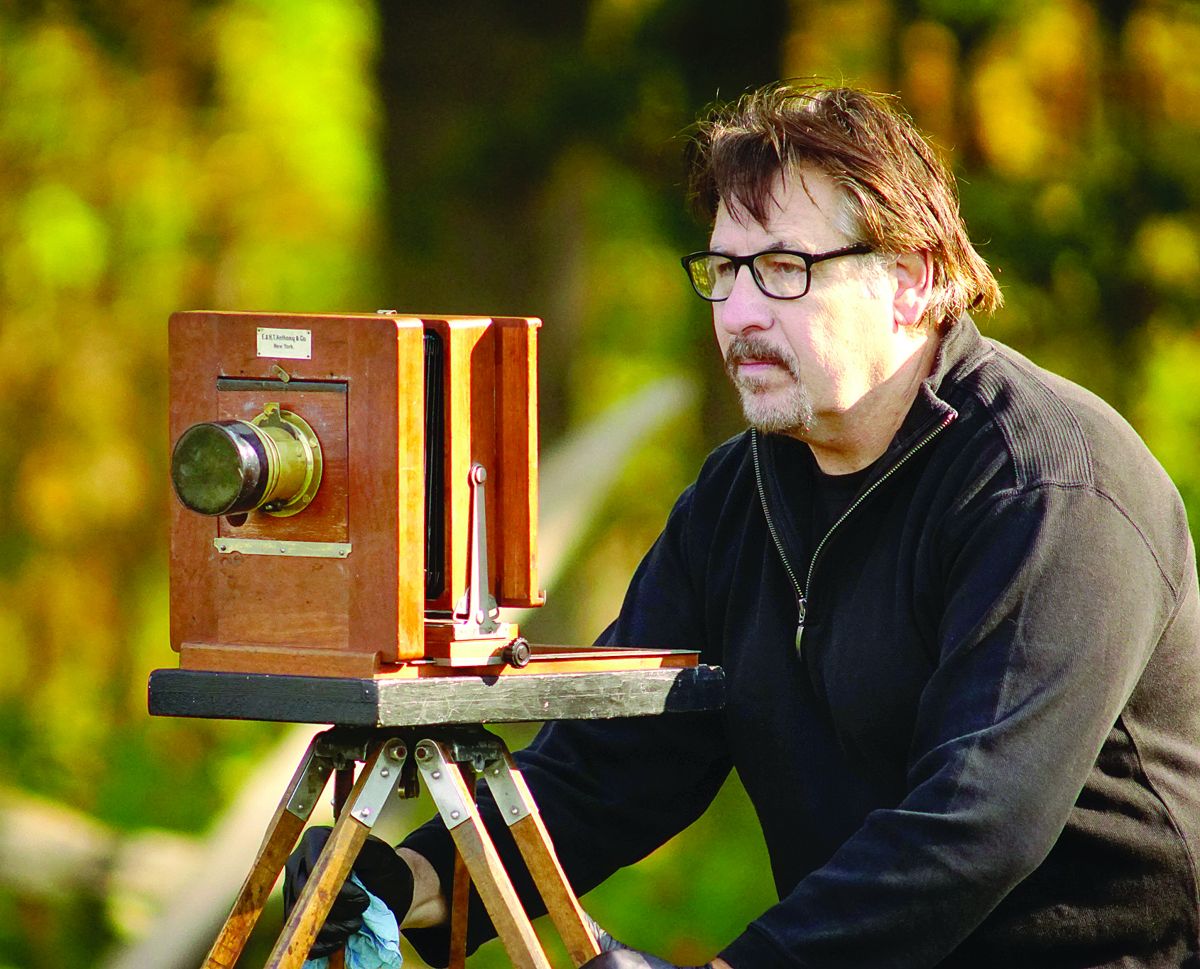
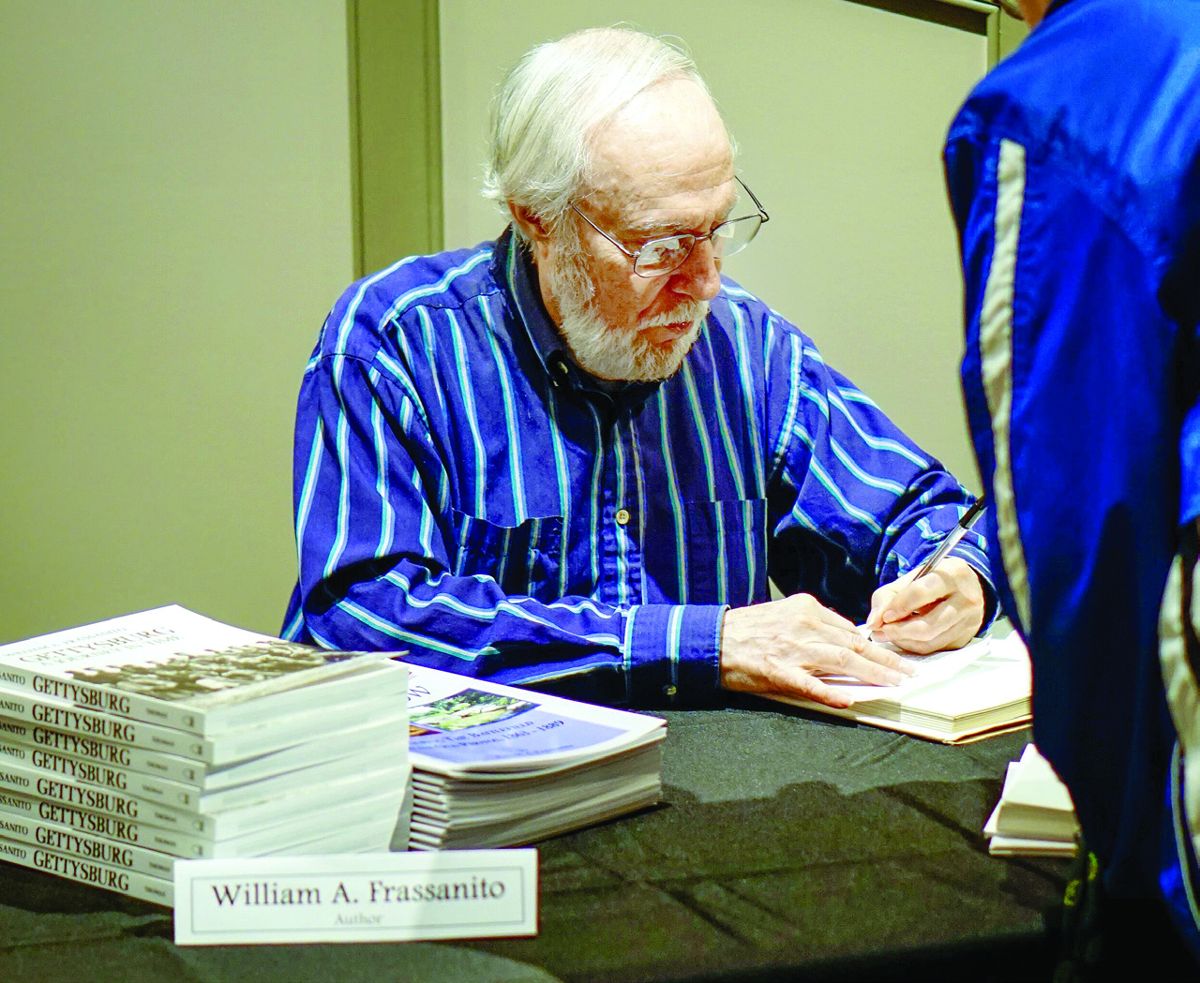
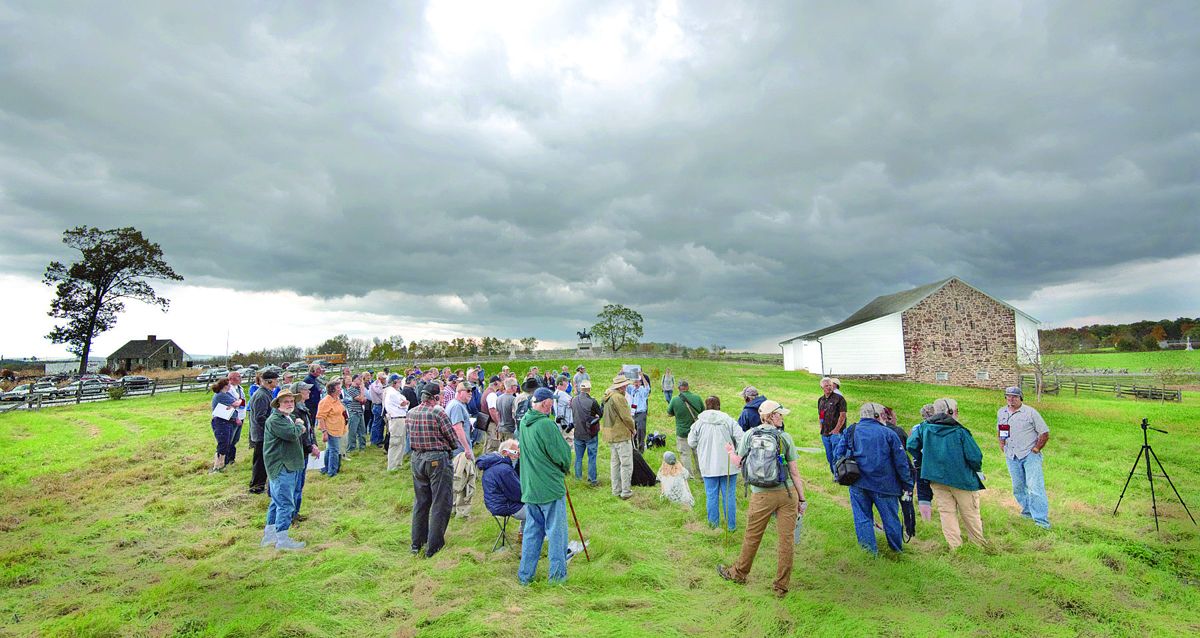
GETTYSBURG, PA.—It’s a special experience to tour the Gettysburg battlefield with a top-notch licensed battlefield guide who can answer every question and makes history come alive with an enlightening array of anecdotes and facts. It’s even better when two of the best Gettysburg guides team up, as Garry Adelman and Tim Smith did at The Center for Civil War Photography’s 16th annual Image of War seminar Oct. 21-23 at Gettysburg, telling the story of the battle through the breathtaking 1863 stereoscopic photographs taken in the days and weeks after the fighting ended. Poster-sized 3-D “anaglyph” reproductions of the 153-year-old battlefield photos by Alexander Gardner, Mathew Brady and others were erected precisely where they were taken 153 years ago so attendees, provided with 3-D glasses, could simultaneously see the same scene at the same spot in 1863 and today. Adelman, vice president of The Center for Civil War Photography (CCWP), calls that the Civil War photographic 4-D experience, because the 3-D historic photo is seen in perfect context with the scene today, adding the fourth dimension of time. The chance to capture video of 120 seminar attendees wearing 3-D glasses on the battlefield convinced Fox 43 TV of York, Pa., to cover the Saturday battlefield tour on Oct. 22 at Little Round Top and Devil’s Den. As CCWP President Bob Zeller explained in an on-air interview, the 3-D photograph was the ‘video’ of Civil War America – the photographic viewing experience that fascinated home front Americans with the depth and detail of each scene. “The mind feels its way into the very depths of the picture,” essayist Oliver Wendell Holmes wrote in 1859. The station aired a minute-long story that evening – the first television coverage in the 16 years of the Image of War seminar. It happened despite a busy weekend of local news for the area stations, because as the seminar attendees toured the battlefield, so did Republican Presidential Candidate Donald Trump, who rolled by in his motorcade as the group visited the Trostle farm. As Adelman and Smith visited nearly all of the locations of the 1863 Gettysburg photographs, Saturday’s tour was enhanced by the serendipitous appearance of an authentically dressed and quite real-looking Confederate reenactor, Bryan Parkhurst of Seven Valleys, Pa., who graciously agreed to pose as the dead Confederate in the “sharpshooter’s nest” at Devil’s Den. Parkhurst also posed at the original local of the body 72 yards to the west. “The in-depth knowledge and enthusiasm of Garry Adelman and Tim Smith, who took us to sites on the battlefield or in town where photos were taken in 1863, made this event special,” said John Banks, a senior editor at ESPN.com who also publishes the popular John Banks’ Civil War Blog, focusing on Antietam, Connecticut, common soldiers and photography. Our main Saturday night banquet presentation was the premier of a groundbreaking 3-D show by CCWP Imaging Director John Richter of every known stereo view taken in and around Gettysburg in 1863. It featured the work of Mathew Brady and his assistants David Woodbury and Anthony Berger; Alexander Gardner and his team of Timothy O’Sullivan and James Gibson, and amateur photographers Samuel Fisher Corlies and Charles Himes. “It was awesome!” said CCWP advisory board member and author William A. Frassanito, whose appearance at the Friday evening session was a key draw for seminar attendees. A long line snaked back through Gettysburg Heritage Center, the seminar headquarters, as attendees patiently waited to meet the dean of Civil War photography and have him sign their books. Frassanito pioneered the modern study of Civil War photographs and their use as valuable historical documents in 1975 with his first book, Gettysburg: A Journey in Time, in which identified the locations where most of the wartime photos were taken and pioneered the “thenand-now” technique by publishing the 1863 photo as well as a modern photo taken from the same spot. One photograph of the dead at Gettysburg by Gardner and his team had been identified in various books over the years as having been taken at six different locations. As Frassanito discovered, none was correct. Roaming the battlefield for hours on end as he looked for the exact rocks or geographic features in that and other images of the dead, Frassanito finally found the actual location. It was at the Rose Farm a previously overlooked, obscure area of the battlefield west of the Wheatfield. Thus, it was at Rose Farm that the seminar reconvened on Sunday morning, Oct. 23. Attendees stepped carefully amidst the cow pods in the tall grass of a still-active pasture where Gardner, Gibson and O’Sullivan made 14 photographs of clusters of Confederate dead from several camera angles. “We crowded around massive stereo view poster boards of the Alexander Gardner and Timothy O’Sullivan images taken there,” Banks said. “The 3-D images were startling – and sad. Hearing what happened on that farm, who lived there and what they saw and experienced was so compelling.” In the same field, wet plate photographer and CCWP co-founder Rob Gibson set up his tripod and wet plate camera, prepared a wet plate negative on the spot in his darkroom box, put the wet plate in the camera and exposed the image, pulling the lens cap off his camera for three seconds to capture an image of the group. Attendees watched as the image came into being on the plate while in the developing bath, watching the exact process used at that very spot 153 years ago to capture some of the most historic and graphic photographs of the Civil War. The 17th annual Image of War is scheduled for Oct. 13-15, 2017, in Charleston, S.C. and highlights include an evening cruise of Charleston harbor as well as CCWP’s exclusive presentations of Civil War stereo photographs in 3-D – the way they were taken and meant to be seen. (Bob Zeller)