
Confederate Monuments: Remove Or Restore?
By Gould B. Hagler Jr. · Originally published August 2016 · p. 14
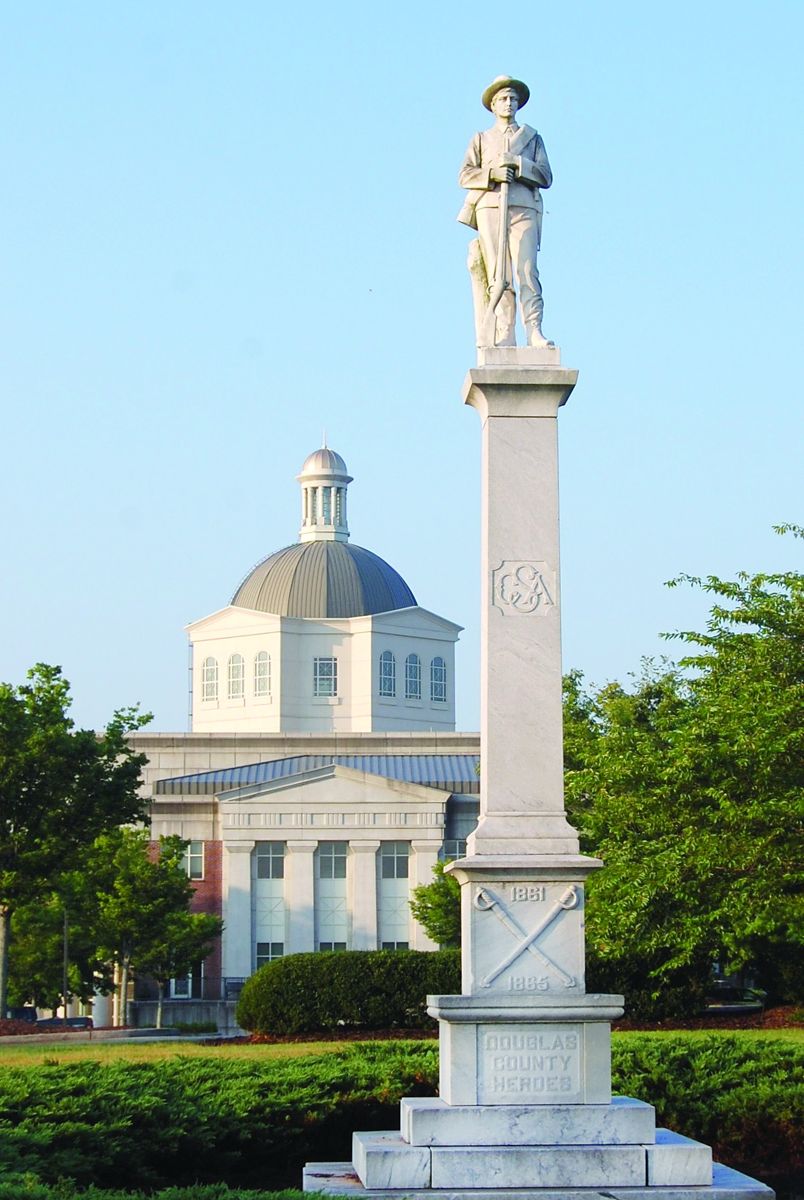
The news frequently contains stories about proposals to remove Confederate monuments. Less often do we read that these plans are carried out. Based on my study of Georgia’s monuments over the past 25 years I can say that in this state there has been a lot more preservation and restoration than there has been removal and relocation. While some have been moved from one site to another, I am aware of no monument being destroyed or hidden from view. Furthermore, in Georgia, more than 25 new monuments have been built since 1990. Why so little follow-up to the headline-grabbing proposals? To consider this question, let’s first ask ourselves why these monuments were built in the first place. We must remember that most Confederate memorials are expressions of mourning. No reader of the Civil War News needs details of the war’s terrible toll. Civil War monuments, north and south, are among other things, cenotaphs – memorials to dead persons buried elsewhere. Thousands upon thousands of young men lost their lives on distant battlefields or died in hospitals or prison camps. Often their families had scant information about their loved ones’ final hours on earth or where their remains were interred. Do most Georgians, regardless of their origins and regardless of their opinions of the war and its causes, really want to see these cenotaphs destroyed? They are in essence gravestones of young men who went to war and did not return, living or dead. The Confederate monuments say more, of course, than “Our Confederate Dead.” They also praise the bravery of the ordinary man who, as the Crisp County monument tells us, “sprang into battle-line to defend his invaded country.” Tens of thousands of men – simple men who had no say so in the political decisions that led to war – fought for four years with bravery and determination against an enemy possessed of every material advantage. Again, regardless of their political views or interpretation of history, do not most Georgians believe that these soldierly qualities are worthy of admiration and remembrance? More controversial perhaps is another function served by Confederate memorials, the statements inscribed on the shafts that state an apologia for the Southern Cause. The monument at the DeKalb Courthouse contains these words: These men held that the states made the Union, that the Constitution is the evidence of the covenant, that the people of the state are subject to no power except as they have agreed, that free convention binds the parties to it, that there is sanctity in oaths and obligation in contracts, and in defense of these principles they pledged their lives, their fortunes and their sacred honor. Even for those who disagree with this view of the 1787 Constitution, is this not an interpretation worthy of note? Do Georgians want to allow the heckler’s veto to stop the discussion? Do they favor honest study of the nature of our republic and its history? Or do they want to bury views that were held 150 years ago by many “men of probity, character, public standing and unquestioned loyalty,” as President Eisenhower wrote as he explained his admiration of General Lee? Several Georgia monuments serve a dual purpose. Built between the two world wars, they honor both Georgia’s Confederates and their grandsons who fought for the United States in the Great War. Others express relief that the war was followed by a rapid reconciliation. “Cease Firing – Peace Is Proclaimed” says the angel to the weary soldier on Piedmont Park’s Peace Monument. The monument in Atlanta’s Westview Cemetery, built by local veterans themselves, quotes the Biblical verse “They shall beat their swords into ploughshares and their spears into pruning hooks.” Do the people of our state want to overlook the fact that this ghastly war was followed by a remarkable reunification? I am sure that debate will continue, and that calls for the removal of monuments will not cease, but as of now the answers to the questions posed above are clear. No monuments have been destroyed. Almost all have been cared for over the decades. Many have been restored and rebuilt as time took its toll or as they were damaged by windstorms and accidents. New monuments have gone up – including two that honor local men who fought for the Union. Moving Confederate monuments is nothing new. More than I can count are now in locations other than their original ones. These have been moved, but not re-moved. All the new setting are as prominent as the old sites. None have been destroyed. Georgians must want it that way.
Gould Hagler is the author of Georgia’s Confederate Monuments: In Honor of a Fallen Nation (Mercer University Press, 2014). All the photos are taken from this book, available from Mercer University
Press, retail outlets, online sellers, and directly from the author (gould. [email protected]).