
Canadians Serving In Our American Civil War
By John A. Punola · Originally published August 2016 · p. 12
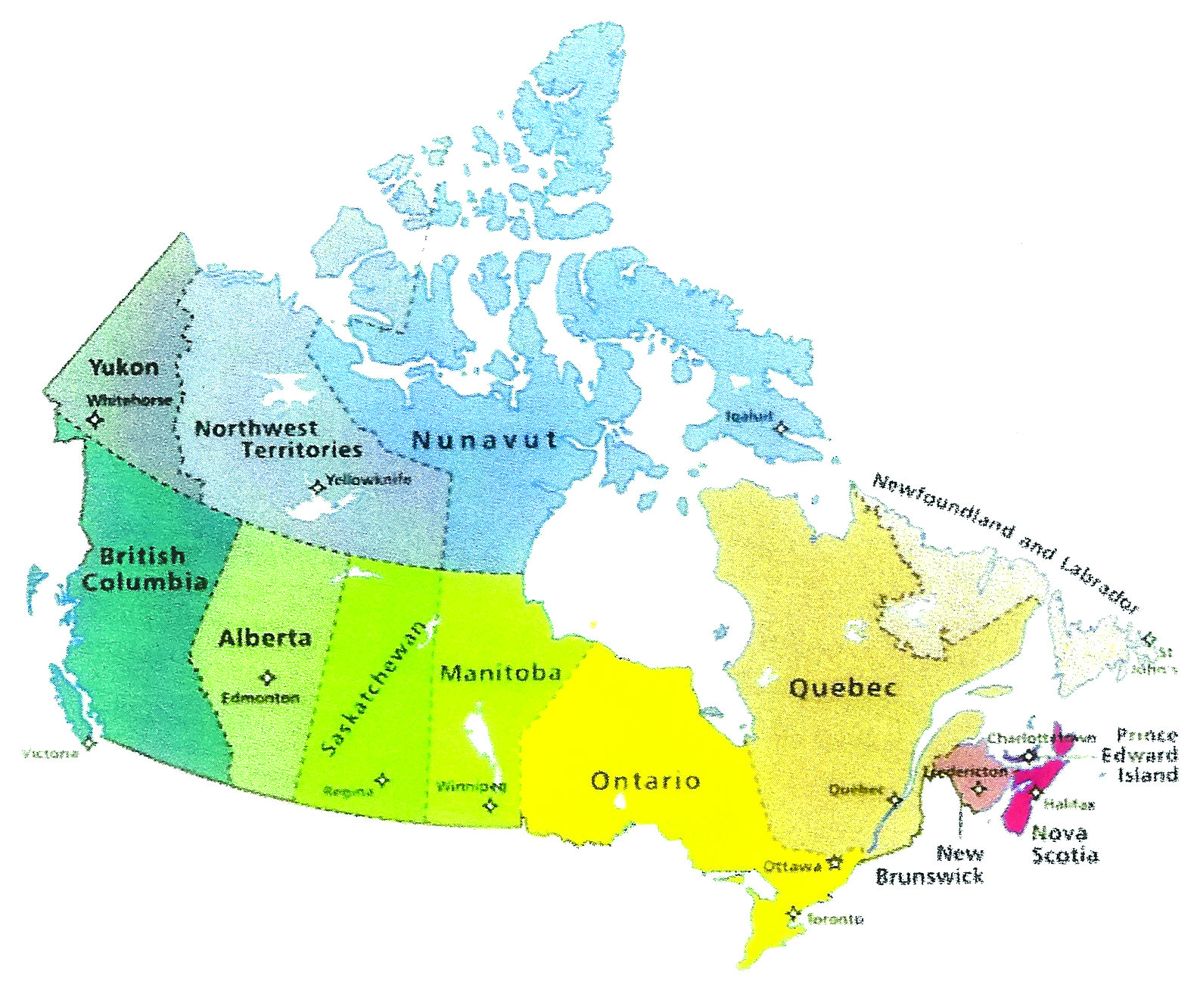
GETTYSBURG, Pa.—While visiting the Gettysburg battlefield last summer, I noticed some people looking for certain grave markers in the National Cemetery. What caught my attention were the flags they were placing red and white Canadian flags. I spoke to several of the group who told me they make an annual trip each year to honor Canadian men who fought and died at Gettysburg during that battle fought, July 1-3, 1863. There are a lot of history buffs, including Civil War historians, who are unaware that about 50,000 Canadian men served in the Union army, but about 550 of them went South to join the Confederacy. Joining the South was difficult for those men because they had to travel through Union lines to get there. The battle of Gettysburg is considered the high water mark for the Confederacy during the Civil War. Approximately 171,000 troops of the Union and Confederate armies battled for three days, and an estimated 45,500 were killed there. The outcome proved to be a costly victory for the Union, who suffered 24,000 casualties and massive losses in equipment and horses. Those Canadians who fought and died for the Union are estimated to be about 50 and are all buried in the National Cemetery in Gettysburg. Some Canadians who died at Gettysburg were identified and quickly buried with full honors. From the opening shots of the battle, July 1, to the final day, July 3, when Confederate General Pickett made his fatal charge, Canadians were involved with both armies. One Canadian of note was 18-year-
old Alex Lester from the Province of New Brunswick. Lester served with the 20th Maine and was killed defending Little Round Top on July 2. The movie Gettysburg glorified the heroic stand by the 20th Maine commanded by Joshua Chamberlain. During the period, 1861-1865, while the American Civil War was raging, Canada was not an independent country. It was still a colony of England and was neutral during the war despite having Canadians flock across the border to join the Union army. There was some tension between the Union and England because the Confederate commissioning of the CSS Alabama and Shenandoah, both commerce raiders built in England. The long border between the Union and the Canadian colonies was a factor. In the English-speaking portion of the colonies, there were strong ties with the Union. However, with the French-speaking part of the East and Maritimes, there was a decided sympathy for the secessionist South, and the French-speaking portion favored the Confederacy whenever it could. It was a long boat ride via blockade runners to reach the Southern ports. Hence, a low number of Canadians ever entered the ranks of the Confederate army. One might wonder why some estimated 33,000 to 55,000 Canadians would leave the safety of their land and travel southward to join in the fighting. The answer is simple; it was all about money. Then again, some Canadians might have fought for adventure as well as the lure of money. Perhaps some had a genuine personal feeling about slavery. Many who fought for the enlistment money came to like military life and chose to remain in the Union Army. The Canadians who stayed in the service earned full U.S. Government pensions, the same as regular Union army soldiers Many Canadians from the farmlands may have outgrown the rigors of a long rural life, or they worked in urban centers at low paying wages, or possibly did not have an income at all. The $60 a month pay to serve in the Union army was lots of money, as the Canadian wage ranged from 25 to 50 cents per day. There was also a minor risk in leaving Canada. There was neutrality between the Canadian colonies and America, and those who chose to leave to enlist into Union or Confederate armies ignored the law imposed from England, the Foreign Service Enlistment Act., which was rarely enforced.
is buried in Arlington National Cemetery. Some 700 Canadians were officially on the rolls as of January 1, 1883, as receiving U.S. military pensions. A roll call by U.S. Senate Resolution, published in 1883, provides the certificate numbers showing the names of all Canadian veterans who were receiving pensions. The record also shows reason for the pension, full postal address, the monthly pension rate and the effective date. Records also show the result of wounds or other effects arising from their service in the Civil War, 1861-1865. During the Civil War, there was an influx of Canadians to join the Union army, but political situation in Canada was also simmering with discontent. The colonies were undergoing As the war raged and Union casualties rose, the Union had a need to procure badly needed replacements. The government sent Union recruiters across the border into Canada to entice willing males to enlist in the Union army. The average Canadian could earn far more in the army than from the jobs available, so money was the biggest incentive. There was also a sense of adventure and gave the younger males an excuse to leave their homes and families to see action. The overall feeling was the war would be over in a short time, and they would return home in six months or so. States such as Wisconsin, Michigan, New York and Maine had the most Canadians in their ranks. All these states share a common border with Canada and presented easy targets for the Union recruiters. The state of Wisconsin had an all-Canadian unit, the Wisconsin 12th Infantry Regiment, which served with honor and distinction throughout the war. The state with the most Canadian recruits was New York, followed by Michigan, Maine, Illinois, Pennsylvania, Ohio, Minnesota, Vermont, New Hampshire and Wisconsin. At war’s end, four Canadians had attained the rank of general, and twenty-nine had earned the Medal of Honor. One Canadian, who served with the Confederacy the same aspirations as the American colonies did in 1776. The land size of the Canadian colonies stretched from the Atlantic to Pacific oceans and contained various cultures and languages that also caused some minor problems. The Eastern part of Canada had been territory gained by virtue of English victory from the French & Indian war, and those settlers remained hostile to English rule. But it seemed inevitable that the Canadian colonies would break from the rule of the Crown in England. This finally happened in 1867, just two years after the end of the American Civil War. The Canadians gained their long-awaited independence, but preferred to remain tied to England. Despite close ties to the Union, there was a developing sympathy for the cause of the South. As the civil war continued, Confederates sent spies and goodwill agents to Montreal, Quebec to seek support for their cause. As the Union slowly began to gain superiority in men and materials, the South needed a diversion that would send the war into Union territory. Unknown to the Canadians, escaped Southern prisoners, and there were many in Montreal, were authorized by Richmond, Va. to plan a hitand-run raid on a Union town near the Canadian border. After a brief training session by seasoned cavalry
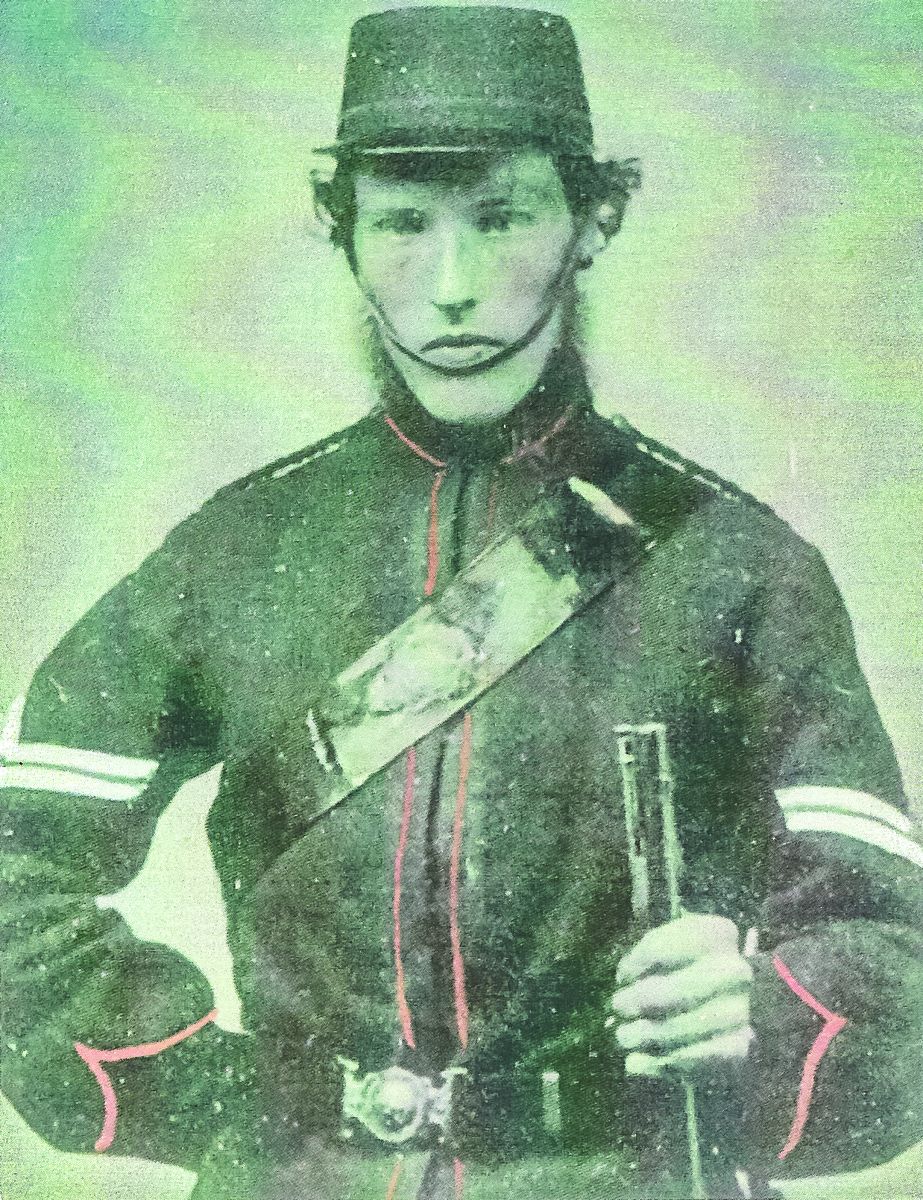
A Canadian, D. Wallace, served with Battery 1, 5th Artillery New York State. He was killed on the first day of fighting at Gettysburg. troopers, final plans were devised to raid a Yankee town. Bennett H. Young, a Confederate officer, was ordered to lead the raid with a force of twenty-five loyal, well-trained men. The selected target was the prosperous town of St Albans, Vermont. The group crossed from Canada and then split into small parties in civilian dress. They entered St. Albans posing as hunters, which was normal for that time of the year. Young and his troops were in no hurry and stayed several weeks to blend into the community. On the morning of October 19, 1864, the Confederates changed into full army dress and set about robbing all the banks and setting fires to prominent buildings. From the three banks they robbed, they took $225,000. Then using captured horses, the Confederates made a quick escape back into Canada. Eventually they were captured by local authorities and brought to trial before Judge C. J. Coursol in Montreal. Judge Coursol released all the Confederates, saying they had done nothing illegal in the eyes of Canadian law. Some money was recovered and returned to the three banks in St. Albans. Despite the return of some money, there was outrage in the Union who viewed the Canadians as unable to adequately patrol the border. A short time after the raid, Congress ordered the pursuit of any future raiders across the Canadian border and destroy them if necessary. This drastic action would have violated Canadian neutrality and would have led to war with the Union. President Lincoln wisely rescinded the order to avoid an incident. Meeting the Canadians at Gettysburg battlefield and seeing their continued devotion to honoring their heroes who fought and died in our Civil War made a lasting impression on me. They felt they were honoring their Canadian sons with no regard for the circumstances of the conflict, yet still remained loyal and caring Canadians who love their flag and country. The introduction of Canadian soldiers plus the large number of freed slaves into the Union armies dramatically tipped the scales in favor of a total Union victory ending the bloody American Civil War.