Battle Of Glorieta Pass Reenactment
By Tim Massey · Originally published August 2016 · p. 15
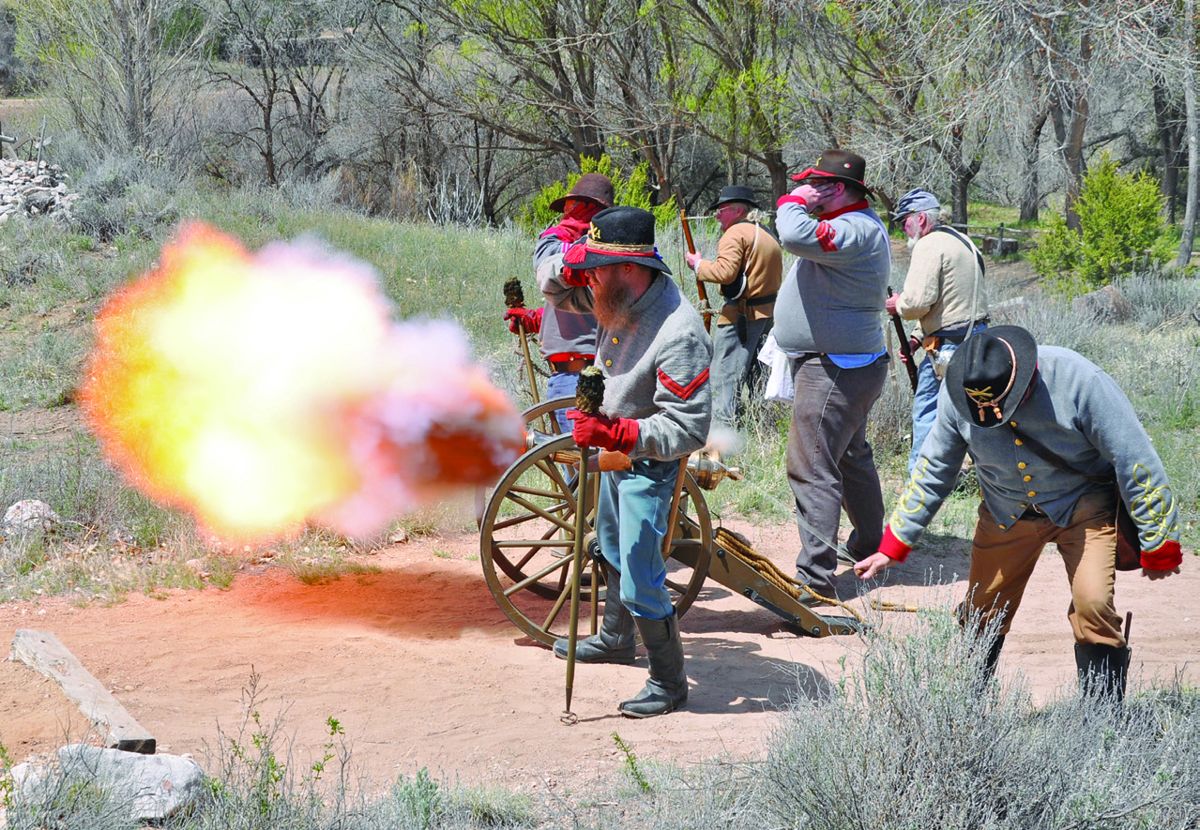
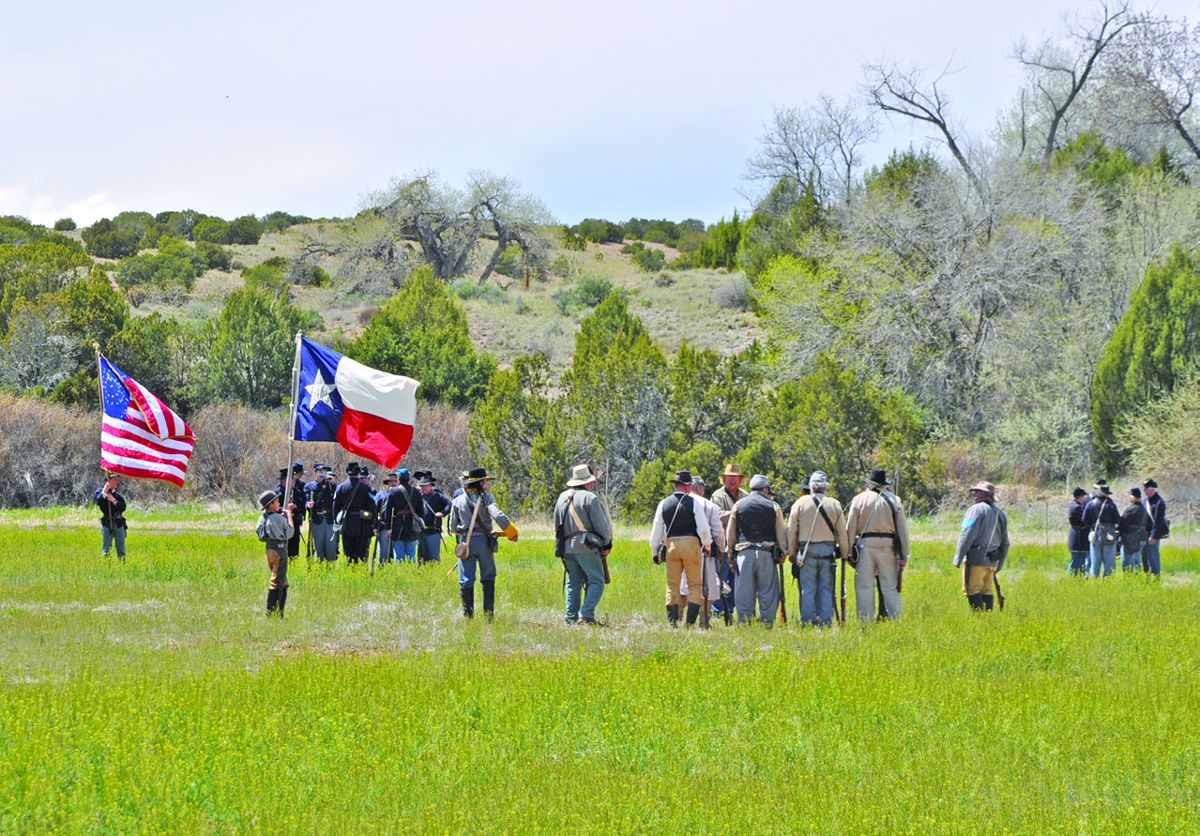
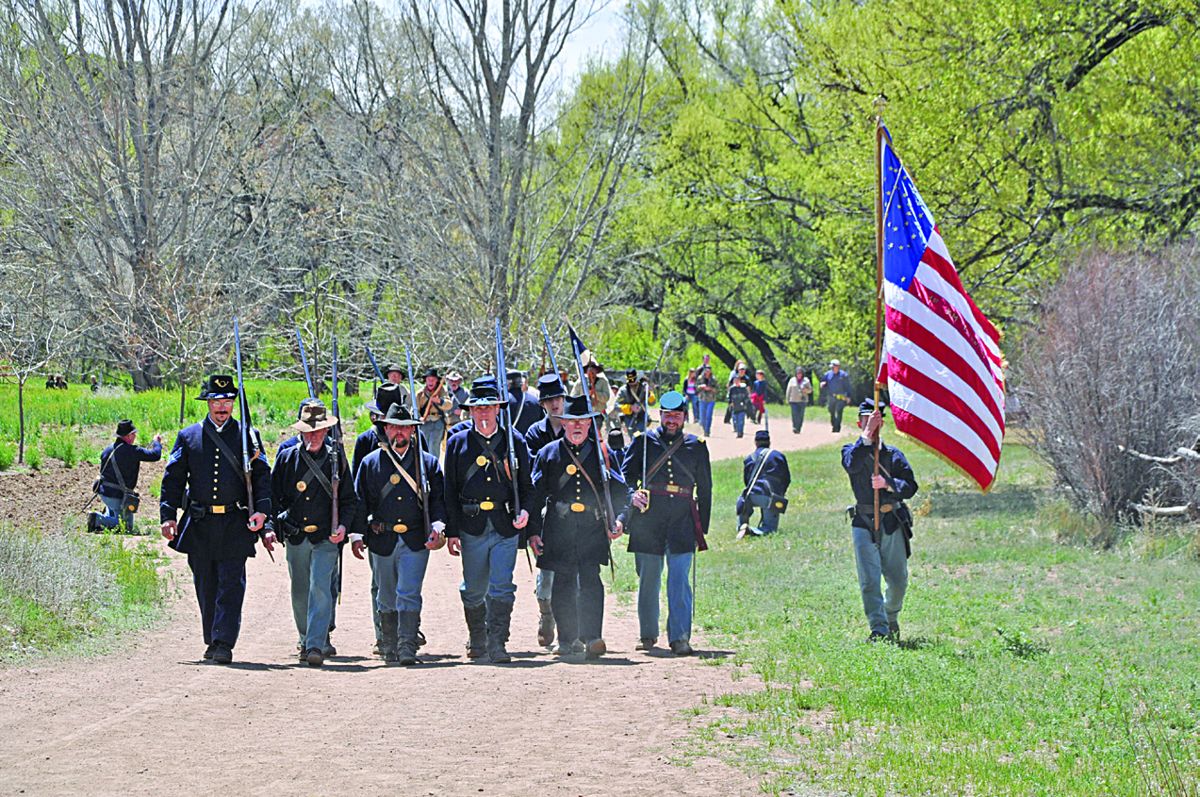
SANTA FE, N. Mex.—I had the pleasure of being a part of the First Texas Frontier Battery during the reenactment of the Battle of Glorieta Pass at the El Rancho de las Golondrinas in Sante Fe, N. Mex. The museum hosted the 2016 reenactment as part of its New Mexico: The Civil War and More on April 30 and May 1. The ranch was founded by Miguel Vega y Coca in 1710. This “living museum” recreates 18th-century Spanish colonial ranch life and hosts an abundance of recreated, and original buildings. The Battle of Glorieta Pass, fought March 26-28, 1862, was the decisive battle of the New Mexico Campaign during the American Civil War. Authors have dubbed it as “the Gettysburg of the West.” The Southerners planned on taking Fort Union and then capturing the gold fields of Colorado before marching west to California. Confederate Brigadier General Henry Sibley’s plan was to march up the Rio Grande Valley to capture federal supplies of food and munitions along the way to Santa Fe. Then he planned to swing east over Glorieta Pass, through Fort Union near present-day Las Vegas, and then north to the Colorado gold fields. The gold would have allowed the Confederacy to buy much-needed supplies, with Pacific seaports under their control, they would have more ways to evade the Union blockade on the eastern ports. The soldiers would then march west on the Oregon Trail to take California, where the Confederates believed there were plenty of Southern sympathizers who would augment Sibley’s force. The pro-Union Colorado force of 1,342 officers and men marched south at a brisk pace from Denver, covering 400 miles in 14 days to reach Fort Union on March 10, 1862. Union and Rebel forces met two weeks later, about 25 miles east of Santa Fe at Glorieta Pass. The Confederates had the edge at first. Then, as one Texan put it, the Federals climbed into the rocks above and started “shooting us down like sheep.” Union troops also burned supplies they couldn’t carry to keep them out of the Confederates hands. This crushed the Confederates hopes of resupplying off the enemy. While Sibley defeated Union forces at Valverde and Glorieta Pass, he was unable to withstand the determined Union counterattack. He and his 1,500 remaining troops withdrew to Fort Bliss, Texas, and on to San Antonio. His performance in the campaigns of 1862-63 is widely regarded as poor at best. Glorieta’s comparison to Gettysburg comes from the “turning of the tide” of this western expansion. It in no way reflects the massive battle at Gettysburg. It did effectively put an end to any future attempts at western expansion by the Confederates. The reenactment weekend proved interesting with twenty degree nights and days peppered with rain, snow, and sunshine. Hundreds of people braved the elements both days to visit the camps and take in the battle. Living historians provided a glimpse of camp life, military drills, weapons, the role of women during the period of the war, and music. Scenarios for the spectators included the capture and trial of deserters, leading to their being tried and shot. The reenactment battle scenario allowed the Union to win the first day and the Confederates the second. Union and Confederate camps were well dispersed in the expansive grounds of the museum. It gave the feel that two armies were indeed camped in close proximity, but not too close. The entire park was a beehive of activity as visitors mingled, and living historians went about their chores. When it was time for the battle all eyes were focused on the field. The roar of cannon quickly brought those who had lingered behind to the stands near the battlefield. The First Texas Frontier Battery made warm work with their two mountain howitzers. The Union side was slow to respond with their less mobile Napoleon. The two army’s infantry then made their way toward each other and a running battle ensued both days. It was a well-proportioned fight which made use of roads, hills and valleys. It culminated in front of the spectators who were seated in the stands. It was a great weekend at an awesome event. It is heartwarming to see the interest in the Civil War period in the West and to share in the activities with the reenactors. Many think the war ended at the Mississippi River, but this event proves otherwise. Check out the El Rancho de las Golondrinas web page at https:// golondrinas.org