
Through the Lens
We Got Them Now!
By Stephanie Hagiwara · Originally published September-October 2026 · pp. 14–17
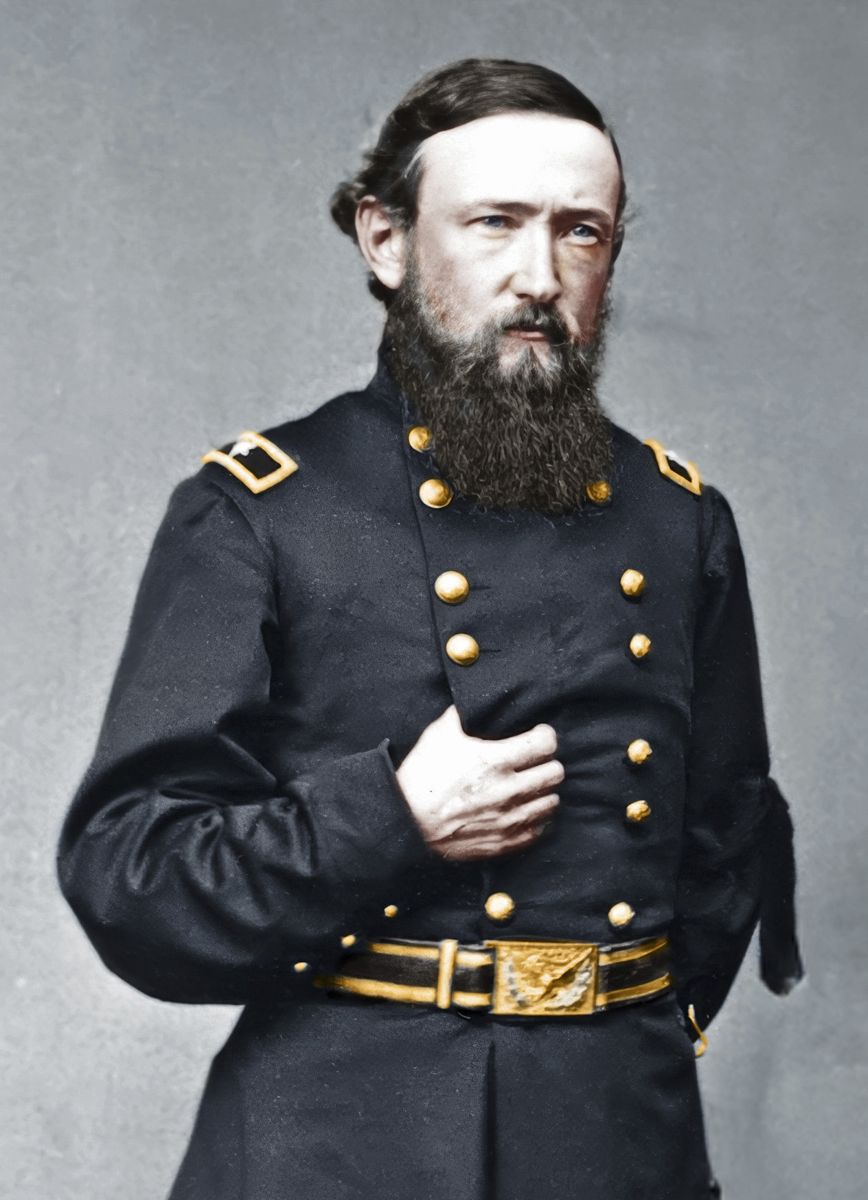
On July 17, 1864, President Jefferson Davis relieved Gen. Joseph E. Johnston as commander of the Army of Tennessee. Throughout the war, Davis and Johnston held fundamentally different views on Confederate strategy. Outnumbered, Johnston requested cavalry to break the supply lines of U.S. Gen. William T. Sherman’s Military Division of the Mississippi, enabling him to attack an isolated element of the Federal command. Johnston was trading territory for time. Davis rejected the cavalry request. He opposed relinquishing any position he could hold and wanted a general determined to safeguard Atlanta, Georgia. Davis replaced Johnston with John Bell Hood, a 33-year-old general known for his aggressive temperament. The senior generals of the Army of Tennessee, including Hood, protested Johnston’s replacement “until the fate of Atlanta is decided.” Davis held firm. The change was intended to prevent the fall of Atlanta. As commander, Johnston had maintained the confidence of his men despite the discouraging retreat toward Atlanta. He had “always been looking out for our comfort and safety” and had seen that they “had something to eat.” The army’s rank and file were dismayed by the change. Hood was known for large-scale, bloody assaults. They would be fighting “for the cause, not the general.” Hood spent his first day in command reviewing the status of his army. He learned that Sherman had split his forces to attack from multiple directions. Hood planned to strike U.S. Gen. George H. Thomas’s Army of the Cumberland after it crossed Peachtree Creek and before it could build breastworks. Generals Alexander P. Stewart and William J. Hardee would attack from right to left, driving Thomas’s army into the junction of Peachtree Creek and the Chattahoochee River. Hood planned for the attack to begin at 1 p.m. On July 20, 1864, Hood spent the morning positioning and repositioning his army, which had slid off its designated starting point. About 10 a.m., a reporter noted that Hood’s eyes flashed with “a strange indescribable light.” Hood was anticipating victory. Thomas’s army spent the morning crossing the creek and establishing defenses. The ground consisted of low hills, ridges, ravines, small streams, fields, pine trees, and dense undergrowth. Gen. John M. Palmer’s XIV Corps took position on the right, Gen. Joseph Hooker’s XX Corps in the center, and a division of Gen. John Newton’s IV Corps on the left. U.S. Col. Benjamin Harrison, 3rd Division, XX Corps, 1st Brigade, was situated between Geary’s and Newton’s men. The future U.S. president and grandson of former President William Henry Harrison was positioned at the bottom of a hill in the creek bed. On his left was Col. John Colburn’s brigade of the 2nd Division. A gristmill stood about 300 yards away. Before him was “a steep bluff, after rising which there was a level field cultivated in corn some 400 yards across, and beyond which the ground again sloped down toward the bed of a small creek.” Above the creek, covered with “small pines,” was a high ridge. Harrison determined that the ridge “was the key point to the whole position.” He tasked 100 Spencer riflemen with reinforcing his skirmishers on the hill. The Battle of Peachtree Creek began about 3 p.m. The skirmishers fired rapidly from the hill. Officers yelled for the men to “Fall in! Fall in!” The men exclaimed, “Boys, they are out of their works! We got them now!” C.S. Gen. William W. Loring, S t e w a r t ’s right-division commander, moved into action against U.S. Gen. William T. U.S. Model 1860 Spencer rifle designed by Christopher Spencer. This rifle held seven .56.56 rimfire cartridges in the butt stock and capable of firing a round about every 18 seconds. (Jack W. Melton Jr.)
Ward’s 3rd Division. Stewart told the men, “We must carry everything, allowing no obstacle to stop us.” The “whooping” Confederates poured out of the woods from the high ridge, drawn toward the only brigade without breastworks. Harrison and Colburn swiftly advanced up the bluff in the intense heat. The cornfield became the battlefield. Between the Spencer riflemen, the artillery’s case shot and shell, and the distance charged, the Confederate line began to waver. “The officers, with drawn swords, were trying to steady their lines and push them forward.” Before the enemy could receive reinforcements, Harrison ordered an attack using the three regiments on the left of the creek. “Our advance, though desperately resisted by the enemy, was steady and unfaltering; the fighting was hand to hand, and step by step.” C.S. Gen. Winfield S. Featherston, on Loring’s right, made his way 800 yards over the ridges and through deep ravines, rough ground, and dense undergrowth, where he was to meet Gen. George Maney’s men. Featherston waited. Assuming Maney’s men had not encountered any Federals, he ordered a charge. At the double-quick, the Confederates dashed for the gap between Newton’s and Geary’s men. They swept the skirmishers off the field.
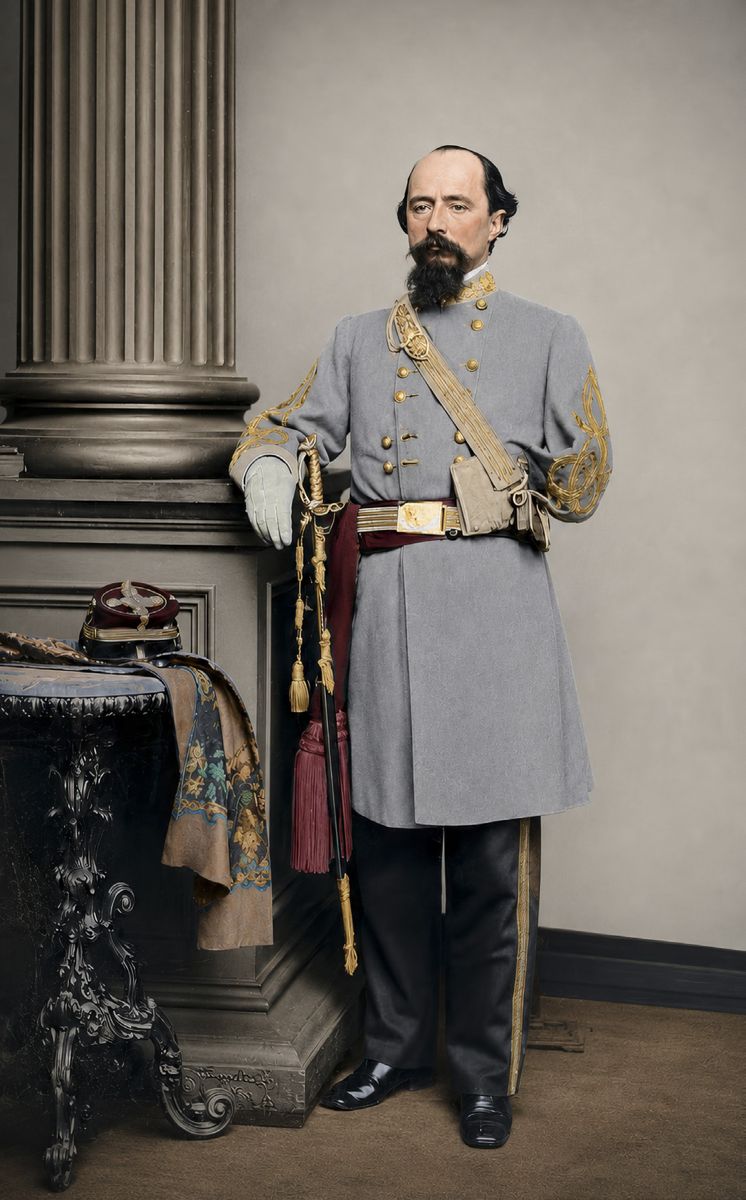
C.S. Gen. Thomas M. Scott, on Loring’s left, overran Geary’s 33rd New Jersey and snatched the state flag. Using a ravine, his men got behind fleeing Federal troops, who abandoned their four-gun battery. Harrison moved two regiments farther up the slope of the hill. His left flank was exposed. The predicament was pointed out to Capt. H. M. Endsley, commanding the leftwing regiment. Endsley replied, “I can’t see it,” and kept driving up toward the enemy. Colburn’s brigade fought its way to the top, connecting with Harrison’s left flank. The men pushed the enemy off the key ridge. “We could see the divisions on the right and left giving away in apparent confusion. … But our advance seemed to give them encouragement – they rallied and retook their lines,” wrote Colburn. Midway during their surge across the field, Featherston’s men slowed to cross the marsh and creek. The Federals opened fire from the front, right, and rear. Plunged into confusion, the Confederates fired in all directions. Featherston retreated through the woods to Collier Road. Geary’s reserve, under Col. David Ireland, arrived and forced Scott into a bloody seesaw fight. Hooker, on horseback, rallied the men and pushed Scott into retreat. Hooker was able to establish a firm center line. The battle ended late that afternoon after raging for three hours. The following morning, Hooker came by to congratulate Harrison. He supposedly said, “I’ll make you a brigadier general for this fight.” According to Colburn, had Harrison “been a West Pointer his promotion would have been ordered by telegraph.” Hooker later wrote to Secretary of War Edwin M. Stanton recommending Harrison’s promotion. On January 23, 1865, Harrison was promoted to brevet brigadier general. Sources:
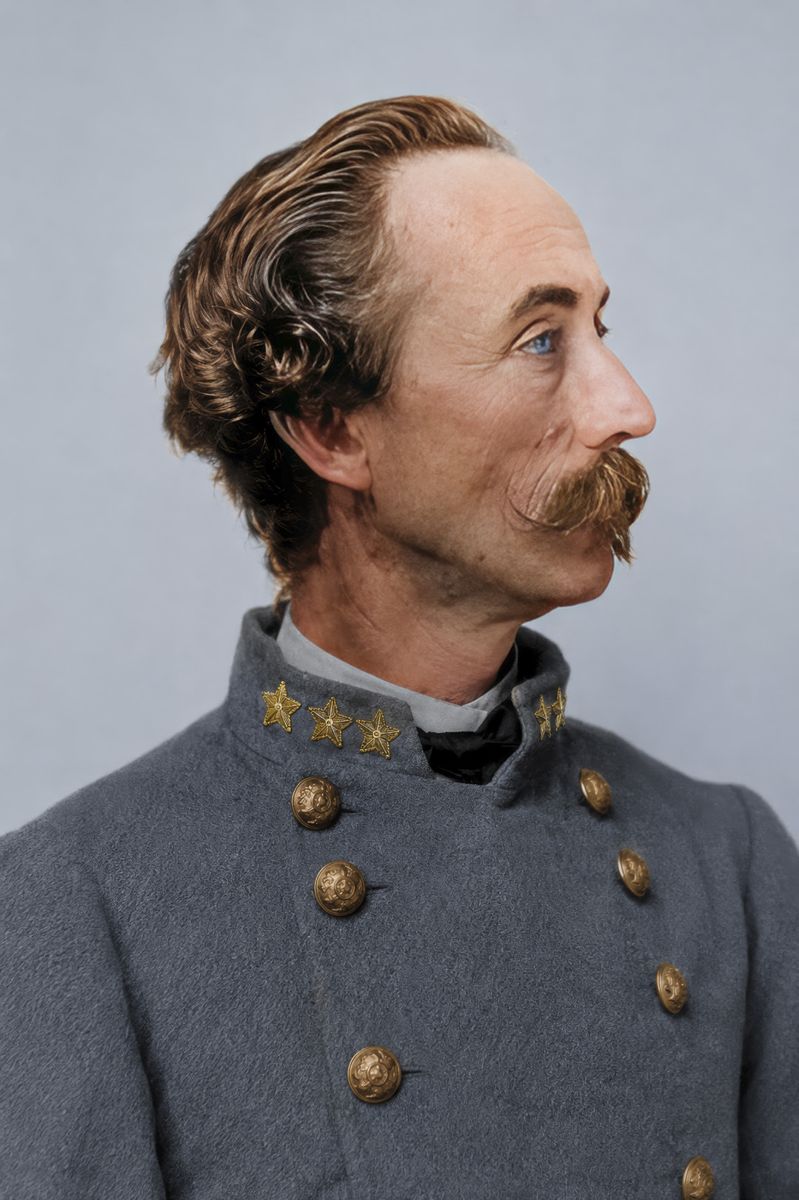
Castel, Albert. Decision in the West: The Atlanta Campaign of 1864. Lawrence: University Press of Kansas, 1992. Merrill, Samuel. The Seventieth Indiana Volunteer Infantry in the War of the Rebellion. Indianapolis: The Bowen-Merrill Company, 1900.
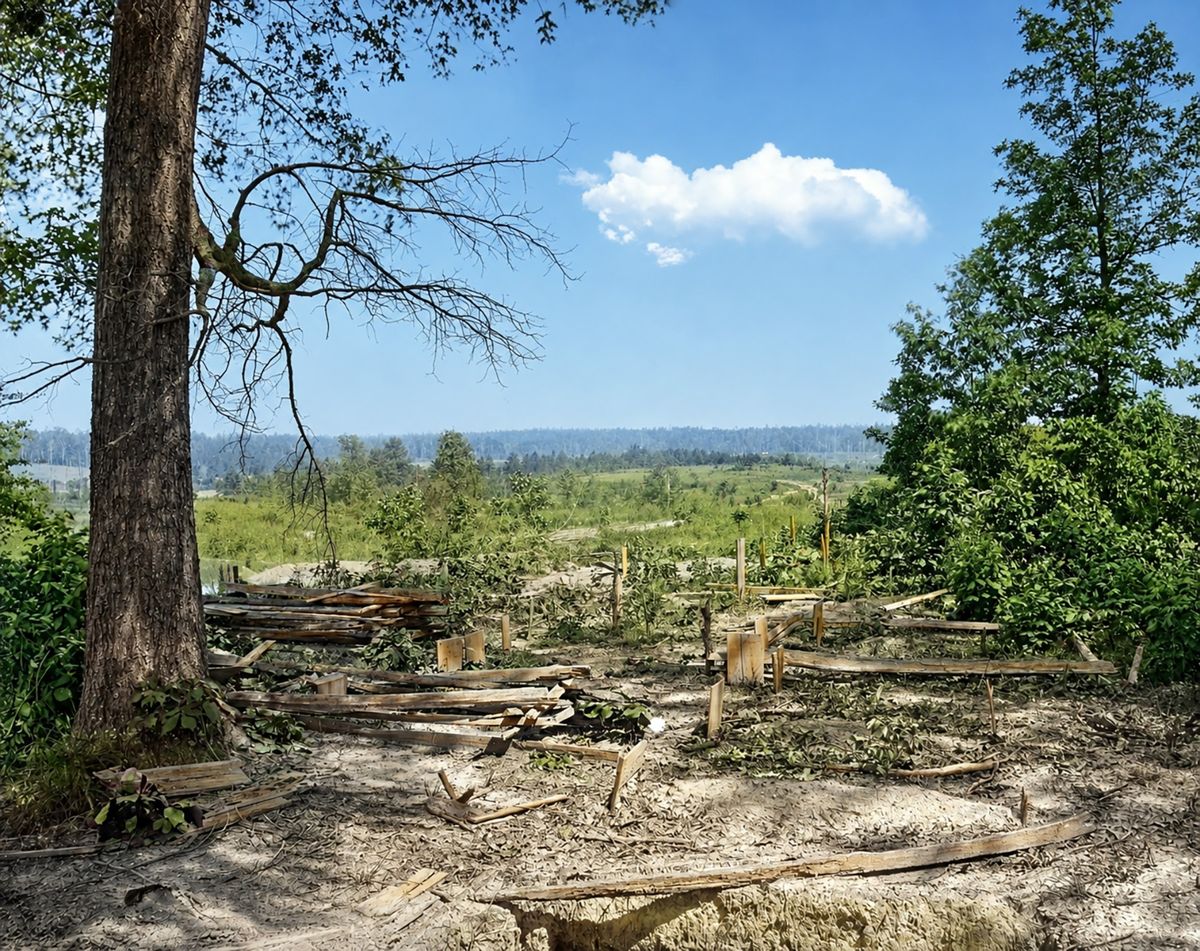
United States War Department. The War of the Rebellion: A Compilation of the Official Records of the Union and Confederate Armies. Series 1, Vol. 38, Part 2. Washington: Government Printing Office, 1894, 344–347.
Stephanie Hagiwara is the editor for CivilWarinColor.com and CivilWarin3D.com. She also writes a column for Historyin FullColor.com that covers stories of photographs of historical interest from the 1850s to the present. Her articles can be found on Facebook, Tumblr, and Pinterest.