
The Battle of Varnell Station, May 9, 1864
By Robert D. Jenkins Sr. · Originally published September-October 2026 · pp. 44–49
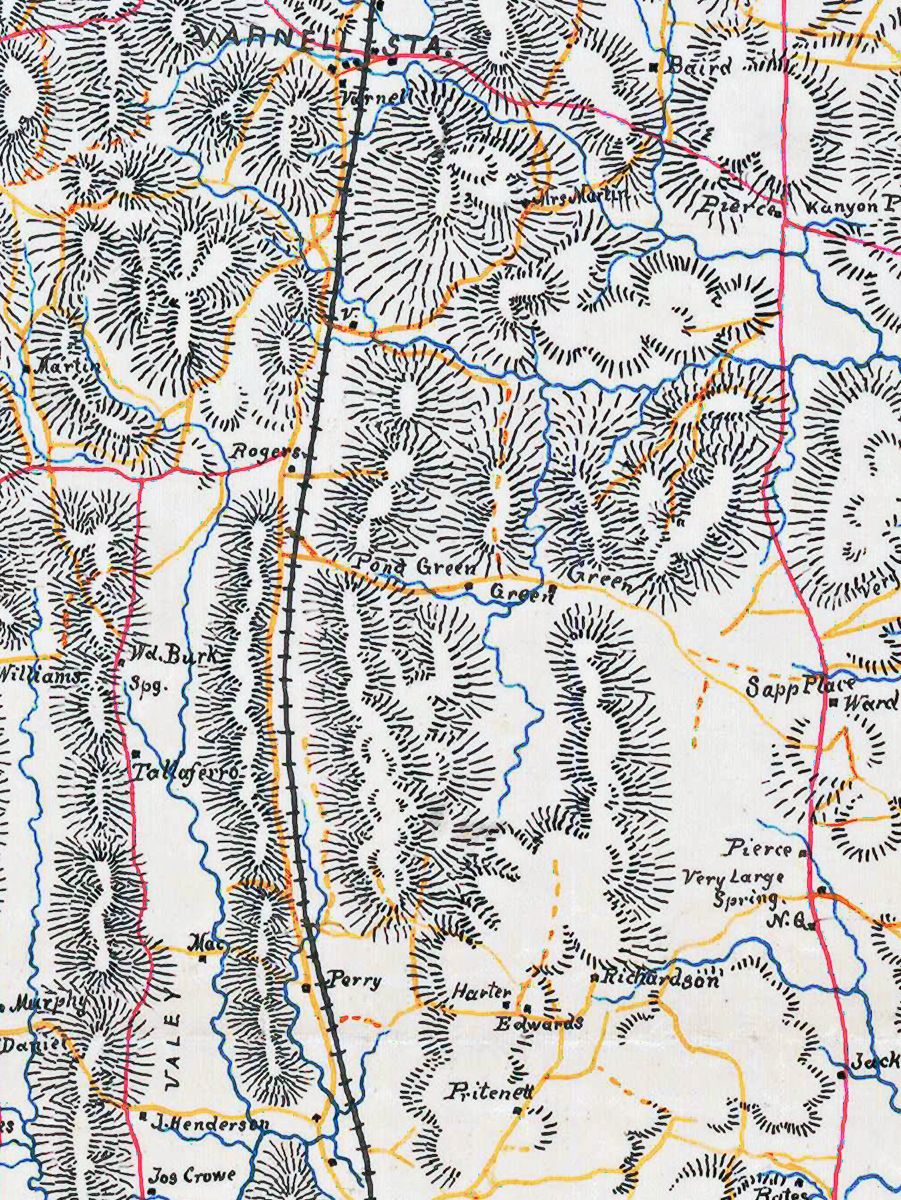
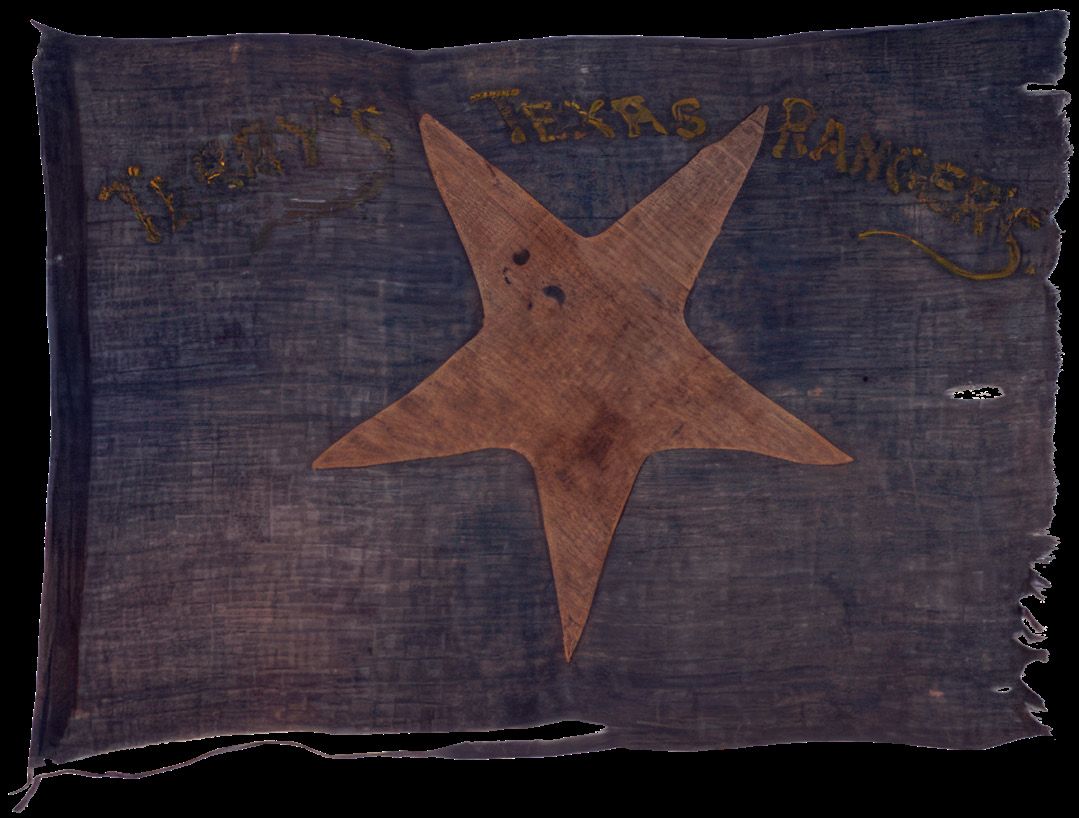
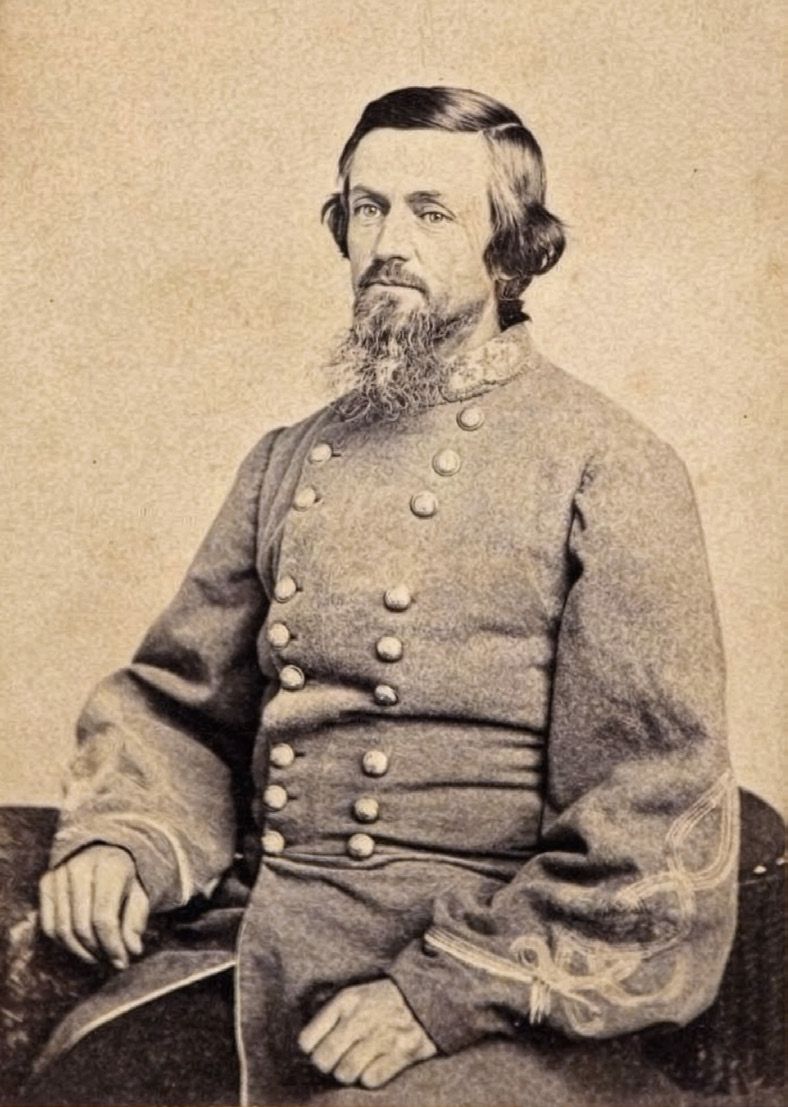
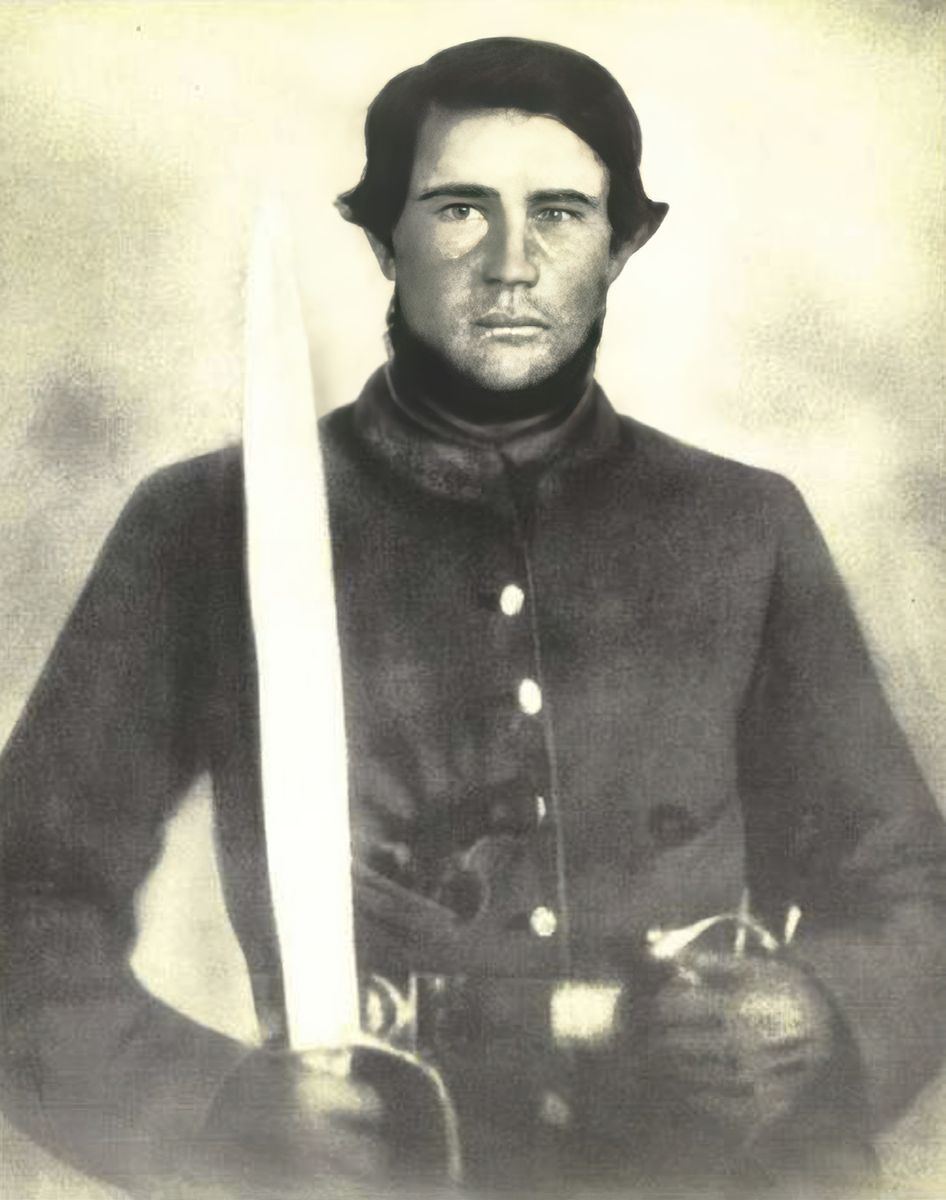
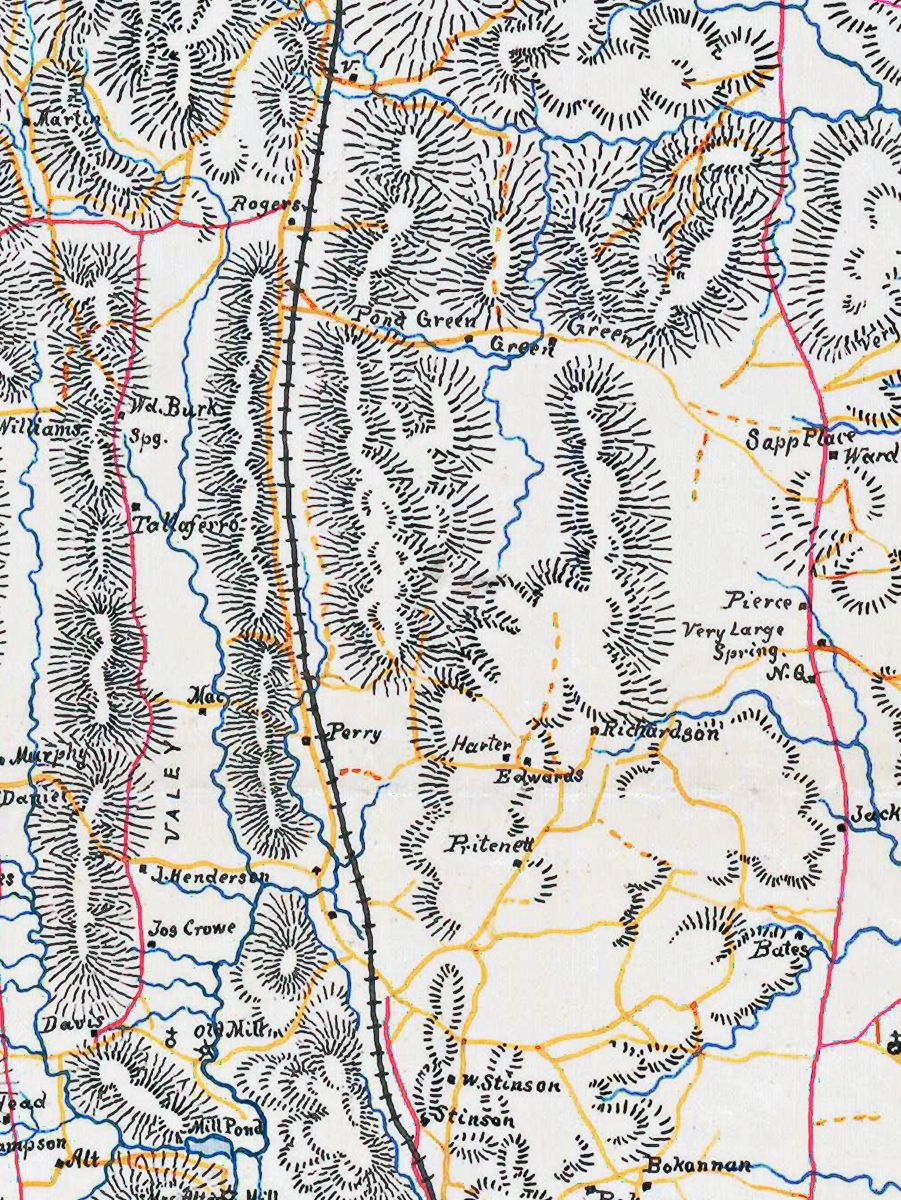
During the late morning of May 9, 1864, Brigadier General Edward M. McCook led his First Division of Cavalry, Army of the Cumberland, a two-brigade force of some 2,800 troopers, south from Varnell Station toward the important Southern railroad town of Dalton, Georgia. The Western and Atlantic Railroad linked Dalton with Chattanooga to the northwest, while the East Tennessee and Georgia Railroad connected the Peach State with Cleveland, Tennessee, and Knoxville beyond. Tasked with covering the left flank of General William T. Sherman’s offensive into Georgia, part of the North’s grand strategy in the spring of 1864, McCook’s small cavalry contingent faced a daunting assignment. Union Colonel Oscar H. LaGrange and his cavalry brigade proceeded down the Varnell Station–Dalton Road along the west side of the East Tennessee and Georgia Railroad (roughly today’s Tunnel Hill–Varnell Road to Sonya Drive NW, Old Waring Road, Waring Road, and Silhouette Way1). LaGrange’s troopers formed the extreme left of the Federal advance on Dalton. Unsupported by any other blue-clad force within several miles, LaGrange’s three regiments, the 2nd Indiana under Lieutenant Colonel James W. Stewart, the 4th Indiana led by Lieutenant Colonel Horace P. Lamson, and the 1st Wisconsin commanded by Major Nathan Paine, totaled about 1,200 troopers. They advanced down the road toward Dalton as the balance of Major General John M. Schofield’s force probed toward Crow Valley.2 LaGrange’s brigade advanced toward Dalton with the 4th Indiana Cavalry in the van, followed by the 1st Wisconsin Cavalry and, in the rear, the 2nd Indiana Cavalry. McCook moved with his First Brigade, led by Colonel Joseph B. Dorr, toward Crow Valley and Poplar Springs (generally following today’s Reed Road [the old roadbed is a little west of the modern road] and Kittle Road NW) to cover the left flank of Schofield’s Army of the Ohio, the XXIII Corps. Dorr’s command consisted of the 8th Iowa, the 2nd Michigan, and the 1st Tennessee Cavalry Regiments, totaling about 1,600 troopers. A long, narrow ridge separated the two Federal cavalry columns. Only a few farm lanes connected the routes, and those lanes were several miles apart. The head of LaGrange’s brigade made contact with grayclad troopers of the 4th Tennessee Cavalry at a crossroads two miles south of Varnell Station, at the intersection of today’s Rauschenberg Road and Waring Road. The Federals easily brushed them away after inflicting three casualties, and the Rebel pickets fled east toward the Sapp Farm on the Cleveland Road. LaGrange’s force then pressed steadily southward down the railroad for about a mile until it encountered strong resistance from what Federal officers believed was the main Confederate line. There, a battalion of the 4th Indiana Cavalry, four companies, dismounted and pressed the Southern line on foot. Suddenly, the Hoosiers were met by an onslaught of Confederate troopers who had also dismounted and were moving directly toward them. This was approximately today’s Brown Bear Path and Dover Street NW, next to Waring Road and the railroad. The balance of the 4th Indiana Cavalry rushed forward to extend the skirmish line, but the Hoosiers remained badly outnumbered. Seeing the resistance stiffen, LaGrange ordered the 1st Wisconsin Cavalry to the right of the 4th Indiana Cavalry, lengthening the Federal line. Even the two deployed regiments were not enough to stop the gray-clad counter-surge. Confederate cavalrymen from the brigades of Brigadier Generals William W. Allen and George G. Dibrell made a spirited counterattack on foot, while two other regiments, the 8th Confederate Cavalry Regiment under Colonel John S. Prather and the 8th Texas Rangers Cavalry Regiment led by Lieutenant Colonel Gustave Cook, charged the surprised Federal cavalry while mounted. Also forming on the Cleveland Road near the Sapp Farm, Confederate cavalry commander Major General Joseph Wheeler, nicknamed “War Child”3 due to his youth and appearance, led Colonel Thomas Harrison’s brigade west to join the assault. In all, some 2,200 gray-clad troopers, most from Brigadier General John H. Kelly’s division, struck LaGrange’s line. Many men from the two forward Federal regiments fled on foot toward the hills to the west, toward Tunnel Hill and the safety of the Federal lines. Others tried to turn and gallop north toward Varnell Station. Some lost their horses in the melee, including Major Nathan Paine, who was injured when he fell from his horse.4 According to one Southern officer, the 8th Confederate Cavalry made the first contact with the Federals, “flying downhill, pistols drawn.” The officer recalled that the 8th Confederate Cavalry “passed in a gallop through our skirmishers and charged down the ridge with a wild yell, rode over the first line of the enemy, then, firing at close quarters, dashed on to the second line and crushed it, killing some, wounding others and capturing nearly all of the second line.” Before the Northerners could recoil, the 8th Texas joined in the charge and cleared the field, turning the blue withdrawal into a rout.5 Captain George Knox Miller of the 8th Confederate Cavalry recalled, “our pickets were driven in about 10 o’clock A.M. and our forces [were] immediately summoned to the field where we found a large force of cavalry & mounted infantry confronting us. Gen. [John H.] Kelly [his division commander] quickly got into battle order & ordered our Regt. to charge,” explained the captain in a letter to his wife, Celestine. “We did so under a leaden storm from the Yankee cavalry dismounted and well posted in open woods. We drove them before us in gallant style capturing one hundred prisoners with their arms—but being without support, full fruits of our charge were not reaped.”6 After the Confederate charge pressed through two of the Federal regiments before the blue-clad horsemen could react, the third Northern cavalry regiment in line, the 2nd Indiana Cavalry, briefly resisted the onslaught before the determined Southerners broke its line as well. A rout soon ensued. The Hoosiers withdrew in confusion, some back toward Varnell Station and others west toward Tunnel Hill, splitting the force. Many Federal cavalrymen lost their mounts when startled horses bucked riders from their saddles. Others who remained mounted bolted to the rear, one way or another, their stampeded horses determining the route for the bewildered riders. A few made a weak effort to resist the Confederate onslaught, but they were quickly overrun by the Southern cavalrymen, who charged into the unsupported Federal left flank from a low wooded ridge that had concealed them before the attack. During the calamity, which occurred between noon and 2 p.m., LaGrange’s brigade was completely routed.7 By the time LaGrange’s men stopped running, they were scattered between Varnell Station, two miles north of where they had been surprised, and positions two miles to the west along the Tunnel Hill Road, in the rear of Schofield’s lines. Colonel LaGrange fell during the action when his horse was shot as he tried to escape. Trooper Daniel Tweed Ferrier of the 2nd Indiana Cavalry quickly dismounted and gave up his horse to the riderless colonel, an act of bravery that led to Ferrier’s capture and subsequent escape. Ferrier was awarded the Medal of Honor after the war for his sacrifice for LaGrange. The colonel was soon unseated again when the second horse was shot. LaGrange was wounded and captured, and his brigade reported casualties included 11 officers and 136 enlisted men killed, wounded, and missing. Alerted to LaGrange’s peril, McCook, with Dorr’s brigade, quickly reversed course to rejoin his beleaguered comrades at the crossroads.8 When McCook arrived on the scene, he found his Second Brigade broken into two parts, one falling back on the left of Schofield’s infantry toward Harris’ Gap and Tunnel Hill, and the other falling back on Varnell Station. According to McCook, LaGrange’s brigade had been attacked by “two brigades of infantry and one of cavalry with a battery of artillery.” The Federal commander was apparently unaware that only two small, dismounted Confederate cavalry brigades and two small, mounted cavalry regiments had served as the initial antagonists. Once Wheeler’s additional force arrived from the Cleveland Road, however, the Rebels outnumbered LaGrange’s brigade by nearly three to one.9 McCook explained the fighting as it had been reported to him by some of the survivors. “The enemy were checked at the junction of two roads near this point.” This occurred near the intersection of today’s Reed Road and Rauschenberg Road. “My loss has been very serious, both in officers and men,” added McCook, who explained that only 25 of his wounded men had been brought off the field. “The men, from the nature of the country, were compelled to fight dismounted and without artillery against their infantry, artillery, and cavalry. Some of the horses belonging to dismounted men were lost.” While the Federal commander explained the disaster as best he could, he added that since his line was five miles long, “it was impossible to make it shorter and cover the roads” he had been ordered to guard. “No country could be worse than this to handle cavalry in,” McCook complained, deflecting responsibility for the debacle.10 On the Confederate side, the victory came at a cost. Captain Miller of the 8th Confederate Cavalry recalled, “Our loss was seven. My pet boy E. Ross Riddle was shot thro’ the heart while dashing to the encounter. Sergt. Hardie was badly wounded in [the] right arm and one other [man] badly wounded in the side. In Co. B also under my command, there was one killed and four or five wounded. But our most serious loss was Capt. Jno. S. McElderry who was killed dead but a few feet from me, just as he had killed one of the enemy with his repeater [revolver].” Confederate losses during the attack totaled 36 troopers, with 10 killed and another mortally wounded. Three other troopers were wounded during the first skirmish at the crossroads.11 Note: A list of the 10 Confederate soldiers killed can be found in Civil War News, Vol. 52, No. 3, p. 37.
Endnotes
- Silhouette Way is a private drive. The modern-day Waring Road runs along the east side of the railroad tracks, while the Civil War-era road proceeded along the west side of the tracks from Varnell Station to Dalton. The War of the Rebellion: A Compilation of the Official Records of the Union and Confederate Armies (hereafter OR), series I, vol. 38, serial no. 73, 509–510; William Scaife, The Campaign for Atlanta (Atlanta: Scaife, 1993), 170. Wheeler was also called “War Baby” by Captain George Knox Miller. Richard M. McMurry, ed., An Uncompromising Secessionist: The Civil War of George Knox Miller, Eighth (Wade’s) Confederate Cavalry (Tuscaloosa: University of Alabama Press, 2007), 191. Scaife, The Campaign for Atlanta, 19; OR, series I, vol. 38, serial no. 73, 750–751; OR, series I, vol. 38, serial no. 74, 615; John Witherspoon DuBose, General Joseph Wheeler and the Army of Tennessee (New York: Neale Publishing Co., 1912), 286. Edward G. Longacre, Cavalry of the Heartland: The Mounted Forces of the Army of Tennessee (Yardley, PA: Westholme Publishing, 2009), 268–271; Gustave Cook, letter to wife, May 9, 1864, Correspondence, Subject File, Lehrman Collection, New York, NY. After receiving accolades from officers and comrades, Colonel Cook smugly wrote his wife that evening: “It don’t hurt us to be complimented, as we are used to it.” 6. McMurry, An Uncompromising Secessionist, 201. 7. OR, series I, vol. 38, serial no. 73, 750–751; OR, series I, vol. 38, serial no. 74, 944. 8. Medal of Honor Museum, Chattanooga, TN; OR, series I, vol. 38, serial no. 73, 750–751, 781. 9. OR, series I, vol. 38, serial no. 73, 750–751. 10. OR, series I, vol. 38, serial no. 73, 750–751. 11. McMurry, An Uncompromising Secessionist, 201; Edwin L. Drake, ed., The Annals of the Army of Tennessee and Early Western History (Jackson, TN: The Guild Bindery Press, 1878), appendix, 87; Lieutenant General Joseph Wheeler, in Confederate Military History, ed. General Clement A. Evans, vol. 8, Alabama (Atlanta: Confederate Publishing Company, 1899), 363–364.
Robert D. (“Bob”) Jenkins Sr. the Executive Director of Blue and Gray Education Society, and he is a trial attorney practicing in Dalton, Ga., where he has maintained a general and civil trial practice since 1990. A native of Hattiesburg, Miss., Bob grew up in Chamblee, Ga. Bob was graduated from Georgia Southern University in 1987 with a B.B.A degree in Business Management with Minors in History and Geography. Bob received his Juris Doctor degree from Mercer University in 1990 and regularly practices in the courts throughout Northwest Georgia. In 2013, Bob Jenkins completed a book titled The Battle of Peach Tree Creek: Hood’s First Sortie, (Mercer University Press, Macon, GA: 2013). In 2014, Bob completed a second book, titled To the Gates of Atlanta: From Kennesaw Mountain to Peach Tree Creek, 1-19 July 1864, (Mercer University Press, Macon, GA: 2015). In 2016, Bob wrote an extensive article on the “Battles for Dalton,” which was published in the Blue and Gray magazine, January 2016 (Vol. XXXII, Issue 1) issue. Bob is President of Save the Dalton Battlefields, LLC, and is Vice Chair of Whitfield County’s Historic Preservation Commission. Through their efforts, the County has acquired and opened Mill Creek Gap Park, Potato Hill Park, and Rocky Face Ridge Park. His book on the Cassville controversies, The Cassville Affairs: Johnston, Hood and the Failed Confederate Strategy in the Atlanta Campaign, 19 May 1864 was published by Mercer University Press, Macon, GA, in 2024. Bob is married to Shari Ann Jenkins, and Wheeler the two have four grown children, HUMES and one granddaughter.
Battle of Varnell Station: Map 1 9 May 1864 Situation 8:00 AM – Noon 1. Ordered to cover the left of the Union forces entering Crow Valley north of Dalton, Brig. Genl. Edward M. McCook advance slowly from Varnell Station south down the East TN, VA, & GA RR with his 2 brigades (some 2,800 troopers). 2. Riding with his 1st Brigade led by Col. Joseph B. Dorr of Iowa, McCook and Dorr’s 1,600 horsemen move toward the smaller Cox’s Valley east of Crow Valley (via today’s Reed Road and Kittle Road) meeting no opposition. 3. Meanwhile, McCook’s 2nd Brigade, under Col. Oscar H. LaGrange of Wisconsin, follow the RR (via today’s Sonya Drive & Rauschenberg Road, to Waring Road) where they make contact with the 4th TN Cavalry (Confederate) of Brig. Genl. George Dibrell’s Brigade. Deploying 4 companies of the 4th IN Cavalry, LaGrange press back the Southern horsemen who flee east toward the Cleveland Road (via today’s Rauschenberg Road & Maple Grove Road, NW) to the Sapp Farm where they alert Maj. Genl. Joseph Wheeler of the advancing Federal column. © Robert D. Jenkins, Sr. & T.D. Helton 2026
Battle of Varnell Station: Map 2 9 May 1864 Situation Noon – 12:30 PM 1. LaGrange’s troopers continue south about 1 mile down the RR until they begin to meet resistance. 2. Dismounted cavalry from Dibrell’s Brigade form a heavy skirmish line impeding the foray of the small Hoosier battalion. 3. Alerted to the isolated Federal column, Wheeler, with a portion of Colonel Thomas H. Harrison’s Brigade, move from the Sapp Farm to intercept LaGrange. 4. Meanwhile, McCook and Dorr’s Brigade continue south toward Cox’s Valley and Potato Hill, unaware of the impending danger to LaGrange.
Battle of Varnell Station: Map 3 9 May 1864 Situation 12:30 PM – 12:45 PM 1. Unable to move the Southern skirmishers, the rest of the 4th IN Cavalry deploy. 2. Finding the Confederate line still outnumbers and outflanks the Hoosiers, LaGrange orders the large 1st WI Cavalry to deploy to the right and west of the Indianans, filling the narrow gap between the two ridges. 3. Dibrell’s and Allen’s brigades suddenly unleash a ferocious counterattack, with a portion of their force mounted and a portion dismounted, causing LaGrange’s line to break and begin to fall back. 4. Seeing the danger, the 2nd Indiana Cavalry move forward to quell the Southern attack, but are soon also swept up in the rout.
Battle of Varnell Station: Map 4 9 May 1864 Situation 12:45 PM – 2:00 PM 1. As LaGrange’s troopers begin to fall back toward the crossroads (today’s Waring Road and its intersection with Rauschenberg Road), they are suddenly struck from the east by Wheeler’s column of Harrison’s Brigade (advancing from the Sapp Farm via today’s Maple Grove Road, NW). 2. The surprise attack from the east cause many of the Federal cavalrymen to become dismounted. Some horses and riders flee west toward the road to Tunnel Hill. 3. Other Northern troopers flee to the north along the route they had come from Varnell Station. 4. After being wounded and having two horses shot from under him, LaGrange is captured along with many of his brigade. In all, 11 officers and 136 Federal troopers were killed, wounded, or captured. 5. Confederate losses during the attack totalled 36 troopers with 10 killed and another mortally wounded. Also, three other troopers were wounded during the first skirmish action at the crossroads. 6. The 10 Confederates who were killed were buried at the Sapp Farm, but the body of one soldier, Captain John S. McElderry, was removed the following day and re-interred at his family’s cemetery in Alabama. 7. Alerted to the danger faced by LaGrange’s force, McCook with Dorr’s brigade return to the crossroads where they help restore order to the Federal left. 8. Meanwhile, Cox’s division advances toward the main Confederate works at Poplar Springs Baptist Church and Potato Hill.